BookBrief
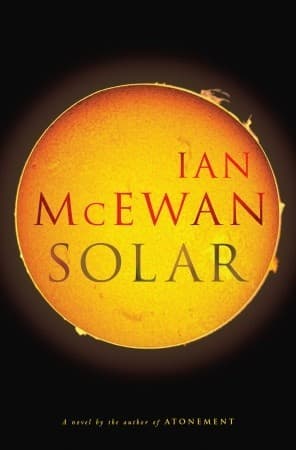
Solar cover
Archivist's Choice

Solar

Ian McEwan (2010)

Genre

Literary Fiction / Science Fiction

Reading Time

300 min

Key Themes

See below

Track Your Reading

Sign in to track this book

A flabby, unfaithful Nobel laureate, whose personal life is as messy as the climate he aims to save, finds a chance at redemption and scientific recognition amid marital chaos and global warming.

Synopsis

Michael Beard, a Nobel laureate physicist past his scientific peak, sees his fifth marriage fail due to his chronic infidelity. He then learns his wife is having an affair. In a strange twist, his wife's lover, a younger physicist named Tarpin, dies in Michael's home. Michael accidentally inherits Tarpin's groundbreaking research on artificial photosynthesis. He takes this opportunity, traveling to New Mexico to present Tarpin's work as his own, hoping to revive his career and become a climate change savior. He goes on an Arctic expedition to study melting ice, where he nearly dies. Years later, Michael is the public face of a major solar energy project. However, his past mistakes and plagiarized work always threaten to undo his new life. He faces accusations, cover-up attempts, and encounters with people from his past, all while dealing with his own moral decline and the environmental crisis he claims to solve.
Reading time
300 min
Difficulty
Medium
Pacing
Moderate
Mood
Satirical, Ironic, Thought-provoking, Darkly comedic
✓ Read this if...
You enjoy satirical literary fiction that explores the intersection of personal failings and global challenges through the lens of a deeply flawed protagonist.
✗ Skip this if...
You prefer straightforward science fiction or stories with purely heroic characters.

Plot Summary

The Fifth Marriage and the Frozen Penis

The novel begins with Michael Beard, a Nobel laureate physicist, in his fifth marriage to Patrice. Their relationship is strained by Michael's repeated infidelities. This time, Patrice is having an affair with Tarpin, a builder. During a winter retreat in Aldeburgh, Michael discovers Patrice's infidelity and confronts her. In an absurd act of revenge, Michael tries to expose himself to the cold, hoping to get frostbite on his penis, making himself infertile and denying Patrice a child with Tarpin. The plan fails, leading to a medical emergency and deep humiliation for Michael. This further breaks down their marriage. The incident shows Michael's self-destructive tendencies and his inability to handle personal crises maturely.

Tarpin's Demise and Michael's Accidental Inheritance

After the Aldeburgh incident, Michael returns to London, still reeling from his marriage's collapse. Patrice continues her affair with Tarpin. One day, Tarpin visits Michael's flat, intending to reconcile or confront him. While Michael is in another room, Tarpin has a fatal accident, falling and hitting his head on a marble fireplace. Michael finds the body. In a moment of panic and self-preservation, he stages the scene to look like an accidental death, avoiding any implication of his presence. He discovers Tarpin's notebook, which contains innovative research on artificial photosynthesis, a scientific breakthrough Tarpin was close to developing. Michael recognizes its potential and secretly takes the notebook, setting the stage for his professional comeback.

The Road to New Mexico and Scientific Plagiarism

With Tarpin's research, Michael subtly integrates the ideas into his own work, presenting them as his original thoughts. He attends a major conference in New Mexico, where he is to give a keynote speech on global warming. He weaves Tarpin's concepts of artificial photosynthesis and solar energy capture into his presentation, gaining significant interest and praise. The scientific community, unaware of the ideas' true origin, sees this as a brilliant new direction for Michael, a surprising comeback for a physicist whose best work was thought to be long behind him. This event marks a turning point, allowing Michael to secure funding and start a new research initiative based on the stolen intellectual property.

The Arctic Expedition and a Near-Death Experience

As part of his new commitment to addressing climate change, Michael goes on an ill-prepared Arctic expedition with a group of scientists. His main reason is less about serious research and more about improving his image and securing more funding. During the trip, Michael, ever the glutton, overindulges in food and drink. He gets severe food poisoning, becoming dangerously ill and almost dying in the remote, harsh environment. This near-death experience reminds him of his physical vulnerabilities and his often-reckless approach to life, sharply contrasting with the scientific rigor he claims to pursue. He is eventually rescued and slowly recovers.

A New Partner and the Business of Science

Years pass, and Michael's stolen ideas, now branded as his own, gain momentum. He establishes a research facility in Nevada and partners with Toby, a brilliant young scientist. Toby, driven by genuine scientific curiosity and a desire to combat climate change, helps turn Tarpin's theoretical work into practical applications. Michael provides the initial push and public face, but largely relies on Toby's expertise. Their collaboration highlights the tension between pure scientific pursuit and the commercial realities of developing and patenting technology. Michael's ethical compromises continue as he navigates the business world, constantly fearing exposure of his deception.

The Accusation and the Cover-Up

Just as his solar energy project nears a major breakthrough and global recognition, Michael receives an anonymous email suggesting knowledge of Tarpin's death and hinting at his involvement. The email sends Michael into a paranoid frenzy, fearing his career and reputation could be destroyed. He suspects several people, including Patrice, of being the sender. This threat forces Michael to confront the consequences of his actions years earlier. He takes increasingly desperate measures to investigate the email's source and ensure his secret remains buried, highlighting his deep-seated fear of exposure and ruin.

The Woman from the Past

During a trip for his solar project, Michael meets Melissa, a woman with whom he had a brief, forgettable affair years ago. Melissa, now a successful businesswoman, reveals she knows details about Tarpin's death. This encounter further increases Michael's anxiety about exposure. He realizes his past indiscretions and moral failings are catching up to him. Melissa's reappearance not only threatens his professional future but also forces him to confront the long-term effects of his many affairs and his general disregard for others' feelings, adding another layer of complexity to his already precarious situation.

The Desert and the Dog

Driven by paranoia after the anonymous email and Melissa's reappearance, Michael decides to dispose of any remaining evidence related to Tarpin's death. He drives into the vast Nevada desert with a bag containing Tarpin's original notebook and other incriminating items. He intends to bury them permanently. However, during this clandestine mission, he encounters a lone, emaciated dog. His attempts to bury the evidence are interrupted by his interaction with the animal, leading to a darkly comic and ultimately unsuccessful effort to completely erase his past. This scene shows Michael's clumsy nature and his inability to effectively carry out even simple, illicit tasks.

The Solar Plant and the Future

Years later, Michael's solar energy project, now a massive industrial plant in the Nevada desert, is about to become operational. The technology, based on Tarpin's original ideas, promises to revolutionize global energy production and combat climate change. Michael, now older and more frail, attends the launch event, enjoying the glory of his supposed achievement. Despite his professional success, his personal life remains chaotic and unfulfilled. He is still prone to gluttony, infidelity, and self-deception. The novel ends with Michael contemplating his legacy, a mix of genuine scientific contribution (though stolen) and deep personal moral failings. He has, in a way, saved the world, but cannot save himself.

The Unresolved Threat

Even as the solar plant is about to launch, the threat of Michael's past catching up to him remains. The anonymous email and Melissa's knowledge are never fully resolved or neutralized. The narrative leaves the reader with the distinct impression that Michael's success, built on deceit, is always vulnerable. He has achieved scientific renown and potentially averted an environmental catastrophe, but at the cost of his integrity and peace of mind. The constant anxiety of exposure serves as a persistent undercurrent, suggesting that true absolution for his actions may never come, leaving his triumph tainted and incomplete.

Principal Figures

Michael Beard

The Protagonist

Michael begins as a morally bankrupt, aging academic and, through a series of accidental events and calculated deceptions, achieves a second professional triumph, but remains personally unredeemed.

Patrice

The Supporting

Patrice evolves from a wronged wife to a woman seeking her own happiness and, potentially, justice or retribution.

Tarpin

The Supporting/Mentioned

Tarpin's brief appearance and accidental death serve as the catalyst for the entire plot, his intellectual legacy stolen and repurposed.

Toby

The Supporting

Toby remains a consistent force of scientific dedication, unknowingly contributing to a project built on deception.

Melissa

The Supporting

Melissa's arc involves her unexpected reappearance as a potential threat to Michael's carefully guarded secret.

Catriona

The Supporting

Catriona remains a steadfast, if increasingly jaded, assistant to Michael.

Professor Henry Gower

The Mentioned

Professor Gower's role is largely static, serving as an external voice of academic skepticism.

Themes & Insights

Moral Corruption and Self-Deception

The novel explores Michael Beard's moral corruption and his ability to deceive himself. He is unfaithful, gluttonous, and an intellectual thief. Despite these serious flaws, Michael always rationalizes his actions, seeing himself as a victim or a genius above normal morality. His theft of Tarpin's work is presented not as a terrible crime but as a practical need, or even a natural extension of his own (dormant) brilliance. This theme appears from the absurd 'frozen penis' incident, where his self-pity outweighs any real regret, to his frantic efforts to cover up Tarpin's death and the origin of his solar research. He truly believes he is saving the world, even if his methods are deeply unethical, showing how humans can create elaborate justifications for self-serving behavior.

He was a man who had made a mess of his own life; could he clean up the messes of humanity?

Narrator

The Nature of Genius and Legacy

Solar looks at the complex nature of genius, especially in science, and the building of a legacy. Michael Beard is a Nobel laureate whose best work is behind him. His later 'genius' in solar energy is entirely stolen from Tarpin, an unknown, self-taught inventor. The novel questions whether an idea's impact matters more than its origin, and whether a good outcome (saving the planet) can redeem a bad beginning (plagiarism and complicity in death). Michael's entire later career is a performance, a careful cultivation of a public image that hides his intellectual fraud. The theme explores how reputation and public perception can overshadow the true source of innovation, and how individual flaws can be separated from, or even contribute to, a significant legacy.

He was an intellectual magpie, forever picking up glittering scraps, but rarely creating anything truly original anymore. Until now, perhaps.

Narrator

Environmentalism and Human Hypocrisy

The novel uses Michael Beard's involvement in climate change research to explore the hypocrisy often present in human efforts to address global crises. Michael, supposedly a champion against global warming, is personally a huge consumer and polluter—overeating, excessive travel, and a general disregard for ecological principles in his daily life. His reason for engaging with solar energy is less about genuine environmental concern and more about personal redemption, professional comeback, and financial gain. This theme highlights the gap between grand idealistic goals and the flawed, self-interested individuals tasked with achieving them, suggesting that even noble causes can be driven by ignoble motives. The contrast between the urgent global threat and Michael's petty personal concerns is a constant ironic element.

He was meant to be saving the world, but he couldn't even save himself from another slice of cake.

Narrator

Aging, Decline, and the Body

A significant theme is the physical and intellectual decline that comes with aging, especially for a man whose identity is linked to his mental ability. Michael Beard's aging body causes him constant discomfort, humiliation, and often, dark comedy. From the opening scene with his frozen penis, to his struggles with gluttony, his near-fatal food poisoning in the Arctic, and his general physical deterioration, the novel directly portrays the indignities of the aging male body. This physical decline mirrors his intellectual stagnation before he 'inherits' Tarpin's work, emphasizing the contrast between his past brilliance and his current state. The body serves as a constant, inescapable reminder of his mortality and his inability to control all aspects of his life, despite his intellectual ambitions.

The body, that traitorous lump of meat, was forever announcing its limits, its indignities.

Narrator

Consequence and Inevitability

The novel subtly explores the theme that consequences, no matter how delayed, are often unavoidable. Michael's actions, from his repeated infidelity to his complicity in Tarpin's death and subsequent intellectual theft, create a web of potential exposure that constantly threatens to unravel his carefully built new life. The anonymous email, Melissa's reappearance, and his own lingering paranoia show this theme. Despite his success, Michael is never truly free from his past. The narrative suggests that while he may escape legal or immediate moral repercussions, the psychological burden and the constant threat of exposure are their own form of punishment, implying that some debts cannot be fully repaid or forgotten.

The past, he knew, was not a country you ever truly left. It was always there, waiting to be revisited.

Narrator

Plot Devices & Literary Techniques

Accidental Death and Intellectual Theft

Tarpin's fortuitous death allows Michael to steal his groundbreaking research.

This is the central plot device that propels Michael Beard's professional resurgence. Tarpin's accidental fall and subsequent death, witnessed (or at least discovered) by Michael, provides the opportunity for Michael to appropriate Tarpin's innovative research on artificial photosynthesis. Without this device, Michael would likely remain a fading academic. It's a darkly comedic twist of fate that allows Michael, a man of profound moral laxity, to become the 'savior' of the planet, highlighting the arbitrary nature of opportunity and the ease with which one can exploit another's misfortune for personal gain. This device not only drives the plot but also establishes the core ethical dilemma of the novel.

The Anonymous Email

A mysterious message threatens to expose Michael's past deception.

The anonymous email serves as a powerful device to introduce suspense and paranoia into Michael's seemingly successful life. It directly references Tarpin's death and Michael's presence, creating a tangible threat that forces Michael to confront his past actions. This device shifts the narrative from Michael's outward professional triumphs to his inner turmoil and fear of exposure. It keeps the reader, and Michael, on edge, constantly wondering who sent it and what they know, thereby reinforcing the theme of inevitable consequences and the fragility of a life built on deceit.

The Arctic Expedition

A physical ordeal that underscores Michael's personal failings and lack of preparedness.

The Arctic expedition functions as a comedic and symbolic plot device. Michael's near-fatal food poisoning in the harsh environment highlights his gluttony, physical vulnerability, and ill-suitedness for genuine scientific fieldwork. It serves as a stark contrast to his intellectual ambitions and his public image as a serious climate scientist. This episode injects a dose of slapstick realism and emphasizes the disconnect between Michael's grand pronouncements and his often-pathetic personal reality, further solidifying his character as a flawed, self-indulgent individual despite his scientific potential.

The Desert Dog

A bizarre encounter that prevents Michael from completely erasing his past.

The encounter with the emaciated dog in the Nevada desert, while seemingly minor, is a significant plot device. Michael's attempt to bury incriminating evidence related to Tarpin's death is interrupted by the dog, leading to a clumsy and ultimately unsuccessful effort to dispose of the materials. This incident symbolizes Michael's inability to truly escape his past or cleanly erase his misdeeds. The absurdity of the situation, with Michael fumbling with evidence while distracted by an animal, underscores his general incompetence in matters requiring discretion and highlights the persistent, almost fated, nature of his ethical entanglements.

Critical analysis

Notable Quotes

He knew he was a man of science, and that science was the only true path to understanding the universe, but he also knew that science was a human endeavour, and therefore prone to human error and human folly.

Michael Beard reflecting on his career and the nature of scientific pursuit.

The problem with all these grand plans for the future of humanity, he thought, was that they invariably left out the human part.

Beard contemplating global warming solutions and the impracticality of human behavior.

He was a man who had won the Nobel Prize for something he hadn't quite done, and now he was trying to win another for something he didn't quite understand.

An internal thought about Michael Beard's past achievements and current scientific endeavors.

The world was going to hell in a handbasket, and he, Michael Beard, was going to be the one to save it, or at least make a good living trying.

Beard's cynical and self-serving motivation for joining the solar energy project.

He was a great man, or had been, and now he was just a man, adrift in a sea of his own making.

A reflection on Beard's declining status and personal failures.

It was the peculiar genius of the human race to invent problems for itself, and then to invent solutions that invariably created new, more complicated problems.

Beard's observation on human progress and its unintended consequences.

He liked the idea of a future powered by the sun, clean and limitless, but he also liked the idea of a good steak and a bottle of claret.

Illustrating Beard's hedonistic nature conflicting with his scientific aspirations.

Marriage, he had discovered, was a series of carefully negotiated truces, punctuated by brief, violent skirmishes.

Beard's cynical view of his multiple marriages.

The universe, he thought, was a vast, indifferent machine, and humanity was just a tiny, insignificant cog in its workings.

Beard's existential contemplation while observing the natural world.

He often wondered if the greatest scientific discoveries were not made by brilliant minds, but by lucky accidents and persistent mediocrity.

Beard's musings on the nature of scientific discovery, perhaps reflecting on his own career.

The true measure of a man, he decided, was not what he achieved, but what he got away with.

Beard's amoral philosophy, revealing his character.

He felt a familiar pang of self-pity, a comfortable old friend he had known for decades.

Beard's recurring emotional state and self-perception.

Progress, he reflected, was often just a euphemism for more complexity, more unintended consequences, and more opportunities for human error.

Beard's critical view of societal and scientific advancement.

The future, he knew, was always arriving, whether you were ready for it or not, and it rarely brought what you expected.

A general reflection on the unpredictable nature of the future.

Quiz

Test Your Knowledge

Ready to see how well you understood this book? Take our interactive quiz with 10 questions.

10
Questions
~5
Minutes
?
Best Score

Key Questions (FAQ)

The novel follows Michael Beard, a Nobel Prize-winning physicist whose personal life is a mess of infidelities and crumbling marriages. Despite his moral failings, he is given a chance to reinvigorate his career and potentially save the world from environmental disaster through a solar energy project, forcing him to confront his own past and capabilities.

About the author

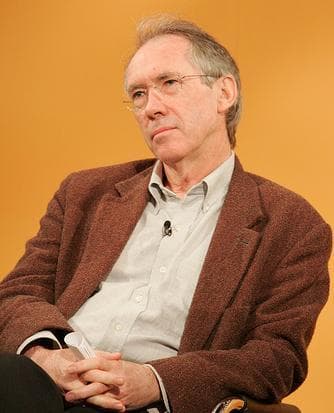
Ian McEwan

Ian Russell McEwan is an English novelist and screenwriter. In 2008, The Times featured him on its list of "The 50 greatest British writers since 1945" and The Daily Telegraph ranked him number 19 in its list of the "100 most powerful people in British culture".