BookBrief
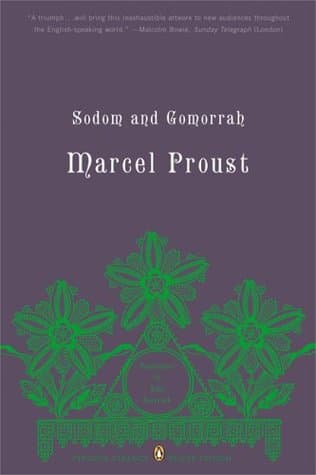
Sodom and Gomorrah cover
Archivist's Choice

Sodom and Gomorrah

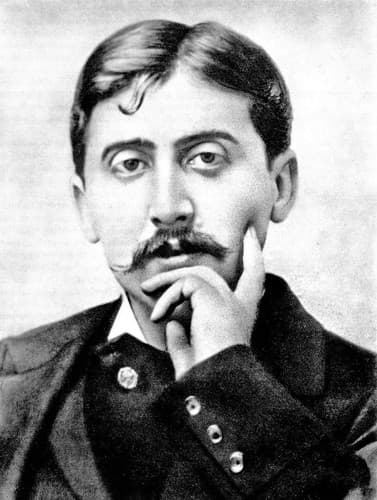
Marcel Proust (2023)

Genre

Literary Fiction / Philosophy / Romance

Reading Time

1200 min

Key Themes

See below

Track Your Reading

Sign in to track this book

In the glittering decay of Parisian high society and the rising vulgarity of the new rich, a jealous narrator struggles with Albertine's elusive affections and Baron de Charlus's scandalous secrets, exposing hidden desires and societal hypocrisy.

Synopsis

The Narrator, now more aware of societal nuances, finds the hidden world of homosexuality and lesbianism in Parisian high society, especially through Baron de Charlus. He becomes obsessed with Albertine, a young woman he thinks he loves, and invites her to live with him, hoping to control her and lessen his jealousy. Their time living together is marked by the Narrator's constant worry, as he watches Albertine closely, suspects her of lesbian relationships, and thinks about marriage. Meanwhile, the social world around him changes, with the aristocracy, like Charlus, slowly giving way to a rising, less refined middle class, seen in the Verdurin salon. Charlus himself experiences social decline and stranger behavior. The Narrator's jealousy peaks, leading to Albertine's sudden departure, leaving him in despair and further thought.
Reading time
1200 min
Difficulty
Hard
Pacing
Slow
Mood
Introspective, Melancholy, Analytical, Obsessive, Decadent
✓ Read this if...
You are fascinated by detailed psychological introspection, societal critique of early 20th-century Parisian high society, and complex explorations of love, jealousy, and homosexuality.
✗ Skip this if...
You prefer fast-paced plots, clear and concise prose, or find lengthy internal monologues and detailed social observations tedious.

Plot Summary

The Narrator's Discovery of Charlus's Inversion

The narrator, watching from his window at the Grand Hotel in Balbec, sees a strange scene between Baron de Charlus and Jupien, a tailor and former valet. Charlus, at first hesitant and circling, eventually meets Jupien secretly in Jupien's shop. This meeting, described with botanical comparisons, shows the narrator Charlus's homosexuality, a discovery that changes how the narrator sees the Baron and the hidden world of same-sex desire in Parisian society. The narrator thinks about the group of homosexuals, their secret signs, and their social exclusion, setting up further exploration of this theme.

The World of the 'Sodomites' and 'Gomorrahans'

After his discovery, the narrator notices the subtle clues and unspoken language of homosexual people, both men and women, whom he calls 'Sodomites' and 'Gomorrahans.' He watches their interactions, their guardedness, and their often-unacknowledged connections. He notes how many important people in society, once thought to be heterosexual, are part of this hidden world. This section looks at the social dynamics of homosexuality, the double lives many lead, and the widespread hypocrisy about sexuality in Belle Époque Paris. The narrator's own worries and interest in Albertine start to mix with these wider observations.

The Narrator's Growing Obsession with Albertine

The narrator's focus moves to Albertine, whom he believes he deeply loves. His affection, however, is tied to a tormenting jealousy and a constant suspicion of her possible unfaithfulness, especially with other women. He remembers their time together in Balbec and, back in Paris, arranges for Albertine to live in his apartment. This arrangement is less about shared affection and more about his desperate need to control her, to watch her every move, and to stop her from doing anything that might confirm his fears about her homosexual leanings. His love for her is presented as a form of suffering.

Life with Albertine in Paris

Albertine moves into the narrator's Parisian apartment, a situation he carefully manages. He stops her from leaving alone, questions her about her past and present, and even hires a former chauffeur, Odette's uncle, to spy on her. Despite these efforts, his jealousy only grows, fed by unclear remarks, hints from others, and his own imagination. He constantly asks her about her friends, especially Andrée and others in her 'little band.' The narrator's 'love' for Albertine is shown as a self-made prison, where his desire for her is connected to his fear of her independence and her true sexual leanings, which he increasingly suspects are like Gomorrah.

The 'Sleepers' and Albertine's World

The narrator often watches Albertine as she sleeps, finding peace in her unconsciousness, where he believes her true self is less hidden. However, his waking hours are spent investigating her past. He learns more about her friendships with other young women, particularly her close bond with Andrée, and their shared activities, which he interprets through his growing belief that Albertine is a 'Gomorrahian.' These discoveries, often from casual talks or overheard remarks, only confirm his suspicions and increase his suffering, leading him to think about marrying her to completely possess and control her.

The Narrator's Torment and the Idea of Marriage

The narrator's jealousy becomes unbearable, leading him to think about extreme actions. The idea of marrying Albertine comes not from true romantic desire, but as a desperate attempt to gain total control over her, to separate her from her suspected female lovers, and to ease his constant torment. He sees marriage as a cage, a way to stop her from doing any 'Gomorrah-like' activities. This thought is full of inner conflict, as he recognizes the transactional and possessive nature of his proposed union, yet feels driven by his suffering to pursue it. His talks with his mother about Albertine are often vague and indirect.

The Verdurin Salon and Society's Shifting Landscape

The Verdurin salon, once dismissed by the Faubourg Saint-Germain, continues to rise in Parisian society. Mme Verdurin, with her ambition and social maneuvering, gradually attracts members of the old aristocracy, including the Prince and Princesse de Guermantes, who are drawn into her circle, often out of boredom or a wish for something new. This section shows the changing social order of Paris, where the old, exclusive world of the aristocracy is slowly being entered and even replaced by the rising middle class. The narrator observes the social customs, the snobbery, and the intellectual show of the salon, thinking about the superficiality of both the old and new elites.

Charlus's Social Decline and Eccentricities

Baron de Charlus, once a strong figure in society, shows increasingly strange and self-destructive behavior. His open displays of homosexuality, his often-outrageous statements, and his changing mood push many away. Despite his powerful connections and aristocratic background, he finds himself more and more on the fringes, even as he tries to show his dominance and intellectual superiority. The narrator watches Charlus's decline with fascination and pity, noting how the Baron's homosexuality and his inability to fit in lead to his social downfall, even as he accepts his true nature, however painfully.

The Narrator's Jealousy Peaks and Albertine's Departure

A simple remark by M. de Cambremer about Albertine's past involvement with Mlle Vinteuil and her friend, known to be lesbians, causes an overwhelming fit of jealousy in the narrator. This discovery, confirming his worst suspicions about Albertine's 'Gomorrah-like' activities, shatters his calm. The torment is so strong that he decides to end their relationship. However, before he can act, Françoise delivers the news: Albertine has left, taking only her belongings and leaving no trace. Her sudden departure throws the narrator into despair and an even deeper, backward-looking jealousy.

The Aftermath of Albertine's Flight

Albertine's departure leaves the narrator devastated. His initial relief at her absence quickly turns into an unbearable longing and an intensified, backward-looking jealousy. He becomes obsessed with finding her, sending Saint-Loup to search for her and even thinking about extreme measures to bring her back. His suffering is now made worse by uncertainty and the inability to control her. The narrator thinks about love as suffering and possession, realizing that his 'love' for Albertine was mainly fueled by his jealousy and his need to stop her from following her own desires. The novel ends with the narrator in grief and an uncertain future.

Principal Figures

The Narrator (Marcel)

The Protagonist

From a curious observer of society, he descends into an obsessive, jealous lover, experiencing profound emotional torment and ultimately recognizing the destructive nature of his own desires.

Albertine Simonet

The Supporting/Object of Affection

Initially a carefree young woman, she becomes increasingly constrained by the Narrator's possessiveness, eventually asserting her independence through a sudden departure.

Baron de Charlus

The Supporting/Antagonist

From a figure of imposing aristocratic power, he descends into increasingly public eccentricities and social isolation due to his inability to fully conceal his homosexuality.

Jupien

The Supporting

From a seemingly minor character, he becomes a significant figure through his relationship with Charlus, embodying the unexpected connections across social strata.

Mme Verdurin

The Supporting

Her social ambition continues to grow, culminating in her salon attracting and even dominating members of the old aristocracy.

Prince de Guermantes

The Supporting

Initially aloof from the rising bourgeoisie, he gradually succumbs to the social pull of figures like Mme Verdurin, signaling the erosion of aristocratic exclusivity.

Françoise

The Supporting

Remains a constant, loyal presence, observing the Narrator's emotional turmoil with a mixture of concern and practical detachment.

Andrée

The Supporting

Remains a consistent, though often unseen, figure of suspicion and jealousy for the Narrator.

Mlle Vinteuil's friend

The Mentioned

Her past actions and identity serve as a final catalyst for the Narrator's emotional breakdown.

Themes & Insights

Homosexuality and Inversion

This book offers an extensive look at homosexuality, called 'inversion' or the 'race' of Sodomites and Gomorrahans. Proust explores the hidden lives, social rules, and psychological difficulties of homosexual men and women in Belle Époque Paris. The Narrator's first discovery of Charlus's meeting with Jupien opens his eyes to a secret society beneath the surface of conventional society. The theme highlights social hypocrisy, the pain of being excluded, and the double lives many characters must lead. It covers identity, secrecy, and the search for acceptance.

What is called love is a far more extensive, a far more mysterious, a far more ambiguous thing than we imagine.

The Narrator

Jealousy and Obsessive Love

Jealousy is the main emotion in the Narrator's relationship with Albertine, turning his love into an obsession. His 'love' for her is tied to his suspicion of her possible unfaithfulness, especially with other women. He tries to completely possess and control her, keeping her in his apartment and arranging surveillance. This theme explores how jealousy can consume a person, leading to suffering and a twisted view of the loved one. It asks if the Narrator's feelings are truly love or just a desperate need for control and relief from pain.

We are not loved by the people we love; we are loved by people who are not in love with us.

The Narrator

Social Change and Decadence

Proust carefully records the changing social scene of Parisian high society. The novel shows the decline of the old aristocracy, like the Guermantes, and the rise of the ambitious middle class, personified by Mme Verdurin and her salon. This theme explores the weakening of traditional class lines, the superficiality of social climbing, and the snobbery that marks both old and new elites. It shows the decadence and moral questions in a society changing, where status is fluid and often gained through wealth rather than family.

Snobbery is a malady of the soul, a form of paralysis.

The Narrator

Memory and the Elusiveness of Truth

Memory continues to be a central theme, with the Narrator constantly re-examining past events and conversations, especially about Albertine, to build a 'truth' that often remains unclear. His memories are colored by his current emotions, particularly his jealousy, leading to multiple, often conflicting interpretations of events. This theme shows that memory is subjective and unreliable and how it shapes perception. The Narrator's attempts to piece together Albertine's past are frustrated by the inherent unknowability of another person's inner life, suggesting that true understanding is often out of reach.

The memory of a beloved object is not a memory of the object itself, but of the way we felt about it.

The Narrator

Plot Devices & Literary Techniques

The Narrator's Subjective Perspective

The entire narrative is filtered through the highly introspective and often unreliable consciousness of the Narrator.

The novel is told entirely from the first-person perspective of the Narrator, whose perceptions, biases, and emotional states heavily color every event and character. This subjective lens means that the 'truth' of situations, particularly concerning Albertine's fidelity or Charlus's motivations, is always open to interpretation and often reflects the Narrator's own anxieties and desires rather than objective reality. This device forces the reader to question the Narrator's interpretations and highlights the inherent unknowability of other people's inner lives, especially in matters of love and jealousy.

Elaborate Metaphors and Similes

Complex and extended comparisons used to describe abstract concepts, emotions, and social dynamics.

Proust frequently employs intricate and often extended metaphors and similes, drawing comparisons between human behavior and natural phenomena (e.g., Charlus's 'ballet' with Jupien described with botanical imagery). This device serves to illuminate the hidden complexities of emotions, social interactions, and psychological states. By likening the invisible to the visible, Proust makes abstract concepts more tangible and allows for a deeper, more nuanced understanding of the characters' inner lives and the subtle workings of society. These literary flourishes are a hallmark of Proust's style, enriching the narrative with layers of meaning.

Retrospective Narration and Analepsis

The Narrator frequently looks back at past events, re-evaluating them in light of new information or present emotions.

The narrative is not strictly chronological; the Narrator constantly engages in analepsis, or flashbacks, revisiting past scenes and conversations. This device is crucial for demonstrating how memory is shaped by present experience and how understanding evolves over time. For instance, the Narrator's initial observations of Albertine or Charlus are re-interpreted as he gains more information or as his jealousy intensifies. This retrospective approach underscores the theme of the elusiveness of truth and the subjective nature of memory, allowing for a layered and evolving understanding of characters and events.

The Verdurin Salon

A recurring social setting that serves as a microcosm for Parisian society and its shifting hierarchies.

The Verdurin salon, a social gathering hosted by Mme Verdurin, functions as a recurring setting throughout the novel, providing a consistent stage for observing the changing dynamics of Parisian high society. It acts as a microcosm, showcasing the interactions between the old aristocracy and the rising bourgeoisie, highlighting social climbing, snobbery, and intellectual pretensions. The salon serves as a device to illustrate the erosion of traditional class boundaries and the superficiality of social interactions, reflecting the broader societal shifts occurring in France.

Critical analysis

Notable Quotes

The only true voyage of discovery, the only fountain of Eternal Youth, would be not to visit strange lands but to possess other eyes, to behold the universe through the eyes of another, of a hundred others, to behold the hundred universes that each of them beholds, that each of them is.

The narrator reflects on the nature of perception and understanding others.

Happiness is beneficial for the body, but it is grief that develops the powers of the mind.

A philosophical observation on the effects of emotional states.

We are healed of a suffering only by experiencing it to the full.

The narrator discusses the process of overcoming pain.

The bonds that unite another person to ourself exist only in our mind.

A reflection on the subjective nature of relationships.

The real voyage of discovery consists not in seeking new landscapes, but in having new eyes.

A reiteration of the theme of perception over physical travel.

Love is space and time measured by the heart.

The narrator contemplates the nature of love.

The only paradise is paradise lost.

A melancholic reflection on nostalgia and memory.

We do not receive wisdom, we must discover it for ourselves after a journey through the wilderness which no one else can make for us, which no one can spare us.

A statement on the personal nature of gaining wisdom.

The time which we have at our disposal every day is elastic; the passions that we feel expand it, those that we inspire contract it; and habit fills up what remains.

An analysis of how emotions and routines affect our perception of time.

It is in moments of illness that we are compelled to recognize that we live not alone but chained to a creature of a different kingdom, whole worlds apart, who has no knowledge of us and by whom it is impossible to make ourselves understood: our body.

The narrator muses on the disconnect between mind and body during sickness.

The desire to write grows with writing.

A brief insight into the creative process.

We are not provided with wisdom, we must discover it for ourselves, after a journey through the wilderness which no one else can make for us, which no one can spare us, for our wisdom is the point of view from which we come at last to regard the world.

A variation on the theme of personal discovery and wisdom.

The true paradises are the paradises that we have lost.

Another reflection on the allure of past happiness.

Let us be grateful to people who make us happy, they are the charming gardeners who make our souls blossom.

A thankful note on the impact of positive relationships.

Quiz

Test Your Knowledge

Ready to see how well you understood this book? Take our interactive quiz with 10 questions.

10
Questions
~5
Minutes
?
Best Score

Key Questions (FAQ)

'Sodom and Gomorrah' explores the destructive nature of sexual jealousy through the narrator's obsessive relationship with Albertine, while simultaneously critiquing the decadent Parisian aristocracy and rising bourgeoisie. The novel delves deeply into homosexual themes through characters like Baron de Charlus and Albertine's suspected lesbianism, examining how hidden desires shape social dynamics and personal torment.

About the author

Marcel Proust

Valentin Louis Georges Eugène Marcel Proust was a French novelist, literary critic, and essayist who wrote the monumental novel In Search of Lost Time, originally in French and published in seven volumes between 1913 and 1927. He is considered by critics and writers to be one of the most influential authors of the 20th century.