“All knowledge is good. But it is a good for which you must be prepared.”
— Nita's first conversation with Fred, the sentient book of magic.

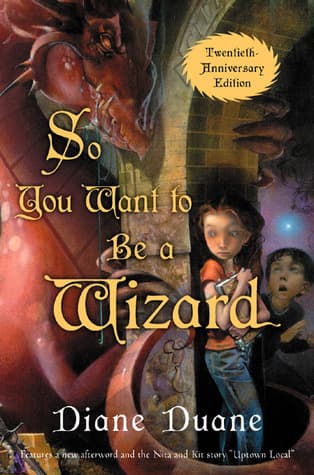
Diane Duane (1983)
Genre
Fantasy / Children's / Science Fiction / Young Adult
Reading Time
6-7 hours
Key Themes
See below
Sign in to track this book
Hounded by bullies, a young girl finds an escape and a perilous calling in a mysterious library book, thrusting her and a new companion into an alternate New York to confront the cosmic entity of death itself and retrieve a powerful artifact.
Thirteen-year-old Nita Callahan is often bullied at her New York City school. One day, while hiding in the library, she finds a book called 'So You Want to Be a Wizard'. Curious, she takes it home and, following its instructions, recites the Wizard's Oath. This act connects her to wizards across the universe. Soon after, she meets Kit Rodriguez, another new wizard who has also taken the Oath. Kit, at first doubtful and cautious, quickly becomes a valuable ally as they both deal with their new abilities and the strange world opening to them. Their first tasks involve learning basic spells and understanding wizardry, preparing them for bigger challenges.
As new wizards, Nita and Kit are immediately assigned their first Ordeal, a traditional challenge designed to test their courage and new magical skills. They learn that the universe is constantly threatened by the Lone Power, a malevolent entity responsible for death and decay, and the ultimate enemy of all wizards. Their specific mission is to recover the Book of Night with Moon, a powerful wizard artifact stolen by a minion of the Lone Power. This Ordeal is not just a test; it is a critical mission, as the Book's absence could have serious consequences for their world and others. They are given a brief overview of the dangers and the importance of their task, understanding that failure is not an option.
To find the Book of Night with Moon, Nita and Kit must travel to an alternate New York City, a world corrupted by the Lone Power. Using a complex transit spell, they enter this desolate reality, which mirrors their own but is filled with decay and despair. Familiar landmarks are distorted, and the city is populated by grotesque creatures and shadowy figures, all servants of the Lone Power. This environment immediately tests their courage and resourcefulness. They quickly realize the seriousness of their situation, understanding that this is not just a magical adventure but a fight for survival in a hostile dimension where their world's rules no longer apply.
As Nita and Kit navigate the desolate streets of alternate New York, they encounter various creatures and phenomena that show the Lone Power's wide influence. They face shadowy, wraith-like beings, corrupted animals, and even distorted everyday objects filled with dark energy. These encounters force them to quickly learn and adapt their magical skills, using spells for protection, illusion, and even direct combat. They see firsthand the destructive power of the Lone Power and the constant struggle wizards face to maintain balance in the universe. The experience is both terrifying and informative, deepening their understanding of their responsibilities and the true nature of their enemy.
Recognizing the need for more information, Nita and Kit seek out a wizard contact or resource within the alternate dimension. Their search leads them to a hidden, magical library, a place of knowledge amidst the decay. Here, they consult old texts and receive cryptic guidance from a resident wizard entity. They learn more about the Book of Night with Moon and its importance, and are told they need a specific key to access its hiding place. This key is not a physical object but a magical construct, requiring them to solve riddles and overcome magical traps to acquire it. The library provides a brief rest but also increases the urgency of their mission.
Following the clues from the library, Nita and Kit realize their path to the Book of Night with Moon lies deep within the alternate New York's underground subway system. This subterranean world is even more dangerous than the surface, filled with the Lone Power's most formidable creatures and a strong sense of dread. They navigate abandoned tunnels, encounter corrupted subway trains, and face direct confrontations with powerful dark entities. The journey is physically and magically demanding, pushing their limits and forcing them to rely on each other's strengths. They must use complex spells to bypass obstacles and defend themselves against relentless attacks, all while trying to save their energy for the final confrontation.
After enduring the perilous journey through the underground, Nita and Kit finally reach the Lone Power's stronghold – a monstrous, decaying structure at the very heart of the alternate dimension. This place radiates immense malevolent energy, and they can feel the presence of the Lone Power itself, or at least a powerful manifestation of it. The air is thick with despair and death. They find the Book of Night with Moon, but it is heavily guarded by the Lone Power's most potent servants and protected by powerful wards. This is the culmination of their Ordeal, and they understand that retrieving the Book will require all their combined magical skill, courage, and ingenuity, as they face the direct influence of their ultimate enemy.
Faced with overwhelming odds, Nita and Kit devise a plan to retrieve the Book of Night with Moon. They use their individual strengths: Nita's intuitive understanding of language and patterns, and Kit's logical approach and mastery of more direct spells. They work together, creating diversions, breaking through wards, and battling the formidable guardians. The confrontation is intense, pushing them to their magical and emotional limits. Through a combination of clever spellcasting, improvisation, and sheer determination, they manage to outwit the Lone Power's defenses and secure the Book. Touching the Book gives them a temporary surge of its ancient power, but also marks them further in the eyes of the Lone Power.
Upon retrieving the Book of Night with Moon, Nita and Kit experience a direct, terrifying confrontation with the essence of the Lone Power. While not a physical being, its immense, malevolent consciousness appears, trying to overwhelm them with despair and fear. It probes their minds, trying to break their will and seize the Book. This is a battle of wills and spirit, rather than spells. Nita's unique connection to language and Kit's steadfast resolve are crucial in resisting the psychic attack. They learn that the Lone Power is not just a force of evil, but a fundamental principle of entropy and decay, constantly seeking to unravel existence.
Having successfully retrieved the Book of Night with Moon and survived the confrontation with the Lone Power's essence, Nita and Kit must now escape the collapsing stronghold and the increasingly hostile alternate dimension. They use their wizardry to create a path out, dodging pursuing creatures and navigating the rapidly deteriorating environment. The Book's power helps guide them, acting as a beacon. Finally, with a combined effort, they perform the transit spell to return to their own New York City. They emerge exhausted but triumphant, the Book safely in hand, having completed their dangerous first Ordeal and proven their worth as wizards. Their world, and their perception of it, is irrevocably changed.
Back in their own world, Nita and Kit are forever changed by their Ordeal. The experiences have created a strong bond between them and given them new confidence. Nita, once timid and a target for bullies, now has an inner strength and a clear purpose. Kit, initially reserved, has embraced his magical abilities and his role as Nita's partner. They understand the immense responsibility that comes with wizardry and the ongoing fight against the Lone Power. While the immediate danger has passed, they know this is just the beginning of their journey. They return the Book of Night with Moon to its rightful place and begin to integrate their magical lives with their mundane ones, now seeing the world through the eyes of a wizard.
The Protagonist
Nita transforms from a timid, bullied girl into a confident and capable wizard, embracing her unique talents and finding her voice.
The Protagonist/Supporting
Kit learns to trust in the unseen and embrace the fantastical, becoming a loyal and indispensable partner to Nita.
The Antagonist
The Lone Power remains a constant, unchanging force of destruction, its nature revealed but never defeated in this installment.
The Supporting
Fred serves as a stable point of wisdom and guidance, his role primarily to inform and empower the young wizards.
The Mentioned
The Book acts as a MacGuffin that tests the protagonists, its retrieval signifying their success and growth.
The Mentioned
The bullies serve as a starting point for Nita's character, their influence diminishing as she gains power and self-worth.
The narrative stresses that becoming a wizard is a conscious choice, shown by taking the Wizard's Oath. This choice brings great responsibility, as Nita and Kit quickly learn that their actions have cosmic consequences, affecting not just their own lives but the balance of the universe. Their Ordeal is not just a test of power, but a test of their willingness to stand against decay and defend creation. The book continually reminds them that their power is a tool, and how they choose to use it defines them as wizards, especially when facing the moral dilemmas presented by the Lone Power's corruption.
“For with the Oath, you will have taken upon yourselves the Power and the Responsibility of choice, which is the whole point of wizardry.”
Nita and Kit are both outsiders in their normal lives, and their wizardry further sets them apart. However, their unique qualities—Nita's intuitive, language-based magic and Kit's logical, structured approach—are not weaknesses but complementary strengths. The story celebrates their individual differences, showing how their combined abilities are essential for overcoming challenges that neither could face alone. This theme extends to the idea that the universe itself thrives on diversity, a stark contrast to the Lone Power's desire for ultimate sameness and nothingness. Their differences make them stronger, both individually and as a team.
“Neither of them was very good at being ordinary. And that, it turned out, was their secret weapon.”
At its core, the novel explores the fundamental cosmic conflict between creation (represented by wizardry and life) and destruction (embodied by the Lone Power and death). The Lone Power's goal is to unravel all existence, reducing it to nothingness, while wizards strive to maintain life, growth, and order. This theme is clearly shown in the alternate New York, a world consumed by decay and corruption, which is a chilling example of the Lone Power's ultimate vision. Nita and Kit's mission to retrieve the Book of Night with Moon is not just about an object, but about preserving a vital piece of the creative force in the universe.
“For the Lone Power has no true desire but to undo what has been done, and to make all things as if they had never been.”
Nita's journey is heavily influenced by her initial fear and self-doubt, stemming from bullying and a general feeling of inadequacy. Wizardry forces her to confront these internal struggles, pushing her beyond her comfort zone. Kit also faces moments of fear and uncertainty, particularly when confronted with the overwhelming power of the Lone Power. The Ordeal serves as a test, teaching both children that true courage is not the absence of fear, but the ability to act despite it. Their growth as wizards is directly tied to their ability to trust themselves and each other, overcoming their personal anxieties to face external threats.
“The fear was still there, a cold knot in her stomach. But now there was something else, too: a stubborn, burning spark of defiance.”
A magical vow that initiates an individual into wizardry and connects them to a cosmic network.
The Wizard's Oath is a crucial plot device that serves as the inciting incident for Nita and Kit's journey. It's a spoken commitment that not only bestows magical abilities but also binds the individual to the responsibilities and dangers of wizardry. This act immediately separates them from their mundane lives and introduces them to the larger magical universe. It functions as a magical contract, signifying a profound change in their identity and purpose, and fundamentally alters their perception of reality, opening their eyes to the hidden forces at play.
A mandatory, dangerous quest that new wizards must undertake to prove their worth and confront the Lone Power.
The Ordeal is a central plot device that structures the narrative. It's a rite of passage for all new wizards, designed to test their nascent skills, courage, and commitment. For Nita and Kit, their Ordeal involves retrieving the Book of Night with Moon from an alternate dimension corrupted by the Lone Power. This device provides a clear goal, creates constant tension and danger, and forces the protagonists to grow rapidly. It's not just a test, but a vital mission with high stakes, demonstrating the immediate and serious responsibilities of wizardry.
Parallel realities that can be accessed by wizards, often reflecting the influence of the Lone Power.
The concept of alternate dimensions is a key plot device that allows for the creation of unique and dangerous settings. The alternate New York, ravaged by the Lone Power, serves as the primary location for Nita and Kit's Ordeal. This device enables the authors to visually manifest the destructive power of the antagonist and create a sense of profound otherworldliness and peril. It highlights the vastness of the wizardly universe and the different states of existence that can be influenced by cosmic forces, providing a stark contrast to the protagonists' familiar home world.
The fundamental principle that magic is a form of universal language, understood and manipulated by wizards.
The 'Language of Magic' is a core plot device that explains how wizardry functions. It posits that magic is not just about waving wands, but about understanding and speaking the fundamental 'words' of the universe, the underlying patterns and truths of creation. This concept is particularly important for Nita, whose natural affinity for language makes her a powerful wizard. It provides a unique and intellectually engaging framework for spellcasting, requiring wit, understanding, and sometimes improvisation, rather than rote memorization. It underscores the theme that magic is an act of understanding and communication with reality itself.
“All knowledge is good. But it is a good for which you must be prepared.”
— Nita's first conversation with Fred, the sentient book of magic.
“The price of wisdom is eternal thought.”
— A phrase Nita learns early on about the nature of wizardry.
“The greatest magic is that which we can do ourselves.”
— A realization Nita has about her own innate abilities.
“You can't just wish for things to happen. You have to make them happen.”
— Spoken by Kit to Nita, emphasizing the active role of a wizard.
“Every choice you make changes the world, even if only a little.”
— An underlying theme about the impact of a wizard's decisions.
“The universe doesn't care whether you're a wizard or not. It just is.”
— A stark reminder of the vastness and indifference of the cosmos.
“Sometimes the best way to deal with a problem is to make a bigger one.”
— A slightly mischievous piece of advice from a more experienced wizard.
“Fear is a tool, not a master.”
— A lesson learned about confronting and utilizing fear.
“You'll never know what you can do until you try.”
— A common encouragement given to the young wizards.
“The greatest danger is not knowing what you're doing.”
— A warning about the perils of ignorance in magic.
“There are no easy answers in wizardry, only harder questions.”
— A reflection on the complexity of magical practice and ethics.
“The magic is in the doing, not just the knowing.”
— Emphasizing the practical application of magical knowledge.
“When you're a wizard, 'impossible' is just a suggestion.”
— A confident assertion about the power and capabilities of wizards.
“Being a wizard doesn't mean you stop being a person. It means you become more of one.”
— A profound statement about growth and self-discovery through magic.
Ready to see how well you understood this book? Take our interactive quiz with 10 questions.
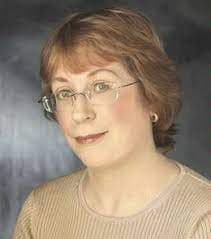
Diane Duane is a celebrated author of young adult fantasy, best known for the "Young Wizards" series, which began with "So You Want to Be a Wizard." Her work is recognized for its imaginative world-building and exploration of complex themes within accessible narratives. Duane's extensive career also includes contributions to established franchises and a deep engagement with the craft of storytelling.







