BookBrief
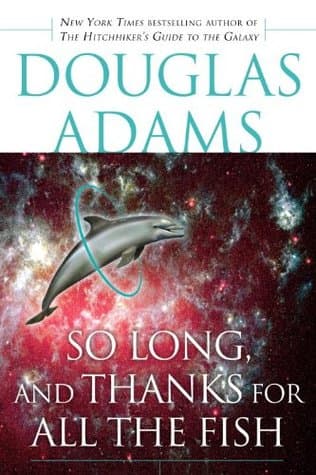
So Long, and Thanks for All the Fish cover
Archivist's Choice

So Long, and Thanks for All the Fish

Douglas Adams (1984)

Genre

Fantasy / Science Fiction

Reading Time

225 min

Key Themes

See below

Track Your Reading

Sign in to track this book

Arthur Dent returns to a familiar Earth, only to find himself in a cosmic scavenger hunt for God's final message, involving dolphins, a giant robot, and the universe's lingering absurdity.

Synopsis

Arthur Dent returns to an Earth that inexplicably reappeared, finding it subtly different from the one he left. He meets Fenchurch, a woman who also remembers Earth's disappearance and reappearance, and they begin to unravel the mystery. Their journey leads them to discover that all the dolphins have vanished, leaving a cryptic fishbowl and a copy of The Hitchhiker's Guide to the Galaxy. Arthur and Fenchurch search for the dolphins and try to understand Earth's strange history, ultimately leading them to Hawalius, where they seek 'God's Final Message to His Creation.' Along the way, Arthur reunites with Ford Prefect and encounters a giant robot. They discover that the Earth was a gift from the dolphins to humanity, and its disappearance and reappearance are tied to their benevolent efforts. The 'Final Message' is a simple statement about life. Fenchurch eventually leaves Earth to join the dolphins, while Arthur continues his travels, with a deeper understanding of the universe.
Reading time
225 min
Difficulty
Medium
Pacing
Moderate
Mood
Whimsical, Humorous, Philosophical, Absurd
✓ Read this if...
You enjoy absurd British humor, philosophical musings disguised as sci-fi, and a quirky, character-driven narrative.
✗ Skip this if...
You prefer hard science fiction, straightforward plots, or dislike surrealism and non-sequiturs.

Plot Summary

Return to an Unfamiliar Earth

Arthur Dent wakes in his old bed, in his old house, on Earth, eight years after he saw its demolition by the Vogons. He struggles to believe this reality given his vivid memories of interstellar travel, aliens, and the end of the world. Everything seems normal, yet subtly wrong. He finds his house exactly as he left it, but there's an inexplicable new motorway outside. He consults a psychiatrist, Dr. Emil Blixt, who suggests Arthur's experiences were a delusion. Arthur tries to live a normal life, buying a new car and trying to ignore the nagging feeling that something is amiss. His past adventures feel like a dream, yet too real to dismiss.

The Mysterious Fishbowl and Fenchurch

Arthur receives a mysterious gift: a fishbowl containing a towel and the inscription 'So Long, and Thanks for All the Fish.' This phrase, a known farewell from the dolphins, deeply unsettles him. While driving, he spots a woman, Fenchurch, hovering above the ground. Intrigued, Arthur follows her home. He learns that Fenchurch also has a strange connection to the number forty-two and a feeling of loss, from a global depression eight years prior, precisely when Earth was destroyed in Arthur's memory. They bond over their shared sense of displacement and the inexplicable nature of their lives, leading to a romance.

The Missing Dolphins and the Guide

Arthur and Fenchurch investigate the sudden disappearance of all dolphins from Earth's oceans. They visit a research facility where scientists are baffled by the mass exodus. During their investigation, Arthur discovers his battered, electronic copy of *The Hitchhiker's Guide to the Galaxy* in his plastic shopping bag, confirming his past adventures were real. This discovery solidifies his belief that something extraordinary is happening and that Fenchurch might hold a key to understanding it. The Guide's reappearance also brings back memories of his friends, particularly Ford Prefect, and the absurdity of his previous life.

Finding a Ship and a Robot

Convinced that the Earth he's on is not the original, Arthur decides they need to leave to find answers. He and Fenchurch search for a spaceship. They eventually find one in a field in Norfolk, disguised as a normal house. Inside, they discover a giant, depressed robot named Marvin, who is waiting for them. Marvin reveals he has been waiting for Arthur for a very long time, further cementing the idea that Arthur's return to Earth was not random. Marvin's presence, though still melancholic, provides a way to escape and a connection to Arthur's past space travels.

The Search for God's Final Message

Marvin tells Arthur and Fenchurch that they are to travel to the planet Krikkit to find 'God's Final Message to His Creation.' This message is rumored to be inscribed on a planet called Hawalius, surrounded by souvenir shops. Their journey in Marvin's ship takes them across vast stretches of space. Arthur is excited by the prospect of finally understanding the universe, while Fenchurch, though initially apprehensive, is eager to uncover the truth behind her own strange experiences and the collective memory of the world's depression.

Reunion with Ford Prefect

During their journey, Arthur and Fenchurch land on a space station. There, Arthur is reunited with Ford Prefect, who is, as usual, trying to get a free ride and a drink. Ford is surprised to see Arthur, believing him to be dead. He explains that the Earth Arthur is on is indeed a replacement, created by the dolphins, and confirms the reality of Arthur's past adventures. Ford, having acquired the complete works of Shakespeare for a large sum, is trying to sell them, unaware that they are common knowledge throughout the galaxy. Their reunion is chaotic but comforting for Arthur, providing another link to his real past.

The Planet Hawalius

Arthur, Fenchurch, Ford, and Marvin finally arrive at the planet Hawalius. The planet is a tourist trap, with souvenir stalls and vendors selling merchandise related to God's Final Message. The message itself is displayed on a giant, unadorned rock. The commercialization of such a revelation strikes Arthur as absurd and typical of the universe's general indifference. Fenchurch feels a growing sense of anticipation, hoping this message will provide the answers she has long sought about her own existence and the peculiar state of her Earth.

The Final Message Revealed

As they approach the rock on Hawalius, God's Final Message is finally revealed. It consists of only two words: 'WE APOLOGISE.' This short, enigmatic message leaves the characters, especially Arthur and Fenchurch, in deep thought. It offers no grand cosmic explanation, no complex theology, but rather a simple, almost dismissive, apology. Arthur finds it both underwhelming and strangely fitting for the universe he knows. Fenchurch, though perhaps expecting more, finds a sense of closure in its stark honesty, realizing that some questions simply don't have the answers one expects.

The Dolphins' Explanation

Ford explains to Arthur and Fenchurch that the dolphins, knowing of the impending Vogon destruction of Earth, had created a hyperspace bypass around the planet, saving a segment of humanity. They then built a new, replica Earth for these survivors, complete with implanted memories to minimize trauma. This new Earth is the one Arthur and Fenchurch inhabit. The dolphins' farewell, 'So Long, and Thanks for All the Fish,' was their final message before leaving. Their plan was to allow humanity to continue, albeit on a slightly altered timeline, and to protect them from further cosmic absurdities.

Fenchurch's Departure

After the revelation of God's Final Message and the dolphins' actions, Fenchurch feels a deep connection to the dolphins and their purpose. She decides to join them, believing that her place is among those who understand the true nature of Earth's existence. With a farewell to Arthur, Fenchurch leaves with the dolphins, flying off into the cosmos. Arthur is left alone once more, heartbroken but also understanding. Her departure signifies her finding her own truth and purpose, leaving Arthur to continue his own journey, changed by their brief but deep connection.

Arthur's Continued Wanderings

Arthur is left on the planet Hawalius, reunited with Ford and Marvin, but without Fenchurch. The universe remains as absurd and inexplicable as ever. He is once again a wanderer, but now with a deeper understanding of the Earth he left and the one he returned to. The experience with Fenchurch and the discovery of God's Final Message have given him a new perspective, even if they haven't provided definitive answers. He continues his journey with Ford and Marvin, still searching for meaning in a cosmos that constantly defies logic, but now carrying the memory and wonder of his love for Fenchurch.

Principal Figures

Arthur Dent

The Protagonist

Arthur starts as a man clinging to the delusion of a normal life, gradually accepting the reality of his past, and finally embracing the absurdity of his existence, even finding love, only to lose it again.

Fenchurch

The Supporting

Fenchurch begins as a woman with unexplained abilities and a sense of loss, uncovers the truth of her past, and ultimately finds her true calling and belonging with the dolphins.

Ford Prefect

The Supporting

Ford remains largely static, consistently being the same chaotic, self-serving, but ultimately loyal friend to Arthur, providing continuity to the absurd universe.

Marvin the Paranoid Android

The Supporting

Marvin remains consistently depressed, his arc primarily involves waiting for Arthur and fulfilling his designated, albeit miserable, role.

Dolphins

The Supporting

The dolphins' arc is revealed retrospectively; they acted as silent protectors of humanity, completing their mission by creating the new Earth and then departing.

Dr. Emil Blixt

The Mentioned

Dr. Blixt remains a static, minor character, serving as a foil to Arthur's fantastic experiences.

Themes & Insights

The Search for Home and Belonging

Arthur Dent's quest for a place where he truly belongs is central. Having lost his original Earth, he constantly struggles with a sense of displacement. His return to a replica Earth, and his journey with Fenchurch, highlight his yearning for stability and connection. Fenchurch also feels this deep lack, from her unexplained past. The theme culminates with Fenchurch finding her belonging with the dolphins, leaving Arthur once again searching, but with a clearer understanding of what 'home' might mean in a vast, indifferent universe. This is clear when Arthur tries to settle back into his old house, only to find the new motorway outside a constant reminder that things are not truly 'home'.

He knew that if he could just get his head around the idea that the Earth was gone, then he could start to live his life again. But it wasn't gone. It was just... different.

Narrator

The Nature of Reality and Memory

The book questions what constitutes 'reality' when Arthur finds himself back on Earth, eight years after its destruction. The implanted memories of the new Earth's inhabitants, including Fenchurch, and Arthur's struggle to reconcile his past adventures with his present, blur the lines between what is real and what is imagined. The dolphins' creation of a replica Earth, with a carefully constructed history, shows how fragile reality can be. This theme explores how personal experience and collective narrative shape our understanding of the world, and how easily it can be undone or rewritten.

He still remembered the day the Earth had been destroyed. He remembered it with the sort of clarity that only comes from having been there.

Narrator

The Absurdity of Existence and Meaninglessness

Consistent with Adams's style, this book explores the inherent absurdity of the universe and the often futile human attempt to find meaning within it. God's Final Message, 'WE APOLOGISE,' captures this theme—a cosmic revelation that is anticlimactic and offers no real answers. The commercialization of the message, with souvenir stalls surrounding it, further highlights the trivialization of deep existential questions. Arthur's journey is less about finding definitive answers and more about learning to live with the lack thereof, embracing the randomness and indifference of the cosmos.

The universe was a joke. A bad joke. But if it was a joke, who was the punchline?

Narrator

Love and Connection in a Chaotic Universe

Despite the cosmic absurdity, the book places emphasis on the power of human connection, particularly through Arthur and Fenchurch's romance. Their shared sense of displacement and their mutual quest for understanding forge a deep bond. Their love story provides a grounding, emotional core amidst the bewildering events. Even though their relationship ends with Fenchurch's departure, the impact she has on Arthur shows that even in an indifferent universe, personal connections can offer meaning, comfort, and a reason to continue. It shows that even a small, personal bond can be a powerful force.

He knew that he loved her. He loved her for her strangeness, for her wonder, for her quiet strength.

Narrator

Plot Devices & Literary Techniques

The Replica Earth

A recreated Earth designed by dolphins to save humanity.

The Replica Earth serves as a major plot device, explaining Arthur's improbable return and the uncanny familiarity mixed with subtle differences. It allows the narrative to explore themes of reality, memory, and the nature of home. By presenting a seemingly normal world that is fundamentally artificial, it challenges Arthur's (and the reader's) perception of what is real. This device also highlights the benevolence and advanced capabilities of the dolphins, setting up their role in the story's resolution and Fenchurch's ultimate decision.

God's Final Message to His Creation

A cosmic message that provides an anticlimactic 'answer' to the universe's meaning.

This device acts as a MacGuffin for much of the latter half of the story, driving Arthur and Fenchurch's journey across the galaxy. Its ultimate revelation – 'WE APOLOGISE' – is a classic Adamsian punchline, serving to emphasize the theme of the universe's inherent absurdity and meaninglessness. It subverts expectations of a profound, theological answer, instead offering a dismissive and almost sarcastic apology, reinforcing the comedic and philosophical tone of the series. It provides a focal point for the characters' existential quests.

The Hitchhiker's Guide to the Galaxy

An electronic encyclopedia providing information and often comedic commentary.

While not as central as in previous books, Arthur's battered copy of *The Guide* reappears and acts as a crucial plot device by confirming the reality of his past adventures, giving him a tangible link to his former life. It reintroduces the wider galactic context and provides occasional, dryly humorous exposition. Its presence serves as a reminder of the vast, chaotic universe Arthur inhabits and often provides the necessary information for the characters to navigate their predicament, even if the information is sometimes unhelpful or delivered with a sardonic tone.

The Number Forty-Two

A recurring, enigmatic number with unexplained significance.

The number forty-two, famously the Answer to the Ultimate Question of Life, the Universe, and Everything, resurfaces as a subtle plot device. Its connection to Fenchurch's abilities and the global depression experienced eight years prior links her directly to the cosmic events that unfolded. While its ultimate meaning remains elusive, its repeated appearance reinforces the overarching theme of a universe filled with unexplained phenomena and hidden connections, hinting at a grand design that is just beyond human comprehension, or perhaps, simply irrelevant.

Critical analysis

Notable Quotes

The major difference between a thing that might go wrong and a thing that cannot possibly go wrong is that when a thing that cannot possibly go wrong goes wrong it usually turns out to be impossible to get at and repair.

Arthur Dent's observation about technology.

It is a well known fact that those people who must want to rule people are, ipso facto, those least suited to do it.

A general observation on leadership.

Arthur Dent, a man who had been through a lot, had learned to distrust any situation that seemed too good to be true. It usually was.

Arthur's cynical outlook after his many adventures.

The ships hung in the sky in much the same way that bricks don't.

Describing the improbable sight of alien spacecraft.

A cup of tea is a simple pleasure, but it is one that can bring great comfort in times of distress.

Arthur Dent's enduring love for tea.

He felt that his whole life was a kind of cosmic joke, and that the punchline was still being written.

Arthur reflecting on his bizarre existence.

The history of the universe is, in some sense, the history of communication. And the history of miscommunication.

A broader philosophical point about understanding.

He had found that the less he knew about certain things, the happier he was.

Arthur's approach to dealing with overwhelming information.

It was impossible to tell whether the universe was a creation of magnificent design or utter randomness, and Arthur suspected it was a bit of both.

Arthur's musings on the nature of reality.

The greatest danger facing most people is not that they aim too high and miss, but that they aim too low and hit.

A thought-provoking statement about ambition.

He had a vague feeling that he should be doing something, but he couldn't for the life of him remember what it was.

Arthur's characteristic state of mild confusion.

The problem with the future is that it keeps turning into the present.

A simple yet profound observation about time.

Life, uh, finds a way. Or perhaps, life finds a way to be incredibly inconvenient.

Arthur's cynical twist on a popular sentiment.

The universe is a big place, perhaps the biggest.

A simple, understated observation about the cosmos.

Quiz

Test Your Knowledge

Ready to see how well you understood this book? Take our interactive quiz with 10 questions.

10
Questions
~5
Minutes
?
Best Score

Key Questions (FAQ)

Arthur Dent returns to an Earth that inexplicably still exists, despite its prior destruction by the Vogons. He finds his house intact, but cannot reconcile this with his memories of space travel, leading him to believe his adventures might have been a hallucination until he discovers his copy of The Hitchhiker's Guide to the Galaxy and other strange clues.

About the author

Douglas Adams

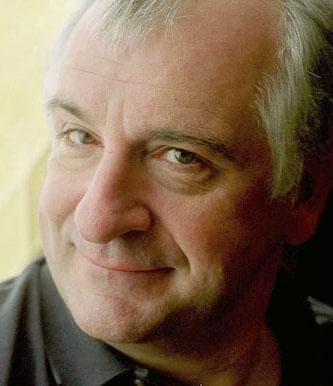
Douglas Noël Adams was an English author, humorist, and screenwriter, best known for The Hitchhiker's Guide to the Galaxy. Originally a 1978 BBC radio comedy, The Hitchhiker's Guide to the Galaxy developed into a "trilogy" of five books that sold more than 15 million copies in his lifetime. It was further developed into a television series, several stage plays, comics, a video game, and a 2005 feature film. Adams's contribution to UK radio is commemorated in The Radio Academy's Hall of Fame.