“When you have hope, you have everything. And you must not lose hope. It is the most important thing.”
— Yoko's mother often reminds her and Ko of the importance of hope during their arduous journey.

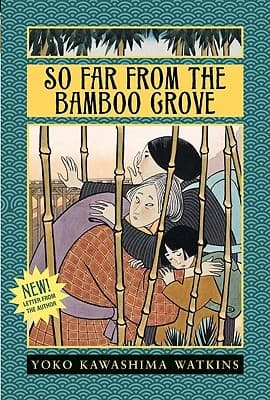
Yoko Kawashima Watkins (1986)
Genre
Children's / Historical Fiction / Young Adult
Reading Time
180 min
Key Themes
See below
Sign in to track this book
Eleven-year-old Yoko, her mother, and her sister begin a difficult journey for survival, leaving their Korean home and its bamboo grove during the chaos of post-WWII liberation.
In August 1945, eleven-year-old Yoko, her older sister Ko, and their mother live a comfortable life in Nanam, northern Korea. Their father works for the Japanese government. Despite being Japanese, Yoko has known no other home. One evening, their father returns with bad news: Japan has surrendered, ending World War II. This news ends their peace, as Japanese people, who occupied Korea for decades, are now targets of Korean anger and violence. Their father, worried for his family's safety, tells them to flee to Japan right away. He and their older brother, Hideyo, who is in the Japanese navy, will follow later. The family must leave their home and beloved bamboo grove.
Following their father's urgent instructions, Yoko, Ko, and Mother pack few belongings and go to the Nanam train station. The atmosphere is chaotic and terrifying; Koreans are openly hostile towards the Japanese, and the station is full of desperate Japanese families trying to escape. They manage to board an overcrowded train heading south, but the journey is full of danger. Korean mobs often stop the train, pulling Japanese passengers off and abusing them. Yoko sees terrible acts, clinging to her mother and sister, as the constant threat of violence is a clear part of their escape.
The train eventually reaches Seoul, a city filled with both fleeing Japanese and vengeful Koreans. The situation gets worse, and during a violent stop or a rush at the station, Yoko and Ko are separated from their mother. Panic sets in as the two young girls are left alone in a foreign, hostile city, without their protector. They must take care of themselves, relying on their wits and any kindness from strangers. The separation is a devastating blow, adding great emotional and physical stress to their already desperate situation, as they now face the journey completely alone.
Alone and without resources, Yoko and Ko decide to walk south towards the port city of Pusan, hoping to find a way to Japan. Their journey is difficult and full of hardship. They walk for days, often without food or clean water, resorting to begging or looking for scraps. They sleep in fields, abandoned buildings, or sometimes, if lucky, are offered shelter by sympathetic Koreans, though this is rare. Both girls suffer from malnutrition and exhaustion. Ko, as the older sister, takes on the responsibility of caring for Yoko, often sacrificing her own well-being to protect her younger sibling, showing great strength and courage.
During their walk, Yoko and Ko meet different kinds of people. Some Koreans, despite the anti-Japanese feelings, offer them food, water, or a safe place to rest, often risking their own safety. These moments of unexpected kindness are lifelines for the girls. However, they also face continued hostility, threats, and close calls with vengeful Koreans. They also meet Russian soldiers, whose presence is frightening and unpredictable, adding more fear and danger to their already uncertain lives. The girls learn to be constantly alert, trusting few and always ready to run.
As their journey continues, Ko's health quickly worsens. Weakened by starvation, exposure, and constant stress, she gets dysentery and becomes too ill to walk. This puts a huge burden on Yoko, who at just eleven, must now care for her sick sister while still trying to find food and safe passage. Yoko's despair grows as she watches Ko suffer, fearing she will lose the only family she has left. She struggles to find medicine or proper food for Ko, often begging or stealing, pushing her own limits of endurance and emotional strength in a desperate attempt to keep her sister alive.
Miraculously, Yoko and Ko are taken in by a kind Korean family, who, despite the risks, provide them with shelter, food, and some basic medical care for Ko. This short period of stability offers a break, but Ko's illness is severe. The family does what they can, but Ko's condition does not significantly improve. The Korean family, understanding the girls' desperate need to reach Japan for better medical attention, advises them to continue their journey to Pusan, despite the dangers. It is a heartbreaking decision to leave their temporary home, but it is their only hope.
With new determination, Yoko continues to carry and support her weakened sister. They eventually reach the busy port city of Pusan, a chaotic place filled with other Japanese refugees desperate to return home. The sight of the sea and the possibility of passage to Japan offers a glimmer of hope after months of unimaginable hardship. However, getting passage is not easy; ships are overcrowded, and resources are scarce. They must deal with bureaucracy and compete with countless others for a spot on a vessel, all while Ko's health remains very fragile.
After much struggle and effort, Yoko and Ko manage to get passage on a ship going to Japan. The voyage itself is another difficulty. The ships are overcrowded, unsanitary, and many passengers are ill or starving. Ko's condition remains critical throughout the journey. Yoko continues to care for her sister, her hopes and fears changing with every wave. The sisters cling to each other, their bond stronger from shared suffering, as they make the final push towards what they hope will be safety and reunion in their homeland.
Yoko and Ko finally arrive in Hakata, Japan. While they are now on Japanese soil, their difficulties are far from over. They are refugees in their own country, with no home, no money, and no news of their father or brother. Ko is immediately hospitalized, her life still uncertain. Yoko, alone once more, faces the difficult task of navigating post-war Japan, searching for relatives, and trying to rebuild a life from nothing. The war may be over, but for Yoko and Ko, the struggle for survival and the search for family continue in a devastated homeland.
The Protagonist
Yoko transforms from a sheltered child to a resilient survivor, demonstrating incredible strength and selflessness in the face of extreme adversity.
The Supporting
Ko evolves from a strong, protective figure to a frail, dependent one, underscoring the devastating impact of war and hardship.
The Supporting
Her arc is one of separation, desperate search, and eventual reunion, demonstrating her unwavering maternal love.
The Mentioned
His arc is one of initial decision-making and subsequent prolonged separation from his family, with the hope of eventual reunion driving the girls.
The Mentioned
His arc is largely off-page, representing the unknown fate of many individuals during wartime.
The Supporting
A brief but impactful appearance, demonstrating a moment of cross-cultural empathy.
The Supporting
They provide a temporary, life-saving sanctuary, embodying selfless kindness amidst conflict.
The most important theme is the strong will to survive despite great hardship. Yoko and Ko endure starvation, illness, constant fear, and threats of violence, yet they keep going. Their strength is shown through their continuous movement, their search for food, and their firm decision to reach Japan. Scenes of Yoko carrying her sick sister, or begging for food, show their fight for life. This theme highlights how humans can endure and overcome even in the worst situations.
“Even though I was only eleven, I knew I couldn't give up. I had to keep Ko alive, and we had to get to Japan.”
The novel clearly shows the terrible effects of war, not just on soldiers but on innocent civilians, especially children. The girls see extreme violence, lose their home, are separated from their family, and become refugees in a hostile land. The constant threat of Korean mobs, the desperation of other Japanese refugees, and the physical suffering they experience all highlight the widespread cruelty and chaos that war brings. Their displacement from a comfortable life to one of constant fear shows the deep disruption caused by conflict.
“The war was over, but for us, the war had just begun.”
The deep love and loyalty within the Kawashima family drive much of the story. The initial separation from their father and brother, and then their mother, leaves Yoko and Ko relying only on each other. Ko's protective instincts towards Yoko, and later Yoko's selfless care for the sick Ko, show deep sibling love and sacrifice. The lasting hope of reuniting with their parents and brother fuels their journey. The mother's early efforts to protect her children also show the theme of parental sacrifice.
“As long as we had each other, we could keep going.”
Throughout their journey, Yoko and Ko experience both extreme cruelty and unexpected kindness. While many Koreans are hostile and vengeful, some individuals risk their own safety to offer the girls help, food, or shelter. The contrast of violent mobs with the kind Korean man on the train or the compassionate Korean family who shelters them shows the complex nature of humanity, even during times of intense conflict and ethnic hatred. It shows that individual empathy can go beyond group animosity.
“For every cruel face, there was sometimes a kind one, a reminder that not all people were the same.”
The story is told from Yoko's perspective, enhancing emotional impact.
The use of first-person narration allows the reader to experience the events directly through Yoko's eyes and emotions. This perspective creates a strong sense of empathy and immediacy, making the horrors and triumphs more personal and impactful. It allows for a child's innocent yet increasingly mature observations of a brutal world, highlighting the contrast between her age and the atrocities she witnesses. This device makes the story feel authentic and deeply moving.
The physical journey mirrors the characters' emotional and psychological transformation.
The arduous physical journey from Nanam, Korea, to Hakata, Japan, serves as a powerful metaphor for Yoko and Ko's transformation. Each step, each obstacle, and each act of survival contributes to their emotional and psychological development. The journey represents their loss of innocence, their struggle for identity as displaced Japanese, and their resilience. It's not just a path from one place to another, but a passage through trauma and growth, ultimately leading to a changed understanding of themselves and the world.
The bamboo grove represents lost peace and the safety of home.
The bamboo grove at Yoko's home in Nanam is introduced as a place of peace, beauty, and security. Its forced abandonment symbolizes the loss of their childhood, their home, and the idyllic life they once knew. It becomes a poignant image of what was left behind and what can never be fully recovered. The memory of the bamboo grove serves as a constant contrast to the harsh realities of their journey, emphasizing the profound sense of displacement and longing for a lost past.
The father's urgent warning sets the tone for the impending dangers.
The father's initial, urgent command for his family to flee, coupled with his grim demeanor, immediately foreshadows the extreme dangers they are about to face. This early warning establishes a sense of dread and impending doom, preparing both the characters and the reader for the brutal realities of their escape. It creates immediate tension and underscores the severity of the post-war situation for Japanese civilians in Korea, validating the subsequent horrors the girls endure.
“When you have hope, you have everything. And you must not lose hope. It is the most important thing.”
— Yoko's mother often reminds her and Ko of the importance of hope during their arduous journey.
“We must always be kind to others, even if they are not kind to us. That is the way of a good person.”
— Yoko's mother teaches her children about the importance of kindness amidst hardship and prejudice.
“Just remember, the sun always rises. No matter how dark the night, morning always comes.”
— A comforting phrase from their mother, intended to give Yoko and Ko strength during their darkest times.
“My mother always told me, 'Yoko, you must always be strong. You must never give up.'”
— Yoko reflects on her mother's persistent encouragement to remain strong despite the overwhelming challenges.
“We were not just running from the war; we were running for our lives, for our future.”
— Yoko describes the desperate nature of their escape from Nanam and the constant threat they faced.
“A good education is the most important thing you can have. No one can ever take that away from you.”
— Their mother emphasizes the lasting value of education, even when they have lost everything else.
“Even when you are afraid, you must try to be brave. It is not about not being afraid, but about acting despite it.”
— Their mother's lesson to Yoko and Ko on true bravery in the face of fear.
“The memory of food was sometimes more painful than the hunger itself.”
— Yoko describes the intense suffering caused by starvation and the cruel irony of remembering past meals.
“We were Japanese, and they were Koreans, but we were all human beings, suffering the same way.”
— Yoko observes the shared humanity and suffering among different groups during the war.
“My mother's strength was not in her muscles, but in her spirit.”
— Yoko reflects on her mother's incredible mental and emotional fortitude throughout their journey.
“Sometimes, the smallest kindness can make the biggest difference.”
— Yoko and Ko experience moments where small acts of generosity from strangers provide crucial help.
“I learned that tears are not a sign of weakness, but a way to let out the pain.”
— Yoko's personal realization about the emotional release and validity of crying.
“Home was not a place anymore, but a feeling, a memory.”
— Yoko contemplates the loss of her physical home and how the concept of 'home' transformed for her.
“To forgive is to set a prisoner free and discover that the prisoner was you.”
— While not directly stated in the book by a character, the sentiment of overcoming bitterness and finding peace through letting go of past grievances is a core theme in Yoko's eventual journey.
Ready to see how well you understood this book? Take our interactive quiz with 10 questions.

Biography coming soon.

Dan Gemeinhart
4.5

Kate O'Hearn
4.4

Jeanne Birdsall
4.4

Jen Wang
4.4

Wendelin Van Draanen
4.3

John Marsden
4.3

Chris Van Allsburg
4.3

Jennifer A. Nielsen
4.2