“Fe didn't know how long she had been gone, or where she had been. She only knew that she had come back changed, and that the world had changed around her.”
— Describing Fe's miraculous return from death and her subsequent transformation.

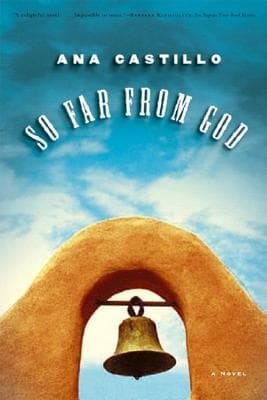
Ana Castillo (1993)
Genre
Literary Fiction / Fantasy
Reading Time
360 min
Key Themes
See below
Sign in to track this book
In the New Mexico village of Tome, Sofia and her four daughters live lives where the sacred and the everyday, the miraculous and the normal, are woven together.
The story begins in Tome, New Mexico, with the funeral of Sofia's youngest daughter, Francisca, known as La Loca. She had been ill and seemed to die. During her wake, as mourners gathered, La Loca suddenly sat up in her coffin, surprising everyone. She said she had been to heaven and returned, but she was now changed. From then on, La Loca refused to wear shoes, eat meat, or leave the family's property. She spent her life in prayer and talking with the spiritual world. Her return changed the family's life, adding a strong miraculous and supernatural element to their challenging lives in rural New Mexico.
Esperanza, Sofia's second daughter, is the most educated and driven. She wants to leave Tome. She becomes a journalist, working as a television news reporter. Her work takes her to war zones in the Middle East, a contrast to her early life. Despite her mother's worries and the family's requests for her to come home, Esperanza stays committed to her career and finding truth. Her time abroad shows her much suffering and the harsh realities of global conflict. She reports on these bravely, often risking her life for her job and the stories she believes need telling.
Fe, Sofia's third daughter, is a careful and organized young woman who works as a bank teller. She is engaged to Manuel, and her life seems stable. However, just before her wedding, Manuel calls off the engagement, leaving Fe heartbroken and publicly embarrassed. The shock and sadness cause a mysterious illness. She starts screaming uncontrollably and constantly, a sound that makes her family desperate and afraid. Doctors cannot diagnose or treat her condition, which seems more spiritual or mental than physical. Her family struggles with her unexplained suffering.
Caridad, Sofia's oldest and most free-spirited daughter, is known for her beauty and adventurous nature. After a night out, she is attacked and left for dead in a field, her body hurt and her spirit broken. A curandera, a traditional healer, finds her and helps her recover physically. However, Caridad's recovery is long and hard, marked by deep mental trauma. During her healing, she has a spiritual awakening, developing healing powers and a stronger intuition. She becomes a curandera herself, helping others, but remains hurt by her past.
Amidst her daughters' tragedies, Sofia, the mother, remains strong. She cares for her ailing children, Fe and La Loca, and also supports the family financially. She shows her resourcefulness by starting a successful sheep cheese business called 'Malinche's Best.' This business provides income and becomes a symbol of her determination to define her identity and her family's future. Sofia's faith, practical sense, and business spirit are central to the family's survival and provide stability amidst chaos and supernatural events.
The family receives bad news: Esperanza has been killed while working in the Middle East. Her death hits hard, especially for Sofia, who had always worried about her adventurous daughter. The news confirms Sofia's fears and adds more grief and loss to the family's burdens. Esperanza's body is returned to Tome, and her funeral is sad, marking the loss of the daughter who went furthest from home for her dreams. Her death shows the dangers of the outside world and the sacrifices made for truth and ambition.
After her recovery, Caridad travels with the curandera who saved her, improving her own healing abilities. She meets a mysterious and beautiful woman named Esmeralda. Their connection is immediate and deep, growing into a spiritual love. Esmeralda, a powerful figure, becomes Caridad's companion. Together, they go on a journey of healing and self-discovery, seeking a deeper connection to the land and to each other. Their relationship is shown as special, giving Caridad a sense of peace and belonging she had long sought after her traumatic experience.
Caridad and Esmeralda's spiritual journey leads them to a sacred cliff, a place of power. In a mystical event, they climb the cliff and disappear, seemingly becoming part of the landscape or going to another dimension. Others witness their disappearance, but no trace of them is found. This event leaves the family, especially Sofia, with sorrow and wonder. It is unclear if they died, ascended, or simply changed their earthly forms, leaving behind a legacy of spiritual love and mystery, adding to the supernatural elements in the family's story.
Fe's unexplained screaming illness continues, draining her life. Despite all efforts, her condition worsens, and she eventually dies from her mysterious ailment. Her death is a quiet tragedy, a slow decline that leaves the family heartbroken. La Loca, who had been praying for Fe, is deeply affected by her sister's death. It challenges her faith and her understanding of her own spiritual powers. Fe's passing shows the limits of earthly treatments and the deep suffering that can exist beyond normal explanation, emphasizing the theme of unexplained affliction.
After Fe's death, La Loca's health also declines. She has a powerful final vision, a glimpse of heaven where she sees her sisters, Esperanza, Fe, and Caridad (with Esmeralda), reunited in peace and joy. This vision brings her comfort and a sense of completion. Soon after, La Loca dies peacefully, finishing her life and her unique spiritual journey. Her death, unlike her first return, is a quiet return to the spiritual world, suggesting a final, peaceful reunion with her sisters, ending the chapter on the lives of Sofia's four daughters.
Despite her many losses, Sofia remains strong. She continues her successful cheese business, which shows her resilience. More importantly, she becomes a community leader and activist, organizing women in Tome to address social and political injustices. She speaks for the marginalized, fighting for environmental protection and against the exploitation of her community. Sofia's journey ends with her transformation from a grieving mother to a strong matriarch and community organizer, showing her spirit and commitment to her family and her people, ensuring their legacy continues.
The Protagonist
From a traditional mother enduring tragedy, Sofia transforms into a resilient entrepreneur and community activist, finding her own voice and power.
The Supporting
Resurrected as a spiritual being, La Loca lives a life of profound faith and eventually passes away peacefully after a final vision.
The Supporting
Esperanza leaves home to pursue a career in journalism, only to tragically die while reporting in a war zone.
The Supporting
Fe's life is tragically cut short by a mysterious, incurable illness that manifests after a broken engagement.
The Supporting
After enduring horrific violence, Caridad undergoes a spiritual awakening, becoming a healer and finding transcendent love before mysteriously disappearing.
The Supporting
Domingo remains largely static, a flawed but occasionally present father figure, whose struggles with addiction persist.
The Supporting
Esmeralda appears as a catalyst for Caridad's final spiritual ascension, sharing a transformative love with her.
The Supporting
Doña Felicia serves as a mentor and healer, guiding Caridad through her recovery and spiritual transformation.
The novel includes strong spiritual themes, mixing Catholic traditions with indigenous beliefs and magical realism. La Loca's return, her life of prayer, and her ability to talk with saints are central. Caridad's healing powers, her connection to nature, and her disappearance with Esmeralda into the cliff show more mystical elements. Characters often turn to prayer, curanderas, and spiritual understanding to deal with unexplained tragedies, showing a world where the sacred is always present and part of daily life in Tome.
“La Loca, with her bare feet and her eyes that saw beyond the veil, was a constant reminder that their world was not just the one they could touch and see.”
The Compean family experiences many losses, including the deaths of three daughters (Esperanza, Fe, and La Loca) and Caridad's attack and disappearance. Each loss brings deep sadness, yet Sofia, the mother, shows great resilience. She constantly adapts, cares for her children, and turns her sorrow into community activism and business. The novel explores how people cope with sorrow, finding strength in faith, family, and a will to keep living and fighting for a better future, even when feeling 'so far from God.'
“Sofia knew that grief, like the desert wind, would eventually settle, leaving behind only the grit of memory.”
Each of Sofia's daughters deals with her own identity. Esperanza seeks it through a career outside Tome, Caridad through trauma and spiritual healing, and Fe through trying to live a normal life. La Loca's identity comes from her miraculous return and her spiritual calling. Sofia herself goes on a journey of self-discovery, moving from a traditional wife and mother to an independent businesswoman and activist. The novel suggests that identity is not fixed but is shaped by experience, suffering, and connection to one's heritage and community, often going against what society expects.
“Sofia, too, was finding a new definition for herself, one that went beyond wife and mother, one that spoke of malinche, of entrepreneur, of activist.”
The novel focuses on the lives of women in a male-dominated society, showing their strength, suffering, and power. Sofia's struggle to raise her daughters and support her family while Domingo is absent shows her heavy burden and resilience. The daughters' different paths—Esperanza's career, Fe's domestic hopes, Caridad's spiritual healing, and La Loca's devotion—represent different ways of being a woman. The support among women, especially through the curandera Doña Felicia, highlights the power of female bonds and traditional healing in a world often run by men and Western medicine.
“It was the women who held the family together, women who knew how to make something out of nothing, women who healed with their hands and their hearts.”
The setting of Tome, New Mexico, and the broader Chicano experience are central to the novel's themes. The story combines Spanish, Indigenous, and Mexican-American cultural elements, from language to the spiritual practices of curanderismo. The land itself is shown as alive, full of history, spirituality, and healing power, affecting the characters' lives and spiritual journeys. Sofia's decision to start a sheep cheese business named 'Malinche's Best' directly addresses and reclaims a controversial figure from Mexican history, symbolizing a reclaiming of cultural identity and power in New Mexico.
“The land of New Mexico was not just dirt and rock; it was memory, it was spirit, it was the very blood that ran through their veins.”
Blends the mundane with the miraculous as an integral part of reality.
Magical realism is the defining narrative technique in 'So Far from God.' Events like La Loca's resurrection from her coffin, Caridad's spiritual healing and mysterious disappearance with Esmeralda into a cliff, and Fe's unexplained screaming illness are presented as natural occurrences within the world of the novel. These fantastical elements are interwoven seamlessly with the everyday struggles of the Compean family, such as Sofia's cheese business and Esperanza's journalism, blurring the line between the real and the supernatural. This device allows Castillo to explore themes of spirituality, trauma, and cultural identity in a uniquely expressive way, reflecting a worldview where the sacred and the mundane coexist.
The lasting impact of historical and personal suffering across generations.
The novel explores how trauma, both historical (colonialism, displacement) and personal (violence, loss), affects the Compean family across generations. Caridad's brutal attack and subsequent spiritual transformation are a direct manifestation of this. The sisters' various struggles, from Fe's inexplicable illness to Esperanza's tragic death, can be seen as echoes of past suffering and the weight of their heritage. Sofia, as the matriarch, carries the burden of her daughters' pain, while also representing the resilience forged through generations of hardship. This device highlights the deep-seated wounds that shape individual and collective identity, particularly within marginalized communities.
Character names reflect their fate or defining characteristic.
The names of Sofia's daughters are highly symbolic and directly foreshadow or reflect their destinies and personalities. Esperanza (Hope) is the adventurous journalist who travels far but ultimately dies, perhaps extinguishing hope. Fe (Faith) is the orderly one whose faith is tested by a mysterious illness and tragic death. Caridad (Charity) is the one who suffers greatly but becomes a healer, embodying compassion. La Loca (The Crazy One) is resurrected and dedicates her life to spiritual devotion. Sofia (Wisdom) is the matriarch who provides stability and guidance. This device enriches the narrative by giving deeper meaning to each character's journey and contribution to the overall family saga.
Traditional Indigenous and Mexican healing practices as a source of power and care.
Curanderismo, the traditional system of folk healing, serves as a significant plot device and cultural touchstone. Doña Felicia, the curandera who saves and mentors Caridad, embodies this practice. Her methods, which include herbal remedies, spiritual rituals, and intuitive guidance, stand in contrast to Western medicine, which often fails to understand or treat the family's more mystical ailments (like Fe's screaming). This device emphasizes the importance of indigenous knowledge, community care, and a holistic understanding of health that encompasses the spiritual, emotional, and physical, offering healing where conventional science cannot.
“Fe didn't know how long she had been gone, or where she had been. She only knew that she had come back changed, and that the world had changed around her.”
— Describing Fe's miraculous return from death and her subsequent transformation.
“La Loca didn't go to church, but she always knew when it was Sunday. The air felt different, the light was softer, and the sound of the bells carried further.”
— Illustrating La Loca's unique spiritual connection to the world around her, despite not being conventionally religious.
“Sofia expected her daughters to be strong, like the women of her family always had been. But strength could take many forms, and sometimes it was just holding on.”
— Sofia's reflection on her daughters' struggles and the various manifestations of resilience.
“Caridad knew that some things, once broken, could never be put back together exactly the same way. But sometimes, what emerged was even more beautiful.”
— Caridad's philosophical outlook after experiencing immense trauma and healing.
“It was a land of extremes, of harsh beauty and sudden violence, where life was both fragile and fiercely persistent.”
— A general description of the New Mexico landscape and its influence on the characters' lives.
“Sometimes, the only way to find your way back was to get lost completely.”
— A recurring theme reflecting the characters' journeys of self-discovery through hardship and disorientation.
“Every woman carried a secret garden within her, where her truest self bloomed, sometimes hidden, sometimes in plain sight.”
— A metaphorical statement about the inner lives and hidden depths of women.
“The past was not a place to live, but a place to visit, to learn from, and then to leave behind.”
— Sofia's perspective on dealing with past traumas and moving forward.
“Esmeralda believed in magic, not the kind with wands and spells, but the kind that lived in the everyday, in coincidences and whispered prayers.”
— Illustrating Esmeralda's unique, grounded understanding of magic in her world.
“They were all searching for something, a piece of themselves they had lost, or a future they hoped to find.”
— A generalized observation about the motivations and struggles of the main characters.
“The desert taught you patience, and it taught you to appreciate the smallest drop of water, the slightest shade.”
— Reflecting on the wisdom gained from living in the harsh desert environment.
“Is it a sin to want to be happy? Or is it a sin not to try?”
— A poignant question posed by one of the characters, grappling with personal desires and societal expectations.
“Sometimes, the greatest acts of rebellion were quiet ones, a refusal to conform, a stubborn insistence on being oneself.”
— Highlighting the subtle yet powerful forms of resistance practiced by the women.
“They were women of the earth, rooted and resilient, capable of both great sorrow and immeasurable joy.”
— A summary of the enduring spirit and complex emotional landscape of the female characters.
Ready to see how well you understood this book? Take our interactive quiz with 10 questions.
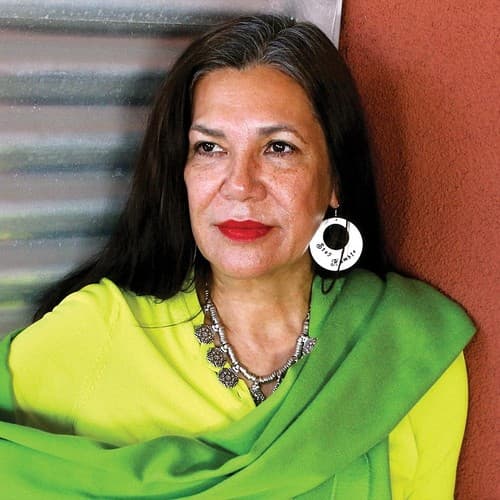
Ana Castillo is a Chicana novelist and poet known for her exploration of feminist and Mexican-American themes. Her groundbreaking novel, "So Far from God," is celebrated for its magical realism and unflinching portrayal of women's lives. Castillo's work often delves into issues of identity, culture, and social justice, earning her a significant place in contemporary American literature.







