“A girl is a guest in her father's home, a slave in her husband's.”
— A common proverb and belief about the role of women in society.

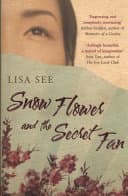
Lisa See (2011)
Genre
Historical Fiction
Reading Time
420 min
Key Themes
See below
Sign in to track this book
In 19th-century rural China, two girls navigate the brutal beauty standards of footbinding and the solace of a secret women's language, forming a lifelong bond tested by societal change and personal betrayal.
In 1823, in a remote Hunan village, eight-year-old Lily (narrating as Old Lily) thinks about her life. Her family, humble farmers, are surprised when the matchmaker, Madame Gao, says Lily's feet are perfectly shaped for footbinding, promising a good marriage. At the same time, Madame Gao arranges a laotong match for Lily with Snow Flower, a girl from a respected but declining family in Tongkou. This bond, sealed by a contract, is meant to last a lifetime, giving emotional support in a restrictive society. Lily is at first impressed by Snow Flower's beauty and poise, feeling less important due to her own family's lower status. Their friendship, however, begins to grow through shared experiences and the secret language of nu shu.
Both Lily and Snow Flower go through the painful process of footbinding, a tradition thought essential for a woman's marriage and status. Lily's mother carefully binds her feet, breaking bones and causing great pain, but eventually achieving the desired three-inch 'golden lilies.' Snow Flower, from a wealthier family, has her feet bound by a professional, resulting in equally tiny but perhaps less perfectly shaped feet. This shared experience creates a strong bond between the girls, as they comfort each other through the suffering. The pain and the expectation of beauty and status from this practice show the extreme societal pressures on women in 19th-century China, solidifying their shared fate.
As part of their laotong bond and preparation for womanhood, Lily and Snow Flower learn nu shu, the secret women's writing. This unique script, passed down through generations of women, lets them express their true feelings, frustrations, and joys in a world where their voices are often silenced. They write letters to each other on fans and embroidered handkerchiefs, sharing their experiences with footbinding, their hopes for marriage, and their observations of the world around them. Nu shu becomes their private place, a lifeline for their deep emotional connection, helping them navigate the rules of their patriarchal society with a shared understanding and closeness no one else can comprehend.
At age sixteen, Lily marries the son of the powerful Lu family, a wealthy and respected match that fulfills the promise of her perfect feet. She moves to the Lu household, where she quickly adapts to her new role as a wife and future matriarch, giving birth to children. Snow Flower, however, marries into the Tong family, which, despite its past prestige, has fallen on hard times. Her husband is a butcher, a low-class profession, and her life is one of hardship and poverty. This sharp difference in their fortunes strains their laotong relationship, as Lily struggles to understand her comfortable life alongside Snow Flower's increasing difficulties, leading to a growing distance between them.
During a time of political unrest and rebellion, the Lu family must flee their home and seek safety. This difficult period shows Lily the harsh realities of displacement and fear. They endure a difficult journey, living in temporary shelters and facing uncertainty. Lily, now a mother, must protect her children and help the family survive. During this time, opportunities for her and Snow Flower to communicate via nu shu become rare, deepening the emotional gap that has begun to form due to their different situations. The rebellion acts as a physical and emotional wedge, challenging their lifelong bond.
As years pass, Lily begins to misinterpret Snow Flower's nu shu letters, especially those written during the rebellion. Snow Flower writes about her struggles, her husband's family, and the difficulties of her life as a butcher's wife. Lily, seeing these letters through her own comfortable life and societal expectations, believes Snow Flower is complaining about her fate and implicitly criticizing Lily's good fortune. She sees Snow Flower's expressions of hardship as a lack of resilience or even a veiled accusation. This misunderstanding, fueled by their different experiences and Lily's own insecurities, causes a significant rift in their relationship, leading to a period of coldness and distance.
A destructive typhoon sweeps through the region, causing widespread damage. Snow Flower's village is hit hard, and her already poor family suffers greatly. The typhoon destroys their home and livelihood, leaving them in an even worse situation. While Lily's family, due to their wealth, recovers more quickly, Snow Flower's struggles increase. This natural disaster shows the vast difference in their lives and the depth of Snow Flower's suffering. It also further isolates Snow Flower, making it harder for her to reach out and for Lily to truly understand the extent of her friend's trouble.
Years after their last true connection, Lily learns that Snow Flower is gravely ill and near death. Feeling guilty and desperate to see her laotong one last time, Lily travels to Snow Flower's poor village. This journey forces Lily to confront the stark reality of Snow Flower's difficult life, far from the comfort Lily enjoys. Seeing Snow Flower's suffering and the poor conditions of her home, Lily begins to understand the true nature of her friend's struggles and the depth of her own misjudgment. This visit is a turning point, as Lily deals with her past coldness and the imminent loss of her dearest friend, prompting a painful realization of her own errors.
As Snow Flower lies dying, she reveals the true meaning behind her nu shu letters and her life's choices. She explains that her seeming complaints were not criticisms of Lily, but honest expressions of her pain and her deep love for Lily, trusting her laotong to understand. Snow Flower clarifies that her marriage to the butcher was not a punishment, but a path of duty and loyalty to her family, a choice she made with grace. Overwhelmed with regret and sorrow, Lily finally understands the full extent of her misinterpretations and the unwavering strength and devotion of Snow Flower's spirit. This revelation shatters Lily's long-held assumptions and exposes the profound depth of her own errors.
Snow Flower dies, leaving Lily consumed by grief and deep regret for her past coldness and misunderstandings. Afterward, Lily dedicates herself to honoring Snow Flower's memory and preserving their shared history. She collects all the nu shu letters, fans, and embroidered pieces, ensuring their unique language and bond are not forgotten. Lily, now an old woman, reflects on her life, her laotong relationship, and the lessons learned. She becomes a storyteller, sharing their tale with younger generations, especially her daughter and granddaughter, passing on the legacy of nu shu and the importance of true friendship, even with its imperfections and challenges. Her final act is to compile their story for future generations.
The Protagonist
Lily transforms from a somewhat self-absorbed young woman into a regretful, wise elder who finally understands the true meaning of love and friendship, dedicating her later life to preserving Snow Flower's memory.
The Co-protagonist/Catalyst
Snow Flower remains steadfast in her character, demonstrating unwavering love and resilience despite a life of increasing hardship, ultimately serving as the catalyst for Lily's profound self-realization.
The Supporting
Her arc is static, representing the unchanging traditions and maternal duty within the patriarchal society.
The Supporting
Her arc is static, serving as an agent of tradition and fate within the narrative.
The Supporting
His arc is static, serving primarily as a symbol of Lily's good fortune and societal success.
The Supporting
His arc is static, embodying the societal misfortune that befalls Snow Flower.
The Supporting
Her arc is static, serving as a wise mentor and keeper of tradition.
The novel explores the deep and often complex bond between women in a patriarchal society where men largely control their lives. The laotong relationship between Lily and Snow Flower provides emotional comfort, understanding, and a unique way to express themselves through nu shu. However, the friendship is also tested by class differences, misunderstandings, and Lily's inability to fully empathize with Snow Flower's hardships. It shows that even the strongest bonds can break under external pressures and internal pride, yet ultimately, the memory of such a friendship can define a life, as seen in Lily's lifelong regret and dedication to Snow Flower's legacy.
“A laotong is for life. It is a friendship made by choice, not by family. It is a bond that no man can break, no family can deny.”
The novel vividly shows the restrictive lives of women in 19th-century China, where their value is mostly determined by foot size and marriage prospects. Footbinding, arranged marriages, and the constant pressure to have male heirs are central to their existence. Despite these immense societal limits, women find ways to act and build internal worlds. Nu shu, the secret women's writing, becomes a symbol of their resilience, allowing them to communicate their true feelings, share their burdens, and create a unique female culture that exists beneath the surface of patriarchal control. Snow Flower, in particular, shows resilience through her quiet endurance of hardship.
“A woman's life is a series of births. First, you are born a daughter. Then you are born a bride. Then you are born a mother. And then, if you are lucky, you are born a grandmother. But a woman is never truly born for herself.”
Social class greatly shapes the destinies of Lily and Snow Flower, deeply affecting their experiences and their friendship. Lily's 'perfect' feet secure her a marriage into a wealthy and respected family, giving her a life of comfort and influence. In contrast, Snow Flower, despite her noble lineage, marries into a poor family with a low-status profession, leading to a life of hardship and poverty. These different paths create a growing gap between the two women, as Lily struggles to understand Snow Flower's difficulties from her privileged position, leading to misunderstandings and the eventual breaking of their bond. The novel highlights how deeply ingrained class distinctions dictated every aspect of life.
“Our lives were like two rivers, flowing side by side. Mine, deep and wide, flowing to the sea. Hers, a narrow stream, caught in the mountains.”
A central theme is the tragic results of misunderstanding and the burden of regret. Lily, due to her own pride, limited view, and societal upbringing, repeatedly misinterprets Snow Flower's nu shu letters and her life choices. She sees Snow Flower's struggles as weakness or complaint, rather than resilience and duty. This leads to a period of coldness and distance in their friendship, which Lily only fully understands on Snow Flower's deathbed. The deep regret Lily feels after Snow Flower's death becomes the driving force behind her later life, as she dedicates herself to understanding and honoring her laotong, turning her sorrow into a legacy of remembrance and a warning about empathy.
“I had judged her by the size of her feet, the poverty of her home, and the shame of her husband's profession. I had judged her by all the things that mattered least.”
A unique phonetic script used exclusively by women to communicate their innermost thoughts.
Nu shu is the most significant plot device, serving as the primary means of communication and emotional expression between Lily and Snow Flower. It allows them to bypass the patriarchal constraints of their society and share their private lives, joys, and sorrows. The nu shu letters and fans are not only physical objects of their bond but also a symbolic representation of female solidarity, resilience, and a hidden world of women's experiences. The misinterpretation of nu shu letters ultimately drives the central conflict and misunderstanding in their relationship, highlighting both its power and its potential for miscommunication.
The painful and traditional practice of binding young girls' feet to create 'golden lilies'.
Footbinding is a crucial plot device that immediately establishes the oppressive societal norms and the limited agency of women. It is both a physical ordeal shared by Lily and Snow Flower, forging an early bond, and a symbolic representation of a woman's value and destiny. Lily's 'perfect' feet secure her a good marriage, while the general practice dictates much of a woman's life path. The pain and sacrifice associated with footbinding underscore the extreme lengths women were expected to go to conform to beauty standards and social expectations, directly impacting their marriage prospects and overall quality of life.
A lifelong sworn sisterhood, an arranged emotional bond between two girls.
The laotong relationship is the foundational plot device, creating the central dynamic of the novel. It is an arranged, lifelong emotional contract between two girls, intended to provide mutual support and companionship in a world where women's lives are otherwise isolated. This bond allows for the deep intimacy and shared experiences between Lily and Snow Flower, which drives the narrative. The evolution and eventual fracturing of this sacred bond, and Lily's subsequent regret, form the core emotional journey of the protagonist, demonstrating the profound significance of such a relationship in their culture.
A physical object used for writing nu shu letters and exchanging messages.
The fan serves as a tangible plot device for communication between Lily and Snow Flower. It is a portable and discreet medium for their nu shu letters, allowing them to exchange thoughts and feelings even when physically separated. The act of writing on and exchanging fans symbolizes their secret world and the intimate nature of their bond. As the story progresses, the fans become repositories of their shared history, their joys, and their misunderstandings, ultimately serving as powerful mementos of their friendship, collected and cherished by Lily in her old age.
“A girl is a guest in her father's home, a slave in her husband's.”
— A common proverb and belief about the role of women in society.
“We women are born to suffer. This is our lot, our fate, our destiny.”
— Lily's reflection on the hardships faced by women, particularly through foot-binding.
“A woman with bound feet is a treasure of the inner chambers.”
— The societal view and value placed on women who underwent foot-binding.
“My duty was to my family, to my husband, to my children. My heart belonged to Snow Flower.”
— Lily's realization about the true depth of her love and connection with Snow Flower.
“The fan was our world, our only true freedom.”
— Describing the secret fan and nu shu as their private means of communication and expression.
“We were not allowed to ask what we wanted, only to say what we were given.”
— Lily reflecting on the lack of agency and choice for women in their lives.
“When we are young, we think we are the only ones who know anything. But as we age, we learn that we are not the first to suffer, and we are not the last.”
— Lily's older, wiser perspective on universal human experience and suffering.
“To be a woman is to be an outsider, even in your own home.”
— A reflection on the liminal status of women, always moving between families and never fully belonging.
“A girl's life is a journey from the outer chamber to the inner chamber, and then to her husband's outer chamber.”
— A metaphor for the progression of a woman's life and her limited sphere of influence.
“We were two halves of one whole, bound by the invisible thread of our nu shu.”
— Lily's description of her profound connection with Snow Flower through their secret language.
“The greatest sorrow is to live without a true friend.”
— Lily's ultimate realization about the value of her bond with Snow Flower, despite their conflicts.
“It is better to be a dog in a peaceful time than a human in a chaotic time.”
— A saying reflecting the harsh realities and desire for stability during periods of war and famine.
“Sometimes, the things we do for love are the very things that cause us the most pain.”
— Lily's reflection on her actions and their impact on her relationship with Snow Flower.
“We were born into a world where a woman's worth was measured by the size of her feet and the sons she bore.”
— A summary of the societal values placed on women in 19th-century China.
Ready to see how well you understood this book? Take our interactive quiz with 10 questions.

Lisa See is an American writer and novelist. Her books include On Gold Mountain: The One-Hundred-Year Odyssey of My Chinese-American Family (1995), a detailed account of See's family history, and the novels Flower Net (1997), The Interior (1999), Dragon Bones (2003), Snow Flower and the Secret Fan (2005), Peony in Love (2007) and Shanghai Girls (2009), which made it to the 2010 New York Times bestseller list. Both Shanghai Girls and Snow Flower and the Secret Fan received honorable mentions from the Asian/Pacific American Awards for Literature.







