“My body was a canvas, and I was the painter, adding new strokes with every piercing and tattoo.”
— Luci's internal monologue about her self-modification.

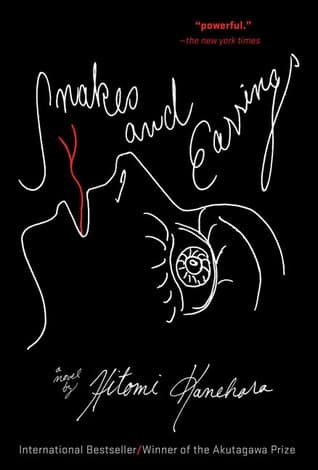
Hitomi Kanehara (2005)
Genre
Young Adult / Romance
Reading Time
90 min
Key Themes
See below
Sign in to track this book
Nineteen-year-old Lui enters Tokyo's underground, changing her body with a forked tongue and dragon tattoo while navigating a dangerous love triangle that blurs the lines between pain and pleasure.
Nineteen-year-old Lui, bored with her life, meets a man named Ama in a nightclub. She is immediately drawn to his unique look, especially his forked tongue and piercings. Feeling a pull to his unconventional life, Lui goes home with him that night. This decision changes her life, pulling her into Ama's world of body modification and extreme living. Her initial interest quickly becomes an obsession, setting the stage for her own journey into self-alteration and a search for meaning.
Fascinated by Ama and wanting to be like him, Lui decides to get her tongue pierced. Ama takes her to his friend Shiba, a piercer and tattoo artist who shares a similar style. The experience is both painful and exciting for Lui, her first step into body modification. This act is more than a physical change; it is an initiation into Ama's subculture and a rejection of her old self. The piercing becomes a symbol of her commitment to this new, extreme life and her growing connection to Ama.
After her tongue piercing, Lui wants more body modifications. She becomes set on getting a large, detailed dragon tattoo covering her back. Shiba, with his skill and mysterious air, is the only one she trusts to create such a significant piece. The dragon tattoo represents a deeper change for Lui, a permanent and visible statement of her new identity. It is about pushing her limits, embracing pain, and finding a sense of belonging in this unconventional world. This new goal further links her life with Shiba's.
As Lui spends more time with Shiba for tattoo meetings, she sees a darker side to him. She witnesses his violent outbursts and aggressive behavior, especially towards other men. Shiba's manner is often intimidating and unpredictable, a contrast to Ama's more passive nature. While unsettling, Lui finds herself drawn to this dangerous edge, seeing it as a raw expression of his being. This exposure to Shiba's violence adds danger to her new life, challenging her ideas of right and wrong.
Despite her relationship with Ama, Lui feels increasingly drawn to Shiba. His intensity, artistic talent, and dangerous appeal are irresistible. During her tattoo sessions, their closeness leads to a secret sexual affair. This relationship is a mix of desire, curiosity, and a need to explore her own experiences. The affair is kept from Ama, creating tension and adding betrayal to Lui's already unconventional life. This illicit relationship highlights Lui's desire for extreme experiences and her willingness to ignore traditional morality.
As Lui spends more time with Shiba, Ama's passive nature turns to suspicion and jealousy. He notices changes in Lui's behavior and her frequent visits to Shiba's studio. Ama does not confront Lui directly, but his discomfort is clear, creating an uneasy feeling in their apartment. His jealousy is not aggressive but shows as quiet resentment and growing emotional distance. This shift in Ama's behavior shows the instability of their living arrangement and hints at coming conflict among the three.
Driven by her desire for extreme body modification and a deeper connection to Ama's style, Lui decides to get her tongue forked, a procedure more significant and painful than her first piercing. Shiba performs the delicate operation, further cementing his role in her transformation. This act is Lui's ultimate commitment to this subculture and her willingness to endure pain for self-expression. The forked tongue becomes the most prominent symbol of her new identity, a permanent change that sets her apart and aligns her with Ama's unique look.
The unspoken tension between Ama and Shiba, fueled by Ama's jealousy over Lui, grows into open hostility. Shiba's violence becomes more obvious, and their interactions grow aggressive. Lui is caught in the middle, a cause for their conflict, yet also an observer of their destructive dynamic. The lines between passion, desire, and aggression blur, creating a dangerous situation. This time is marked by a sense of coming trouble, as the volatile personalities of the three clash, threatening to explode into a violent confrontation that could ruin everything.
The tensions finally erupt in a violent fight between Ama and Shiba. The exact details are unclear, but it results from Ama's jealousy and Shiba's aggression. Lui witnesses the brutality, further exposing her to the harsh realities of the world she chose. This event is a brutal peak, shattering any illusions Lui had about their lifestyle. The violence leaves a lasting impact, forcing Lui to face the dangerous results of her choices and the destructive power of the relationships she has formed.
After the violent fight, Lui is left to cope. The event leaves a deep mark on her, making her think about her choices and the people she let into her life. The future of her relationships with Ama and Shiba is uncertain, as is her own path forward. While the physical changes are permanent, the emotional and psychological scars are fresh. Lui feels empty and unsure, considering the true cost of her pursuit of extreme experiences and the meaning, or lack thereof, she has found in her journey.
The Protagonist
Lui transforms from an uninspired girl into a woman marked by extreme body modifications, seeking to define herself through pain and unconventional relationships.
The Supporting
Ama's initial calm demeanor gradually gives way to jealousy and suspicion as Lui becomes closer to Shiba, leading to an eventual violent outburst.
The Antagonist/Supporting
Shiba remains largely consistent in his violent and intense nature, acting as a catalyst for Lui's transformation and the central conflict with Ama.
The novel explores how people try to define themselves through extreme physical changes and unconventional lives. Lui's journey from a bored, typical girl to a woman with a forked tongue and dragon tattoo shows a radical search for identity. This theme is clear in every piercing and tattoo Lui gets, each a step away from her past self and a deeper dive into a subculture that values extreme self-expression. The pain of these changes is part of becoming, a necessary step in shedding the old and embracing the new.
“She wanted to be someone else, someone utterly different, and the only way she knew how was to tear herself apart and rebuild.”
The story looks at the magnetic but dangerous world of Japan's youth subculture, marked by body modification, casual sex, and violence. This theme is central to the setting and the characters' lives. Lui's initial interest in Ama's world quickly pulls her in, where freedom and intensity are intoxicating, but danger is always present. Shiba, with his artistic skill and violent outbursts, embodies this mix, showing how beauty and brutality can exist together. The story does not avoid the darker outcomes of this lifestyle.
“In this world, beauty and pain were two sides of the same coin, inseparable.”
Pain is not just a result in the novel but something the characters embrace to feel alive and experience strong sensations. Lui actively seeks painful procedures like tongue splitting and tattooing. This theme suggests that in a world seen as numb or meaningless, physical pain can provide a real connection to existence and a heightened sense of self. Descriptions of the piercing and tattooing processes emphasize the agony, but also the rush of adrenaline and the feeling of achievement, highlighting pain's role in their search for meaning.
“The pain was a confirmation, a solid, undeniable fact in a world that often felt unreal.”
The relationships between Lui, Ama, and Shiba are marked by obsession, jealousy, and destructive patterns. Lui's interest in Ama, followed by her affair with Shiba, shows how desire can lead to betrayal and conflict. Ama's quiet jealousy and Shiba's aggressive possessiveness fuel the growing tension, leading to violence. This theme explores the dark side of human connection, where strong attraction can quickly turn into possessiveness and harm. The characters are drawn to each other for their extreme qualities, creating a volatile dynamic where love and violence are intertwined.
“They were tangled in a knot of desire and destruction, each pulling the other deeper into the darkness.”
Physical alterations symbolize internal changes and a search for identity.
The various body modifications—piercings, forked tongue, and tattoos—are not merely aesthetic choices but serve as powerful metaphors for Lui's internal transformation and her journey of self-discovery. Each new alteration marks a deeper commitment to her chosen lifestyle and a rejection of her past self. The pain associated with these procedures symbolizes the suffering and struggle inherent in forging a new identity, while the permanent nature of the modifications reflects the irreversible changes occurring within her psyche. They are outward manifestations of her inner turmoil and her desire to belong to a specific subculture.
Shiba's violent nature and Ama's quiet resentment hint at future conflict.
The narrative subtly foreshadows the eventual violent climax through the established character traits of Shiba and Ama. Shiba's aggressive tendencies and unpredictable outbursts are introduced early, signaling his potential for harm. Similarly, Ama's passive demeanor slowly shifts to quiet jealousy and suspicion as Lui's affair with Shiba develops. These character-driven hints build a sense of impending dread and inevitability, preparing the reader for the eventual confrontation without explicitly revealing the plot. The distinct personalities of the two men, one overtly dangerous, the other subtly simmering, set the stage for their clash.
The story is told entirely from Lui's subjective perspective.
The novel is narrated exclusively from Lui's first-person limited point of view. This narrative choice immerses the reader directly into Lui's subjective experiences, thoughts, and perceptions of the world. It allows for a deep exploration of her internal motivations, her fascination with pain, and her evolving understanding of identity. However, it also means that other characters, like Ama and Shiba, are primarily seen through Lui's lens, often leaving their inner worlds ambiguous and their motivations open to interpretation. This perspective heightens the sense of Lui's isolation and her personal journey.
The dragon tattoo and forked tongue represent power, danger, and transformation.
The imagery of snakes and dragons is deeply symbolic throughout the novel. Ama's forked tongue, reminiscent of a snake, initially draws Lui in, representing a primal, dangerous allure and a break from human normalcy. Lui's eventual forked tongue is a direct emulation, signifying her complete immersion and transformation. The dragon tattoo Lui desires is a powerful symbol of strength, ferocity, and mystical transformation. Both creatures are often associated with the underworld, rebellion, and a potent, untamed energy, mirroring the characters' embrace of a subculture that defies conventional societal norms and embraces a more primal existence.
“My body was a canvas, and I was the painter, adding new strokes with every piercing and tattoo.”
— Luci's internal monologue about her self-modification.
“The pain was a reminder that I was alive, that I was choosing this, that I was real.”
— Luci reflecting on the sensation of her tongue splitting.
“He looked at me as if I was something precious, something he wanted to break.”
— Luci's perception of Ama's gaze early in their relationship.
“The world outside my own skin seemed dull and meaningless compared to the vibrant landscape I was creating within.”
— Luci's focus on her internal and physical transformation.
“I wanted to be consumed, to disappear into someone else's darkness, even if it meant being destroyed.”
— Luci's longing for intense connection and extreme experiences.
“His eyes were like a snake's, ancient and knowing, promising both danger and a strange kind of peace.”
— Luci's initial impression of Shiba.
“Every new scar, every new hole, was a story written on my flesh.”
— Luci's view on her body modifications as personal history.
“The city lights blurred into a beautiful, violent smear, just like my life.”
— Luci's observation of the Tokyo cityscape.
“I didn't want happiness. I wanted intensity. I wanted to feel everything, even the things that hurt.”
— Luci's rejection of conventional desires.
“His touch was like a brand, marking me as his, and I welcomed the burn.”
— Luci's reaction to Ama's physical intimacy.
“The split tongue was a secret language, a symbol of my rebellion against the ordinary.”
— Luci reflecting on the meaning of her tongue modification.
“I was a creature of the night, drawn to the shadows and the strange beauty they held.”
— Luci's self-perception within the Tokyo nightlife.
“Sometimes, the most beautiful things are the ones that are broken.”
— Luci's philosophical observation about beauty and imperfection.
Ready to see how well you understood this book? Take our interactive quiz with 10 questions.