“For it is not the time for the King to be abroad, when his people are in danger.”
— Faery's warning about the King's duties.

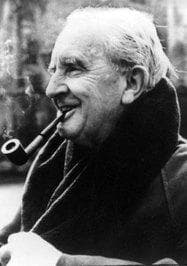
J.R.R. Tolkien (1967)
Genre
Fantasy / Children's
Reading Time
90 min
Key Themes
See below
Sign in to track this book
A young man from a traditional village finds a magical star in his birthday cake, allowing him to enter the dangerous, beautiful land of Faery for a lifetime of adventure.
The village of Wootton Major prepares for its Feast of Good Children, a celebration every twenty-four years where ten-year-olds get a slice of the Great Cake. This cake, known for its magic, is baked by the Master Cook. This time, the current Master Cook, Alf, bakes the cake with his apprentice, Nokes. Years ago, the previous Master Cook, also named Alf, had hidden a small, star-shaped token in the cake for a future child. The children eagerly await their slices, hoping for the cake's wonders.
At the feast, a boy named Smith receives his slice of the Great Cake and finds a small, five-pointed silver star inside. Unlike other children who find trinkets or nothing, Smith's star is special. The star, a gift from the King of Faery, is not just a charm but a key, giving him access to Faery. Smith, not knowing its true power at first, wears the star on his forehead, where it glows faintly, a sign of his unique link to the magical world beyond the ordinary.
As Smith grows, the star lets him glimpse Faery, often without fully understanding what he sees or where he goes. He finds himself in enchanted glades, seeing mythical creatures, and hearing unearthly music. These experiences feel vivid and real, but back in Wootton Major, they often fade into dreams or strong imagination. He learns to play incredibly beautiful music, and his craftsmanship becomes exceptional, hinting at Faery's subtle influence on his talents.
Eventually, Smith learns to use the star to cross into Faery consciously. He discovers he can choose to see the true nature of things, finding magical beings and landscapes usually hidden from mortal eyes. He explores different parts of Faery, meeting its various inhabitants—from beautiful and kind to strange and sometimes dangerous. The star on his forehead becomes a beacon, a welcome sign in many areas and a warning in others, helping him navigate its complexities with some safety and understanding.
Smith travels widely in Faery. He visits lands of eternal spring, dark forests with ancient powers, and mountains where mythical creatures live. He interacts with various beings, sometimes watching, sometimes joining their world. He learns their customs, joys, and sorrows. While he never fully leaves his life in Wootton Major, Faery becomes a second home, a place of wonder and deep experience that broadens his understanding of the world and himself, shaping his art and spirit.
Years pass in Wootton Major; Smith grows older, marries, and has children. His life as a smith continues, but his secret life in Faery deeply influences his craft and wisdom. He is known for his beautiful work, which seems to have an almost magical quality. The star stays with him, a constant companion and source of wonder. He observes the cycles of life and death, both in his village and in the timeless realm of Faery, gaining a unique perspective on existence that few mortals ever achieve.
Decades pass, and the next Feast of Good Children approaches. Smith, now an old man, still wears the star, though its light may have dimmed to mortal eyes. He watches the preparations in Wootton Major with a mix of joy and sadness, remembering his own childhood feast. He understands the event's importance, not just as a village tradition, but as a possible path for another child into the wonders he has known. The Master Cook, now Nokes, prepares the Great Cake, unaware of the star's history.
Knowing the star is not meant for one person forever, Smith makes the hard choice to pass it on. He understands the star's purpose: to grant access to Faery, and it is time for someone else to experience its wonders. He carefully removes the star from his forehead. This act is not about loss, but about deep generosity and understanding the star's true nature as a gift to be shared, ensuring the connection between Wootton Major and Faery continues.
Under cover of night, Smith visits the bakery where the Great Cake is being prepared. With great care and secrecy, he places the star back into the cake, embedding it deep within the dough, just as the King of Faery had done decades before. He makes sure it is positioned to be found by a child at the upcoming feast. This act is a silent, selfless gesture, keeping the magical tradition alive and ensuring the gateway to Faery remains open for a new generation.
At the Feast of Good Children, the cake is cut and given out. A young girl named Tim finds the star in her slice. The narrator notes that though she may not immediately grasp its full meaning, the star will now begin its magic for her, just as it did for Smith. The cycle of wonder and connection to Faery continues, showing the lasting power of the gift and the timeless nature of the magical realm, even as the mortal world of Wootton Major moves forward.
After passing on the star, Smith lives out his remaining years as an old man in Wootton Major. While he no longer holds the physical key to Faery, the experiences and wisdom from his time there remain deeply within him. He continues his craft, his work still showing subtle magic and beauty. He finds peace knowing that Faery's wonder will continue to touch others' lives, and he carries the memories of his extraordinary journeys with contentment, having fulfilled his role as the star-bearer.
The Protagonist
Smith transforms from an innocent boy into a wise old man, deeply shaped by his experiences in Faery, ultimately choosing to pass on his gift for the benefit of others.
The Supporting
The King's arc is less about personal change and more about the enduring nature of his benevolent influence, maintaining the connection between realms.
The Supporting
Nokes' arc is primarily professional, moving from apprentice to Master Cook, embodying the continuity of village tradition.
The Mentioned
Alf's arc is complete before the story truly begins, having fulfilled his duty to the King of Faery.
The Supporting
Tim's arc is just beginning as she receives the star, symbolizing the continuation of the story's central theme.
The Supporting
As a collective, their arc is cyclical, representing the ongoing tradition of the feast and the continuous potential for magic.
The story explores how the ordinary world of Wootton Major connects subtly to the extraordinary realm of Faery. Smith lives a double life, a respected smith in his village and a visitor to Faery. His daily craft becomes better because of his magical experiences, making his work unusually beautiful. This theme appears early with the magical star hidden in the seemingly ordinary Great Cake, a symbol of magic within tradition.
“For the Great Cake was not only a custom but a link, and a door.”
The star is a gift, not something to keep. Smith's journey involves not just experiencing Faery, but understanding the responsibility that comes with such a gift. His final act of putting the star back into the cake shows a deep understanding of stewardship—that true gifts are meant to be shared and serve a purpose beyond personal enjoyment. This theme is central to Smith's character and the story's ending.
“He knew that the Star was not his own, to keep for ever, or to give to whom he chose.”
The story begins with children at a feast, highlighting an inborn capacity for wonder. Smith's first experiences of Faery are like vivid dreams, blurring reality, much like childhood imagination. As he ages, his understanding of Faery deepens, moving from simple wonder to a deep wisdom about its beauty, dangers, and place in the world. His journey reflects growth from innocent perception to a mature, responsible engagement with magic, without losing the initial sense of awe.
“He had seen wonders and terrors, and he had learned wisdom, and he had made things of beauty.”
The Feast of Good Children happens every twenty-four years, marking the passage of generations and life's cycles. Smith's story covers several feast cycles, showing how people come and go, but traditions and the magical connection last. His choice to return the star to the cake ensures Faery's link continues, emphasizing that while individual lives are short, the spirit of wonder and magic can persist through time, passed from one generation to the next.
“So the Feast came again in its turn, and the Master Cook baked the Great Cake, and the children came.”
A ceremonial cake that acts as a conduit for magic and a marker of tradition.
The Great Cake is the central plot device, serving as the literal and symbolic link between Wootton Major and Faery. It is the vessel in which the star is hidden, and its distribution marks the beginning of a child's magical journey. Beyond its magical role, it also represents the enduring traditions of the village and the cyclical nature of time. Its preparation and consumption are ritualistic, emphasizing the importance of community and the subtle presence of magic within everyday life.
A magical token that grants its bearer access to the realm of Faery.
The star is the primary magical object in the story. It is not merely a charm but a key, a beacon, and a mark of privilege. It allows Smith to perceive and enter Faery, guiding him and protecting him. Its temporary nature, meant to be passed on, highlights the theme of stewardship and the idea that magic is a gift to be shared, not hoarded. The star's faint glow and its ability to disappear and reappear underscore its otherworldly nature.
A recurring village festival that functions as a magical lottery and rite of passage.
The Feast of Good Children serves as a narrative device to initiate the magical journey for a chosen child every twenty-four years. It provides a structured setting for the transfer of the star and signifies a rite of passage for the children turning ten. Its regular occurrence emphasizes the cyclical nature of the story and the enduring presence of magic within the community's traditions, providing a framework for the story's timeline and the star's transmission.
A magical, parallel world that exists alongside the mortal realm.
Faery is a distinct plot device, acting as the setting for Smith's extraordinary adventures and the source of the story's magic. It is a world of wonder and beauty, but also of potential peril and mystery, existing just beyond the veil of mortal perception. Its existence provides the contrast to the mundane village life of Wootton Major, allowing for the exploration of themes like wonder, wisdom, and the intertwining of different realities. It is the destination and the ultimate teacher for the star-bearer.
“For it is not the time for the King to be abroad, when his people are in danger.”
— Faery's warning about the King's duties.
“But a man must have a star, or he is nothing.”
— Smith reflecting on the importance of his Star.
“The great Cake was divided into twenty-four pieces, one for each year of the child's life, and one over for luck.”
— Description of the traditional Great Cake at the Feast of Good Children.
“For the things of Faery are not like the things of the world, and they do not always come when called.”
— The nature of Faery and its unpredictability.
“But there are always some who are more than others, and they must carry the burden.”
— The Master Cook explaining the special role of some individuals.
“And it is not well to meddle too deeply with things that are not of your kind.”
— Warning about the dangers of interfering with Faery.
“For a gift given, however small, may bear fruit beyond all reckoning.”
— The unexpected power of a simple gift.
“The great world, for all its wonders, can be a lonely place without a friend.”
— Smith's realization about companionship.
“And so, when the time came, the Star passed on, as all things must.”
— The inevitable passing of the Star from Smith to another.
“It is a strange thing to be a child, and stranger still to grow old.”
— Reflections on the passage of life.
“For the best of gifts are those that are given freely, and not demanded.”
— The nature of true generosity.
“There are things in the world that cannot be explained, but only felt.”
— Acknowledging the mystery of certain experiences.
“And sometimes, even the smallest of creatures can hold the greatest of secrets.”
— A hidden truth revealed by an unassuming source.
“For the true journey is not just out and back, but within and through.”
— The deeper meaning of Smith's travels.
Ready to see how well you understood this book? Take our interactive quiz with 10 questions.
Biography coming soon.







