“The dead can't speak, but their bodies tell tales.”
— Gus Saenz reflecting on the victims and the clues their bodies provide.

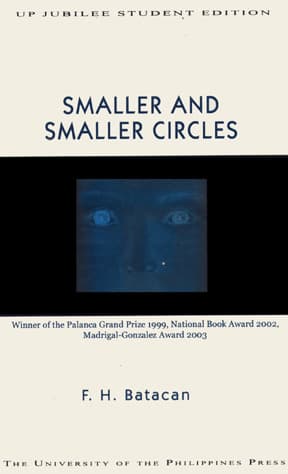
F.H. Batacan (2015)
Genre
Thriller / Mystery
Reading Time
150 min
Key Themes
See below
Sign in to track this book
In the dark underbelly of Manila, a Jesuit priest with a past and a sharp mind for forensics hunts a serial killer preying on street children, exposing the city's corrupt institutions and the church's own shadowed secrets.
In the sprawling, impoverished community of Payatas, Manila, two young scavenger boys find the dismembered body of a young boy amidst the refuse. The corpse, missing several organs, is reported to Deputy Director Francisco Lastimosa. The discovery creates fear and confusion in the community, showing the vulnerability of its residents. The initial police response lacks proper forensic procedure, leading to a contaminated crime scene. The case is mishandled, with authorities more concerned with appearances than investigation, setting a frustrating tone for the search for justice.
Fr. Gus Saenz, a Jesuit priest and skilled forensic anthropologist, is reluctantly drawn into the investigation. He is known for his sharp intellect and unconventional methods, often clashing with the rigid structures of the church and police force. He is accompanied by his younger protégé, Jerry Acuzar, a psychologist grappling with his own personal demons and the grim realities of their work. Joanna Bonifacio, a journalist, requests their expertise, seeing it as the only hope for truth. Their initial assessment of the crime scene and victim's remains immediately points to a serial killer with specific, ritualistic tendencies, a conclusion the local police are slow to accept.
Before police can properly process the first crime scene, another child's body is discovered, bearing similar horrific mutilations. This second discovery confirms Fr. Gus's initial suspicions: a serial killer is preying on the children of Payatas. Public and media pressure mounts, fueled by Joanna Bonifacio. Fr. Gus and Jerry are given more leeway to conduct their own investigation, though they still face resistance and skepticism from within the police department, especially from Director Lastimosa, who cares more about public image than solving the case through proper forensic methods.
Fr. Gus and Jerry meticulously examine the bodies, noting the precise nature of the excisions and signs of struggle. Fr. Gus, with his understanding of human anatomy and psychology, begins to profile the killer. He hypothesizes that the killer is likely male, organized, with some knowledge of anatomy, and driven by compulsion rather than simple rage. Jerry uses his psychological insights to interpret behavioral patterns suggested by the crime scenes. They also note the unusual cleanliness of the excisions, suggesting surgical precision, which further complicates the profile and narrows down potential suspects.
Throughout their investigation, Fr. Gus and Jerry confront deep problems within the Philippine justice system. Bureaucracy, corruption, and lack of resources constantly impede their progress. Director Lastimosa, concerned with his public image and pleasing political superiors, often obstructs their efforts, prioritizing quick arrests over thorough investigation. Evidence is mishandled, leads are ignored, and valuable time is lost due to internal politics and incompetence. This systemic failure highlights the contrast between the dedication of Fr. Gus and Jerry and the apathy of the institutions they work with.
Recognizing the limitations of official channels, Fr. Gus and Jerry take their investigation directly to Payatas. They spend time talking to residents, particularly the children, understanding their daily lives, fears, and community dynamics. They learn about local superstitions, poverty, and the children's vulnerabilities. This grassroots approach allows them to uncover crucial details and gain community trust, something the police, with their detached approach, fail to achieve. They discover that the killer is likely someone familiar with the area and its inhabitants.
Under immense public pressure, Director Lastimosa orders the arrest of a mentally challenged man from Payatas, presenting him to the media as the perpetrator. This move is a clear attempt to provide a quick resolution and quell public outcry, despite the lack of concrete evidence. Fr. Gus and Jerry immediately recognize this as misdirection and injustice. They argue against the arrest, pointing out inconsistencies with their killer profile, but their warnings are largely ignored by the self-serving police hierarchy, further showing the corruption within the system.
Through painstaking analysis of the victims' wounds and the specific organs removed, Fr. Gus finally deciphers the killer's modus operandi. He realizes that the killer is not merely dismembering victims but performing a ritualistic act, specifically removing organs associated with the 'sins' of the victims as perceived by the killer. This revelation points to a disturbed individual with a twisted sense of morality, possibly influenced by religious zealotry or a severe psychological disorder. The killer views himself as a purger, cleansing the world of perceived impurities, specifically targeting children from impoverished backgrounds he deems 'impure'.
Following their detailed profiling and a deeper look into the community's overlooked members, Fr. Gus and Jerry narrow down their suspects. They begin to focus on Elias Toledo, a seemingly respectable and religious man who works as a butcher in the market, giving him access to sharp tools and knowledge of anatomy. His quiet demeanor and history of working with children in a religious capacity initially make him an unlikely suspect to others, but his specific psychological traits and connection to the community fit Fr. Gus's profile of a highly organized, ritualistic killer driven by a warped sense of righteousness. Toledo's seemingly innocuous presence allowed him to operate undetected for a long time.
Fr. Gus and Jerry, armed with their evidence and profiling, confront Elias Toledo. The confrontation is tense, revealing Toledo's disturbed psyche and his chilling justification for his heinous acts. While the killer is identified and apprehended, the novel ends with a poignant reflection on the systemic failures that allowed such atrocities to occur and persist. The corruption and inefficiency within the police force, the vulnerability of the poor, and the slow wheels of justice mean that while a killer is caught, the underlying societal issues remain unaddressed. Fr. Gus and Jerry are left with the burden of their knowledge and the bittersweet victory of partial justice, knowing that the 'smaller and smaller circles' of neglect continue to entrap the innocent.
The Protagonist
Fr. Gus's arc sees him grappling with his faith and the corruption around him, reaffirming his commitment to justice despite the systemic failures.
The Supporting
Jerry grows in confidence and forensic skill under Fr. Gus's tutelage, learning to cope with the trauma of their work while maintaining his empathy.
The Antagonist
Lastimosa remains largely unchanged, serving as a static representation of institutional failure.
The Supporting
Joanna maintains her journalistic integrity, consistently pushing for the truth despite the risks involved.
The Antagonist
Toledo's character is revealed through his actions and the profiling, showing a descent into ritualistic madness.
The Mentioned
Puto's role is primarily to initiate the plot, representing the victims of the killer.
The Supporting
Arceo remains a minor but ethical presence, struggling within a corrupt system.
The novel starkly portrays social injustice and crushing poverty in the Philippines, particularly in areas like Payatas. The victims are exclusively poor children, highlighting their extreme vulnerability and the systemic neglect they face. The police's initial indifference and the government's slow response underscore how the lives of the poor are often deemed less valuable. Fr. Gus's work not only seeks to solve the murders but also to bring dignity to these forgotten victims. The setting itself, the Payatas dumpsite, is a symbol of societal abandonment and the harsh realities faced by its inhabitants.
“In Payatas, life was cheap. And death, cheaper still.”
A central theme is the pervasive corruption and debilitating bureaucracy within the Philippine justice system and government. Director Lastimosa embodies this, prioritizing public image and political gain over diligent investigation and truth. Evidence is mishandled, leads are ignored, and innocent individuals are scapegoated, all due to institutional failures. Fr. Gus and Jerry constantly battle against this inefficiency, demonstrating how systemic flaws impede justice and allow criminals to operate without consequence. The novel critiques a system that protects itself rather than its citizens, especially the most vulnerable.
“The greater crime was not the killing, but the conspiracy of silence and incompetence that allowed it to happen.”
Fr. Gus Saenz, a priest and a scientist, embodies the tension and occasional harmony between faith and reason. While he is a man of God, his approach to solving crimes is scientific and logical, relying on forensic evidence and psychological profiling. He often finds his faith challenged by the horrific acts of evil he encounters, yet it also fuels his commitment to justice. The novel explores how faith can provide moral guidance, but reason and empirical evidence are essential tools for understanding and combating real-world evil. The killer's twisted religious motivations further complicate this theme, showing the dark side of fanaticism.
“God's work, sometimes, required a scalpel and a microscope, not just a prayer book.”
The novel explores the chilling nature of evil, particularly how it can manifest in seemingly ordinary individuals and be driven by warped ideologies. Elias Toledo, the killer, is not a monstrous caricature but a man with a chillingly rationalized, albeit twisted, motive. His belief that he is performing a righteous act of cleansing highlights the psychological complexities of evil. The story also suggests that evil is not just individual but systemic, perpetuated by societal neglect and institutional corruption. It forces characters and readers to confront the uncomfortable truth that evil can hide in plain sight and thrive in environments of indifference.
“Evil wasn't always a roaring beast; sometimes, it was a quiet whisper in the dark, a cold logic in a twisted mind.”
Joanna Bonifacio's character highlights the critical role of media in exposing injustice and holding power accountable. Her relentless pursuit of truth and her willingness to publish stories that challenge official narratives force authorities to take the case seriously. The media acts as a counterbalance to the corrupt police force, creating public pressure that, at times, compels action. However, the novel also implicitly critiques how media can sensationalize or misdirect, as seen in Lastimosa's attempts to manipulate public perception through controlled press releases. It is a double-edged sword, capable of both revealing and obscuring the truth.
“The truth, like a persistent weed, would always find its way through the cracks, especially when a good journalist was tending to the garden.”
The scientific method used to solve the crimes.
Forensic anthropology, epitomized by Fr. Gus Saenz, serves as the primary investigative tool in the novel. It allows for the meticulous examination of human remains to determine cause of death, identity, and the circumstances surrounding the crime. This device stands in stark contrast to the police's outdated and often incompetent methods, highlighting the importance of scientific rigor. It's through Fr. Gus's expert analysis of the victims' bodies and their injuries that the killer's ritualistic patterns and psychological profile are uncovered, providing the crucial breakthroughs in the investigation.
The police force is depicted as corrupt and incompetent.
The police force, particularly under Director Lastimosa, functions as an unreliable institution. Instead of being protectors of justice, they are often obstacles, characterized by corruption, bureaucracy, and a focus on optics over genuine investigation. This device highlights the societal breakdown in the Philippines, where the very entities meant to uphold the law are compromised. It forces Fr. Gus and Jerry to operate largely outside official channels, emphasizing their role as outsiders fighting against a deeply flawed system rather than working within it. This unreliability creates constant tension and frustration for the protagonists.
The impoverished setting symbolizes societal neglect and vulnerability.
The Payatas dumpsite is more than just a location; it's a powerful symbolic plot device. It represents the extreme poverty, marginalization, and societal neglect of a significant portion of the Philippine population. The dumpsite's harsh environment underscores the vulnerability of its child inhabitants, making them easy targets for a predator. The constant presence of garbage and decay mirrors the moral and systemic decay within the society. The setting itself becomes a character, dictating the lives and deaths of its residents and providing a stark backdrop for the unfolding horrors and the search for justice.
The title refers to the narrowing of the investigation and the societal entrapment.
The novel's title, 'Smaller and Smaller Circles,' functions as a key metaphor. On one level, it refers to the narrowing scope of the forensic investigation as Fr. Gus and Jerry meticulously close in on the killer, eliminating possibilities and refining their profile. On another, more profound level, it symbolizes the entrapment of the poor and vulnerable within ever-tightening circles of poverty, neglect, and systemic injustice. The victims are caught in these circles, and even after the killer is found, the larger societal issues that create these conditions persist, suggesting a cyclical nature of suffering and injustice.
“The dead can't speak, but their bodies tell tales.”
— Gus Saenz reflecting on the victims and the clues their bodies provide.
“Monsters are not born; they are made.”
— Father Saenz pondering the nature of evil and the serial killer's origins.
“In the Philippines, justice is not blind. It wears a blindfold, but peeks through the sides.”
— A cynical observation about the state of the justice system in the country.
“Sometimes, the hardest thing to find is the truth, especially when it's hidden by those who claim to seek it.”
— Gus Saenz's frustration with the bureaucracy and political interference in the investigation.
“The greatest evil is not the one that announces itself with a roar, but the one that creeps in silently, unnoticed.”
— Father Saenz contemplating the insidious nature of the killer's motives and methods.
“We look for monsters under our beds, when sometimes, they are the ones we pray with.”
— A chilling realization about the killer's identity and proximity to the community.
“Poverty breeds desperation, and desperation can make men do terrible things.”
— A reflection on the socio-economic factors that contribute to crime in the area.
“The silence of the innocent is often louder than the screams of the guilty.”
— Father Gus considering the voiceless victims and the lack of attention to their plight.
“To understand the killer, you must first understand the darkness within yourself.”
— Father Saenz's internal struggle and the psychological toll of investigating such heinous crimes.
“Every small detail matters. A misplaced leaf, a forgotten button – they all tell a story.”
— Father Gus emphasizing the meticulous nature of forensic investigation.
“The church, like any institution, has its shadows. And sometimes, those shadows hide the darkest secrets.”
— A critical look at the institutional failings and cover-ups within the Catholic Church.
“Hope is a dangerous thing, especially when it's the only thing you have left.”
— A character reflecting on the slim chances of finding justice or peace in their circumstances.
“The truth is not always beautiful, but it is always necessary.”
— Father Saenz's commitment to uncovering the truth, regardless of how painful it might be.
“In the labyrinth of human evil, the circles grow smaller and smaller, until you find yourself at the very center.”
— A metaphorical description of the narrowing investigation and the confrontation with the killer.
Ready to see how well you understood this book? Take our interactive quiz with 10 questions.







