
BookBrief
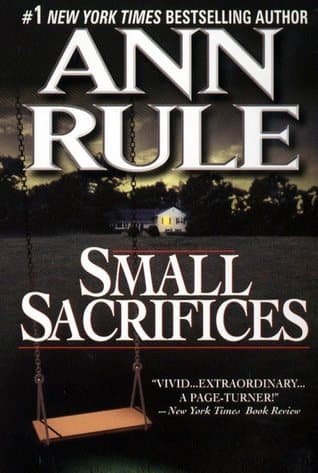
Small Sacrifices cover
Archivist's Choice

Small Sacrifices

Ann Rule (1987)

Genre

Thriller / Biography / History / Mystery

Reading Time

10-12 hours

Key Themes

See below

Track Your Reading

Sign in to track this book

Ann Rule's true crime book dissects the darkness that led Diane Downs, a mother, to shoot her three children in an attempt to reclaim her life.

Core Idea

Ann Rule's "Small Sacrifices" tells the true story of Diane Downs, a mother who shot her three children, killing one, to remove them as obstacles to her love affair. The book explores the mind of a narcissistic person, showing how Downs manipulated perceptions and used the 'mask of maternal devotion' to avoid suspicion. Her surviving children's testimonies were key to her conviction. The book examines the nature of evil, the impact of parental betrayal, and the search for truth in the justice system.
Reading time
10-12 hours
Difficulty
Medium
✓ Read this if...
You are fascinated by true crime narratives that deeply explore the psychology of perpetrators, the resilience of child victims, and the intricate process of criminal investigation and prosecution. This book is for those who appreciate detailed biographical accounts and the unraveling of complex lies.
✗ Skip this if...
You are sensitive to stories involving child abuse, murder, or the manipulation of maternal figures. If you prefer fictional thrillers over true crime or find detailed courtroom proceedings tedious, this might not be for you.

Core idea

The central argument and framework that powers the entire book.

Ann Rule's "Small Sacrifices" tells the true story of Diane Downs, a mother who shot her three children, killing one, to remove them as obstacles to her love affair. The book explores the mind of a narcissistic person, showing how Downs manipulated perceptions and used the 'mask of maternal devotion' to avoid suspicion. Her surviving children's testimonies were key to her conviction. The book examines the nature of evil, the impact of parental betrayal, and the search for truth in the justice system.

At a glance

Reading time

10-12 hours

Difficulty

Medium

Read this if...

You are fascinated by true crime narratives that deeply explore the psychology of perpetrators, the resilience of child victims, and the intricate process of criminal investigation and prosecution. This book is for those who appreciate detailed biographical accounts and the unraveling of complex lies.

Skip this if...

You are sensitive to stories involving child abuse, murder, or the manipulation of maternal figures. If you prefer fictional thrillers over true crime or find detailed courtroom proceedings tedious, this might not be for you.

Key Takeaways

1

The Mask of Maternal Devotion

How a seemingly loving mother could commit an unthinkable act of violence against her own children.

Quote

Diane Downs was a woman who could project an image of vulnerability and maternal devotion, while harboring a chilling capacity for manipulation and violence.

Ann Rule carefully shows the difference between Diane Downs's public image and her real motives. Downs presented herself as a grieving mother, a victim of an attack, wanting her children to recover. However, Rule, through investigation and interviews, reveals a calculating person whose 'love' for her children was conditional and secondary to her own desires. This highlights the deep psychological gap between outward appearance and inner reality, making Downs a chilling example of deceptive behavior. Her ability to keep this facade, ev...

Supporting evidence

Rule details how Downs's calm demeanor, lack of genuine grief, and inconsistent statements immediately raised red flags for investigators, contrasting sharply with the 'grieving mother' act she performed for media and hospital staff. Her focus on her boyfriend, rather than her children's recovery, further exposed the facade.

Apply this

Develop a critical eye for inconsistencies in behavior and narrative, especially in high-stakes emotional situations. Understand that outward displays of emotion do not always reflect genuine feelings or intentions. Trust your instincts when something feels 'off,' regardless of societal expectations.


maternal-filicidesociopathydeception
2

Love as a Weapon of Control

For Diane Downs, relationships were not about connection but about exerting power and manipulation.

Quote

Diane Downs used her children, and her relationships, as pawns in a game to achieve her own selfish desires.

This point explores how Diane Downs used her relationships, especially with her children and her lover, Robert Knickerbocker. Rule shows how Downs used 'love' and emotional ties as tools for control, rather than forming real bonds. Her obsession with Knickerbocker, and his eventual rejection of her because of her children, led to the crime. This was not a crime of passion, but a cold, planned act to remove obstacles to her happiness. The children were victims of their mother's selfish agenda, showing a lack of empathy and a transactio...

Supporting evidence

The book meticulously details Downs's relentless pursuit of Robert Knickerbocker and her stated belief that her children were a barrier to their relationship. Her willingness to eliminate these 'obstacles' underscores her manipulative approach to relationships.

Apply this

Recognize the signs of manipulative behavior in relationships, where one party consistently uses emotional leverage or guilt to control others. Prioritize clear communication and boundaries to prevent being used as a pawn in another's agenda. Understand that true love fosters growth and respect, not control.

manipulative-relationshipsnarcissistic-personality-disorderemotional-abuse
3

The Unseen Scars of Survival

The long-term psychological and physical toll on the surviving children, Cheryl and Christie.

Quote

The children's survival was a miracle, but their journey through trauma and recovery was a testament to the human spirit's resilience, and the lasting horror of their mother's betrayal.

While the main focus is on Diane Downs's guilt, Rule also shows the impact on her surviving children, Cheryl and Christie. Their physical injuries were severe, but the psychological wounds were deeper and lasted longer. Witnessing their mother's betrayal, enduring the legal process, and knowing their mother's true nature left lasting scars. This emphasizes that crime victims do not just 'recover' – they begin a lifelong journey of healing, coping with trauma, and rebuilding their lives after an unimaginable betrayal. Their resilience,...

Supporting evidence

Rule documents Christie Downs's crucial testimony, her struggles with memory and trauma, and Cheryl Downs's paralysis and subsequent recovery. The ongoing efforts of their adoptive parents to provide a stable, loving environment are also highlighted.

Apply this

Recognize the profound and long-lasting effects of trauma on survivors, especially children. Advocate for comprehensive psychological and physical support for victims of violence. Understand that healing is a continuous process, and empathy is crucial for those who have endured such experiences.

child-traumasurvivor-psychologyresilience
4

The Power of a Child's Testimony

Christie Downs's brave and crucial testimony was instrumental in securing justice.

Quote

It was the quiet, determined voice of a child, scarred but not broken, that ultimately brought down her own mother.

One of the most compelling parts of the trial, and Rule's story, is Christie Downs's role. Despite being shot in the head and suffering brain damage, Christie's fragmented but consistent memories of the event, and her ability to identify her mother as the shooter, were vital to the prosecution's case. This highlights the bravery of child witnesses in traumatic situations and the legal system's reliance on their often-fragile accounts. It also shows the nature of Downs's crime – she tried to murder her children and silence their abilit...

Supporting evidence

Rule details the psychological and legal challenges of preparing Christie to testify, her initial struggles to recall details, and the dramatic impact of her testimony in court, where she pointed to her mother as the shooter.

Apply this

Support and protect child witnesses in legal proceedings, recognizing the immense pressure and trauma they face. Understand the complexities of memory in trauma victims and the importance of careful, sensitive interviewing techniques. Value the truth, no matter how difficult or uncomfortable it may be.

child-witnesslegal-justicetraumatic-memory
5

The Unraveling Lies

How Diane Downs's elaborate web of deceit slowly but surely fell apart under scrutiny.

Quote

Every lie Diane told, every inconsistency, chipped away at her carefully constructed facade, revealing the monstrous truth beneath.

Ann Rule describes the careful detective work that systematically broke down Diane Downs's alibi and story. From the initial inconsistencies in her account of the 'bushy-haired stranger' to her strange behavior at the hospital and her desperate attempts to shift blame, Downs's lies led to her downfall. This emphasizes the power of thorough investigation and how elaborate falsehoods collapse under pressure. It shows the dedication of law enforcement and the prosecution team who refused to accept the easy story, instead looking deeper t...

Supporting evidence

Rule details the ballistics evidence that matched the gun found in Downs's car to the crime, the lack of evidence supporting her 'stranger' story, her calm demeanor during interrogations, and her attempts to plant false leads.

Apply this

Practice critical thinking when presented with narratives, especially those that seem too convenient or lack corroborating evidence. Appreciate the importance of investigative journalism and law enforcement in uncovering truth. Understand that truth often has a way of emerging, even from the most intricate webs of deceit.

forensic-investigationdeceptive-behaviorcriminal-psychology
6

The Allure of the Media Spotlight

Diane Downs's disturbing comfort and manipulation of public attention.

Quote

Diane Downs seemed to relish the attention, turning her children's tragedy into her own macabre performance for the cameras.

This point highlights an unsettling aspect of Diane Downs's personality: her apparent enjoyment of media attention. Rule describes how Downs seemed to thrive on attention, giving interviews and maintaining her 'grieving mother' act for television and reporters. This behavior was different from real grief and further distanced her from those who suspected her guilt. It indicates a lack of empathy and a narcissistic desire for attention, even if that attention came from a tragedy. Her ability to perform for cameras shows her manipulativ...

Supporting evidence

Rule recounts Downs's numerous television interviews where she calmly recounted the 'attack,' her attempts to control the narrative, and her continued public appearances even as suspicion mounted against her.

Apply this

Be critical of media portrayals, especially in high-profile criminal cases. Understand that public performance can mask true intentions. Recognize the manipulative potential of individuals who seek to control their public image, even in the face of grave accusations.

media-manipulationnarcissismpublic-perception
7

The Justice System's Imperfections

Even with overwhelming evidence, the path to justice is fraught with challenges and the potential for escape.

Quote

Even after conviction, the shadow of Diane Downs's cunning and capacity for escape loomed, reminding us that justice is not always a final, static state.

While Diane Downs was convicted, Rule's story also shows the vulnerabilities and continuous need for vigilance within the justice system. Downs's escape from prison, though temporary, reminded everyone that even convicted criminals with manipulative tendencies can exploit weaknesses and remain a threat. This emphasizes that justice is not a one-time event but an ongoing process of enforcement and protection. It also highlights the psychological complexity of people like Downs, who constantly try to avoid responsibility, forcing the sy...

Supporting evidence

Rule details Downs's audacious escape from the Oregon Women's Correctional Center and the subsequent manhunt, demonstrating her continued capacity for manipulation and evasion even behind bars.

Apply this

Support continuous improvements in correctional facility security and oversight. Understand that even after conviction, dangerous individuals can remain a threat. Advocate for robust post-conviction monitoring and psychological assessments where appropriate.

criminal-justice-systemprison-escaperehabilitation-challenges
8

The Enduring Quest for Truth

Ann Rule's dedication to uncovering the full, unvarnished story behind the headlines.

Quote

My role is to bear witness, to delve beyond the sensational headlines, and to tell the complete, often uncomfortable, truth.

This point reflects on Ann Rule's role as a true crime author, and her commitment to presenting a complete account of the Diane Downs case. Rule does not just report facts; she reconstructs the psychological setting of the crime, the lives of those affected, and the investigation. Her dedication to research, interviews, and empathetic storytelling makes 'Small Sacrifices' more than a simple recounting of events. It shows the importance of responsible true crime stories that seek to understand the 'why' behind the 'what,' providing con...

Supporting evidence

Rule's extensive bibliography, interviews with law enforcement, family members, and medical personnel, as well as her detailed descriptions of court proceedings and psychological profiles, all demonstrate her commitment to a holistic narrative.

Apply this

Seek out and support responsible, well-researched non-fiction and journalism. Question narratives that prioritize shock value over depth and accuracy. Understand the ethical responsibility of storytellers, especially when dealing with real-life tragedies and human suffering.

true-crime-journalisminvestigative-reportingnarrative-ethics
9

The Unseen Victims of Parental Crime

How the actions of one parent can irrevocably shatter the lives of their children.

Quote

The ultimate betrayal is when the one meant to protect you becomes the very source of your terror.

This point focuses on the horror of crimes committed by a parent against their children. Diane Downs's actions represent the ultimate breach of trust and the most basic breakdown of the parent-child bond. Rule shows how this type of crime leaves a devastating legacy, not only physically but emotionally and psychologically. The children were not just victims of violence, but of an unimaginable betrayal by the person who should have been their safest haven. This highlights the strong societal revulsion for such acts and the lasting pain...

Supporting evidence

The entire narrative, from the shooting to the children's recovery and testimony, underscores the unique horror of a mother turning on her own offspring, a theme implicitly woven throughout Rule's detailed account of the children's suffering.

Apply this

Recognize the critical role of parental protection and care in child development. Support interventions and resources for families at risk of child abuse and neglect. Understand the deep psychological scars left by parental betrayal and advocate for long-term support for child victims.

child-abusefamilial-violencebetrayal-trauma
10

The Banality of Evil

How a seemingly ordinary person can harbor extraordinary darkness.

Quote

Diane Downs was not a monster in appearance, but her actions revealed a chilling void where empathy and conscience should have been.

One of the most unsettling aspects of the Diane Downs case, as presented by Ann Rule, is the 'ordinariness' of the perpetrator. Downs was not a monstrous figure; she was a seemingly attractive young mother. This point explores the unsettling idea that deep evil can exist within people who appear normal. Her ability to blend in, to project an image of normalcy, makes her crime even more terrifying. It challenges the comforting idea that evil is always easy to identify, making us confront the truth that darkness can hide beneath the mos...

Supporting evidence

Rule's descriptions of Downs's appearance, her seemingly normal life before the crime, and her ability to maintain a 'normal' facade even after the shooting, despite her horrific actions, illustrate this point.

Apply this

Cultivate a nuanced understanding of human behavior, recognizing that appearances can be deceiving. Avoid quick judgments based solely on superficial characteristics. Promote awareness that psychological aberrations can exist in anyone, regardless of their outward presentation.

banality-of-evilpsychopathyhuman-darkness

Critical analysis

Notable Quotes

Diane Downs shot her three children, killing one and crippling the other two, then calmly drove them to the hospital, claiming a bushy-haired stranger had ambushed them.

Introducing the central crime and Diane Downs' initial, false narrative.

She was an extraordinary liar, a woman who could create an entire fantasy world and believe it herself.

Describing Diane Downs' psychological makeup and her capacity for self-deception.

The small sacrifices she made were not her own, but those of her children.

Reflecting on the title of the book and the true victims of Diane's actions.

Christy, the oldest, was shot through the spine, paralyzed, but her mind was intact, and she remembered everything.

Highlighting Christy's critical role as a witness, despite her severe injuries.

It was impossible to imagine a mother doing such a thing, yet the evidence began to point inexorably to Diane.

Expressing the initial disbelief surrounding the crime, contrasting with the accumulating evidence.

The children's suffering became merely an inconvenience to her, an obstacle to her own desires.

Illustrating Diane's extreme narcissism and lack of empathy.

Her affair with a married man, Nick, seemed to be the catalyst for her desperate actions.

Connecting Diane's romantic obsession to her motivation for the crime.

A mother's love, it was supposed to be unconditional. Diane's was conditional on her own convenience.

Contrasting societal expectations of motherhood with Diane's twisted reality.

The detective, Fred Hugi, felt a deep, personal connection to the surviving children, becoming their advocate.

Highlighting the dedicated work of the lead investigator and his compassion.

She was a woman who could smile for the cameras while her children lay fighting for their lives.

Describing Diane's chilling public demeanor during the investigation.

The courtroom became a stage for Diane's performance, but the truth eventually prevailed.

Referring to Diane's attempts to manipulate the jury during her trial.

Even after her conviction, Diane never admitted guilt, maintaining her fabricated story.

Emphasizing Diane's enduring denial and lack of remorse post-conviction.

The resilience of the children, especially Christy and Danny, in the face of such horror was truly astonishing.

Acknowledging the strength and recovery of the surviving victims.

Ann Rule delves into the mind of a killer, not to understand, but to expose the darkness.

Reflecting on Ann Rule's authorial intent and approach to true crime.

Quiz

Test Your Knowledge

Ready to see how well you understood this book? Take our interactive quiz with 10 questions.

10
Questions
~5
Minutes
?
Best Score

Key Questions (FAQ)

'Small Sacrifices' is Ann Rule's true-crime account of Diane Downs, a young mother who shot her three children, killing one and severely injuring the other two, and then claimed a stranger had attacked them. The book delves into the subsequent investigation and trial, revealing the shocking truth behind Downs's actions.

About the author

Ann Rule

Ann Rule was a pioneering true crime author, renowned for her meticulous research and compelling narratives. Her breakthrough book, 'Small Sacrifices,' detailed the chilling case of Diane Downs and became a bestseller. Rule's extensive body of work, often focusing on female victims and the psychology of criminals, solidified her reputation as a master of the genre.





