“The city was a beast, and he was just one more parasite clinging to its hide.”
— Reflecting on the grimy, unforgiving nature of Los Angeles.

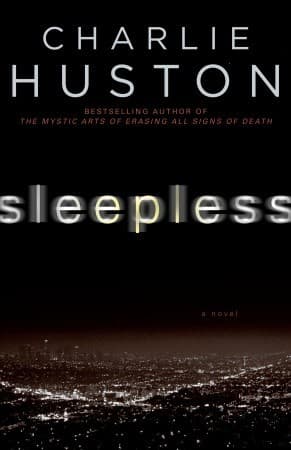
Charlie Huston (2010)
Genre
Thriller / Mystery / Science Fiction
Reading Time
9-10 hours
Key Themes
See below
Sign in to track this book
In a Los Angeles suffering from an insomnia plague, an undercover cop who can still sleep navigates martial law, drug cartels, and corporate conspiracy to find a cure for his sleepless wife and daughter, all while being hunted by a mercenary.
The world is gripped by a mysterious pandemic causing widespread insomnia, known as the Sleepless Plague. Detective Parker Hass, one of the few immune, works undercover in a chaotic Los Angeles. He poses as a drug dealer, infiltrating the black market for "Dreamer," the only known relief for the sleepless. His wife, Maya, has the plague, and their infant daughter, Chloe, is at risk. Park's mission, sanctioned by the LAPD, is to trace the illegal distribution of Dreamer back to its source, believed to be the pharmaceutical company Novum, which officially manufactures the drug. The city is a fractured mix of martial law and insurgent activity, making his work dangerous and emotionally draining as he watches his family suffer.
While on a drug buy, Park sees a sleepless person showing enhanced cognitive abilities and an unsettling calm. This makes him suspect there is more to the plague than simple insomnia. His investigation leads him to Kresley, a brilliant but reclusive tech billionaire and founder of the 'Awakened' movement. Kresley believes the Sleepless Plague is not a disease but an evolutionary step, a state of heightened awareness that unlocks human potential. He has gathered a commune of the sleepless, whom he calls the 'Awakened,' and is conducting experiments, claiming to guide humanity's next step.
Park discovers that Novum Pharmaceuticals, instead of treating the sleepless, is weaponizing the plague. They developed a more potent strain of the sleepless virus to create super-soldiers. Dreamer, the drug they distribute, is not a cure but a controlled sedative designed to manage the population and prevent the sleepless from fully using their enhanced capabilities, keeping them docile. This reveals a vast conspiracy of corporate greed and military ambition, with Novum manipulating the global crisis for profit and power. Park realizes his initial target was only a symptom of a larger, more sinister plot.
Kresley, having figured out Novum's true intentions, has a counter-plan. He believes the Sleepless Plague, when left alone without Dreamer, can unlock extraordinary mental and physical abilities. He aims to speed up this evolutionary process within his 'Awakened' commune, seeing himself as a leader for a new humanity. He views the plague as a gift, not a curse, and plans to use his resources and the Awakened's enhanced abilities to expose Novum and begin a new era. Park, initially skeptical, must confront the moral implications of Kresley's vision, especially as Maya's condition worsens.
Throughout Park's investigation, he is stalked by an aging, skilled mercenary named Deacon. Deacon does not work for Novum or Kresley directly but is driven by a deep personal vendetta. His family was devastated by the Sleepless Plague, and he blames the system, especially those who profit from or manipulate the crisis. He sees Park as part of that system, a pawn in a game that destroyed his life. Deacon's pursuit is relentless and brutal, adding another layer of danger to Park's already difficult mission. His presence foreshadows a violent confrontation, representing the human cost of the plague and the conspiracies around it.
As the plot progresses, Maya's sleeplessness intensifies. She experiences increasingly severe hallucinations, paranoia, and physical decline, mirroring the advanced stages of the plague. Park is torn between exposing the conspiracy and protecting his family. The thought of Chloe suffering the same fate makes him consider extreme options, including Kresley's unconventional methods. He struggles with the ethical limits of his mission, questioning whether justice for many outweighs saving his loved ones. Maya's suffering is a constant, painful reminder of the stakes.
To gather definitive proof against Novum, Park must infiltrate their most secure research facilities. He uses his undercover persona, exploiting weaknesses in Novum's black market operations and manipulating low-level operatives. This requires him to act in morally ambiguous ways, blurring the lines between his identity as a cop and his role as a criminal. He navigates dangerous encounters, relying on his training and instincts to avoid detection. The infiltration is tense, as he knows one wrong move could expose him and jeopardize his mission, his life, and his family's safety.
Novum, aware of Kresley's activities and the threat he poses, launches a full-scale assault on his secluded compound. This leads to a brutal confrontation between Novum's heavily armed security forces and Kresley's 'Awakened' followers, who, despite their enhanced mental abilities, are not trained fighters. Park finds himself caught in the crossfire, forced to choose sides. The battle is a chaotic display of violence, highlighting Novum's ruthlessness and Kresley's desperate measures to protect his vision. During the chaos, Park struggles to get vital information while ensuring his own survival.
As Park tries to escape Novum's clutches with crucial evidence, Deacon intercepts him. The aging mercenary, driven by his desire for vengeance against anyone connected to the plague, sees Park as a symbol of the corrupt system. Their confrontation is personal and violent, a brutal hand-to-hand struggle that tests Park's physical and mental limits. Deacon's combat skills are formidable, honed by years of experience, and his resolve is absolute. This fight is not just about survival for Park but also about understanding the deep anger and despair the Sleepless Plague has inflicted on ordinary people.
Park, having survived the encounters with Novum and Deacon, successfully leaks the incriminating evidence to the world. The revelations about Novum's role in developing and weaponizing the Sleepless Plague, as well as their manipulation of Dreamer, cause global shockwaves. While Novum faces public outcry and legal repercussions, the Sleepless Plague remains. The world is forever changed, with many now 'Awakened' or suffering from insomnia. Park has achieved justice, but the personal cost is immense, and the future for his family, especially Maya and Chloe, remains uncertain in this new, restless world.
The Protagonist
Park transforms from a dutiful, albeit disillusioned, police officer into a desperate father and reluctant revolutionary, willing to break laws to expose a greater truth and save his family.
The Supporting
Maya's arc is one of tragic decline due to the plague, becoming a symbol of the widespread suffering and the personal sacrifice Park must make.
The Supporting/Antagonist (initially ambiguous)
Kresley's arc reveals his true intentions as a visionary who, while opposing Novum, also has a radical, potentially dangerous, agenda for humanity.
The Antagonist
Deacon remains a force of destructive vengeance, never fully reconciling with the new world, his arc culminating in a final, desperate confrontation.
The Supporting
Chloe's arc is largely symbolic, representing the innocence threatened by the Sleepless Plague and the hope for a better future.
The Mentioned/Supporting
Thorne's arc reveals him as the orchestrator of the global conspiracy, his downfall a consequence of Park's exposure.
The novel explores what it means to be human when basic biological processes like sleep are disrupted. It questions whether the Sleepless Plague is a disease or, as Kresley believes, an evolutionary step. The 'Awakened' show enhanced cognitive abilities, making characters and readers consider if humanity's next stage involves not needing sleep. This theme is central to Kresley's philosophy and challenges Park's traditional view of normalcy, especially as Maya's condition progresses, blurring the lines between illness and transformation.
““Open your eyes. The future is coming.””
A major theme is the corrupting influence of corporate power and the ethical problems of scientific advancement. Novum Pharmaceuticals, instead of finding a cure, weaponizes the Sleepless Plague and manipulates the drug 'Dreamer' for profit and control. This shows how powerful institutions can exploit global crises for personal gain, ignoring human life. The story criticizes the unchecked ambition of corporations like Novum, which prioritize power and wealth over humanity, creating a world where profit dictates the future of a devastating pandemic.
““The pharmaceutical giant behind Dreamer. Somewhere in those shadows, at the nexus of disease and drugs and money, a secret is hiding.””
Park's main motivation is protecting his family, particularly his wife Maya and daughter Chloe. His love for them drives him to take extraordinary risks, blurring the lines between his duty as a cop and his role as a husband and father. He makes great sacrifices, both personal and professional, to ensure their safety and future. This theme explores how far individuals will go for their loved ones in the face of overwhelming odds, highlighting the emotional weight of his choices as Maya's condition worsens and Chloe's future is uncertain.
““For them, he will risk what they need most from him: his belief that justice must be served.””
The novel constantly questions the nature of reality, especially in a world where widespread insomnia leads to hallucinations and altered states of consciousness. Park, as one of the few who can sleep, struggles to tell truth from illusion in a society where many experience a different reality. Kresley's philosophy challenges common perceptions of the plague, suggesting it is an awakening rather than an illness. This theme is highlighted by the misinformation around Novum's activities and the subjective experiences of the sleepless, forcing characters to constantly reassess what is real and what is only perceived.
““The deeper Park stumbles through the dark, the more he is convinced that it is obscuring the real world.””
A global pandemic causing widespread insomnia and altered consciousness.
The Sleepless Plague is the central inciting incident and driving force of the narrative. It's a mysterious virus that robs most of humanity of the ability to sleep, leading to a breakdown of society. It acts as both a literal disease and a metaphorical catalyst for societal change, forcing characters to confront existential questions about humanity's future. The plague's dual nature – a debilitating illness and a potential evolutionary step – creates deep ideological conflicts and moral dilemmas.
A pharmaceutical drug that offers temporary sleep, but with hidden implications.
Dreamer is a crucial plot device, functioning as both a palliative for the sleepless and a tool of control. Initially presented as the only relief for insomnia sufferers, it is later revealed to be a product of Novum's manipulation, designed to suppress the full potential of the 'Awakened.' Its black market trade drives Park's undercover mission, and its true nature exposes the depth of Novum's conspiracy, making it a symbol of corporate deception and control over a vulnerable population.
Park's false persona as a drug dealer to infiltrate the black market.
Park's undercover identity as a drug dealer is a key narrative device that allows him to access the criminal underworld and uncover the conspiracy. It creates inherent tension, as he constantly risks exposure and must engage in morally compromising acts. This device highlights his internal conflict between his duty as a police officer and the demands of his persona, forcing him to blur ethical lines and confront the dark side of his mission to protect his family and expose the truth.
Kresley's secluded community of sleepless individuals exhibiting enhanced abilities.
The 'Awakened' commune serves as a foil to the suffering masses and a crucial piece of Kresley's vision. It's a controlled environment where the sleepless are encouraged to embrace their altered state, developing enhanced cognitive and sensory abilities. This device allows the author to explore the potential 'evolutionary' aspects of the plague, showcasing both the promise and the danger of Kresley's radical ideology. It also provides a sanctuary and a strategic base for Kresley's opposition to Novum.
“The city was a beast, and he was just one more parasite clinging to its hide.”
— Reflecting on the grimy, unforgiving nature of Los Angeles.
“Sleep was a luxury, and luxuries were for the living.”
— The protagonist's internal monologue about his chronic insomnia and the demands of his job.
“Every lie had a shelf life, and his was rapidly expiring.”
— As the main character's deceptions begin to unravel.
“There’s no such thing as a clean kill, only less messy ones.”
— A pragmatic observation on the nature of violence and murder.
“Fear was a constant companion, a low hum beneath the surface of everything.”
— Describing the pervasive sense of dread in a dangerous situation.
“The past wasn't dead; it was just waiting for you to turn your back.”
— Considering how past actions and events continue to haunt the present.
“He moved through the night like a shark, always in motion, always hunting.”
— A vivid description of the protagonist's relentless pursuit of his goals.
“Justice was a word for things that happened in movies, not in the real world.”
— A cynical view on the absence of true justice in the harsh reality he inhabits.
“The silence wasn’t empty; it was full of all the things he wasn’t saying.”
— During a tense conversation where unspoken truths loom large.
“Sometimes the only way out was straight through the middle of it.”
— Deciding to confront a problem head-on rather than avoid it.
“He was a ghost in his own life, watching it unfold from a distance.”
— Feeling disconnected and alienated from his own existence.
“The city breathed, a slow, toxic inhale and exhale.”
— Personifying Los Angeles as a living, breathing, but corrupted entity.
“Every secret had a price, and someone always paid it.”
— Reflecting on the inevitable consequences of keeping secrets.
“The world didn't care about your intentions, only your results.”
— A harsh reminder of the pragmatic and unforgiving nature of his reality.
Ready to see how well you understood this book? Take our interactive quiz with 10 questions.

Charlie Huston is a critically acclaimed author known for his gritty and visceral crime fiction. His novel "Sleepless" is a prime example of his hardboiled style, often drawing comparisons to the noir tradition. Huston's work is celebrated for its dark atmosphere and unflinching portrayal of flawed characters navigating dangerous worlds.







