“When you wake up and find yourself in a place you’ve never seen before, and you recognize it, that’s a strange feeling.”
— Gwenda Reed's initial unsettling experience upon arriving at Dilmouth and recognizing the house.

Agatha Christie (1940)
Genre
Thriller / Mystery
Reading Time
240 min
Key Themes
See below
Sign in to track this book
A newlywed's unsettling visions in her new home lead Miss Marple to unearth a decades-old 'perfect' murder, proving some ghosts are all too real and deadly.
Gwenda Reed, newly married to Giles Reed, arrives in England from New Zealand to find and furnish a house before her husband joins her. While house-hunting, she is drawn to a Victorian villa named Hillside in Dillmouth, Dorset, and buys it. As she oversees renovations, Gwenda experiences strange sensations of déjà vu. She recognizes parts of the house she has never seen before, such as a blocked-up door and a specific wallpaper pattern. These uncanny experiences disturb her, especially a vivid mental image of a man strangling a woman on the stairs, with a child singing 'Oranges and Lemons' in the background.
After Giles joins her, Gwenda and Giles attend a performance of John Webster's 'The Duchess of Malfi' in London. During a scene where the Duchess is strangled, Gwenda is overwhelmed by a terrifying memory: she sees a man, whom she identifies as her father, strangling a woman named Helen on the stairs of Hillside. The memory is so strong she collapses. This incident confirms her belief that she saw a murder as a small child, and that the house she bought was the crime scene. Giles, at first skeptical, believes her due to the intensity of her experience.
Disturbed by her memories, Gwenda tells Miss Marple, an elderly woman staying with her nephew, Raymond West, and his wife, Joan, in the nearby village of St. Mary Mead. Miss Marple, known for her sharp mind and understanding of people, listens carefully to Gwenda's story. She suggests that Gwenda's memories are not a delusion but a repressed memory of a real event. Interested by the challenge of a 'sleeping murder'—a crime committed long ago and forgotten—Miss Marple agrees to help Gwenda and Giles find the truth behind Helen's disappearance, advising them to be careful.
Gwenda and Giles begin to investigate Gwenda's childhood. They learn that Gwenda's father, Major James Kennedy, was an army officer who married a beautiful woman named Helen. Helen was Gwenda's stepmother. The couple lived at Hillside for a short time before Helen mysteriously disappeared, supposedly running off with another man. Gwenda's father then sent her to live with relatives in New Zealand, never speaking of Helen again. The official story was that Helen had eloped, but Gwenda's memories strongly contradict this, suggesting a murder. They realize the man Gwenda saw was her own father.
To get more information, Gwenda and Giles contact people who knew Helen Kennedy. They visit Dr. Kennedy, Helen's half-brother, now a successful physician. He confirms Helen's beauty and charming but somewhat inconsistent nature, and the story of her elopement. They also meet the Fentons, the family who lived at Hillside before the Kennedys and employed Helen as a companion. Mrs. Helen Fane (née Fenton) remembers Helen Kennedy well, recalling her as a captivating but manipulative woman. They also learn of a young man, Richard Erskine, who liked Helen and was suspected of having an affair with her.
The investigation, subtly guided by Miss Marple, uncovers several inconsistencies. The story of Helen's elopement with a man named Charles Burnaby seems too neatly explained. They learn that Helen had a difficult relationship with her first husband, who died shortly before she met Major Kennedy. Gwenda and Giles also meet Lily, a former maid at Hillside, who remembers Helen being unhappy and constantly flirting. Lily also recalls Helen having a secret admirer and hints at a darker side to Helen's personality. The Reeds begin to suspect that Major Kennedy might have been provoked, or that someone else was involved.
Miss Marple, through her acquaintances, learns about a woman named Mrs. Fane, who was connected to the Fentons and had a history of poisoning. This Mrs. Fane had a sister, Helen, who coincidentally had the same name as the victim. Miss Marple begins to suspect a more complex plot than a simple crime of passion. She realizes that the story of Helen Kennedy's elopement might have been a deliberate lie to cover up a more planned murder, possibly involving poison, rather than the strangling Gwenda remembered. This opens up the possibility of a different killer.
Gwenda's recurring memory of the children's rhyme 'Oranges and Lemons' is a vital clue. Miss Marple realizes that the rhyme lists church bells and specific locations in London. They investigate the possibility that the rhyme was not just a childhood tune, but a coded message or an important detail connected to the crime. This leads them to explore the possibility of a body being buried in a specific location, perhaps one mentioned in the rhyme, or that the rhyme was sung by a child at a crucial moment. The song's importance grows, indicating it was more than background noise.
Following the clues, especially the 'Oranges and Lemons' rhyme and Miss Marple's deductions about the location, the Reeds and the police eventually dig up a disused part of the garden at Hillside. To everyone's shock, they find the skeletal remains of Helen Kennedy. The discovery confirms Gwenda's repressed memory and establishes that Helen was murdered, not eloped. The cause of death is strangulation, matching Gwenda's visual memory. This discovery turns the cold case into an active murder investigation, with Gwenda's father becoming the main suspect.
With the body found, suspicion falls heavily on Major Kennedy, who had died years ago. However, Miss Marple reveals the chilling truth: Helen Kennedy was murdered by her half-brother, Dr. Kennedy. He had carefully planned the crime, poisoning Helen with digitalis over time to weaken her, then staging the strangulation on the stairs to frame Major Kennedy. Gwenda's childhood memory was manipulated; the figure she saw was not her father strangling Helen, but Dr. Kennedy carrying Helen's seemingly lifeless body down the stairs. Dr. Kennedy had a motive: Helen was about to reveal a past crime of his, and he stood to inherit money. He had also been having an affair with Helen, and she was threatening to expose him. The 'Oranges and Lemons' rhyme was a distraction, a detail Gwenda remembered from a time shortly before the murder, not necessarily during the act itself.
The Protagonist
Gwenda transforms from a carefree newlywed to a woman haunted by and ultimately liberated by her past, finding peace after uncovering the truth.
The Supporting
Giles evolves from a slightly detached observer to an active, protective partner, fully committed to solving the mystery alongside his wife.
The Supporting
Miss Marple remains consistently wise and observant, using her established skills to bring justice to a long-dormant crime.
The Mentioned
Her character is revealed retrospectively, changing from a simple runaway to a complex, perhaps morally ambiguous, victim.
The Supporting
His posthumous reputation shifts from a potential murderer to a wronged, tragic figure.
The Antagonist
His character arc is one of sustained deception, culminating in his shocking unmasking as the true killer.
The Supporting
Lily's character serves as a witness, providing consistent, though sometimes fragmented, memories that help piece together the past.
The Supporting
His role is to shed light on Helen's character and to be briefly considered as a suspect before being dismissed.
The Supporting
Her character provides historical context and corroborates details about Helen's early life and personality.
The novel explores memory, especially repressed childhood trauma. Gwenda's fragmented, terrifying memories of a murder, at first dismissed by others, form the core of the plot. The story shows how deeply buried memories can resurface, triggered by familiar surroundings or sensory experiences, and how they can be misinterpreted or incomplete. Gwenda's process of piecing together her past is a journey into the imperfect and powerful nature of human memory, and the psychological impact of seeing a traumatic event as a child. It questions what we truly 'see' versus what we interpret.
““One remembers things, you know, not exactly as they happened, but as one sees them later.””
Sleeping Murder looks at the nature of evil, especially how it can hide behind a respectable appearance. Dr. Kennedy, the killer, is presented as a cultured and successful professional, making his calculated villainy more shocking. The novel contrasts passionate crime with planned, cold-blooded murder, showing how a 'perfect crime' can stay hidden for decades. It explores the depths of human wickedness and how far people will go to protect their secrets, even at the cost of innocent lives and reputations. Helen's own manipulative tendencies also suggest a more complex moral situation.
““Evil is not something that happens out there, Gwenda. It is something that happens in here.””
The entire plot centers on the struggle to uncover the truth hidden beneath layers of deception and convenient lies. Helen Kennedy's 'elopement' is a carefully built falsehood meant to hide her murder. Characters' recollections are often biased or incomplete, requiring careful sifting to tell fact from fiction. Miss Marple's role is to see through these deceptions, using her understanding of people to look past appearances. The novel shows how easily truth can be suppressed or distorted, and the persistent effort needed to bring it to light, even decades later.
““It's extraordinary, isn't it, how people can manage to mislead you simply by telling you what they think is the truth.””
The main idea of 'Sleeping Murder' is how an unresolved past crime affects the present. Gwenda's life is disrupted by the echoes of a murder committed decades before she was consciously aware of it. The house, Hillside, is a physical representation of this haunting past, its architecture triggering Gwenda's memories. The story shows how secrets, once buried, can resurface with devastating force, demanding resolution and justice. It supports the idea that some wrongs cannot remain 'sleeping' indefinitely and will inevitably awaken to demand reckoning.
““The past is never dead. It's not even past.””
The central mechanism for uncovering a decades-old murder.
Gwenda Reed's repressed childhood memory of witnessing a murder is the primary plot device driving the entire narrative. The initial fragments of memory, triggered by her new home and later solidified by a play, provide the only direct evidence of the 'sleeping murder'. This device allows Christie to explore psychological suspense and the unreliability of memory, while also creating a compelling reason for a cold case to be reopened. It creates a personal stake for the protagonist, ensuring her relentless pursuit of the truth.
A seemingly ordinary house that triggers terrifying memories and serves as the crime scene.
Hillside, the house Gwenda purchases, is more than just a setting; it acts as a catalyst for her repressed memories. Its features—a blocked-up door, a specific wallpaper pattern, the stairs—all trigger Gwenda's subconscious recollections. The uncanny feeling she experiences, a sense of having 'been there before' despite knowing she hasn't, is a key element of the psychological suspense. The house physically embodies the haunting past, making the environment itself a crucial character in uncovering the truth of the murder committed within its walls.
A seemingly innocent children's rhyme that becomes a crucial, misleading clue.
The nursery rhyme 'Oranges and Lemons' is a significant symbolic and plot device. Gwenda distinctly remembers hearing it during the murder, leading her and Giles to initially believe it holds a direct clue to the killer or the body's location, perhaps pointing to London churches. However, it ultimately proves to be a red herring in its direct interpretation, instead signifying a moment in time just before the murder. Its inclusion highlights how fragmented childhood memories can be misinterpreted and how seemingly innocuous details can take on sinister meaning.
A murder so meticulously planned and covered up that it remains unsolved for decades.
The concept of a 'perfect crime' is central to the mystery. Helen Kennedy's murder is initially disguised as an elopement, a story so convincing that it fools everyone for years. The killer's careful planning, including the framing of Major Kennedy and the disposal of the body, ensures the crime remains 'sleeping'. This device showcases Christie's skill in crafting intricate plots and challenges the characters (and the reader) to unravel a seemingly flawless deception, emphasizing the difficulty of solving crimes where the perpetrator has had ample time to cover their tracks.
“When you wake up and find yourself in a place you’ve never seen before, and you recognize it, that’s a strange feeling.”
— Gwenda Reed's initial unsettling experience upon arriving at Dilmouth and recognizing the house.
“It’s not what people say, it’s what they don’t say.”
— Miss Marple's observation on the importance of unspoken truths and omissions in conversations.
“The past is never dead. It’s not even past.”
— A recurring theme, highlighted by the way the past murder resurfaces and impacts the present.
“There are some people who are born to do evil things, and some people who are born to be victims.”
— A character's cynical view on human nature and destiny.
“One can always tell a great deal about a house by the books it keeps.”
— Gwenda's habit of examining bookshelves to understand the previous inhabitants.
“It’s very easy to be wise after the event.”
— A common reflection on hindsight, particularly in detective work.
“People remember what they want to remember, and forget what they want to forget.”
— Miss Marple's insight into the selective nature of human memory.
“The truth is a very elusive thing, you know. Especially when people don’t want it to be found.”
— A comment on the difficulty of uncovering truth when it is actively being concealed.
“A house has a memory, you know. It remembers what happened in it.”
— Gwenda's strong feeling that the house itself holds memories of the past events.
“Sometimes the most obvious explanation is the right one, and sometimes it’s the most misleading.”
— A dilemma faced by detectives when evaluating different theories.
“It’s extraordinary how much one forgets, and how little one forgets.”
— A paradoxical statement about the nature of human memory, both its fallibility and persistence.
“There’s always a reason for everything, if you can only find it.”
— The underlying principle of detective work, that every action has a motive.
“Fear is a very strong emotion. It can make people do very foolish things.”
— A reflection on how fear can drive individuals to irrational actions.
“One has to be very careful about making assumptions. They can lead you very far astray.”
— Miss Marple's caution against jumping to conclusions without sufficient evidence.
Ready to see how well you understood this book? Take our interactive quiz with 10 questions.
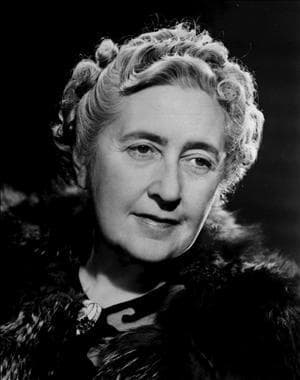
Dame Agatha Mary Clarissa Christie, Lady Mallowan, was an English writer known for her 66 detective novels and 14 short story collections, particularly those revolving around fictional detectives Hercule Poirot and Miss Marple. She also wrote the world's longest-running play, the murder mystery The Mousetrap, which has been performed in the West End since 1952. A writer during the "Golden Age of Detective Fiction", Christie has been called the "Queen of Crime". She also wrote six novels under the pseudonym Mary Westmacott. In 1971, she was made a Dame (DBE) by Queen Elizabeth II for her contributions to literature. Guinness World Records lists Christie as the best-selling fiction writer of all time, her novels having sold more than two billion copies.







