“We are not the first. We are not the last. We are just the ones who happened to be here when it happened.”
— Reflecting on the discovery of ancient alien technology on Earth.

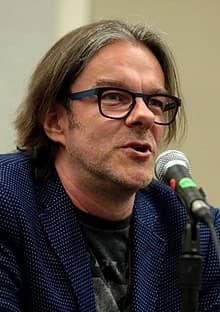
Sylvain Neuvel (2016)
Genre
Thriller / Fantasy / Mystery / Science Fiction
Reading Time
360 min
Key Themes
See below
Sign in to track this book
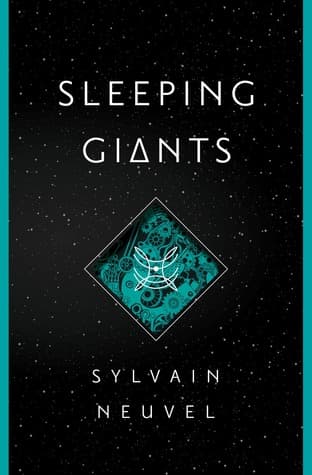
A mysterious, colossal metal hand discovered by a young girl sparks a global race against time to decipher its alien origins and purpose, threatening to either unite or obliterate humanity.
In Deadwood, South Dakota, an eleven-year-old girl named Rose Franklin falls into a deep, square-shaped hole while riding her new bike. At the bottom, she finds herself in the palm of an enormous, carved metal hand with glowing walls. Firefighters rescue her, and the discovery of the object immediately draws government attention. The hand is unlike anything ever seen, made of an unknown metal. Its origin and purpose are a complete mystery. This event affects Rose, leading her to understand the object she first encountered.
Seventeen years after her initial discovery, Dr. Rose Franklin is a physicist. A mysterious, unnamed interrogator working for a government agency recruits her. The interrogator's goal is to assemble a team and use Rose's connection and expertise to unlock the secrets of the giant hand, which has been kept secret for decades. The entire story is told through transcribed interviews, logs, and reports, mainly between the Interrogator and the various team members he recruits, including Rose, her pilot Kara Resnik, and linguist Vincent Couture.
The Interrogator brings together a team: Dr. Rose Franklin for physics, Kara Resnik as the pilot, and Dr. Vincent Couture, a linguist. Their initial work focuses on the giant hand, stored in a secure facility. Through research and experiments, Rose determines the hand is not just a statue but advanced technology. Her team eventually discovers that the hand emits a specific energy signature when certain patterns on its surface are activated. This suggests the hand is a component of a much larger, extraterrestrial machine.
Using the energy signature from the hand, the team develops a method to scan for similar objects globally. This leads to the discovery of other buried, giant metal body parts scattered across the planet. They find a forearm in Peru, a leg in China, and a torso in Turkey, among other pieces. Each discovery is a massive project, requiring covert operations and international cooperation, often under the strict supervision and manipulation of the Interrogator, who handles the logistics and political maneuvering.
The most important discovery is the head, found buried deep under the Ural Mountains in Russia. Kara Resnik, a skilled pilot, helps with the dangerous retrieval missions, often taking risks. The head, like the other parts, is massive and made of the same unknown metal. The team thinks these parts belong to a single, colossal entity. The Interrogator constantly pushes the team, using psychological tactics and veiled threats to ensure their compliance and progress. The stakes are high.
Under pressure from the Interrogator, the team begins assembling the colossal metal parts in a secret underground facility. Rose, with her knowledge of the artifacts, guides the process. The pieces connect easily. When fully assembled, the giant figure, called 'Themis,' activates. Its eyes glow, and it begins to move, showing itself to be a sentient or semi-sentient robot of immense power. This activation causes global concern and a frantic scramble for control.
After its activation, Themis tries to communicate through energy patterns and symbols. Dr. Vincent Couture, the linguist, helps decipher these complex messages. Themis's communications show its extraterrestrial origin and hint at a mission or purpose related to Earth. It seems to be a protector or observer, but its intentions are unclear. The Interrogator sees Themis as a potential weapon or a tool for geopolitical advantage, pushing the team to understand its capabilities and control it.
Pilot Kara Resnik, because of her frequent interaction with the artifacts during retrieval and her psychological profile, develops a connection with Themis. She experiences visions and feelings that seem to come from the giant robot. During an experiment, Themis reacts dramatically, damaging the facility and nearly harming the team. This event shows the unpredictable nature of the alien technology and the dangers of attempting to control it, increasing tensions within the team and with the Interrogator.
Fearing that Themis will be weaponized or misused by global powers, Rose Franklin makes a decision. She realizes that her discovery and work have put humanity in danger. To prevent an international crisis or war, Rose sacrifices herself by starting a sequence that causes Themis to self-destruct or become dormant, ensuring it cannot be controlled. This act of self-sacrifice is her attempt to protect humanity from the discovery she helped reveal.
After Rose's actions, the giant robot Themis is either destroyed or made inert, and the project is officially shut down. The remaining team members, including Kara Resnik and Vincent Couture, are debriefed and released. Their lives are changed by their involvement with the alien artifact. The Interrogator, despite his planning, is left without his prize. The book ends with questions about Themis's true origin, its species, and the chance of other such giants existing in the universe, leaving a sense of unease and anticipation for future discoveries.
The Protagonist
From a curious child to a dedicated scientist, Rose evolves into a reluctant hero who sacrifices herself to protect humanity from its own destructive tendencies.
The Antagonist
He remains largely static, a relentless force pursuing his agenda, ultimately failing to achieve full control over Themis.
The Supporting
Kara grapples with her past and her unique connection to Themis, ultimately becoming a survivor forever changed by the experience.
The Supporting
He evolves from a skeptical academic to a dedicated interpreter of alien communication, broadening his understanding of language beyond human constructs.
The Mentioned
Themis is assembled, activated, and then either destroyed or rendered inert, its ultimate fate and purpose remaining partially mysterious.
The Supporting
He remains a consistent military presence, his views on Themis largely unchanged.
The Mentioned
Her character does not have an arc within the main narrative, serving primarily as a reference point for Rose's personal life.
The Mentioned
This character is a background authority figure and does not have a personal arc.
The novel explores the moral problems of scientific discoveries, especially with extraterrestrial technology. Rose Franklin constantly deals with the chance that her findings will be weaponized or misused by governments, leading to her ultimate sacrifice. The Interrogator's pursuit of control over Themis shows the dangers of ambition and the military's desire to exploit such power, making the reader question humanity's readiness for such advancements.
“What do you do when you find something that could change humanity forever? You hide it. You study it. You control it.”
The search for Themis's purpose mirrors the characters' own searches for meaning and identity. Rose's life is defined by her first encounter with the hand, driving her scientific work. Kara Resnik finds a connection and purpose through her interaction with Themis, even as she deals with her past. The question of what Themis is—a protector, a weapon, an observer—reflects humanity's struggle to define its place in the universe and its own nature, whether for creation or destruction.
“I spent my entire life trying to figure out what it was. What it meant. And now I know. And I wish I didn't.”
A central tension in the book is the conflict between the desire to understand alien technology and the impulse to control it. Rose Franklin and Vincent Couture seek to understand Themis's origin and communication, driven by scientific curiosity. The Interrogator and the military focus on gaining control over Themis for strategic advantage. This struggle shows a human flaw: the tendency to prioritize power and dominance over true understanding and peaceful coexistence.
“Understanding is a luxury. Control is a necessity.”
Dr. Vincent Couture's role as a linguist is important. The book explores the challenges of communicating with an alien intelligence that works outside human language. Themis communicates through energy patterns and symbols, making the team rethink what language is. This theme shows that understanding other intelligences needs open-mindedness and a willingness to go beyond human-centered views, revealing the potential for universal forms of communication.
“Language isn't just words. It's intent. It's meaning. It's the way we connect.”
The discovery of Themis changes how humanity sees its place in the cosmos. The existence of advanced extraterrestrial life, beyond human understanding, forces characters and readers alike to face their own smallness and the vastness of the universe. This theme brings both wonder and fear, as humanity deals with not being alone and the potential for both good and bad alien encounters. It questions whether humanity is ready for such a revelation.
“We were alone. And then we weren't. And now, what?”
The entire narrative is presented through collected documents, creating a sense of realism and immediacy.
The novel is uniquely structured as a collection of transcribed interviews, personal logs, internal memos, and mission reports. This epistolary format provides a raw, unfiltered perspective on the events, allowing readers to piece together the story from multiple viewpoints. It creates a sense of authenticity and immediacy, simulating classified government documents. This device also allows the unnamed Interrogator to guide the narrative and manipulate information, making the reader question the reliability and completeness of the presented 'facts'.
A mysterious, manipulative figure who controls the flow of information and character interactions.
The Interrogator is a key narrative device. By remaining unnamed and largely unseen, he becomes an enigmatic and omniscient presence, a symbol of bureaucratic power and manipulation. His interviews drive the plot forward, revealing character backstories and motivations, while also shaping the reader's perception of events. His calculated questions and observations create tension and suspense, and his lack of a name emphasizes his role as an institutional force rather than an individual, highlighting the impersonal nature of power.
A central MacGuffin and symbol of alien intelligence and potential.
Themis, the giant alien robot, functions as both the central MacGuffin that drives the plot and a powerful symbol. Its mysterious origin, advanced technology, and ambiguous purpose propel the characters' actions and the overall narrative. As a symbol, Themis represents the unknown, the potential for both incredible advancement and catastrophic destruction, and humanity's complicated relationship with power and the 'other.' Its fragmented discovery and eventual assembly create a compelling mystery for the characters and the reader.
The plot unfolds as characters solve complex scientific and linguistic challenges.
The narrative heavily relies on the device of scientific and linguistic puzzles. Rose and her team must deduce the nature of the alien metal, decipher energy signatures, locate fragmented parts, and interpret alien communication. This intellectual challenge engages the reader, allowing them to follow the scientific process and breakthroughs. The gradual unveiling of information through these puzzles builds suspense and showcases the ingenuity of the human mind when faced with unprecedented challenges, grounding the fantastical elements in plausible scientific inquiry.
“We are not the first. We are not the last. We are just the ones who happened to be here when it happened.”
— Reflecting on the discovery of ancient alien technology on Earth.
“Sometimes the only way to move forward is to look back.”
— A character advises on solving a mystery by examining historical clues.
“Power is not about what you can do, but what you choose to do with it.”
— Discussing the ethical implications of controlling advanced technology.
“The universe doesn't care about our plans. It just is.”
— A philosophical moment during a crisis involving alien artifacts.
“Fear is a tool. Use it, don't let it use you.”
— Advice given to a character facing dangerous unknowns.
“Every piece of this puzzle is a weapon or a shield. It depends on who holds it.”
— Describing the dual nature of the discovered alien components.
“We built gods to explain the things we couldn't understand. Now we have to explain the gods.”
— Reflecting on how alien technology challenges human beliefs.
“The truth is a fragile thing. Handle it with care, or it will shatter.”
— Warning about the consequences of revealing secrets to the public.
“In the silence between stars, we found our voice.”
— Poetic observation about humanity's reaction to extraterrestrial contact.
“You don't get to choose the battles. You just get to choose how you fight them.”
— A character's resolve during a tense confrontation.
“History is written by the survivors, but it's made by the curious.”
— Commenting on the role of exploration and discovery in shaping events.
“The greatest mysteries are not in the stars, but in ourselves.”
— A moment of introspection amid the sci-fi thriller elements.
“We are children playing with toys we don't understand, in a sandbox that isn't ours.”
— Critiquing humanity's handling of alien technology.
“Hope is the first step on the road to disappointment.”
— A cynical view expressed during a setback in the investigation.
“The end of the world is just the beginning of someone else's story.”
— Speculating on the cosmic implications of the events.
Ready to see how well you understood this book? Take our interactive quiz with 10 questions.
Biography coming soon.







