“High school is like a game of chess. You have to think three moves ahead, and sometimes you have to sacrifice a pawn to save the king.”
— Scott Hudson reflects on navigating freshman year.

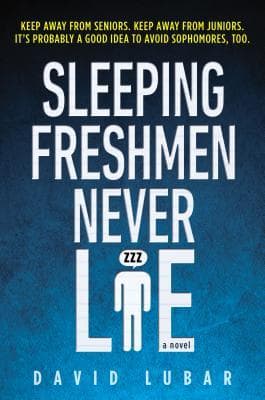
David Lubar (1970)
Genre
Young Adult / Romance
Reading Time
240 min
Key Themes
See below
Sign in to track this book
As his mom's pregnancy nears, freshman Scott writes a funny, sincere survival guide for his unborn sibling, navigating high school crushes, strange clubs, and cafeteria battles, all while trying to win Julia's attention.
Scott Hudson begins his freshman year of high school feeling overwhelmed and out of place. His middle school best friends, Patrick and Mitch, are now in different social groups: Patrick focuses on sports, and Mitch joins the drama club. To add to his worries, Scott's mother announces she is pregnant. Scott decides to cope by writing a 'survival guide' for his future sibling, documenting high school life. He quickly becomes interested in Julia, a beautiful freshman girl he knows from elementary school, making his main goal for the year to win her affection. He also reconnects with his childhood friend, Kyle, who is now much taller and more confident.
Wanting to get closer to Julia, Scott starts joining many extracurricular activities. He signs up for the school newspaper, the yearbook committee, and even the drama club, despite not being good at acting. These attempts often fail or create awkward situations. While navigating these new environments, Scott spends more time with Lee, an artistic girl who often wears all black and prefers to be called 'Smelly.' Initially, Scott sees Lee as just a friend, someone to confide in about Julia, but her unique perspective and kindness slowly make an impression on him, even as he remains focused on Julia.
As the school year goes on, Scott's mother's pregnancy becomes more obvious, making him more anxious about his sibling's arrival. He struggles with the idea of sharing his parents' attention and the changes a baby will bring. At the same time, his friendships with Patrick and Mitch continue to drift apart. Patrick is busy with football and his new friends, while Mitch is fully involved in the drama club, dating the lead actress, and rarely has time for Scott. Scott feels more isolated from his old friends, finding comfort mainly in his writing for the survival guide and his evolving, though still platonic, relationship with Lee.
Scott joins the literary magazine, mostly because Julia is also involved. To his surprise, he discovers he is good at writing, especially poetry. He starts to enjoy the creative process and finds a new way to express his feelings and observations about high school. This unexpected talent boosts his confidence somewhat and provides a sense of accomplishment outside of his social struggles. He begins to contribute regularly to the magazine, impressing the faculty advisor and his peers. This involvement also lets him spend more time with Julia in a more academic setting, though their interactions remain mostly platonic, to Scott's frustration.
Scott finally asks Julia to the upcoming school dance. To his dismay, she politely declines, saying she already has a boyfriend, Vernon, a senior. This rejection deeply affects Scott, shattering his long-held fantasy of a relationship with Julia. He attends the dance feeling sad, watching his friends and classmates from the sidelines. This experience makes him face the reality of his situation and how pointless his focus on Julia was. He realizes he has been so busy chasing an ideal that he has overlooked other parts of his life and the people around him who truly care about him.
After the disappointment of the dance, Scott finds comfort and understanding in Lee. She listens to his problems without judgment, offering a different view on his romantic pursuits and high school life. Lee's friendship and unique outlook make Scott question his priorities. He begins to appreciate her for who she is, rather than seeing her as just someone to talk to about Julia. Their conversations get deeper, and Scott starts to see her character and her genuine care for him. He notices her kindness, intelligence, and artistic spirit, qualities he had not seen before.
Near the end of the school year, Scott's baby brother is born. He is nervous at first, but holding his tiny brother, he feels an unexpected wave of protectiveness and affection. The baby's arrival, whom his parents name Sean, changes the family dynamic, but not as negatively as Scott had expected. He begins to accept his role as an older brother, finding a new purpose in preparing his survival guide for Sean. This event shows Scott's growth, as he starts to understand family and responsibility beyond his own immediate desires.
With the school year ending, Scott tries to reconnect with Patrick and Mitch. While their friendships are not exactly as they were in middle school, they find common ground and begin to rebuild their bonds, acknowledging the changes they have all gone through. More importantly, Scott's feelings for Lee deepen. He realizes that chasing Julia had made him blind to how wonderful Lee is. He starts to see her in a romantic way, appreciating her wit, kindness, and individuality. This realization marks a turning point in his understanding of love and friendship.
In the final days of freshman year, Scott acknowledges his growing romantic feelings for Lee. He realizes that he has been looking for love in the wrong place and that the person who truly understood and supported him was there all along. He tells Lee his feelings, not with a grand gesture, but sincerely. The book ends with Scott and Lee sharing a moment, suggesting the start of a new, more real relationship. He has learned that high school is not just about chasing popular girls, but about finding real connections and discovering himself.
The Protagonist
Scott transforms from an infatuated, self-conscious freshman into a more self-aware and mature individual who values authentic relationships.
The Supporting/Romantic Interest
Lee remains consistently true to herself, acting as a steady anchor for Scott's evolving perspective, eventually being recognized for her true worth.
The Supporting
Julia remains a consistent object of Scott's affection, representing his initial, naive understanding of love and popularity.
The Supporting
Patrick navigates the social changes of high school, temporarily distancing himself from Scott but eventually reconnecting.
The Supporting
Mitch embraces his passion for drama, leading to a temporary rift with Scott, but their friendship endures.
The Supporting
Kyle showcases a positive transformation during adolescence, maintaining a supportive friendship with Scott.
The Supporting
Mr. Franka acts as a mentor, fostering Scott's hidden writing talent.
The Supporting
Mrs. Hudson's pregnancy and the birth of her new child catalyze Scott's journey of maturity.
The Mentioned
Sean's birth completes Scott's family, giving him a new sense of responsibility and purpose.
Scott's freshman year is a journey of self-discovery. He first tries to define himself through his crush on Julia and by joining various clubs without real interest. However, through his experiences—rejection, drifting friendships, and his unexpected talent for writing—he learns who he truly is and what he values. His 'survival guide' becomes a record of this changing identity, not just for his brother, but for himself.
“Maybe high school wasn't about trying to be somebody. Maybe it was about trying to be yourself.”
The book explores how friendships change during adolescence. Scott's relationships with Patrick and Mitch evolve and sometimes strain because of their different interests. More importantly, it looks at the difference between infatuation and real love. Scott's initial focus on Julia gives way to a deeper appreciation and romantic feeling for Lee. This shows that true connection often comes from shared understanding and acceptance, rather than idealized beauty.
“Sometimes the person you were looking for was right there all along, you just weren't looking hard enough.”
High school is a time of great change, and Scott faces many uncertainties: new social groups, shifting friendships, and his mother's unexpected pregnancy. His 'survival guide' is a direct response to this uncertainty, an attempt to bring order to chaos. The book shows how people cope with change, adapt to new situations, and grow through challenging experiences, like his brother's birth and his romantic disappointments.
“Life was like a big, confusing instruction manual, and sometimes you just had to figure things out for yourself.”
Scott's 'survival guide' is a main part of the story, serving as his primary way to express himself and reflect. Through writing, he processes his experiences, worries, and observations. What starts as a practical guide for his sibling becomes a personal journal and a record of his own growth. He also discovers a talent for poetry and contributing to the literary magazine, showing how writing can be a powerful tool for understanding oneself and the world.
“Writing was like talking to yourself, but without anyone thinking you were crazy.”
Scott's ongoing journal entries for his unborn sibling.
The entire novel is framed as Scott's 'survival guide' for his unborn baby brother, Sean. This device allows Scott to directly address the reader (or Sean), sharing his thoughts, anxieties, and advice in a conversational and often humorous tone. It provides a unique narrative voice, allowing for both immediate reactions to events and reflective insights. It also gives Scott a clear purpose and a way to process the overwhelming experience of freshman year, transforming from a simple list of tips to a profound record of his personal growth.
The story is told entirely through Scott's eyes and thoughts.
The novel is narrated in the first-person by Scott Hudson. This perspective immerses the reader directly into Scott's mind, allowing for a deep understanding of his anxieties, infatuations, and evolving insights. We experience his social awkwardness, his crushes, and his eventual maturation directly through his internal monologue and observations. This makes his journey of self-discovery feel very personal and relatable, enhancing the coming-of-age aspect of the story.
Situational irony and Scott's self-deprecating humor.
The book frequently employs irony and humor, often stemming from Scott's awkward situations and his self-deprecating reflections. Much of the humor comes from the contrast between Scott's idealized expectations of high school (and Julia) and the often messy, unglamorous reality. The irony is also present in his initial blindness to Lee's qualities while fixated on Julia. This comedic tone makes the relatable struggles of high school more engaging and lightens the emotional weight of Scott's disappointments, while also highlighting his growth.
Clubs represent Scott's attempts to fit in and his eventual self-discovery.
The various clubs Scott joins (newspaper, yearbook, drama, literary magazine) serve as symbolic representations of his journey. Initially, they are mere tools to get closer to Julia, signifying his superficial motivations. As he progresses, his involvement, particularly in the literary magazine, becomes a genuine outlet for his talents and a place where he finds authentic connection and self-worth, moving beyond his initial, shallow intentions.
“High school is like a game of chess. You have to think three moves ahead, and sometimes you have to sacrifice a pawn to save the king.”
— Scott Hudson reflects on navigating freshman year.
“The only thing worse than being a freshman is being a freshman who's in love.”
— Scott's thoughts on his crush on Julia.
“Sometimes the best way to get through something is to write about it.”
— Scott explains his journaling habit to his brother.
“You don't have to be popular to be happy. You just have to be yourself.”
— Scott's realization after trying to fit in.
“A true friend is someone who knows all your flaws and still likes you anyway.”
— Scott reflecting on his friendship with Kyle.
“Love isn't about finding the perfect person. It's about seeing the imperfections and loving them anyway.”
— Scott's musings on his feelings for Julia.
“The hardest part of growing up is realizing that your parents are human too.”
— Scott's thoughts after a conversation with his parents.
“Sometimes the quietest people have the loudest minds.”
— Scott observes a shy classmate.
“You can't change the past, but you can learn from it and make the future better.”
— Scott advises his brother after a mistake.
“The best stories are the ones that are true, even if they're embarrassing.”
— Scott writes in his journal about freshman experiences.
“Being a freshman is like being a newborn baby in a world of giants.”
— Scott describes the overwhelming feeling of starting high school.
“Love is worth the risk, even if it means getting your heart broken.”
— Scott decides to confess his feelings to Julia.
“The only way to find out who you are is to try new things and see what sticks.”
— Scott joins the school newspaper to explore interests.
“Family isn't just about blood. It's about who's there for you when you need them.”
— Scott reflects on support from friends and family.
Ready to see how well you understood this book? Take our interactive quiz with 10 questions.

David Lubar is a prolific author of young adult fiction, celebrated for his engaging and often humorous stories. His notable works include "Hidden Talents" and "Sleeping Freshmen Never Lie," which explore themes of adolescence, friendship, and the extraordinary found in everyday life. Lubar's accessible writing style and relatable characters have earned him a dedicated readership among young adults.