“There are no good guys and bad guys. There's just guys. Guys who do good things and guys who do bad things.”
— A reflection on the moral ambiguity of the characters and the world they inhabit.

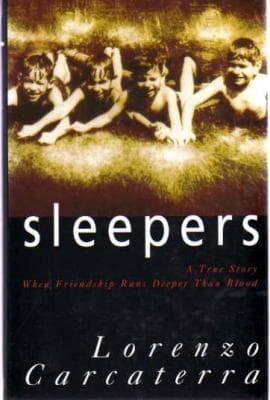
Lorenzo Carcaterra (1995)
Genre
Thriller / Mystery
Reading Time
10-12 hours
Key Themes
See below
Sign in to track this book
Four Hell's Kitchen friends, scarred by a year of brutal abuse in a juvenile home, reunite decades later to orchestrate an elaborate, high-stakes revenge plot that blurs the lines between street justice and legal manipulation.
In the summer of 1967, young Lorenzo Carcaterra (Shakes), Michael Sullivan, John Riley, and Tommy Marcano are close friends in Hell's Kitchen, New York. They are known for their pranks and street smarts. One afternoon, they prank a hot dog vendor by stealing his cart. The prank goes wrong when the cart rolls down a hill and kills a man. Police immediately catch the boys, identified by a witness. Despite their young age and the accidental death, they are charged and sentenced to one year at the Wilkinson Home for Boys, a brutal reformatory upstate. This event shatters their childhood and community trust.
At Wilkinson, the four boys face terror from the guards, led by Sean Nokes, Ralph Ferguson, Henry Addison, and Adam Styler. Abuse begins almost immediately, from severe beatings to psychological torment. The most traumatic experiences are repeated sexual assaults by the guards, especially Nokes, in the showers and isolated areas. These horrific events create a silent pact of shared trauma among the boys. They develop a deep hatred for their tormentors and vow never to speak of what happened, even to each other, but also never to forget.
After their year-long ordeal, the boys are released from Wilkinson and return to Hell's Kitchen. The trauma has changed them permanently. Michael Sullivan, deeply affected, studies law, determined to understand and use the system that failed them. Lorenzo Carcaterra (Shakes) becomes a journalist, using words. John Riley and Tommy Marcano, however, struggle with their inner demons. They become withdrawn and violent, eventually becoming professional hitmen for the local mafia, unable to escape the rage and scars from Wilkinson.
Years later, in 1980, John Riley and Tommy Marcano, now criminals, are dining in a Hell's Kitchen restaurant. By chance, their former Wilkinson tormentor, Sean Nokes, walks in, now a security guard. Recognition is immediate and chilling. Seeing Nokes reignites the suppressed anger and trauma in John and Tommy. Without hesitation, and in front of witnesses, they murder Nokes. They are arrested and charged with murder, creating the opportunity for revenge, planned by their childhood friends.
When Lorenzo and Michael hear of John and Tommy's arrest, they see their chance for revenge. Michael, now a District Attorney, finds a way to use the legal system. He approaches Lorenzo, and together they plan a daring scheme. Their main strategy is for Michael to secretly prosecute John and Tommy, but intentionally mess up the case to get them acquitted. This would free their friends and allow them to publicly expose the other Wilkinson guards—Ralph Ferguson, Henry Addison, and Adam Styler—who would be called as defense witnesses. This would humiliate them and make them targets for John and Tommy after release.
To carry out their complex plan, Lorenzo and Michael need help from trusted people from their past. They go to King Benny, a respected Irish mob boss in Hell's Kitchen who had always looked out for the boys. Benny, loyal to the community and aware of the injustices the boys suffered, agrees to provide alibis and resources. They also get help from Father Bobby Carillo, a beloved local priest who mentored the boys and suspected the abuse at Wilkinson. Father Bobby, despite his moral conflict, agrees to lie on the stand, giving a false alibi for John and Tommy. He is driven by his love for the boys and his belief in a higher form of justice.
The trial for Sean Nokes' murder begins, with Michael Sullivan as the prosecuting attorney, a position he secured strategically. Danny Snyder, a flamboyant and experienced lawyer chosen by King Benny, handles the defense, unaware of the larger scheme. Snyder is told to present a strong defense but not to explore certain areas too deeply. The courtroom is full of Hell's Kitchen residents, closely watching the fate of their local boys. Michael, under great pressure, must appear to prosecute strongly while secretly ensuring the defense has every advantage, all while hiding his true motives from the court.
As planned, the defense calls Ralph Ferguson, Henry Addison, and Adam Styler, the other Wilkinson guards, as witnesses. The goal is to discredit Nokes' character and show a motive for the murder tied to the boys' past. Under questioning, especially from Michael (who subtly guides the story using his prosecutor role), the guards must testify about their time at Wilkinson. While they deny abuse, their behavior and vague answers suggest the truth. Lorenzo, in the courtroom, sees the guards' growing discomfort and fear as their past slowly comes out, exposing their horrific actions to the public.
A key moment in the trial comes when Father Bobby Carillo testifies. Despite his faith and moral struggles, he agrees to commit perjury for the boys he loves. He testifies that John and Tommy were with him at a Knicks game when Nokes was murdered, giving a detailed and convincing alibi. His testimony, from a respected man of the cloth, strongly influences the jury. This act by Father Bobby is important to the defense's strategy, showing how far their community will go to protect them and ensure their freedom, even if it means lying under oath.
After much discussion, the jury finds John Riley and Tommy Marcano not guilty, to the quiet relief and satisfaction of the Hell's Kitchen community. Michael's plan has worked. The remaining Wilkinson guards, now exposed and humiliated, face their own consequences, though their final fates are somewhat unclear. The four friends, having gotten their revenge, know they can never truly escape their past. They go their separate ways: John and Tommy disappear, Michael continues his legal career, and Lorenzo continues his writing, forever haunted and connected by their shared trauma and the extraordinary lengths they went to for justice. The story ends with Lorenzo thinking about their strong bond and the cost of their vengeance.
The Protagonist/Narrator
From an innocent prankster, he becomes a survivor and a writer, using his voice to seek justice and document their shared trauma.
The Protagonist/Strategist
Transforms from a traumatized boy into a powerful prosecutor who uses the law as a weapon for street justice.
The Protagonist/Avenger
An innocent boy turned into a violent avenger, forever marked by the atrocities he endured.
The Protagonist/Avenger
From a fun-loving child to a hardened criminal, seeking retribution for past wrongs.
The Antagonist
A brutal abuser who ultimately faces a violent end at the hands of his former victims.
The Supporting
A man of God who sacrifices his moral purity for the sake of justice and loyalty to his community.
The Supporting
A powerful street figure who uses his influence to right past wrongs for the boys he cherishes.
The Supporting
Remains a constant, loving presence, providing emotional support and stability for Lorenzo.
The Supporting
A professional lawyer who unknowingly becomes a pawn in a larger game of street justice.
The main theme looks at the unclear line between seeking justice and getting revenge. The boys, failed by the legal system at Wilkinson, take matters into their own hands. Their plan to arrange Nokes' murder and then manipulate the trial to expose the other guards raises questions about whether their actions are true justice or just more violence. The story suggests that for victims of such deep trauma, traditional justice might not be enough, leading to a desperate, morally complex search for retribution. John and Tommy's acquittal shows the community's quiet approval of their 'street justice'.
“We did it not for justice, but for revenge. And for us, at that moment, they were the same thing.”
The book clearly shows how the four boys brutally and permanently lost their innocence at Wilkinson. Their childhood, initially marked by harmless pranks and friendship in Hell's Kitchen, is destroyed by the abuse they face. The trauma leaves deep psychological scars that shape their future: two become lawyers/writers focused on the system, and two become violent criminals. The story often returns to the Wilkinson experience, showing how the past continues to affect and define their adult lives, stopping them from truly escaping the horrors. Their inability to talk about the abuse with each other further shows the depth of their shared trauma.
“The Wilkinson Home for Boys took away our childhood and replaced it with a darkness that would never leave us.”
A core idea in 'Sleepers' is the strong loyalty among the four friends. Their shared experience at Wilkinson creates a powerful brotherhood, a silent agreement of solidarity and mutual protection. This loyalty drives the elaborate revenge plot, as Michael and Lorenzo risk their careers and lives to free John and Tommy. King Benny and Father Bobby's willingness to commit perjury also highlights this theme, extending loyalty beyond the four boys to the entire Hell's Kitchen community, who stand together against outside injustice. This loyalty goes beyond legal and moral rules.
“We were four boys, then four men, bound by a secret and a loyalty that would last our entire lives.”
The novel criticizes how various societal systems can be corrupt and fail. The Wilkinson Home for Boys, supposedly a reformatory, is shown to be a place of abuse and cruelty, with the system failing to protect the vulnerable children. The legal system also has flaws, first by sending the boys to such a place and later by being used by Michael for his own goals. This manipulation, though for a 'just' cause in the friends' eyes, shows how the system can be bent and broken. The story suggests that when official channels fail, people are driven to create their own forms of 'justice'.
“The law wasn't about right or wrong, it was about who had the power to make their version of the truth stick.”
The story constantly makes the reader face moral uncertainty. While the abuse at Wilkinson is clearly evil, the revenge the boys take is far from simple. Nokes' murder is brutal, and manipulating the court, including a priest committing perjury, involves morally questionable actions. The story does not hide the protagonists' dark side, showing them as complex people driven by deep pain rather than simple heroes. This theme challenges the audience to consider if the ends justify the means, and if 'justice' achieved through unethical methods can truly be called just.
“We were doing something wrong to make something right. And that, in itself, was a kind of hell.”
The story is told retrospectively by Lorenzo, shaping the reader's perception.
The entire story is narrated by Lorenzo 'Shakes' Carcaterra, looking back on the events from adulthood. This first-person perspective provides intimate access to his thoughts, feelings, and the shared trauma of the boys. However, it also introduces an element of unreliability, as the narrative is colored by his personal experiences, emotional investment, and the passage of time. The narrator is an active participant and architect of the revenge, making his account inherently biased towards justifying their actions and highlighting the injustices they faced, thereby inviting the reader to empathize with their morally ambiguous choices.
Alternates between the boys' childhood/Wilkinson and the adult revenge plot.
The narrative structure frequently shifts between two distinct timelines: the boys' childhood in Hell's Kitchen and their horrific year at Wilkinson, and the adult lives of the four friends culminating in the murder trial. This device effectively establishes the profound impact of the past on the present. The flashbacks to Wilkinson serve to build empathy for the characters and justify their later actions, while the present-day narrative builds suspense around the intricate revenge plot. The constant interweaving emphasizes that the past is not merely prologue but an ever-present force shaping their identities and motivations.
A symbolic setting representing institutional failure and trauma.
The Wilkinson Home for Boys functions as more than just a setting; it is a powerful symbol of institutional failure, corruption, and the destruction of innocence. It represents the dark underbelly of a system meant to rehabilitate but instead perpetrates unspeakable horrors. The home becomes a crucible that forges the boys' unbreakable bond but also their deep-seated rage and trauma. Its memory haunts them for life, serving as the constant motivation for their revenge. The name 'Wilkinson' itself becomes synonymous with abuse and injustice within the narrative.
A thematic conflict explored through the characters' actions and motivations.
This is a pervasive narrative device that pits the formal legal system against the informal, often violent, code of justice prevalent in Hell's Kitchen. The boys initially experience the failure of legal justice when they are wrongly sentenced and then abused by those entrusted with their care. Their subsequent revenge plot, orchestrated through legal manipulation and outright criminal acts, is a clear manifestation of street justice taking precedence. The trial itself becomes a stage where these two forms of justice clash, with the community's loyalty to the boys (street justice) ultimately triumphing over the letter of the law.
“There are no good guys and bad guys. There's just guys. Guys who do good things and guys who do bad things.”
— A reflection on the moral ambiguity of the characters and the world they inhabit.
“Sometimes you have to do a bad thing to make a good thing happen.”
— A justification for the morally questionable actions taken by the protagonists.
“The past is a ghost. It haunts you, it follows you, but it can't hurt you unless you let it.”
— Reflecting on the enduring impact of their childhood trauma.
“We were just kids. But they turned us into something else.”
— The boys' realization of how their time in the reformatory changed them forever.
“There's a thin line between justice and revenge. And sometimes, you have to cross it.”
— A central theme of the book, as the boys seek retribution for their suffering.
“Some things, once broken, can never truly be put back together.”
— A somber realization about the lasting damage inflicted upon them.
“The worst kind of betrayal is from those you trust the most.”
— Referring to the betrayal by the system and the guards who were supposed to protect them.
“You can never truly escape your past. It's always a part of you.”
— The lingering effects of their experiences on their adult lives.
“Silence can be louder than any scream.”
— Referring to the unspoken suffering and secrets kept by the boys.
“Friendship isn't about who you've known the longest, it's about who walked into your life, said 'I'm here for you,' and proved it.”
— Highlighting the unbreakable bond between the four friends.
“The world doesn't care about your pain. You have to fight for your own peace.”
— A cynical view of the world and the need for self-reliance in seeking justice.
“Sometimes, the only way to heal is to make those who hurt you pay.”
— Driving the motive for their elaborate plan of revenge.
“We lost our childhood, but we never lost each other.”
— Emphasizing the enduring strength of their friendship despite their shared trauma.
“The truth is a weapon. And sometimes, it's the only one you have.”
— Referring to their strategy in using the legal system to expose the truth and achieve their goals.
Ready to see how well you understood this book? Take our interactive quiz with 10 questions.







