“They don't take your memories. They take your emotions.”
— Kyla's initial understanding of the Slating process and its true impact.

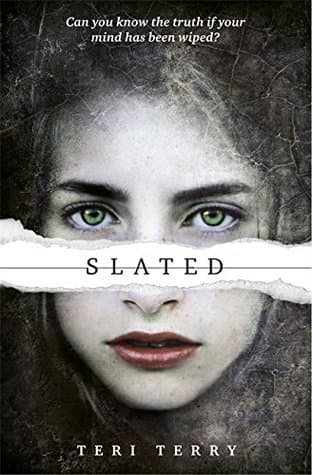
Teri Terry (2012)
Genre
Thriller / Fantasy / Mystery / Science Fiction / Young Adult
Reading Time
9-10 hours
Key Themes
See below
Sign in to track this book
A 'slated' teenager, without her memories and called a terrorist, must remember her past to expose the truth behind her government's supposed mercy.
Kyla wakes up in a hospital, her memory completely gone, a process called 'Slating.' She is told she was a dangerous criminal, a 'terrorist,' and this is her second chance. She gets a new name, Kyla, and a new family: her new mother, Amy; her father, Ben; and her younger sister, Abi. Kyla finds it hard to adjust to her new life, constantly watched by her Levo, a wrist device that tracks her emotions and can sedate her if her heart rate or stress levels get too high. She feels a deep sense of loss and confusion, seeing fragmented images and feelings that hint at a past she cannot remember. Her new family tries to be supportive, but Kyla senses a cautious distance, especially from Abi.
Kyla starts going to school for Slateds, where she meets other teenagers like her. She becomes friends with Jazz, a lively girl who quickly becomes her confidante, and finds that not all Slateds are happy with their new lives. Kyla also meets Ben, a mysterious and intense boy who seems different. They feel an immediate, strong connection, and Kyla is drawn to him despite strict rules against close attachments, especially to other Slateds. She notices that Ben also seems to have memory flashes or unusual reactions, suggesting a past that might not be fully erased. Their growing bond makes Kyla question the official story of Slating even more.
As Kyla tries to live her new life, she has vivid dreams and fragmented memories that feel real. These flashes often involve violence, a dark room, and fear. She sees a girl's face, hears a specific song, and feels a strong need to understand what happened to her before she was Slated. She tells Jazz about these experiences, but Jazz is less eager to explore her own past. Kyla's Levo often shows high stress levels during these times, leading to warnings and the threat of sedation. She starts to suspect that the government's story about her being a terrorist might be a lie, or not the full truth, and that her 'erased' past is trying to come back.
Through Ben, Kyla meets a secret group of Slateds who are trying to get their memories back and resist government control. This group includes Nico, a more cynical and rebellious Slated, and others who share Kyla's suspicion about their pasts. They meet in secret, sharing information and ways to bypass the Levo's monitoring. Kyla learns that not all Slateds were criminals; some were political dissidents or their children. This deeply bothers her and strengthens her will to find the truth about her own past. She starts to actively join their efforts, feeling a sense of purpose and belonging she has not felt since her Slating.
Kyla and Ben work together, following clues from their fragmented memories. Kyla remembers a specific song and a distinct symbol, while Ben remembers certain places. They realize that the government agency responsible for Slating, the AAR (Anti-Aggression Regime), is more sinister than they first thought. The AAR not only erases memories but also manipulates public opinion and strictly controls its citizens. They learn that anyone who deviates too much or tries to regain their memories risks 're-Slating' – a more thorough and possibly fatal memory wipe. The stakes become very high as they realize their search for truth could lead to their permanent erasure.
Kyla's trust is broken when she finds out that Jazz, her closest friend, has been an informant for the AAR. Jazz, afraid of re-Slating and desperate to avoid further punishment, has been reporting Kyla's suspicious activities and her involvement with Ben and the resistance group. This betrayal is a huge blow to Kyla, making her question everyone and showing the constant surveillance and control of the AAR. The discovery forces Kyla to be more careful and aware of the constant danger she is in, even from those she thought were friends. It shows the psychological manipulation and fear the AAR uses to control society and its Slated population.
Kyla and Ben put together enough clues to realize they knew each other before being Slated. They find a hidden place, an abandoned building, that triggers strong memories for both of them. Through their shared flashes, they realize they were part of a resistance movement, and that Kyla's original name was Rain, and Ben's was Mac. The most shocking discovery is that Ben (Mac) was the one who accidentally led the AAR to Kyla's (Rain's) group, causing their capture and Slating. This truth is painful for both of them, adding guilt and complexity to their relationship. Kyla deals with the pain of this discovery, trying to reconcile the Ben she knows with Mac's actions.
Feeling more and more trapped and realizing the AAR is closing in, Kyla and Ben decide to escape the controlled environment. They know that staying means re-Slating or worse. They manage to avoid the strict surveillance and leave their assigned homes, starting a dangerous journey to find the full truth about their identities and the resistance they were part of. Their escape is full of danger, as the AAR constantly hunts them. They rely on their wits and the fragmented memories they have recovered, hoping to find allies who can help them understand the larger political situation and why they were targeted.
Kyla and Ben eventually contact remnants of the original resistance movement, including people who knew them before they were Slated. They learn that the AAR is not just about controlling criminals; it is a totalitarian system that silences dissent and manipulates people through fear and propaganda. The Slating program is a way to get rid of political opposition and make people conform. Kyla discovers her original identity, Rain, was an important person in the resistance, known for her strong will and leadership. This knowledge empowers her but also puts a greater burden on her, as she realizes the fight is much bigger than her personal search for memory.
Kyla, now fully accepting her identity as Rain, confronts the AAR and those who created the Slating program. She uses her recovered memories and the resistance's support to expose the AAR's lies and cruelty. While the immediate threat from the AAR is huge, Kyla and Ben (Mac) realize they can make a difference. The book ends with Kyla and Ben, along with the renewed resistance, getting ready for a bigger fight against the oppressive system. Kyla has accepted her past, embracing both the pain and the strength it gives her. She is no longer just a Slated, but a leader, fighting for freedom and memory for all.
The Protagonist
Kyla evolves from a confused, memory-wiped girl into a determined leader who embraces her past identity as Rain and fights against the oppressive regime.
The Supporting
Ben grapples with his past guilt as Mac, slowly opening up to Kyla and working alongside her to fight the AAR.
The Supporting
Jazz succumbs to fear and becomes an informant for the AAR, prioritizing her own safety over her friendship with Kyla.
The Supporting
Amy remains a consistent source of maternal care for Kyla, providing a semblance of normalcy amidst the chaos of Kyla's memory recovery.
The Supporting
Abi's initial wariness towards Kyla evolves into genuine sisterly affection and concern.
The Supporting
Nico remains a steadfast and practical member of the resistance, providing support and a more cynical perspective.
The Supporting
Ben remains a somewhat detached figure, representing the societal compliance with the Slating system.
The Antagonist
The AAR maintains its oppressive control throughout the narrative, serving as the constant threat against Kyla and the resistance.
The main theme is Kyla's struggle to get her identity back after being Slated. Her journey looks at what makes up a self, whether it is memories, personality, or an inner spirit. As Kyla puts together parts of her past, she deals with who she was and who she is becoming, questioning the idea that memory loss means a blank slate. This theme is key to her growth, as she eventually reclaims her original name, Rain, and accepts her true self, not just the one given to her.
““I’m not Kyla. I’m Rain. And I won’t forget again.””
The strength and weakness of memory are central to the story. The AAR tries to control truth by erasing memories, but Kyla's subconscious fights back, showing that memories are deeply set and important to one's sense of reality. The book explores how personal and shared memory shapes identity and understanding of the world. Kyla's search for truth is tied to her search for her memories, revealing the government's lies and the true nature of their oppressive system. The fragmented nature of her memories adds mystery and urgency to her journey.
““They can slate us, but they can’t erase who we were. Not completely.””
The novel shows a dystopian society where a totalitarian government, the AAR, completely controls its citizens, especially through the Slating program and Levo devices. This theme looks at the conflict between individual freedom and government oppression. Kyla's fight to regain her memories and independence is a direct act of rebellion against this control. The characters' attempts to get around the Levo, form secret groups, and eventually escape the system show the human desire for freedom and how far people will go to get it, even against overwhelming power.
““The Levo is always listening. Always watching. They want us to be afraid, to be compliant.””
Trust is rare in Kyla's world, constantly tested by constant surveillance and the AAR's manipulative tactics. Kyla's initial trust in her new family and friends is challenged, most notably by Jazz's betrayal, which highlights the psychological warfare used by the AAR. The theme looks at how hard it is to form real connections when everyone could be an informant or a victim of the system. On the other hand, the deep trust Kyla builds with Ben and the resistance members becomes a strong force against the system, showing the importance of unity against oppression.
““How can you trust anyone when they can just wipe your mind clean and make you forget?””
The Slating process is an act of dehumanization, making individuals into blank slates and taking away their past, personality, and ability to act. The AAR sees Slateds as dangerous criminals to be re-educated and controlled, denying their basic humanity. Kyla's journey is a strong statement of humanity, as she fights to reclaim her individuality, emotions, and personal history. The novel asks what truly makes a person human and if identity can ever truly be erased, arguing for the lasting power of the human spirit to resist such attempts at dehumanization.
““They want us to be empty. But we're not empty. We're just… waiting.””
A wrist device monitoring emotions and enforcing compliance.
The Levo is a crucial technological plot device worn by all Slated individuals. It functions as a constant monitor of their heart rate and emotional state, designed to identify and suppress any heightened emotions (anger, fear, etc.) that might indicate a return of their pre-Slating personality or rebellious thoughts. If Kyla's Levo registers too much stress, it can administer a sedative, or even trigger a 're-Slating.' This device symbolizes the AAR's pervasive surveillance and control, acting as a constant physical and psychological threat that limits the characters' freedom and drives much of the tension in the narrative.
Disjointed images and sensations that hint at Kyla's past.
Kyla experiences fragmented memories and vivid flashbacks, often triggered by specific sounds, smells, or interactions. These are not coherent recollections but disjointed images, feelings, and snippets of sounds that gradually build a picture of her past. This device serves as the primary driver of the mystery and Kyla's quest for truth. It creates suspense for the reader, revealing information slowly and compelling Kyla to investigate further. It also emphasizes the idea that memories are not easily erased and can resurface despite extreme measures, highlighting the resilience of the human mind.
The governmental procedure of memory erasure and personality wipe.
The Slating process itself is a central plot device, defining the entire premise of the book. It's a procedure performed by the AAR to erase the memories and personalities of 'criminals,' giving them a 'second chance' under strict government control. This device immediately establishes the dystopian setting and the core conflict: Kyla's struggle against the system that has stripped her of her past. It raises profound questions about identity, justice, and the ethics of memory manipulation, setting the stage for Kyla's journey of self-discovery and rebellion.
A clandestine network of Slateds and allies fighting the AAR.
The resistance group, which Kyla eventually joins, acts as a crucial plot device for advancing the narrative and revealing the true nature of the AAR. This underground network provides Kyla with allies, information, and a sense of purpose. It allows her to move beyond her personal quest for memory and engage in a larger fight against oppression. The group's existence demonstrates that not all Slateds are compliant and that dissent can thrive even under extreme surveillance, offering hope and a platform for collective action against the totalitarian regime.
“They don't take your memories. They take your emotions.”
— Kyla's initial understanding of the Slating process and its true impact.
“I am not what happened to me. I am what I choose to become.”
— Kyla's internal struggle for identity and agency after being Slated.
“The past isn't just a story. It's a part of you.”
— Kyla's growing realization that her past, though hidden, still influences her.
“Sometimes the safest place is the one you run from.”
— Kyla's growing suspicion about the true nature of her 'safe' new life.
“Fear is a powerful tool. But it can also be a weapon against those who wield it.”
— Kyla's observation about the government's control tactics and their potential weakness.
“How can you know who you are if you don't know where you came from?”
— Kyla's fundamental question as she tries to piece together her pre-Slated life.
“There are no easy answers, only harder questions.”
— Kyla's reflection on the complexity of her situation and the truths she uncovers.
“They take away your past so you can't be held accountable for it. But they also take away your future.”
— Kyla's understanding of the Slating process as both a punishment and a stripping of potential.
“The truth is a dangerous thing, especially when it's buried.”
— Kyla's journey to uncover the hidden truths about her world and herself.
“You can't erase who someone is. Not really.”
— Kyla's growing belief that her core identity persists despite the Slating.
“The hardest prison is the one you don't know you're in.”
— Kyla's realization about the subtle yet pervasive control exerted by the government.
“Sometimes doing nothing is the hardest choice of all.”
— Kyla's internal conflict when faced with difficult decisions and the stakes involved.
“Trust is a luxury I can't afford.”
— Kyla's cautious approach to relationships given her circumstances and the pervasive deception.
“The world isn't black and white. It's a thousand shades of grey.”
— Kyla's evolving perspective on morality and the complexities of the system she lives in.
Ready to see how well you understood this book? Take our interactive quiz with 10 questions.

Biography coming soon.







