“Every house has a heart, and the heart of Slade House is pure black.”
— Early in the novel, hinting at the sinister nature of the house.

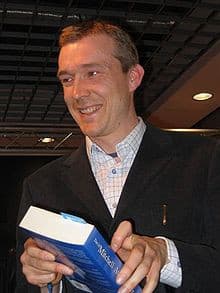
David Mitchell (2015)
Genre
Literary Fiction / Thriller / Fantasy / Mystery / Science Fiction
Reading Time
240 min
Key Themes
See below
Sign in to track this book
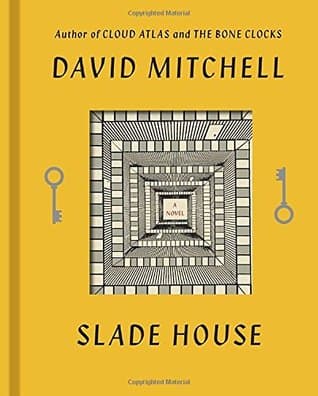
Every nine years, a hidden manor lures lonely souls into its reality-warping embrace, trapping them in a cycle of spiritual consumption by its immortal, parasitic residents.
Nathan Bishop, a musically talented but socially awkward 13-year-old, visits his mother, Rita, at The Swan and Sugarloaf pub in October 1979. A strange, small black iron door in an alley draws him in. He follows a cat and meets Norah Grayer, a beautiful woman who invites him into Slade House. Inside, he meets Norah's equally charming brother, Ibb. They flatter Nathan, praise his musical talent, and offer him a drink that makes him feel euphoric and disoriented. He experiences strange temporal shifts and a sense of growing weakness. Eventually, Ibb and Norah reveal their true, monstrous forms. Nathan realizes he is trapped. They extract his 'psychosorium'—his soul/life force—leaving his body behind as they prepare for their next nine-year ritual.
Nine years later, in 1987, Detective J.M. Chetwyn investigates the cold case of Nathan Bishop's disappearance. He is recently divorced and feels lost. His investigation leads him to the alley behind The Swan and Sugarloaf, where he finds the iron door. Inside Slade House, he meets Norah and Ibb Grayer, who present themselves as the house's eccentric owners. They claim Nathan was a troubled youth who ran away. Chetwyn, despite his professional skepticism, is drawn into their web, experiencing disorientation and temporal confusion like Nathan. He discovers the house itself seems to shift. As he tries to find the truth, the Grayers overpower him. He too falls victim to their ritual, his 'psychosorium' consumed.
In 1997, Sally Timms, a shy art student, is drawn to Slade House after seeing an advertisement for a 'life modeling' opportunity. She struggles with self-doubt and loneliness. Norah and Ibb Grayer welcome her, praising her artistic sensibilities and making her feel valued. Sally experiences the house's strange, shifting nature, where rooms appear and disappear, and time flows erratically. She feels growing unease but is also captivated by the Grayers' charm. As her energy wanes, she discovers a collection of portraits in the house—each a former victim. Realizing her fate, she tries to escape but is ultimately trapped and consumed, her 'psychosorium' adding to the Grayers' sustenance.
Ten years later, in 2007, Fredrick L Griffin, a cynical and ambitious journalist, investigates the series of disappearances linked to The Swan and Sugarloaf pub. He is skeptical but intrigued by the local legends. He finds the iron door and is invited into Slade House by Norah and Ibb. Unlike previous victims, Fredrick resists their charms more, constantly questioning and trying to record his experiences. He discovers a hidden room containing evidence of the Grayers' past victims, including Nathan Bishop's old Walkman. He attempts to expose them but is outmatched by their supernatural abilities. The Grayers reveal their true nature and consume his 'psychosorium,' noting his strong will.
In 2015, Dr. Iris Marinus-Fenby, a powerful psychic and member of a secret society called the 'Anchorites,' is drawn to Slade House. She has a unique ability to perceive 'psychosoriums' and the true nature of reality. She enters the house, fully aware of the Grayers' predatory nature. Iris confronts Norah and Ibb, revealing she knows their history: they are 'Soul Eaters,' ancient beings who sustain themselves by consuming the souls of others. She also reveals their origin as former Anchorites who betrayed their order for immortality. Iris, using her psychic powers, tries to destroy them and free the trapped souls within the house, engaging in a fierce mental battle.
During her confrontation, Iris Marinus-Fenby reveals the Grayers' true history. Norah and Ibb were once human Anchorites, members of a group dedicated to safeguarding the boundary between worlds and protecting humanity from supernatural threats. They became obsessed with immortality and discovered a forbidden ritual to achieve it by consuming 'psychosoriums'—the souls of others. This act transformed them into the monstrous 'Soul Eaters' they are today, bound to Slade House and its nine-year cycle of predation. Iris explains that the Anchorites have tried to track and stop them for centuries, and she is their latest attempt to end the Grayers' terror.
Iris engages Norah and Ibb in a brutal psychic battle within Slade House. She uses her unique abilities to manipulate the house's shifting realities and to awaken the residual 'psychosoriums' of their past victims, including Nathan, Chetwyn, Sally, and Fredrick. These trapped souls, though weakened, begin to resist the Grayers, causing them pain and confusion. Iris aims to overload the Grayers with their own consumed souls, hoping to unravel their immortality. The house itself becomes a battlefield, its fabric twisting and turning in response to the immense psychic energy being expended by all involved.
The psychic battle intensifies, with Iris pushing her abilities to their limits. She sacrifices her own 'psychosorium,' merging it with the collective strength of the Grayers' past victims. This overwhelming surge of energy finally breaks Norah and Ibb's hold on their immortality and on Slade House. The house begins to violently collapse, its impossible architecture dissolving. Norah and Ibb scream in agony as they are consumed by the very souls they devoured, their existence unraveling. Iris, having completed her mission, also fades away, her 'psychosorium' expended to end the Grayers' terror and free the trapped souls.
Following the collapse of Slade House and the demise of Norah and Ibb, the small black iron door in the alley behind The Swan and Sugarloaf pub vanishes, leaving no trace. Local residents, who had always vaguely sensed something amiss with the alley, now find it unremarkable. The disappearances cease, and the lingering dread dissipates. The events of Slade House become a forgotten local eccentricity, or perhaps a whispered urban legend, with no concrete evidence. The Anchorites continue their watch, aware that while one threat has been neutralized, others may still exist, maintaining their silent vigil over the boundaries of reality.
The final battle waged by Iris Marinus-Fenby breaks the ancient, nine-year cycle of predation that Norah and Ibb Grayer had maintained for centuries. With their destruction, the 'psychosoriums' of Nathan Bishop, J.M. Chetwyn, Sally Timms, Fredrick L Griffin, and countless others, previously trapped within Slade House and sustaining the Grayers, are finally released. These souls are no longer bound to the house or their tormentors, finding peace and the ability to move on. The horrifying ritual of the Soul Eaters ends, ensuring that no more innocent lives will be lured into the impossible architecture of Slade House for its monstrous inhabitants' sustenance.
The Antagonist
Norah's character remains largely static, a creature of unchanging predation, until her ultimate destruction by Iris Marinus-Fenby.
The Antagonist
Ibb, like Norah, shows no character development, remaining a monstrous entity until his demise.
The Protagonist/Victim
Nathan's arc is tragic; he is lured and consumed, but his trapped 'psychosorium' eventually contributes to the Grayers' downfall.
The Protagonist/Victim
Chetwyn's arc is one of investigative pursuit leading to personal tragedy, ultimately becoming a part of the house's trapped essence.
The Protagonist/Victim
Sally's journey is one of hopeful vulnerability turning into a terrifying realization of her entrapment.
The Protagonist/Victim
Fredrick's arc is a race against time to expose the truth, ending in his capture but providing crucial information to Iris.
The Protagonist
Iris's arc is one of heroic sacrifice, successfully ending the Grayers' reign and freeing their victims.
The Mentioned/Supporting
The Anchorites' arc is ongoing, a timeless battle against forces that threaten reality.
The novel explores how the Grayers prey on the emotional and psychological vulnerabilities of their victims. Each character, from Nathan's loneliness and desire for recognition to Chetwyn's post-divorce isolation and Sally's insecurity, is chosen for a specific weakness that Norah and Ibb exploit. The house itself acts as a sophisticated trap, adapting to each victim's psyche, making their vulnerability a key to their downfall. This theme highlights how easily even strong-willed individuals can be manipulated when their deepest needs are targeted, as seen when Fredrick's ambition leads him to his doom.
“''It's always the same, isn't it? The lonely ones, the ones who feel different. They're the easiest to invite in.'”
Slade House constantly blurs the line between reality and illusion. The house itself is a sentient, shifting entity; its architecture and temporal flow defy conventional physics. Rooms appear and disappear, time loops, and memories are distorted. This challenges both the characters' and the reader's understanding of what is real. The 'psychosoriums' concept emphasizes that subjective perception and a being's essence are more significant than physical form. Iris Marinus-Fenby's ability to 'see' the true nature of things is crucial. She perceives layers of reality hidden from ordinary humans, allowing her to navigate and ultimately dismantle the Grayers' illusory world.
“''Slade House isn't a place, not really. It's a state of mind, made manifest.'”
The Grayers' immortality is central to the narrative, but it comes at a horrific price: the continuous consumption of human souls. Their existence is parasitic, sustained by the suffering and essence of others. This theme explores the moral implications of seeking eternal life through such means, portraying it not as a blessing but as a curse that has twisted Norah and Ibb into monstrous, emotionless beings. Their past as human Anchorites, who chose this path, shows the corruption of their initial purpose and the ultimate emptiness of an immortality without genuine connection or humanity. Their eventual destruction frees the souls they've held captive, suggesting that true peace lies in the natural cycle of life and death.
“''To live forever, one must take forever from others.'”
Each victim leaves a trace, a 'psychosorium' that holds their memories and essence within Slade House. The house itself seems to 'remember' its past inhabitants, and the Grayers can access these memories, taunting their new victims. This highlights how trauma and significant life events can imprint themselves on a place and its inhabitants. The novel also explores the legacy of the Grayers' actions—the unresolved disappearances, the lingering dread in the area, and the Anchorites' centuries-long pursuit. Ultimately, Iris's mission is not just to stop the Grayers but to free these trapped memories and allow the victims' spirits to find peace, breaking the cycle of their painful legacy.
“''The house remembers. Oh yes, it remembers everything.'”
Slade House itself is a living, impossible entity that adapts to its victims.
Slade House is not merely a setting but a crucial character and plot device. Its architecture constantly shifts, rooms appear and disappear, and its internal geography defies logic. This serves to disorient victims, making escape impossible and enhancing the psychological horror. It's also intrinsically linked to the Grayers' power, acting as an extension of their will and their trap. The house's 'psychosorium' is also a collective of consumed souls, providing power and a prison. Its eventual collapse signifies the complete destruction of the Grayers' power and the release of their victims.
The Grayers' ritual of predation occurs precisely every nine years.
The nine-year cycle is a recurring structural element that drives the plot forward, marking the intervals between each victim's story. It creates a sense of dread and inevitability, as readers anticipate the next disappearance. This precise timing hints at a deeper, possibly cosmic or ritualistic, aspect to the Grayers' existence and power. It also allows for the generational spanning of the narrative, connecting different eras through this consistent, horrifying pattern until Iris finally breaks it.
The spiritual essence or soul of a person, consumed by the Grayers.
The 'psychosorium' is a unique concept introduced to explain how the Grayers sustain themselves. It represents the sum total of a person's consciousness, memories, and life force. Its consumption leaves the body behind, creating the mystery of the disappearances. This device allows for the Grayers to gain not just sustenance but also the knowledge and experiences of their victims, subtly influencing their interactions with future prey. It also provides the mechanism for Iris to fight back, by awakening and harnessing the trapped 'psychosoriums' of past victims.
A magical, elusive portal that appears only when conditions are right.
The small black iron door is the physical gateway to Slade House, but it's more than just an entrance. It's an iconic symbol of temptation, mystery, and entrapment. It only appears to those the Grayers deem suitable victims, and only when the 'conditions are exactly right,' hinting at a magical or psychic resonance. Its elusive nature adds to the house's mystique and the impossibility of its existence, making it a powerful symbol of the boundary between the mundane world and the supernatural horrors within.
“Every house has a heart, and the heart of Slade House is pure black.”
— Early in the novel, hinting at the sinister nature of the house.
“The past is a foreign country; they do things differently there. But the future is an even stranger one.”
— A character reflecting on time and the unfolding events.
“We are what we remember. If we lose our memories, are we still ourselves?”
— A recurring theme as characters face memory manipulation and loss.
“The greatest trick the devil ever pulled was convincing the world he didn't exist. The second greatest was convincing people they were safe.”
— A character's cynical observation about perceived security.
“Life is a series of doors. Some open, some close, some lead to places you never expected.”
— A metaphorical reflection on life's journey and choices.
“Fear is a powerful tool. It can make you do things you never thought possible, both good and bad.”
— Discussing the influence of fear on human actions.
“There are always two sides to every story, and sometimes, a third, hidden one.”
— Emphasizing the complexity of truth and narrative.
“To be truly free, you must first acknowledge your chains.”
— A character's realization about their own entrapment.
“The house eats time. It eats lives. It eats souls.”
— A stark description of Slade House's predatory nature.
“Every secret has a shelf life. Eventually, it spoils.”
— A character contemplating the inevitable unraveling of hidden truths.
“The world is not always what it seems. Sometimes, it's much, much stranger.”
— Reflecting on the hidden, fantastical elements beneath the mundane.
“Love, in its purest form, is a kind of madness.”
— A character's intense emotional experience leading to profound actions.
“Even the smallest act of defiance can spark a revolution.”
— An observation on the potential impact of individual resistance.
“What is magic but science we don't yet understand?”
— A character musing on the nature of the supernatural phenomena.
Ready to see how well you understood this book? Take our interactive quiz with 10 questions.
David or Dave Mitchell may refer to:







