“The prairie had its own kind of beauty, Sarah said, a quiet beauty.”
— Sarah reflecting on the landscape after moving from the coast.

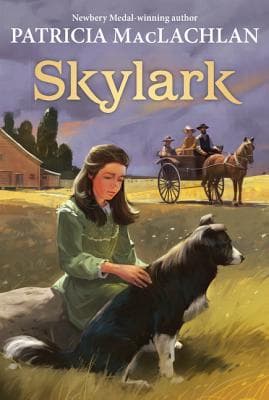
Patricia MacLachlan (1994)
Genre
Children's / Historical Fiction / Young Adult
Reading Time
90 min
Key Themes
See below
Sign in to track this book
During a severe prairie drought, a young girl named Anna struggles with her family's separation, as her mother, Sarah, longs for the sea, hoping her parents will reunite and their home will be whole again.
Anna, a young girl on the prairie, tells her family's story. Her mother, Sarah, misses her Maine home and finds the flat prairie difficult. Sarah often sings sad songs and looks east, longing for the ocean. Anna's father, Jacob, connected to the land, tries to comfort Sarah, but a relentless drought increases her unease. Fields turn to dust, well water shrinks, and fire threatens. This environmental crisis worsens Sarah's homesickness and fear, setting a somber mood for the family's future.
The drought worsens, bringing devastating prairie fires. The sky fills with smoke, and the air smells of burning grass. Animals, like coyotes, desperate for water, come closer to the farmhouse. Sarah, overwhelmed by the harsh conditions and constant danger, decides to leave. She believes it is the only way to protect her children, Anna and Caleb. Despite Jacob's quiet request for her to stay, Sarah is firm, packing their few things for the long trip back to Maine, leaving Jacob to care for the land he will not abandon.
Anna, Caleb, and Sarah begin their train journey to Maine. The children are excited by the train and changing scenery, but Anna also feels a deep loss and worry for her father. Sarah, relieved to leave the drought-stricken prairie, carries a heavy heart, often looking back as if she might change her mind. During the trip, Anna tries to comfort her mother, understanding her longing for the familiar. The train ride symbolizes both escape and separation, showing the emotional gap in their family.
In Maine, Sarah, Anna, and Caleb are welcomed by Sarah's two aunts, who live by the sea. The environment is very different from the prairie: lush, green, and filled with the sound and smell of the ocean. Anna and Caleb enjoy exploring the beach and playing with their cousins. However, despite the beauty and comfort of family, Anna misses the prairie and, most of all, her father. Sarah, though seemingly more at peace, still carries a quiet sadness, often staring out at the sea with a distant look, thinking of Jacob.
As weeks pass, Anna's longing for her father and the prairie grows. She writes letters to Jacob, describing her experiences but also expressing her deep wish to return. Sarah, though seemingly happier by the sea, still shows signs of inner conflict. She often talks about Jacob and the farm, showing that part of her remains on the prairie. Anna notices that while Sarah is physically in Maine, her heart is divided. This time highlights the complex idea of 'home' and strong family bonds, even when separated by long distances.
One day, a letter from Jacob arrives. Anna eagerly reads it, her heart full of hope. Jacob writes that the much-awaited rain has come to the prairie, and the land is slowly recovering. He mentions green shoots appearing and renewed life. Though his words are simple, Anna senses a deep longing for his family in them. The letter restarts the children's wish to return and subtly influences Sarah, who begins to think seriously about their future.
Jacob's letter starts a visible inner struggle for Sarah. She spends more time by the window, looking at the ocean, but her thoughts are elsewhere. She talks to Anna about the conflicting pull of her two homes — the comfort of Maine versus love for her husband and the life they built on the prairie. Anna, sensing her mother's trouble, gently reminds her of Jacob and their shared life. Sarah's decision is not easy; it means choosing between two deeply rooted parts of herself.
After much thought, Sarah decides to return to the prairie. This choice comes not just from news of rain, but from her deep love for Jacob and the realization that their family is incomplete without him. Anna and Caleb are overjoyed, their excitement clear. Sarah understands that while the prairie may not be her first love, it is where her family is, and that is where her heart belongs. The decision marks a big change in Sarah's view, as she embraces her prairie life with new purpose.
Sarah, Anna, and Caleb begin their journey back to the prairie. This time, the train ride is filled with a different kind of anticipation. Anna notices a new lightness in her mother. Sarah is still quiet, but her gaze no longer longs for the past; it looks toward the future. The children talk excitedly about seeing their father and the farm. The journey west symbolizes a family reuniting and a woman embracing her chosen life, ready to face the prairie's challenges with her husband.
The train arrives, and Jacob is there to meet them. The reunion is tender and emotional, showing their lasting love. Anna sees the prairie, now green after the rains, a sharp contrast to the dry land they left. Sarah, seeing Jacob and the revitalized land, finally seems to find peace. The family returns to their farmhouse, not just to a place, but to a re-established sense of belonging and completeness. The drought's challenges have made them a stronger, more resilient family.
Back on the prairie, Sarah seems changed. She still misses the sea, but her sadness is balanced with quiet acceptance and a growing affection for the land. She helps Jacob with chores, sings songs, and finds joy in their daily life. Anna notices Sarah watching the 'skylarks' — the small, tough birds — with new understanding, perhaps seeing herself in their persistence. The family, having endured separation and hardship, is now stronger and more united, ready to face whatever the prairie brings with shared resilience and love.
The Protagonist
Anna begins as a child caught between her parents' differing loves, but through the separation, she gains a deeper understanding of love, home, and resilience.
The Supporting
Sarah transforms from a woman consumed by homesickness to one who, through separation, chooses and embraces her life on the prairie with her family.
The Supporting
Jacob remains a steady, unchanging force, symbolizing the enduring nature of love for land and family.
The Supporting
Caleb's arc is less about personal growth and more about experiencing the family's journey through a child's eyes.
The Supporting
They serve as static figures representing Sarah's past and a temporary refuge.
The novel explores what 'home' truly means. For Sarah, home is initially Maine and the ocean, causing deep homesickness on the prairie. For Jacob, home is the land he farms. Anna struggles with the idea that home is where her family is, feeling incomplete without her father. The separation helps Sarah realize that while Maine offers comfort, her true home is with her husband and children, even if the landscape is difficult. This idea is central when Sarah chooses to return to the prairie, putting family before her personal preference for a place.
“''I miss the sea,' Mama would say sometimes, gazing east. But she would say, 'I miss Papa,' too, as if he were the sea.”
The harsh prairie environment, especially the severe drought and fires, tests the characters' resilience. Jacob shows this through his firm commitment to his land, refusing to abandon it despite hardship. Sarah's resilience is clear in her difficult decision to leave to protect her children, and then in her even harder decision to return and accept a life she once struggled with. Anna and Caleb also show resilience by adapting to new places and enduring separation. The 'skylarks' in the title and text are a metaphor for this theme, small birds that thrive in the open, often harsh prairie.
“Sometimes I felt as if we were all skylarks, flying high, but always coming back to the nest.”
At its heart, the story is about the lasting power of love and family bonds. Sarah's love for her children makes her leave the prairie, and her love for Jacob eventually brings her back. Anna's deep affection for both parents and her wish for a complete family unit are central to the story. The separation, though painful, ultimately strengthens these bonds, as the characters realize how essential they are to each other's happiness. The quiet, steady love between Jacob and Sarah, even when separated, is a strong undercurrent throughout the book.
“It was quiet in the house, but it was not empty. It was full of Papa.”
The book clearly shows the challenging relationship between humans and nature, specifically the prairie. The drought, fires, and the vast landscape are not just backgrounds but active forces shaping characters' lives and choices. Sarah struggles against the prairie's harshness, while Jacob works with it. The story highlights nature's power to both sustain and destroy, and the need to adapt to its unpredictable rhythms. The return of rain symbolizes nature's eventual generosity and the cycle of life on the plains.
“The land was brown and cracked. The sky was the same, brown and cracked, too.”
The story is told through the eyes of the young daughter, Anna.
Anna's first-person perspective allows the reader to experience the family's struggles and triumphs through an empathetic, observant, and slightly innocent lens. Her narration captures the emotional nuances of her mother's homesickness and her own longing for her father, making the complex adult themes accessible and relatable. It also provides a sense of immediacy and personal connection to the events, as Anna processes the changes in her world.
The small, resilient bird symbolizes hope, perseverance, and finding joy in challenging environments.
The skylark, mentioned explicitly in the title and implicitly throughout the narrative, symbolizes the characters' ability to find beauty and hope amidst hardship. Like the bird that sings joyfully even in the vast, sometimes desolate prairie, Sarah, Anna, and Jacob learn to persevere. The skylark represents resilience, the quiet beauty of the prairie, and the idea that even in tough times, there is always a song to be sung, a reason to hope, and a spirit to endure.
The stark differences between the prairie and Maine highlight the characters' internal conflicts.
The novel uses the contrasting settings of the arid, challenging prairie and the lush, ocean-side environment of Maine to underscore Sarah's internal conflict and the family's journey. The prairie represents hardship, Jacob's steadfastness, and the chosen life. Maine represents Sarah's past, comfort, and a temporary refuge. The juxtaposition of these two places amplifies the emotional weight of Sarah's decision and clarifies the different pulls on her heart and the family's identity.
The environmental crisis serves as the primary external conflict driving the plot.
The severe drought is not just a natural phenomenon but a central plot device. It acts as the catalyst for Sarah's decision to leave the prairie, creating the family's separation and the core conflict of the story. The drought symbolizes the overwhelming challenges of life and the way external pressures can impact personal relationships. Its eventual breaking, marked by the arrival of rain, signifies a turning point, allowing for resolution and reunion.
“The prairie had its own kind of beauty, Sarah said, a quiet beauty.”
— Sarah reflecting on the landscape after moving from the coast.
“Sometimes I think I was born in the wrong place. Sometimes I think I have sand in my shoes and the sea in my heart.”
— Anna expressing her longing for the ocean, a recurring theme.
“Mama said that words were like seeds. Plant them carefully, she said, and they will grow into something beautiful. Or something thorny.”
— Anna recalling her mother's wisdom about the power of language.
“The wind was a constant companion on the prairie, whispering secrets, telling stories.”
— Anna's observation of the pervasive wind and its personification.
“Sometimes, when you miss something so much it hurts, you have to find a way to carry it with you.”
— Caleb offering comfort and advice to Anna about her longing for the sea.
“Love is not a house, Anna. It is a feeling. It can live anywhere.”
— Sarah reassuring Anna about the nature of love and family.
“Books were windows to other worlds, and Anna loved to look through them.”
— Anna's deep appreciation for reading and its escapism.
“The sky was so big out here, bigger than anything she had ever known. It made her feel small, but in a good way.”
— Anna's awe at the vastness of the prairie sky.
“A family is like a quilt, Mama said. Each piece different, but all sewn together with love.”
— Anna remembering another of her mother's analogies about family.
“There are some things you carry with you, like a stone in your pocket. Heavy, but familiar.”
— Anna reflecting on the persistent memories and feelings she holds.
“Even the quietest things have a voice, if you listen closely enough.”
— Anna learning to appreciate the subtle sounds and life of the prairie.
“Hope is a small bird, Mama said. You have to feed it, or it will fly away.”
— Anna recalling her mother's advice on nurturing hope.
“The world is full of beauty, Anna, even in the smallest things. You just have to open your eyes to see it.”
— Sarah encouraging Anna to find beauty in her surroundings.
“Sometimes, the hardest journeys are the ones that lead you home.”
— Anna's realization about her personal growth and acceptance of her new life.
Ready to see how well you understood this book? Take our interactive quiz with 10 questions.

Biography coming soon.

Dan Gemeinhart
4.5

Kate O'Hearn
4.4

Jeanne Birdsall
4.4

Jen Wang
4.4

Wendelin Van Draanen
4.3

John Marsden
4.3

Chris Van Allsburg
4.3

Jennifer A. Nielsen
4.2