“The stars watch, and the stars wait. They do not judge, but they remember.”
— A common refrain among the Helian people, emphasizing their connection to the celestial.

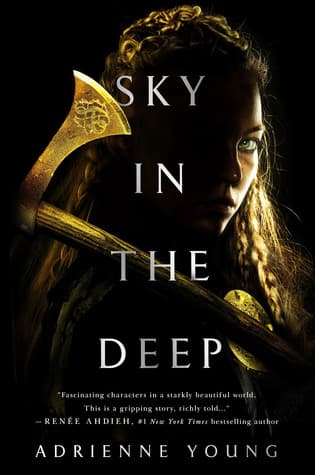
Young, Adrienne Young (2018)
Genre
Fantasy / Historical Fiction / Young Adult / Romance
Reading Time
6-7 hours
Key Themes
See below
Sign in to track this book
A Viking warrior, Eelyn, finds her brother fighting for the enemy, forcing her to unite with her foes and a rival to face a legendary threat, redefining loyalty and family.
Seventeen-year-old Eelyn, an Aska warrior, fights in a brutal annual battle against the Riki clan. Amid the chaos, Eelyn sees a figure on the Riki side who looks like her brother, Iri, whom she watched die five years earlier. The shock is immense as she sees him fighting, alive. Her focus breaks, and she feels confused and betrayed. The Riki win the battle, and Eelyn, disoriented, is captured by Riki warriors, including Iri and his friend, Fiske.
Eelyn is taken prisoner to the Riki village, a place she only knew as the enemy's home. Her first days are filled with hostility and suspicion from the Riki, especially from Fiske, who sees her as a threat. She lives with Iri and his family, including his Riki wife, Myra. Eelyn struggles to accept the brother she knew with this changed man who now fights for the Riki. She must adapt to their customs and endure their mistrust, all while missing her Aska clan and trying to understand Iri’s defection.
As winter comes, Eelyn becomes part of Riki village life, doing chores and learning their routines. She continues to argue with Fiske, but also begins to see the Riki as people with families and traditions like her own. She watches Iri's life with Myra and their child, seeing his happiness and loyalty to his new clan. This forced closeness starts to break down her ingrained hatred, though she still wants to return to the Aska. She slowly earns some respect from the Riki, especially from Myra, who tries to help them connect.
Rumors of a ruthless clan called the Herja spread through the Riki village. At first, these are dismissed as myth, but they become real as reports of brutal raids on distant villages arrive. The Herja are known for their ferocity and for leaving no survivors. This new, external threat makes the Riki consider a danger far greater than their old feud with the Aska. Fear of the Herja starts to overshadow the hatred between the two clans.
The Herja's presence becomes clear when they attack a Riki outpost. Eelyn, Iri, and Fiske find themselves fighting together against the common enemy. This battle is a turning point, as Eelyn sees the Herja's brutal efficiency and the fear they inspire. The experience forces them to rely on each other, blurring their clan loyalties in the face of a shared threat. The realization that their individual clans are vulnerable grows, and the need for a united front becomes clear.
After the Herja raid, Eelyn, Iri, and Fiske understand that neither the Aska nor the Riki can stand against this new threat alone. They decide to propose an unthinkable alliance: the two warring clans must unite. This is a radical idea, challenging centuries of tradition and hatred. Eelyn, with Iri and Fiske's support, becomes a messenger, returning to her Aska clan to convince her family and elders of this partnership, despite the pain of Iri's perceived betrayal and the Aska's deep hatred for the Riki.
Eelyn's return to the Aska brings a mix of relief and suspicion. She faces her mother and the clan elders, who are initially outraged by her idea to ally with the Riki, especially with Iri, whom they still consider dead or a traitor. Eelyn tells of her experiences in the Riki village, describes the Herja's brutality, and emphasizes the scale of the threat. She struggles to bridge the gap of hatred and fear, using her own change and new understanding to argue for the alliance, appealing to their survival instincts and love for their people.
After much discussion and Eelyn's pleas, the Aska elders, though hesitant, agree to the alliance. Representatives from both clans meet, a tense and historically charged encounter. Old wounds and prejudices resurface, but the shared fear of the Herja is a strong motivator. Led by Eelyn, Iri, and Fiske, the leaders reluctantly shake hands, agreeing to fight together. This marks a major shift, as warriors who only knew each other as enemies begin to train and prepare for battle together, forming an uneasy but necessary unity.
The combined forces of the Aska and Riki gather, a strong but still fragile alliance. Eelyn fights alongside Fiske, Iri, and warriors from both clans. The battle against the Herja is brutal and bloody, testing the new unity. Warriors who once hated each other now protect each other, driven by the common goal of survival. Eelyn, a brave leader, fights fiercely, showing the spirit of the alliance. The fight shows the power of shared purpose, as the Aska and Riki, for the first time, act as one.
Through great sacrifice and teamwork, the united Aska and Riki forces defeat the Herja, driving them back and securing their lands. The victory is hard-won, with many casualties, but also a strong sense of shared achievement. Afterward, the two clans, though still separate, have a new understanding. Eelyn and Fiske's relationship deepens, a symbol of the potential for peace and love between their peoples. The future is uncertain, but the path towards coexistence and a new kind of family has opened, changing their world forever.
The Protagonist
Eelyn transforms from a rigid, hate-filled warrior into a bridge-builder, learning to see beyond clan rivalry and embrace a broader definition of family and alliance.
The Love Interest/Supporting
Fiske moves from rigid adherence to clan rivalry and suspicion to opening his heart and mind, eventually becoming Eelyn's trusted partner and lover.
The Supporting
Iri, initially seen as a traitor, becomes a crucial bridge between the two clans, reconciling his past and present loyalties to help forge a new future.
The Supporting
Myra remains a steadfast and kind figure, providing emotional support and demonstrating the possibility of cross-clan understanding.
The Supporting
Aki moves from grief and entrenched hatred to a reluctant acceptance of the alliance, driven by her love for her children and her clan's survival.
The Antagonist
The Herja act as a destructive force, driving the narrative towards the unification of the Aska and Riki, and are ultimately defeated.
The book explores how family extends beyond blood and how loyalty can change. Eelyn's idea of family breaks when she sees Iri with the Riki, forcing her to consider what loyalty means. She learns that loyalty can be to a cause, to a person, or to a wider community, even if that community was once an enemy. Iri's choice to build a life with Myra and his Riki child shows that family can be chosen and formed through shared experiences, not just inherited. The final alliance reinforces that true loyalty supports survival and well-being, even if it means uniting with former adversaries.
““Home is not a place, it is a feeling. It is the people, and the love, that makes a home.””
Centuries of animosity between the Aska and Riki have ingrained prejudice in Eelyn. Her captivity forces her to live among her enemies, slowly showing her their humanity. She sees their daily lives, their loves, and their fears, realizing they are not so different from her own people. The shared threat of the Herja acts as a strong catalyst, making both clans set aside their historical hatred for mutual survival. This theme highlights how destructive prejudice is and how understanding and empathy can help, even with deep-seated conflict.
““Hate is a weapon, but it is also a cage. It binds you to the very thing you despise.””
The harsh environment and constant threat of war emphasize survival. Eelyn's warrior upbringing prepares her for physical survival, but her journey requires a deeper adaptation—emotional and psychological. She must adapt to living with her enemies, to the shock of Iri's betrayal, and to the need for an alliance. Both the Aska and Riki clans must adapt their old ways and traditions to survive the Herja threat. This theme highlights resilience, the ability to change when facing adversity, and the human drive to endure.
““We fight to live, but we live to fight. What happens when the fight changes everything you know?””
Throughout the story, characters face choices that shape their destinies and the fate of their clans. Iri's choice to stay with the Riki after being rescued, rather than try to return to the Aska, is a key example. Eelyn's choice to advocate for an alliance, despite her deep hatred and the pain of Iri's 'betrayal,' shows great courage and conviction. Even the clan elders face the difficult choice of upholding tradition or embracing an uncertain future for survival. This theme highlights individual action and the impact of personal decisions on collective outcomes, showing that even in a brutal world, characters can forge their own paths and influence history.
““Sometimes, the hardest choice is the only choice.””
The unexpected reappearance of a character believed dead.
This device is central to the plot, as Eelyn's brother Iri, whom she thought she watched die five years prior, is revealed to be alive and fighting for the enemy Riki clan. This shocking revelation shatters Eelyn's world, challenging her understanding of loyalty, family, and the nature of her enemies. It directly precipitates her capture and immersion into Riki life, setting the entire plot in motion and forcing her to confront deep-seated prejudices and forge new alliances.
Placing characters who are normally adversaries into close, unavoidable contact.
Eelyn's captivity in the Riki village forces her to live alongside her sworn enemies, particularly Iri and Fiske. This sustained, inescapable contact is crucial for breaking down her ingrained hatred and allowing her to see the Riki as individuals rather than a monolithic enemy. It facilitates the development of her romantic relationship with Fiske and her understanding of Iri's new life, ultimately making the alliance between the clans plausible by fostering empathy and mutual understanding.
An outside threat that compels opposing factions to unite.
The emergence of the brutal Herja clan, a common enemy far more dangerous than the Aska and Riki are to each other, serves as the primary external catalyst. Their relentless and indiscriminate raids force both clans to recognize that their traditional rivalry is a luxury they can no longer afford. This shared threat provides the urgent motivation needed for the Aska and Riki to overcome centuries of animosity and forge an unprecedented alliance, highlighting the 'enemy of my enemy is my friend' principle.
A character is thrust into an unfamiliar culture, forcing them to adapt and learn.
Eelyn's time as a captive in the Riki village is a profound experience of cultural immersion. She is forced to learn Riki customs, language (subtly implied), and daily life, which are initially alien and hostile. This immersion allows her to move beyond her preconceived notions and observe the Riki's humanity, their family structures, and their values. It is through this direct experience that she gains the understanding necessary to advocate for and ultimately broker the alliance, changing her perspective from rigid hatred to nuanced empathy.
“The stars watch, and the stars wait. They do not judge, but they remember.”
— A common refrain among the Helian people, emphasizing their connection to the celestial.
“There are some things you cannot outrun, no matter how fast your feet, or how strong your will.”
— Aelin reflecting on the inescapable truths of her life and responsibilities.
“Love is not a weakness, it is a weapon. It is the sharpest edge of all.”
— Spoken by a character about the surprising strength found in emotional bonds.
“We are all born of the same sea, even if we walk different shores.”
— A message of unity and shared humanity, despite tribal differences.
“Sometimes, the only way to find your way home is to get lost first.”
— A character's realization about the journey of self-discovery.
“The past is a ship, and it can either carry you forward or anchor you down.”
— A metaphor about how one chooses to engage with their history.
“Fear can be a shield, or it can be a sword. It depends on how you wield it.”
— Discussing the dual nature of fear and its potential uses.
“A promise made under the stars is a promise etched into the sky itself.”
— Highlighting the sacredness of vows within the Helian tradition.
“Even the mightiest waves eventually recede, but the shore remains.”
— A reflection on endurance and the impermanence of hardship.
“There is a difference between surrender and acceptance. One is defeat, the other is peace.”
— A character's profound understanding of confronting difficult situations.
“The greatest battles are not always fought with swords, but with hearts.”
— Emphasizing the emotional and internal conflicts that characters face.
“To truly see someone, you must look beyond the skin, beyond the tribe, into the soul.”
— A plea for understanding and empathy between warring factions.
“Some wounds heal, leaving only scars. Others leave a hollow space that can never be filled.”
— A poignant observation on grief and loss.
“The sky does not belong to one people, nor does the sea. We are merely its temporary keepers.”
— A philosophy promoting shared stewardship of the world.
Ready to see how well you understood this book? Take our interactive quiz with 10 questions.

Biography coming soon.

Adrienne Young is a USA Today bestselling author known for her immersive fantasy novels. Her notable works include "Namesake" and "Sky in the Deep," which explore themes of identity, belonging, and adventure within richly imagined worlds. Young's writing is characterized by its strong female protagonists and evocative storytelling.







