“There was a girl. She had no name. She belonged to no one. That was the way of things.”
— Opening lines, establishing the protagonist's initial state.

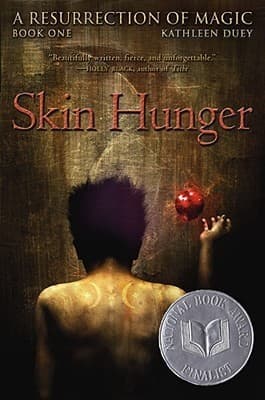
Kathleen Duey (2007)
Genre
Fantasy / Young Adult / Romance
Reading Time
360 min
Key Themes
See below
Sign in to track this book
A young woman's secret ability to talk to animals ties her to a nobleman's dangerous quest, forcing a heartbreaking choice that echoes through centuries to a brutal magic academy where survival is the first lesson.
Sadima lives in a village where magic is forbidden, leaving people open to tricksters. Her mother died after Sadima's birth, a tragedy her family blames on a magician who stole their belongings. Sadima grows up knowing the danger of magic, yet she can secretly talk to animals. She keeps this power hidden, fearing her community's judgment. Her life is a quiet struggle, helping her family survive, always aware of magic whispered in old tales, a contrast to her world without it.
Far from Sadima's village, the young nobleman Somiss is obsessed with bringing magic back. He believes old ways hold lost power and wants to reclaim it. Rumors of a girl who can speak to animals reach him. Seeing this as a sign of true magic, Somiss sends his servant, Franklin, to find her. Franklin, loyal to Somiss, begins this quest, unaware of its impact on his life and others.
Franklin arrives in Sadima's village and watches her. He eventually approaches her, earning her trust with his kind manner. Sadima, needing connection, slowly shares her secret about talking to animals. The joy of sharing this secret turns into deep affection and love for him. Franklin is captivated by Sadima's gift and spirit, torn between his duty to Somiss and his growing feelings for her.
Franklin's goal is to bring Sadima to Somiss. Despite her love for Franklin, Sadima finds herself caught in Somiss's ambitious and often cruel pursuit of magic. She realizes Franklin's loyalty to Somiss is absolute, and their relationship means becoming part of Somiss's dangerous experiments. Sadima begins to understand the cost of rediscovered magic and the moral issues of Somiss's plan.
As Somiss's experiments grow more extreme, Sadima faces the dark side of magic's return. She sees its potential for abuse and the sacrifices Somiss will make, including innocent lives. Caught between her love for Franklin and her horror at Somiss's actions, Sadima faces a heartbreaking choice. She must decide whether to stay with Franklin and support Somiss, or leave, knowing it means losing the man she loves.
Centuries after Sadima's time, magic has returned, but it is tightly controlled. Wizards dominate the world from a hidden academy, deciding who can learn and use magic. This academy is both a school and a prison, admitting only a select few, usually the wealthy. Common people are largely excluded from its power, creating a new social division based on magic.
Hahp is the second son of a rich merchant family. Unlike his older brother, he is not set for a life of power. When the chance (or obligation) comes to send a son to the elite Academy of Magic, Hahp is chosen. He is unwilling and unprepared for the academy's harsh reality, where only one in ten students will graduate. His entry into this cutthroat world begins a difficult journey.
At the academy, Hahp is paired with Gerrard, a peasant boy. Gerrard's admission is unusual, as the academy usually accepts only the privileged. His presence among the nine rich students sets him apart, making him an object of curiosity. This pairing forces Hahp to confront his own ideas and navigate the academy's rigid social structure, while Gerrard struggles to survive in a world not meant for him.
The Academy of Magic is a difficult test. The first rule for the ten students is survival. Lessons are dangerous, and competition is fierce, often leading to injury. Hahp and Gerrard, with their peers, are thrown into a relentless environment where alliances are fragile, and betrayal is a constant threat. They must quickly adapt, learn whom to trust, and fight for their lives to be the one student who graduates.
As Hahp and Gerrard endure the academy's trials, links to Sadima's past appear. Old texts, forgotten stories, and the magic they learn hint at events and people from centuries before. Sadima's choices, her magic, and Somiss's ambition are not just history but active forces shaping the present. Hahp's journey at the academy becomes tied to the echoes of Sadima's life, revealing a powerful link across generations.
The Protagonist
Sadima transforms from a hidden, fearful girl into a woman who understands the true cost of power and makes a courageous, heartbreaking decision for the greater good.
The Supporting
Franklin's unwavering loyalty to Somiss is tested by his love for Sadima, forcing him to witness the moral compromises of his master's quest.
The Antagonist
Somiss's unwavering pursuit of magic leads him to increasingly morally ambiguous and dangerous actions, shaping the future of magic in the world.
The Protagonist
Hahp transforms from a reluctant, privileged youth into a resilient survivor, discovering his own capabilities and purpose within the brutal academy.
The Supporting
Gerrard, the anomaly, struggles to survive and prove his worth in an academy designed for the privileged, forging an enduring bond with Hahp.
The Mentioned
Her tragic death sets the initial conflict and fear surrounding magic in Sadima's life.
The Mentioned
Their family's ambition dictates Hahp's fate, forcing him into the academy.
The novel explores how magic is seen and controlled across different times. In Sadima's era, magic is banned, leading to its suppression and suffering for those with it or those tricked by charlatans. Centuries later, magic has returned but is controlled by an elite academy, making it a tool of power. This theme shows the danger of power, whether suppressed or institutionalized. Somiss's quest for magic and the academy's trials show that magic itself is neutral; its impact depends on who uses and controls it.
“Magic is a hunger. But it can also be a feast or a poison, depending on who serves it.”
This theme focuses on Sadima's story, especially her relationship with Franklin. Her love brings her joy but also links her to Somiss's dangerous plans. Franklin's loyalty to Somiss, from a lifetime of service, creates a dilemma for Sadima, forcing her to choose between happiness and moral integrity. The novel suggests that true love often requires sacrifice, and loyalty can blind people to ethical wrongs. Sadima's decision shows the painful sacrifices love and conscience demand.
“Some bonds are forged so deep, they cannot be broken, even when they lead to ruin.”
Differences in social class are a repeated idea. In Sadima's time, her poverty makes her vulnerable to manipulation by people like Somiss. In Hahp's timeline, the Academy of Magic symbolizes class division, admitting mostly the wealthy. Hahp, as a 'second son,' and Gerrard, a peasant, show how access to knowledge, power, and survival is determined by birthright. The novel criticizes how society can suppress talent or give unearned advantages, continuing cycles of power imbalance.
“The world decides your worth before you draw your first breath, and for some, it's a debt that can never be paid.”
The dual narrative shows how the past affects the present and future. Sadima's choices and Somiss's actions in the past directly shape the magical world Hahp lives in centuries later. The Academy of Magic, its rules, and the nature of returned magic are legacies of past events. Hahp's journey is not just about his survival but also about uncovering echoes of a history he knows nothing about. The novel emphasizes that history is a living force that influences destiny.
“The past is never truly gone; it merely waits for the right moment to whisper its secrets into the present.”
Alternating timelines of Sadima's past and Hahp's future.
The novel employs a dual narrative, presenting two distinct storylines set centuries apart. One follows Sadima's life during a time when magic is banned, and the other follows Hahp's experiences in a future where magic is controlled by an academy. This device allows the author to explore the long-term consequences of actions, choices, and societal shifts related to magic. It builds suspense as the reader gradually uncovers the connections between the two timelines, enriching the thematic depth by showing how historical events shape future realities and character destinies.
Sadima's secret ability to communicate with animals.
Sadima's ability to communicate silently with animals serves as a key plot device. It is the catalyst for her encounter with Franklin and, consequently, with Somiss, drawing her into the central conflict. This 'hidden gift' highlights the dangers of magic in her society and her fear of exposure. It also represents a purer, more intuitive form of magic, contrasting with Somiss's more intellectual and often violent approach. The gift underscores her connection to the natural world and her inherent goodness, setting her apart from those who seek to exploit magic for power.
A brutal, exclusive institution for magic users in the future timeline.
The Academy of Magic functions as a critical plot device in Hahp's storyline. It is not merely a school but a dangerous, competitive arena where students must literally fight for survival. This institution embodies the themes of control, privilege, and the harsh realities of power in the future. Its design, rules, and the deadly trials it imposes drive much of the immediate conflict for Hahp and Gerrard, while also serving as a tangible manifestation of the legacy left by Sadima's era and Somiss's ambition to restore magic in a controlled manner.
Franklin's absolute devotion to Somiss.
Franklin's unwavering and almost unconditional loyalty to Somiss is a crucial plot device. It acts as a powerful barrier between Sadima and a truly free life with Franklin, forcing Sadima to make an impossible choice. This loyalty is a character trait that defines Franklin, explaining his actions and limitations, and it serves to escalate the dramatic tension in Sadima's narrative. It highlights the power dynamics between master and servant and explores the moral complexities that arise when personal affections clash with deeply ingrained obligations.
“There was a girl. She had no name. She belonged to no one. That was the way of things.”
— Opening lines, establishing the protagonist's initial state.
“He knew, with a certainty that chilled him, that he would never be free of this place. Or of her.”
— Gar's realization about his inescapable connection to the village and his captive.
“To be loved was to be owned. And she would not be owned.”
— Sadie's fierce resistance to the idea of love implying possession.
“The hunger was not for food. It was for touch. For a kindness she had never known.”
— Describing Sadie's deep emotional and physical longing.
“He saw the wildness in her eyes, and it mirrored the wildness in his own heart.”
— Gar recognizing a kindred spirit in Sadie's untamed nature.
“Sometimes, the only way to survive was to forget who you were supposed to be.”
— Sadie's internal struggle with her past and forced identity.
“Every touch was a question, and every answer was a new kind of pain.”
— Sadie's conflicted feelings about Gar's physical contact.
“He had taken her freedom, but she had stolen his peace.”
— Gar's internal reflection on the unexpected consequences of his actions.
“The world was a cage, and love was just another lock.”
— Sadie's cynical view of love given her experience of captivity.
“He didn't want to break her. He only wanted to understand.”
— Gar's internal struggle with his desire for control versus empathy.
“She had thought she wanted to be free, but perhaps she only wanted to be safe.”
— Sadie's evolving understanding of her own desires.
“The silence between them was not empty; it was full of all the words they couldn't say.”
— Describing the unspoken tension and understanding between Sadie and Gar.
“He had never known such hunger, not for food, not for power, but for the girl who defied him.”
— Gar's intense and unexpected obsession with Sadie.
“Her name was a whisper on his lips, a secret he couldn't keep.”
— Gar's growing affection and recognition of Sadie as an individual.
Ready to see how well you understood this book? Take our interactive quiz with 10 questions.







