“I opened the garage door and peered in. It was dark and dusty. It smelled of earth and decay.”
— Michael first discovers Skellig in the garage.


David Almond (1998)
Genre
Fantasy / Children's / Young Adult
Reading Time
150 min
Key Themes
See below
Sign in to track this book
In a collapsing garage, a boy whose sister is ill finds a creature of feather and bone, an enigmatic being that blends bird, angel, and the essence of hope.
Ten-year-old Michael and his family move into a new, dilapidated house. The move is stressful because his baby sister is gravely ill with a heart condition, requiring constant care. Michael feels neglected and overwhelmed by the chaos and the weight of his sister's possible death. His parents are consumed with worry and hospital visits, leaving Michael feeling isolated and uncertain about their future in this new home. The garden is overgrown, and the house feels old and crumbling, reflecting the family's fragile state.
Seeking refuge from the emotional turmoil inside the house, Michael explores the neglected garden and finds a crumbling garage. Inside, among dust, debris, and dead insects, he discovers a strange, emaciated creature. It is a man, but with bony shoulder blades that suggest wings, and a peculiar, ancient smell. The creature is weak, covered in cobwebs, and suffering from arthritis. Michael, though initially frightened, feels a pull to help him, bringing him food and drink, despite the creature's initial reluctance and gruffness.
Michael meets Mina, a bright and independent girl who lives next door. Mina is homeschooled and loves nature, art, and poetry, especially the works of William Blake. She is fascinated by birds and observes them closely. Mina is individualistic and encourages Michael to question and explore. Their friendship develops quickly, and Michael finds a confidante in Mina, though he initially keeps the secret of the garage creature from her, unsure how to explain such an extraordinary discovery.
Overwhelmed by the responsibility of caring for the creature and worried about his sister, Michael tells Mina. He leads her to the garage, where she meets the strange being. Unlike Michael's initial fear, Mina approaches the creature with an open mind and wonder. She recognizes the skeletal protrusions on his back as potential wings and suggests he might be an ancient, forgotten being. They decide to move him to a safer, less exposed place, an abandoned house down the road, so he can begin to heal.
Michael and Mina diligently care for the creature, whom they name Skellig. They bring him food, medicine (like aspirin for his arthritis), and even a bottle of '27 and brown ale, which he mysteriously craves. As they nurse him, Skellig slowly regains his strength. One evening, in the abandoned house, a transformation occurs: Skellig's shoulder blades unfurl into magnificent, feathery wings. He is revealed to be a celestial, bird-like being, perhaps an angel or a similar mythical creature, who had fallen ill and become dormant.
Michael's baby sister's condition worsens, leading to more frequent hospital visits and increased despair for his parents. The doctors deliver grim news, and the family prepares for the worst. During this period of anxiety, Michael and Mina continue their visits to Skellig. His quiet, mystical presence and the growing wonder of his transformation provide solace and a distraction from the bleak reality of the baby's illness. Skellig, in his own way, seems to absorb some of their sadness and offers a glimmer of hope.
One night, Skellig calls Michael and Mina to him. He takes their hands, and they enter a shared, dream-like experience. They feel themselves flying, soaring through the air, and seeing the world from above. This mystical journey is spiritual and transformative, connecting them to something ancient and vast. It is an experience that goes beyond the physical and reinforces Skellig's extraordinary nature, leaving Michael and Mina with wonder and a renewed belief in the impossible.
The baby sister's condition reaches a critical point, requiring emergency surgery. The family endures an agonizing wait, fearing the worst. The surgery is successful, and the baby begins a slow but steady recovery. Later, Michael's mother recounts a dream-like experience she had in the hospital, feeling a comforting presence, hearing a voice, and seeing a figure with wings. Michael and Mina realize that Skellig, in some ethereal way, must have visited and influenced the baby's healing, giving her strength and hope.
With the baby recovering and his own strength fully restored, Skellig prepares for his departure. He meets Michael and Mina one last time, sharing some of his ancient wisdom and a sense of the interconnectedness of all life. He explains that there are many like him, and that they are part of a greater, unseen world. With a final, majestic unfurling of his wings, Skellig takes flight from the abandoned house, soaring into the night sky, leaving Michael and Mina with wonder, peace, and the enduring memory of their extraordinary encounter.
Life slowly returns to normal for Michael's family. The baby, named Joy, continues to recover, her health improving daily. The house, once a symbol of distress, begins to feel more like a home as the family heals emotionally. Michael and Mina remain close friends, sharing the secret of Skellig. Their experience has changed them, opening their eyes to the mysteries of the world and the power of compassion and belief. Michael learns to embrace the unknown and finds solace in the enduring bond with his family and Mina.
The Protagonist
Michael transforms from a scared, isolated boy into a compassionate and open-minded individual who embraces the mysteries of life.
The Mysterious Figure
Skellig transitions from a dying, forgotten creature to a vibrant, soaring being, fulfilling his purpose of inspiring wonder and healing.
The Supporting
Mina remains true to her unique self, using her intelligence and open-mindedness to help Michael and Skellig.
The Supporting
She moves from despair and fear to renewed hope and quiet joy as her baby recovers.
The Supporting
He navigates the family crisis, maintaining a practical outlook while also experiencing the emotional toll, eventually finding relief in his daughter's recovery.
The Supporting
From near death, she slowly recovers, symbolizing the triumph of life and hope.
The Mentioned
Does not have a personal arc, serves as a representation of medical reality.
The Supporting
A static character who provides practical support and a sense of normalcy.
The Supporting
A static character who provides a supportive and understanding environment for Mina and Michael.
The novel is steeped in the tension between the despair caused by the baby's critical illness and the hope embodied by Skellig's mysterious presence and eventual transformation. Michael's family experiences despair, symbolized by the 'Dr. Death' diagnosis and the dilapidated house. Skellig, initially a symbol of decay, gradually becomes a beacon of hope and miracle, suggesting that even in the darkest times, unexpected wonders can emerge. The baby's recovery reinforces the triumph of hope.
“He was sick, and old, and rheumatic. He was covered in dust and webs. He was like a bag of bones and a smell of decay. But there was something else.”
Skellig explores the human capacity to believe in things that defy rational explanation. Michael and Mina accept Skellig for what he is, even when they don't fully understand him, showing an open-mindedness that contrasts with the adults' more grounded perspectives. The book suggests that there are mysteries beyond human comprehension, and that sometimes, belief in the impossible is necessary for healing and wonder. Skellig himself is a symbol of the unknown, challenging conventional understandings of life.
“He's not dead. He's just... waiting. Like a statue. Like a thing that's been left behind.”
A central theme is the power of compassion. Michael and Mina's selfless care for Skellig, despite his initial gruffness and frightening appearance, is what allows him to heal and transform. This act of nurturing parallels the family's desperate care for the baby. The novel shows how acts of kindness and sustained attention, whether towards a mysterious creature or a sick child, can lead to profound and miraculous outcomes, creating connection and restoring life.
“We'll feed him, Michael. We'll give him all the love we can.”
The narrative begins with a sense of loss—the loss of Michael's previous home, the possible loss of his baby sister, and the loss of normalcy for his family. The dilapidated house and Skellig's initial state of decay further emphasize this. However, the story moves towards renewal. The house is slowly renovated, the baby recovers, and Skellig is reborn into his true form. This cyclical theme suggests that from endings, new beginnings can emerge, and that life finds a way to renew itself.
“He was a mess, like a collapsed tent or a pile of rubbish. But he was alive.”
The book blends the mundane natural world and the extraordinary supernatural. Mina's deep connection to nature, her love for birds, and her observations of the natural world provide a grounding context. Skellig, however, goes beyond the natural, existing as a blend of human, bird, and angel. This juxtaposition suggests that the natural world holds wonders that hint at deeper, unseen forces, and that the miraculous can be found within the everyday, if one is open to perceiving it.
“He had wings. Not feathery wings like a bird, but wings like the bones of an angel.”
Symbol of decay, neglect, and hidden potential.
The garage serves as both a literal and symbolic setting. Literally, it's a forgotten, crumbling space where Skellig is found, reflecting the family's state of disarray and the baby's illness. Symbolically, it represents a place of neglect and decay, but also a hidden, liminal space where the extraordinary can be discovered. Its transformation, as Michael and Mina clean it and later move Skellig, mirrors the family's slow journey towards healing and hope.
A magical realism element symbolizing renewal and the power of care.
Skellig's gradual physical transformation, from an arthritic, skeletal figure to a creature with magnificent wings, is a key element of magical realism. It's not explicitly explained but is presented as a natural outcome of care and belief. This transformation symbolizes renewal, the triumph of life over decay, and the idea that nurturing something, whether a creature or a hope, can lead to miraculous and profound changes. It reinforces the theme of the unknown and the power of compassion.
Intertextual reference providing thematic depth and character insight.
Mina's frequent references to and recitation of William Blake's poetry, particularly 'Songs of Innocence and of Experience,' enrich the novel's themes. Blake's exploration of innocence, experience, angels, and the spiritual nature of the world provides a philosophical framework for understanding Skellig and the children's wonder. It highlights Mina's intellectual curiosity and open-mindedness, and serves as an intertextual device that deepens the mystical and philosophical undertones of the story.
Catalyst for family crisis and emotional journey.
The baby's critical illness is the primary catalyst for the family's emotional turmoil and Michael's initial isolation. It creates a backdrop of despair against which the discovery of Skellig shines as a counterpoint of hope. The baby's struggle and eventual recovery, seemingly influenced by Skellig, tie the supernatural element directly to the very human themes of life, death, and the power of love and miracles within a family context. Her naming as 'Joy' at the end reinforces the theme of renewal.
“I opened the garage door and peered in. It was dark and dusty. It smelled of earth and decay.”
— Michael first discovers Skellig in the garage.
“He was an old man, a tramp, a hobo. He was dirty and smelly and his clothes were ripped and torn. He was covered in cobwebs and dust and dried leaves.”
— Michael's initial description of Skellig's appearance.
“‘I need aspirin,’ he whispered. ‘And an Owlt. And a Chinese.’”
— Skellig's unusual request for food and medicine.
“‘I’m Mina,’ she said. ‘What’s your name?’ ‘Michael,’ I said. ‘I live next door.’”
— Michael and Mina's first meeting.
“She showed me a dead bird. It was a sparrow. It lay on her palm, its claws curled, its eyes closed.”
— Mina showing Michael her fascination with nature and death.
“‘We don’t have to go to school,’ she said. ‘We have the whole world to learn from.’”
— Mina expressing her unconventional approach to education.
“‘He’s got wings,’ I whispered. ‘Big ones. Folded on his back.’”
— Michael revealing Skellig's true nature to Mina.
“‘We’re all going to die, Michael,’ she said. ‘But some of us are going to live forever.’”
— Mina contemplating mortality and immortality.
“‘It’s like he’s an ancient ancestor,’ said Mina. ‘One of the very first. With wings.’”
— Mina's interpretation of Skellig's origins.
“‘Sometimes,’ he whispered, ‘I think I’m going to disappear.’”
— Skellig expressing his vulnerability and fear of fading away.
“‘You’ve got to keep breathing, Michael,’ she said. ‘You’ve got to keep trying.’”
— Michael's mother encouraging him during his sister's illness.
“We were a tiny miracle, a small, fragile, beautiful thing.”
— Michael reflecting on the birth and survival of his baby sister.
“He held our hands. We felt the tiny bones and the warm skin. We felt the blood and the breath. We felt the life.”
— Skellig holding Michael and Mina's hands, a moment of connection.
“‘Don’t forget,’ he whispered. ‘Don’t forget I’m here.’”
— Skellig's parting words to Michael.
Ready to see how well you understood this book? Take our interactive quiz with 10 questions.
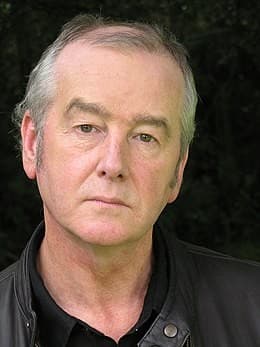
David Almond is an acclaimed British author celebrated for his evocative and often magical realist children's and young adult fiction. His notable works include the award-winning "Skellig," "Kit's Wilderness," and "Clay," as well as the prequel "My Name Is Mina." Almond's writing is characterized by its lyrical prose, exploration of profound themes, and a unique blend of the ordinary and the extraordinary.







