“Every story has a beginning, a middle, and an end. But not necessarily in that order.”
— Early in the book, hinting at the non-linear nature of solving mysteries.

Anthony Horowitz (1999)
Genre
Thriller / Children's / Mystery / Young Adult
Reading Time
360 min
Key Themes
See below
Sign in to track this book
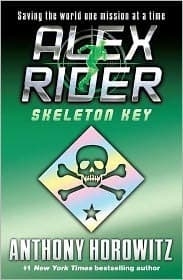
Teenage spy Alex Rider joins the CIA to stop a Russian billionaire with a nuclear weapon, fighting from Miami to Russia to prevent a global disaster.
Alex Rider is on vacation in Miami with his guardian, Jack Starbright. While playing tennis at the Babylon Rock hotel, he sees an elderly British couple, the Pleasures, who work for MI6, get murdered. The CIA, specifically Agent Joe Byrne, quickly arrests Alex. Byrne reveals that the Pleasures were investigating a dangerous Russian general named Alexei Sarov. Because of Alex's past with MI6 and his accidental involvement, the CIA makes him go undercover. He poses as a rich, rebellious teenager named Alex Friend, whose parents are supposedly in rehab. His mission is to get close to Sarov on his isolated Cuban island, Skeleton Key, where Sarov is thought to be planning a major terrorist act.
Alex flies to Skeleton Key, a remote Cuban island, pretending to be a guest. General Sarov, a former KGB agent who wants to restore Russia's past power, greets him, along with his adopted son, Nikolai. Nikolai is a quiet boy around Alex's age. Alex also meets Mrs. Jones (not the MI6 Mrs. Jones), Sarov's strict housekeeper, and Boris, Sarov's bodyguard. Alex notices the island's isolation and the unusual family dynamics. He starts looking for clues about Sarov's plans, observing the general's focus on his 'project' and the security measures.
While on Skeleton Key, Alex uses his spy gadgets to snoop. He finds a secret underground bunker and, with a miniature camera, photographs schematics and documents. He learns that Sarov is planning to detonate a nuclear bomb during a G8 summit in Cuba, blaming the United States. Sarov believes this will destabilize the world and let Russia rise again as a superpower. Alex also realizes that Nikolai is deeply involved in Sarov's plans and looks up to the general, who raised him after his parents died.
Alex continues his search, which leads him to a hidden dock where a broken Soviet nuclear submarine, the K-14, is moored. He realizes this submarine is how Sarov will deliver the nuclear weapon to the G8 summit. Inside the submarine, Alex finds the nuclear warhead, confirming the size of Sarov's plan. He tries to send this information to the CIA using a modified Walkman, but Sarov's surveillance systems intercept his signal. Sarov learns Alex is a spy, leading to a confrontation and Alex's capture.
After being discovered, Boris captures Alex and brings him to Sarov. Sarov, now knowing Alex's true identity, interrogates him. Sarov reveals his connection to the K-14; his son, Vladimir, served on it before dying in an accident. He sees Vladimir's death as a sacrifice for Russia and believes his plan is a tribute. Sarov tries to manipulate Alex, arguing his actions are for a greater good, but Alex resists. During this time, Alex learns more about Nikolai's past and his loyalty to Sarov.
Sarov reveals his most disturbing plan: he wants to replace Nikolai with Alex. He sees Alex as a better heir, intelligent and resourceful, and believes he can shape Alex into his new son to carry on his legacy. He plans to kill Nikolai and have Alex take his place, adopting him. This shocks Alex, who sees Sarov's madness. Sarov explains his reasons, detailing his disappointment in Nikolai's perceived weakness and his desire for a son with Alex's strength and cunning.
Nikolai, hearing Sarov's plan to kill him and replace him with Alex, is devastated and angry. He confronts Alex, initially out of jealousy, but then they find common ground. Nikolai, understanding Sarov's betrayal and madness, decides to help Alex escape. He gives Alex a key and distracts Boris, letting Alex break free. Alex then races to the submarine to stop Sarov's plan, knowing the G8 summit is near and the world is in danger.
Alex boards the K-14 submarine, where Sarov is preparing to launch. A desperate fight starts as Alex tries to disarm the nuclear bomb. Sarov confronts him, attempting to activate the device. Alex uses his intelligence and strength, fighting the older general. During the struggle, Alex manages to change the controls and starts the launch sequence, but not of the missile. Instead, he makes the submarine surface early, alerting authorities and disrupting Sarov's plan.
As the submarine surfaces, Alex and Sarov continue their deadly chase. Sarov, defeated, makes a last attempt to detonate the bomb manually. However, Nikolai intervenes, sacrificing himself to stop Sarov. In the chaos, Sarov dies from an explosion or by his own hand after the bomb is disarmed. The CIA and Cuban forces arrive, securing the submarine and rescuing Alex. The world is saved from nuclear destruction, and Alex, again, is a hero, shaken by the events and Nikolai's sacrifice.
After the intense mission, Alex is debriefed by the CIA and returns to London. He reunites with Jack Starbright, who is relieved he is safe. The events on Skeleton Key leave a lasting mark on Alex, especially Nikolai's tragic death and Sarov's twisted ideas. He thinks about the morality of his missions and the heavy costs. Though the world is safe, Alex knows his life as a teenage spy is not over, and he must continue to navigate the dangerous world of espionage while trying to live a normal life.
The Protagonist
Alex is forced to mature rapidly, confronting the moral complexities of espionage and the personal sacrifices involved. He becomes more cynical but also more resilient.
The Antagonist
Sarov's descent into madness and his unwavering commitment to his extreme ideology lead to his ultimate downfall and the destruction of his plans.
The Supporting
Nikolai's journey is one of disillusionment and self-sacrifice, as he realizes the true nature of his adoptive father and chooses to do what is right.
The Supporting
Jack's arc remains consistent as a steadfast, protective figure, constantly worried about Alex's safety but understanding his unique circumstances.
The Supporting
Byrne remains a consistent, professional, and somewhat detached operative, representing the institutional forces that control Alex's life.
The Supporting
Boris remains a static character, serving as a loyal and physically imposing antagonist under Sarov's command.
The Supporting
Mrs. Jones's character remains consistent as a morally grounded figure within MI6, always advocating for Alex's safety.
The Supporting
Blunt remains a static character, consistently prioritizing mission success over individual welfare.
This theme looks at the psychological and physical demands placed on Alex Rider, a fourteen-year-old, as he is repeatedly forced into dangerous spy missions. The story shows the innocence he loses and the moral compromises he makes. In 'Skeleton Key,' the CIA forces him into a mission against a nuclear terrorist, treating him as a tool rather than a child. Alex's internal struggle with the violence and manipulation he faces, especially when Sarov tries to adopt him, shows how unsuitable his role is.
“'He was a boy who had seen too much, done too much, and known too much for his age.'”
The novel explores how identity can be made and controlled, by intelligence agencies and by people. Alex gets a false identity ('Alex Friend') to infiltrate Skeleton Key, making him pretend to be someone else. More deeply, General Sarov tries to erase Alex's true self and shape him into a replacement for his dead son, Vladimir, and later Nikolai. This manipulation, meant to create an heir who embodies Sarov's twisted ideas, shows how fragile personal identity is when faced with powerful, controlling forces.
“'You will be my son, Alex. You will be Vladimir. You will be the future of Russia.'”
This theme examines the line between true patriotism and dangerous fanaticism. General Sarov believes he acts out of love for his country, Russia, and a desire to restore its power. However, his actions—planning to detonate a nuclear weapon and destabilize the world—show a destructive fanaticism that has little to do with national interest. His grief over his son's death fuels this extremism, showing how good intentions can become dangerous ideologies. Alex, in contrast, acts to save lives, representing a more selfless form of heroism.
“'I am a patriot, Alex. I fight for my country. But you, you are a Western dog, a puppet of your masters.'”
This theme explores the dynamics of family, both biological and chosen, and the impact of betrayal. Sarov's actions are partly driven by the loss of his biological son, Vladimir, leading him to adopt Nikolai. However, his willingness to discard and even kill Nikolai for Alex shows a capacity for betrayal within this adopted family. Nikolai's decision to help Alex, after Sarov's betrayal, shows that loyalty cannot be forced, and that even in troubled 'families,' there can be a moral awakening.
“'He was my father. He promised me everything. And he was going to kill me.'”
Alex assumes a false persona to infiltrate the antagonist's world.
Alex is forced to adopt the identity of 'Alex Friend,' a wealthy, rebellious teenager whose parents are supposedly in rehab. This device allows him to gain access to General Sarov's isolated compound on Skeleton Key, providing a plausible reason for his presence among Sarov's guests. The elaborate backstory and the need for Alex to maintain this facade create tension and opportunities for close calls, constantly reminding the reader of the danger of his true identity being discovered. It also highlights the psychological burden of living a lie.
Specialized tools aid Alex in his espionage and survival.
As with other Alex Rider novels, 'Skeleton Key' features a range of ingenious spy gadgets provided by the intelligence agencies. These include a modified Walkman capable of transmitting information, a miniature camera hidden in a pen, and a high-tech diving watch. These devices are crucial for Alex to gather intelligence, communicate with his handlers, and escape perilous situations. They serve as a fantastical element that enhances the thriller aspect and provides Alex with the means to overcome seemingly impossible obstacles, despite his young age.
A remote island creates a sense of entrapment and heightened danger.
The choice of Skeleton Key, a remote Cuban island, as General Sarov's base of operations is a significant plot device. Its isolation ensures that Sarov can operate with minimal interference and that Alex, once on the island, is effectively trapped. This setting intensifies the feeling of danger and claustrophobia, as escape routes are limited and help is far away. The island's geography, with its hidden bunkers and submarine docks, also facilitates the concealment of Sarov's nefarious plans and adds to the mystery and suspense.
A decommissioned vessel serves as both a symbol and a weapon.
The K-14, a derelict Soviet nuclear submarine, serves multiple purposes in the plot. It is the vessel Sarov intends to use to deliver his nuclear warhead, making it the central location for the climax. Symbolically, it represents Sarov's past glory, his personal tragedy (his son died on a K-class submarine), and his desire to reignite the Cold War. Its decaying state contrasts with the immense destructive power it still holds, mirroring Sarov's own twisted ambition. The confined space of the submarine also provides a tense environment for the final confrontation.
“Every story has a beginning, a middle, and an end. But not necessarily in that order.”
— Early in the book, hinting at the non-linear nature of solving mysteries.
“He knew that fear was a tool. It could be used against you, or it could be used to sharpen you.”
— Alex contemplating his emotions during a dangerous situation.
“The truth was rarely simple. It was usually twisted, like a knot that had been pulled too tight.”
— Alex reflecting on the complexities of the conspiracy he's uncovering.
“Sometimes the most dangerous thing you can do is nothing at all.”
— A realization Alex has when contemplating inaction versus taking risks.
“He was a spy, and a spy's job was to see what others couldn't, and to do what others wouldn't.”
— Alex internalizing his role and responsibilities as an MI6 agent.
“The world was full of secrets, and some of them were best left undisturbed.”
— A character warning Alex about the perils of digging too deep.
“Trust was a fragile thing, easily broken, almost impossible to mend completely.”
— Alex dealing with betrayal and the difficulty of trusting others in his line of work.
“Every choice had a consequence, and some consequences were fatal.”
— Alex facing a critical decision with high stakes.
“He had learned that heroes weren't always the ones who stood in the spotlight.”
— Alex observing the unsung bravery of ordinary people.
“The greatest weapon in any fight was not strength, but intelligence.”
— Alex relying on his wit and cunning rather than brute force.
“Sometimes, the hardest thing to do was to admit you needed help.”
— Alex's struggle with his independent nature and the necessity of teamwork.
“The past wasn't dead. It was just waiting for the right moment to come back and haunt you.”
— A reference to unresolved events and their impact on the present.
“He was just a kid, but he carried the weight of the world on his shoulders.”
— Alex's internal reflection on the heavy responsibilities placed upon him.
“Even in the darkest places, there was always a flicker of hope, if you knew where to look.”
— Alex finding a small clue or source of optimism amidst despair.
Ready to see how well you understood this book? Take our interactive quiz with 10 questions.
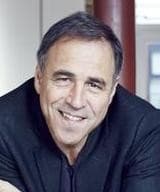
Anthony Horowitz is a prolific British author known for his engaging mystery and thriller novels. He is the creator of the bestselling Sherlock Holmes novels, including 'The House of Silk' and 'Moriarty,' as well as the acclaimed 'Hawthorne and Horowitz' series, featuring 'The Word is Murder' and 'The Sentence is Death.' Horowitz also penned the Alex Rider series for young adults, which has sold over 19 million copies worldwide.







