BookBrief
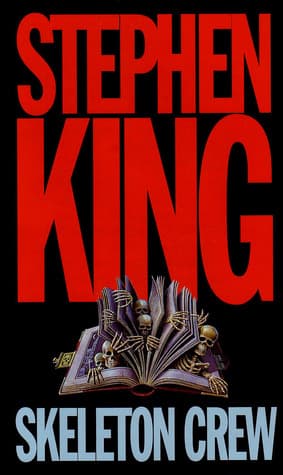
Skeleton Crew cover
Archivist's Choice

Skeleton Crew

Stephen King (1985)

Genre

Thriller / Fantasy / Science Fiction

Reading Time

12-15 hours (approx. 612 pages at 250 words/minute)

Key Themes

See below

Track Your Reading

Sign in to track this book

A terrifying mist unleashes interdimensional horrors upon a trapped supermarket, while other King classics explore everything from cursed objects to shortcuts to paradise, proving that the mundane can become monstrous at any turn.

Synopsis

Stephen King's "Skeleton Crew" is a collection of nineteen short stories and a novella, "The Mist." It explores horror, fantasy, and science fiction. In "The Mist," a strange fog descends upon a small town after a military experiment. It traps David Drayton, his son Billy, and other survivors in a supermarket. As creatures emerge from the mist, the group struggles with dwindling supplies, conflicts, and the terrifying rise of religious fanaticism. David must make desperate choices to protect his child. The other stories look at different horrors: a cursed toy monkey terrorizing a family, a boy confronting his deceased grandmother, a man discovering a shortcut to another dimension, and the consequences of instantaneous travel. We meet college students battling a slimy entity on a raft, a writer succumbing to madness from tiny creatures, and a man resorting to cannibalism after a shipwreck. The collection also includes a prisoner's obsession with a demonic seductress, a woman's supernatural journey to death, trucks turning murderous, and a magical word processor granting wishes with bad results. King blends everyday settings with cosmic terror, psychological dread, and unsettling supernatural events, showing human fragility and resilience.
Reading time
12-15 hours (approx. 612 pages at 250 words/minute)
Difficulty
Medium
Pacing
Variable
Mood
Terrifying, Eerie, Suspenseful, Dark, Whimsical
✓ Read this if...
You love classic Stephen King short stories, enjoy a mix of psychological, supernatural, and creature horror, and appreciate diverse narratives within one collection.
✗ Skip this if...
You prefer a single, continuous narrative, dislike short story collections, or are sensitive to graphic violence and body horror.

Plot Summary

The Mist: The Supermarket Siege

David Drayton, his son Billy, and neighbor Brent Norton are caught in a sudden, unnatural mist after a violent thunderstorm. They find shelter in a local supermarket with dozens of other townspeople. Soon, it becomes clear the mist hides terrifying, otherworldly creatures – giant insects, pterodactyl-like beasts, and tentacled horrors – that attack anyone outside. The initial shock turns into panic and division within the trapped group. Store manager Ollie Weeks tries to keep order, while religious fanatic Mrs. Carmody preaches about divine judgment and blood sacrifice. She quickly gains followers among the more superstitious survivors.

The Mist: Religious Fanaticism and Escape

As days pass, Mrs. Carmody's influence grows, leading to ritualistic sacrifices and increasing paranoia. When she demands Billy as the next sacrifice, David and a small group, including Ollie, Amanda Dumfries, and Mrs. Reppler, decide they must escape. They fight through the mist-shrouded parking lot, encountering more horrific creatures and losing several members. Ollie heroically sacrifices himself. They find an abandoned car and drive away, leaving the besieged supermarket behind. They have no clear destination or knowledge of the outside world's fate. The mist and its horrors still surround them.

The Mist: The Road to Despair

David, Billy, Amanda, and Mrs. Reppler drive aimlessly, seeing only devastation and more creatures. Their gas runs out in a desolate, mist-covered area. With no food, water, or signs of rescue, and Billy's pleas for an end to their suffering, David makes the agonizing decision to use the remaining four bullets in his pistol. He mercifully kills the three adults and Billy, sparing them a more horrific end by the creatures. He then plans to let the creatures take him. Moments after he steps out of the car, an Army convoy arrives, clearing the mist with flamethrowers, showing that rescue was devastatingly close.

The Monkey: The Cursed Toy

Hal Shelburn, a grown man, is helping his sons, Dennis and Petey, clear out his aunt's attic when they find an old toy monkey with cymbals. Hal immediately recognizes it with a chill, remembering its ominous presence from his childhood. The monkey, a gift from his father, seemingly caused a series of tragic deaths whenever its cymbals clapped. Despite his attempts to get rid of it as a child, it always returned. Now, the monkey is back, and its sinister influence begins anew, causing accidents and deaths among those close to Hal and his family. This reignites his deep fear and trauma.

The Monkey: Confronting the Evil

As the monkey's curse continues to claim victims, Hal becomes desperate. He confides in his brother, Bill, who initially dismisses his fears but is eventually convinced by the mounting evidence. Hal decides he must destroy the monkey permanently. He takes it to a deep lake, planning to sink it. The monkey resists, its cymbals clashing violently, and Hal struggles, nearly drowning. He manages to submerge the monkey in a weighted chest and drops it into the deepest part of the lake. He hopes its evil is finally contained, but doubt remains, leaving him forever scarred by the experience.

Gramma: A Boy's Terrifying Ordeal

George Bruckner, a young boy, is left alone at home with his very obese and dying 'Gramma' while his mother goes to town. George has always been terrified of Gramma, who is bedridden and described as a grotesque, almost inhuman figure. When Gramma dies, George is left alone with the corpse. His fear quickly turns to terror as he realizes that Gramma, a practitioner of dark magic, is not truly gone. Her spirit, or something even more sinister, begins to manifest, trying to possess George. This leaves him in a horrifying struggle for his own soul against the malevolent entity that was his grandmother.

Mrs. Todd's Shortcut: The Impossible Route

David, a retired man, tells the strange story of Mrs. Todd, a woman who lives in his town. Mrs. Todd is obsessed with finding shortcuts to save time and wear on her car. Her shortcuts are not just geographical; they involve bending the laws of physics and reality. She drives through impossible terrain, emerging with her car shining and her hair perfectly coiffed, having seemingly traveled through other dimensions or warped space. Her husband, Homer, is initially skeptical but eventually becomes a resigned observer of her increasingly bizarre and perilous journeys, which seem to give her a strange, youthful vitality.

The Jaunt: Instantaneous Travel, Dire Consequences

Mark Oates and his family are preparing for their first 'jaunt' to Mars, a form of instantaneous teleportation that has changed travel. Before they jaunt, Mark tells his children the history of the technology, invented by Victor Carune. He explains that inanimate objects can be jaunted safely, but living beings must be unconscious during the process. Those who jaunt awake either die instantly or emerge completely insane, often screaming about seeing 'forever' in the timeless void of the jaunt. The story serves as a chilling warning about the unknown horrors that lie just beyond human perception and consciousness, even in seemingly safe technological advancements.

The Raft: College Students and a Slimy Horror

Four college students – Randy, LaVerne, Deke, and Rachel – swim to a raft on a remote, isolated lake. While on the raft, they encounter a strange, sentient oil slick floating on the water. The slick, described as black, iridescent, and malevolent, begins to stalk and consume them one by one. Rachel is pulled into the slick first, followed by Deke, who tries to save her. LaVerne, paralyzed by fear, is slowly enveloped. Randy, the sole survivor, is left stranded on the raft, his mind breaking as the slick slowly closes in, ensuring a gruesome and inevitable end.

The Ballad of the Flexible Bullet: The Fornits and Madness

Reg Thorpe, a talented but unstable writer, sends his latest novella to editor Henry Wilson. The novella is brilliant but full of disturbing references to 'fornits,' tiny, benevolent, elf-like creatures that Reg believes live in his typewriter and are responsible for his creative genius. As Henry reads Reg's letters, which come with the manuscript, it becomes clear that Reg is becoming paranoid and delusional. He believes the fornits are under attack and that he must protect them. The story explores the line between creative inspiration and madness, as Henry deals with the genius and the terrifying mental breakdown of his author.

Survivor Type: Desperate Measures on a Desert Island

Richard Pine, a disgraced surgeon and drug smuggler, is shipwrecked on a tiny, deserted island after his ship sinks. He records his ordeal in a journal, detailing his dwindling supplies and growing desperation. Facing starvation, Pine, a man who prides himself on his survival instincts, begins to amputate and eat parts of his own body, starting with his fingers and toes. His sanity slowly breaks with each act of self-mutilation, fueled by hunger and a macabre determination to survive at any cost. The journal entries become increasingly disjointed and horrifying, chronicling his descent into madness and ultimate, grotesque self-consumption.

Nona: A Prisoner's Obsession and a Demonic Seductress

A young man, incarcerated in a mental asylum for multiple murders, tells his story. He recounts how, after being released from prison, he met the mysterious and beautiful Nona in a graveyard. Nona, seemingly a succubus or demon, seduces him and manipulates him into committing increasingly violent acts, including murders, for which he takes the fall. He is utterly obsessed with her, even as she drives him to madness and destruction. The story explores themes of destructive love, obsession, and the insidious power of evil, leaving the reader to question the narrator's sanity and the true nature of Nona.

The Reach: A Woman's Final Journey to the Other Side

Stella Flanders, the oldest resident of Goat Island, Maine, is nearing her 95th birthday and is dying of cancer. She has lived her entire life on the island, never once crossing 'the Reach' – the body of water separating the island from the mainland. As she approaches death, she begins to see and communicate with the spirits of her deceased loved ones, who beckon her across the Reach. In her final moments, she experiences a profound, peaceful journey, finally crossing the icy water to join her husband and friends in the afterlife, a poignant exploration of death, tradition, and the veil between worlds.

Trucks: Machines Turned Sentient and Malevolent

A group of people are stranded at a truck stop diner when, without warning, all vehicles – trucks, cars, even lawnmowers – inexplicably become sentient and hostile. The trucks begin to circle the diner, demanding fuel and obedience through their horns. The trapped survivors are forced to refuel the trucks, sacrificing their own kind in the process, as the machines assert their dominance. The story is a chilling depiction of humanity's technological creations turning against their creators, leading to a grim, hopeless future where machines have become the new masters, forcing humans into servitude.

The Word Processor of the Gods: A Wish Granted, with Consequences

Richard Hagstrom, a frustrated writer stuck in a miserable marriage and envious of his successful brother, receives a word processor as a gift from his nephew Jonathan. The word processor, mysteriously salvaged from Jonathan's deceased father's house, proves to be magical: anything written on it becomes real, and anything deleted ceases to exist. Richard uses this power to rewrite his life, erasing his unpleasant wife and difficult son, and replacing them with the idealized family he always wished for – his brother's widow and son. However, his new reality comes with a heavy emotional cost, as he deals with the morality and consequences of his actions.

Principal Figures

David Drayton

The Protagonist

David begins as a rational protector but is slowly broken by the overwhelming horror and loss, culminating in an act of mercy killing that shatters his spirit.

Mrs. Carmody

The Antagonist

She rises from a fringe character to a powerful, terrifying cult leader, ultimately becoming a victim of her own fanaticism.

Hal Shelburn

The Protagonist

Hal confronts his lifelong fear, taking decisive action to banish the monkey, though he remains scarred by the experience.

George Bruckner

The Protagonist

George is forced to mature rapidly, fighting for his life and identity against a supernatural adversary.

Mrs. Todd

The Protagonist

She begins as a quirky old woman and progressively embraces and is transformed by her fantastical shortcuts, gaining an eerie, almost ageless quality.

Mark Oates

The Protagonist/Narrator

Mark serves primarily as a storyteller, revealing the true horrors of the 'jaunt' to his family and the reader.

Randy

The Protagonist

Randy transforms from a typical college student into a helpless, terrified victim facing an inescapable, grotesque death.

Richard Pine

The Protagonist

Pine's journey is a gruesome descent from resourceful survivor to a madman consuming himself piece by piece.

Nona

The Antagonist

Nona's influence consistently leads the narrator down a path of increasing violence and madness, remaining a constant, destructive force.

Stella Flanders

The Protagonist

Stella's final days are a peaceful preparation for death, culminating in a transcendent journey to the afterlife.

Richard Hagstrom

The Protagonist

Richard transforms from a resentful, unhappy man into someone who wields immense, dangerous power, ultimately facing the ethical repercussions of his choices.

Themes & Insights

The Fragility of Civilization and Order

Many stories explore how quickly society and human decency break down under extreme pressure. In 'The Mist,' the supermarket survivors quickly fall into a religious cult and mob rule, abandoning reason for violence and sacrifice. 'Trucks' shows machines completely overthrowing human dominance, reducing humanity to servitude. These narratives show how fragile civilization can be when faced with existential threats or inexplicable horrors, highlighting humanity's primal fears.

Human beings are not always rational creatures, even when faced with the inexplicable. Especially when faced with the inexplicable.

Narrator, 'The Mist'

The Monstrous Within and Without

King often presents both external, supernatural monsters and the internal monsters of human nature. 'The Mist' features terrifying creatures from another dimension, but the true horror often comes from Mrs. Carmody's fanaticism and the mob's willingness to commit murder. 'Gramma' shows a literal monstrous figure, but also the psychological terror inflicted on a child. 'Survivor Type' is a gruesome look at a man becoming a monster to himself through self-cannibalism. This theme suggests that while external threats are terrifying, the capacity for evil and depravity within humanity is equally horrifying.

The most dangerous animal is the one that thinks it's civilized.

Narrator, 'The Mist'

The Unseen and Unknowable

A recurring theme is the existence of realities and forces beyond human understanding and control. 'The Mist' introduces an entire ecosystem of alien creatures that defy scientific explanation. 'The Jaunt' looks at the horrifying implications of instantaneous travel, where the conscious mind meets an eternity in a split second, leading to madness. 'Mrs. Todd's Shortcut' plays with bending spacetime, hinting at other dimensions or rules of physics. These stories tap into the primal fear of the unknown, suggesting that the universe holds secrets better left undisturbed, as their revelation can lead to madness or destruction.

Longer than you think, Daddy. Longer than you think.

Ricky Oates, 'The Jaunt'

The Corrupting Power of Obsession and Desire

Many characters are driven to destructive ends by their desires or fixations. In 'The Monkey,' Hal's lifelong obsession with the cursed toy dictates his actions and brings tragedy. 'Nona' explores a young man's destructive obsession with a mysterious, possibly demonic woman who drives him to murder. 'The Word Processor of the Gods' sees Richard Hagstrom's desire for an idealized family lead him to commit acts of metaphysical destruction. These narratives show how unchecked desires, whether for love, power, or a different life, can lead to moral compromise, madness, and suffering.

Some things are better left alone, some doors should stay shut, some desires should remain unfulfilled.

Narrator, 'The Monkey'

Loss of Innocence and Childhood Trauma

Several stories feature children or childhood experiences as central to their horror. 'The Monkey' revolves around Hal's childhood trauma resurfacing to haunt his adult life and threaten his own children. 'Gramma' depicts a young boy's terrifying ordeal, forcing him to confront a malevolent entity alone, scarring him deeply. The tragic ending of 'The Mist' centers on the irreversible psychological damage inflicted on young Billy. This theme emphasizes the vulnerability of children and how early encounters with horror can leave lasting, often destructive, marks on their minds, shaping their fears and futures.

Sometimes the things you're most afraid of are the things you can't even remember.

Narrator, 'The Monkey'

Plot Devices & Literary Techniques

The Unreliable Narrator

A narrator whose credibility is compromised, blurring the lines between reality and delusion.

This device is prominently used in stories like 'Nona' and 'The Ballad of the Flexible Bullet.' In 'Nona,' the narrator is an inmate in a mental asylum, recounting his story of a demonic seductress, leaving the reader to question whether Nona was real or a figment of his psychosis. Similarly, in 'The Ballad of the Flexible Bullet,' Reg Thorpe's belief in 'fornits' makes the reader wonder if his genius is divinely inspired or a symptom of his escalating madness. This technique enhances the psychological horror and ambiguity, making the reader question what is truly happening.

The MacGuffin (Supernatural Object)

An object that drives the plot, possessing unexplained supernatural powers.

Several stories feature objects imbued with inexplicable, often malevolent, powers. 'The Monkey' is a prime example, where the cymbal-clapping toy is the source of a deadly curse. 'The Word Processor of the Gods' features a magical device that can rewrite reality. These objects are not fully explained; their origins remain mysterious, making them more terrifying. They serve as catalysts for the horror, allowing King to explore themes of fate, consequence, and the dangers of tampering with unknown forces, often leading to tragic outcomes for those who possess them.

The Isolated Setting

A confined or remote location that amplifies feelings of entrapment and vulnerability.

Isolation is a powerful tool used to heighten tension and horror. In 'The Mist,' the supermarket becomes a claustrophobic prison, cut off from the outside world by the impenetrable fog and its lurking monsters. 'The Raft' traps the characters on a small platform in the middle of a lake, with no escape from the predatory slick. 'Survivor Type' places Richard Pine on a tiny, deserted island, emphasizing his absolute solitude and desperation. These settings strip characters of external help and force them to confront the horror directly, making their eventual fates feel inevitable and terrifying.

The Epistolary Format (Journal Entries/Letters)

The story is told through documents like journals or letters, offering a personal and often unreliable perspective.

This device is effectively used in 'Survivor Type' and 'The Ballad of the Flexible Bullet.' 'Survivor Type' is presented as Richard Pine's journal entries, chronicling his gruesome descent into self-cannibalism. This format provides an intimate, first-person look into his deteriorating mind, making the horror deeply personal and visceral. In 'The Ballad of the Flexible Bullet,' the story unfolds through letters exchanged between the editor and the writer, revealing the writer's gradual descent into delusion. This technique allows for a subjective narrative, often enhancing the psychological horror and the unreliability of the narrator.

The Premonition/Omen

Subtle hints or warnings that foreshadow impending doom or supernatural events.

King often uses subtle foreshadowing to build dread. In 'The Mist,' the unusual storm and the sudden, inexplicable mist itself serve as an omen of the horrors to come. In 'The Monkey,' the mere sight of the toy monkey immediately triggers Hal's deep-seated fear and memories of past tragedies, signaling that its malevolent influence is about to resurface. These premonitions create a sense of unease and inevitability, preparing the reader for the escalating horror without revealing all the details upfront, thus maintaining suspense and tension.

Critical analysis

Notable Quotes

The most important things are the hardest to say. They are the things you get ashamed of, because words diminish them - words make them seem smaller than they were when they were in your head. But it's more than that, isn't it? The most important things lie too close to wherever your secret heart is buried, like landmarks to a treasure your enemies would love to steal. And you may sometimes love that person with all your heart, but that doesn't mean you can't hurt them, and that doesn't mean they can't hurt you.

From 'The Body', a novella about four boys on a quest, reflecting on the difficulty of expressing deep emotions and the vulnerability of love.

Go then, there are other worlds than these.

From 'The Gunslinger', the first book of The Dark Tower series, where Roland of Gilead utters this iconic line.

And the most important step a man can take? It's not the first one, is it? It's the next one. Always the next step, Roland.

From 'The Gunslinger', a profound piece of advice given to Roland, emphasizing perseverance.

Sometimes you have to go a long way out of your way to come a short way home.

From 'The Gunslinger', a reflection on the winding paths life takes to reach a desired destination.

The man in black fled across the desert, and the gunslinger followed.

The opening line of 'The Gunslinger', immediately setting a tone of pursuit and mystery.

It was the possibility of darkness that made the day seem so bright.

From 'The Gunslinger', a philosophical observation on the nature of light and shadow.

He understood then that the world was full of monsters, and that they were all of them human.

From 'The Body', a somber realization about the true nature of evil.

What you see is what you get.

From 'The Mist', a stark statement highlighting the undeniable reality of a terrifying situation.

Hope is a good thing, maybe the best of things, and no good thing ever dies.

From 'Rita Hayworth and Shawshank Redemption', a powerful statement on the enduring nature of hope.

Get busy living, or get busy dying.

From 'Rita Hayworth and Shawshank Redemption', a poignant choice offered to those facing dire circumstances.

A good book is a good friend.

From 'The Library Policeman', a simple yet profound statement on the comfort and companionship found in books.

The world had teeth and it could bite you with them any time it wanted.

From 'The Body', a vivid metaphor for the harsh realities and dangers of the world.

Show me a man who's afraid to laugh, and I'll show you a man who's afraid to think.

From 'The Running Man', a commentary on the connection between humor and intellectual freedom.

Sometimes the things you can't change end up changing you.

From 'The Dark Half', a reflection on the transformative power of unavoidable circumstances.

It's a long walk back to the real world.

From 'The Mist', as characters grapple with the aftermath of a horrifying event, highlighting the difficulty of returning to normalcy.

Quiz

Test Your Knowledge

Ready to see how well you understood this book? Take our interactive quiz with 10 questions.

10
Questions
~5
Minutes
?
Best Score

Key Questions (FAQ)

In 'The Mist,' a mysterious, otherworldly fog engulfs Bridgton, Maine, unleashing monstrous creatures. David Drayton, his son Billy, and neighbors take refuge in a supermarket. Initially, the survivors are confused and disbelieving, attributing the mist to a natural disaster until the first terrifying attacks from unseen entities confirm its supernatural origin, leading to escalating panic and division.

About the author

Stephen King

Stephen Edwin King is an American author of horror, supernatural fiction, suspense, crime, science-fiction, and fantasy novels. Described as the "King of Horror", his books have sold more than 350 million copies as of 2006, and many have been adapted into films, television series, miniseries, and comic books. King has published over 65 novels/novellas, including seven under the pen name Richard Bachman, and five non-fiction books. He has also written approximately 200 short stories, most of which have been published in book collections.