“When a girl leaves her home at eighteen, she does so at a venture. She does not know what is to befall her; she has no idea of the little tragedies that await her.”
— Narrator's reflection on Carrie's departure from home.


Theodore Dreiser (1994)
Genre
Literary Fiction / Historical Fiction
Reading Time
12-15 hours
Key Themes
See below
Sign in to track this book
An impressionable Midwestern girl's journey into the glittering, amoral abyss of turn-of-the-century Chicago exposes the raw materialism and spiritual innocence at the heart of the American dream.
Caroline 'Carrie' Meeber, an impressionable eighteen-year-old, arrives in Chicago from Columbia City, Wisconsin, seeking opportunity and a more exciting life than her provincial upbringing allowed. She plans to live with her older sister Minnie Hanson and Minnie's husband Sven. On the train, she meets Charles Drouet, a handsome and flashy traveling salesman, who immediately takes an interest in her. Carrie is fascinated by Drouet's sophisticated appearance and easy charm, sensing a world of comfort and luxury he represents. Upon reaching Minnie's cramped apartment, Carrie sees the stark realities of working-class life, a contrast to the glamour Drouet embodies, and she begins her job hunt.
Carrie finds a grueling, low-paying job at a shoe factory, which quickly drains her spirit and health. The monotony and meager wages are a harsh reality compared to her aspirations. After falling ill and losing her job, she encounters Drouet again by chance. He sees her distress and, eager to impress her, offers her money, new clothes, and a comfortable apartment. He promises a life free from the drudgery she's experienced. Despite her initial moral reservations, the allure of material comfort and Drouet's persistent, charming persuasion prove irresistible. She moves in with him, becoming his mistress, entering a world of relative ease and social advancement that her sister Minnie disapproves of.
Drouet introduces Carrie to his friend George Hurstwood, the sophisticated and outwardly respectable manager of Fitzgerald and Moy's saloon, a popular establishment in downtown Chicago. Hurstwood, a man of forty, is immediately captivated by Carrie's youth, beauty, and innocent charm. These qualities contrast with his own increasingly stale domestic life with his demanding wife, Julia, and their two children. He begins to pursue Carrie discreetly, using his refined manners and greater financial means to outshine Drouet. Carrie, flattered by his attention and impressed by his dignified demeanor, is drawn to Hurstwood's more serious and substantial presence, which she perceives as a step up from Drouet's superficiality.
Hurstwood, growing increasingly obsessed with Carrie, begins to manipulate situations to spend more time with her, often without Drouet's knowledge. He takes her to finer restaurants and theaters, exposing her to a more refined world than Drouet typically offered. Carrie, initially unaware of Hurstwood's marital status, finds herself increasingly attracted to his maturity and stability. Hurstwood, meanwhile, becomes more brazen in his pursuit, even visiting her while Drouet is away. Their clandestine meetings lead to a deeper emotional connection for Carrie, who starts to see Hurstwood as a more serious prospect than the lighthearted Drouet, despite a growing sense of unease about the secrecy.
Hurstwood's affair with Carrie is exposed, leading to a confrontation with Drouet and a severe crisis in Hurstwood's own life. His wife, Julia, discovers his infidelity and threatens divorce, which would ruin his social standing and financial security. In a moment of drunken despair and opportunity, Hurstwood steals $10,000 from his employer's safe. Panicked and desperate, he tricks Carrie into believing Drouet has been in an accident and convinces her to leave Chicago with him, initially under false pretenses. They travel to Montreal, where Carrie gradually realizes the gravity of Hurstwood's actions and his deception about her 'trip' turning into an elopement.
In Montreal, Hurstwood attempts to settle down with Carrie, but the stolen money is eventually traced. Faced with the threat of arrest, he returns a significant portion of the funds, leaving him with only a small amount. To escape the scandal and the remnants of his past, he convinces Carrie to move to New York City. They pose as husband and wife, but Hurstwood's initial confidence is shaken. He struggles to find a suitable managerial position, his pride preventing him from taking lesser roles. The vibrant energy of New York, which once seemed to promise a new beginning, instead highlights Hurstwood's diminishing prospects. This marks the beginning of his steady, irreversible decline.
As Hurstwood's financial situation worsens, Carrie, tired of their shabby apartment and his growing despondency, seeks work. She finds a minor role in a theatrical production, initially as a chorus girl, where she discovers a natural aptitude for acting. Her quiet, expressive nature resonates with audiences, and she begins to gain recognition, slowly climbing the ladder in the theatrical world. This shift marks a turning point: as Carrie's star rises, Hurstwood's fortunes continue to plummet. He becomes increasingly idle, spending his days reading newspapers, unable to adapt or find meaningful employment. A growing chasm forms between them.
Hurstwood's inability to find work and his dwindling savings lead him into abject poverty. He eventually resorts to begging and sleeping in flophouses. His once-dignified appearance gives way to destitution and despair. He becomes a shadow of his former self, embodying the tragic consequences of his past actions and his inability to adapt to changing circumstances. Meanwhile, Carrie's theatrical career flourishes. She moves from chorus girl to featured roles, gaining popularity and a comfortable income. The stark contrast between their fates becomes undeniable, symbolizing the unforgiving nature of urban life and the divergent paths of ambition and idleness.
Carrie's success as an actress brings her fame and a comfortable, independent life. She moves into a fashionable hotel, surrounded by the luxuries she once only dreamed of. Hurstwood, having fallen to the lowest depths of society, occasionally tries to contact her, but Carrie, hardened by his decline and her own ambition, is largely unresponsive. Their paths have diverged too dramatically. She recognizes his suffering but feels detached, seeing him as a relic of a past she has outgrown. The final separation is complete, with Carrie embracing her newfound celebrity and Hurstwood fading into the anonymity of New York's impoverished masses.
Completely defeated and without hope, Hurstwood succumbs to the harsh realities of his existence. He spends his last days wandering the streets, suffering from cold, hunger, and loneliness. His once-proud spirit is utterly broken. He eventually takes his own life in a cheap flophouse, a tragic end for a man who once commanded respect and affluence. His death goes largely unnoticed by the bustling city, a stark reflection of the indifference of urban life and the unforgiving consequences of his choices. His demise contrasts sharply with Carrie's continued ascent, highlighting the novel's themes of social mobility and personal responsibility.
Carrie achieves significant success as an actress, living a life of luxury and public admiration. She has attained the material wealth and social standing she once coveted. However, despite her external triumphs, Carrie remains internally restless and vaguely unhappy. She sits in her expensive hotel room, looking out at the city, feeling a persistent, undefined longing. Her success has not brought her true contentment; instead, it has only intensified her awareness of new desires and aspirations. She is perpetually searching for a deeper satisfaction that material gain cannot provide. This reflects the novel's central idea that human desire is insatiable.
The Protagonist
Carrie transforms from a timid country girl into a successful, independent actress, but her journey for fulfillment remains perpetually incomplete.
The Supporting
Drouet remains largely static, a figure of superficial charm whose initial success is maintained without significant growth or decline.
The Antagonist/Supporting
Hurstwood undergoes a dramatic fall from a position of wealth and respectability to destitution and suicide, driven by his choices and inability to adapt.
The Supporting
Minnie remains static, serving as a foil to Carrie's aspirations and a reminder of the life Carrie chose to leave behind.
The Supporting
Sven remains a static character, symbolizing the unchanging nature of the working class and its limitations.
The Supporting
Julia's character remains largely static, serving as a representation of the societal pressures and marital dissatisfaction that contribute to Hurstwood's recklessness.
The Supporting
Lola's arc is less about personal transformation and more about providing support and companionship to Carrie during her rise.
The novel explores the seductive power of the American Dream, especially its materialistic aspect, in late 19th-century urban America. Carrie's entire journey is driven by a restless desire for material comforts, luxury, and social status, which she equates with happiness and fulfillment. From her initial fascination with Drouet's clothes to her eventual success as an actress, her pursuit is always for 'more' – better clothes, finer apartments, greater recognition. However, the novel ultimately suggests that this pursuit is a treadmill. Even at the height of her success, Carrie remains unfulfilled, perpetually longing for something undefined, showing the emptiness of purely materialistic aspirations. Hurstwood's fall, too, is precipitated by his inability to maintain his material standing.
““Oh, if I could only have things like that!””
Dreiser details the fluid and often brutal nature of social mobility in the burgeoning industrial cities. Carrie's ascent from factory worker to acclaimed actress, and Hurstwood's precipitous fall from a respectable manager to a homeless beggar, vividly illustrate how easily one can rise or fall through the social strata. The novel shows how class is not just about wealth, but also about demeanor, education, and adaptability. Carrie successfully navigates these changes by adapting, while Hurstwood, unable to adjust to his diminished circumstances, is swallowed by them. The stark contrast between Minnie's stagnant working-class life and Carrie's dynamic upward trajectory shows the opportunities and perils of urban life.
““The city has its own way of tearing down and building up.””
A central theme is the insatiability of human desire. Carrie is driven by a constant, almost unconscious, longing for 'more' – more comfort, more beauty, more recognition. Each achievement, however, only leads to new desires, leaving her in a perpetual state of yearning. Her final success as an actress, while providing all the material comforts, does not bring true contentment; she still sits by her window, 'rocking to and fro in the arms of an illusion.' This suggests that true fulfillment is elusive, perhaps unattainable, and that human desire is an endless cycle, forever seeking a satisfaction that the external world cannot provide.
““She was still a waif of the streets of life, looking at the lighted windows of the world.””
The novel portrays the city, particularly Chicago and New York, as a vast, impersonal entity where individuals can achieve great success or fall into complete anonymity and despair. While the city offers opportunities, it also creates a sense of isolation and indifference. Hurstwood's slow, agonizing decline into homelessness and his eventual death go largely unnoticed, swallowed by the sheer scale of the metropolis. Carrie, despite her fame, experiences a form of emotional isolation, unable to find deep connection or lasting happiness amidst her material gains. The city is a place of endless possibility but also profound loneliness, where individual fates are often dictated by forces larger than themselves.
““The great city hummed for her a wonderful song of itself.””
Dreiser's naturalistic approach challenges conventional Victorian morality. Carrie is not punished for her 'fallen' status; instead, she thrives. Conversely, Hurstwood, who makes morally questionable choices, suffers a tragic fate. The novel suggests that individual choices are often influenced, if not determined, by environmental and biological forces, such as the allure of wealth, the drive for pleasure, and the struggle for survival. Characters are portrayed as products of their circumstances and desires, rather than strictly moral agents. This ambiguity forces the reader to question traditional notions of good and evil, focusing instead on the complex interplay of human nature and societal pressures.
““She was not evil, but only an anomaly in the moral code.””
The narrator has full access to characters' thoughts and feelings, and offers extensive social commentary.
Dreiser employs a highly intrusive, omniscient narrator who not only describes events and characters' inner lives but also frequently interjects with philosophical reflections, social commentary, and psychological analyses. This narrative voice guides the reader's interpretation, often explaining the societal forces and human impulses driving the characters' actions. It allows for a broad scope, detailing the economic and social conditions of the time, and providing a naturalistic perspective on human behavior, often framing characters as products of their environment and desires rather than purely moral agents.
The simultaneous rise of one character and fall of another highlights the novel's themes of social mobility and urban indifference.
The novel masterfully uses parallel plotlines, charting Carrie's steady ascent from poverty to theatrical stardom alongside Hurstwood's gradual, then precipitous, decline from affluence to destitution. This structural device serves to emphasize the novel's central themes: the capricious nature of fortune in the city, the unforgiving consequences of certain choices, and the profound indifference of urban life to individual fates. The contrast between their diverging paths highlights how adaptability and innate desire can lead to success, while a lack of resilience and a clinging to past glories can lead to ruin, creating a powerful sense of tragic irony.
Objects like clothes, apartments, and money represent social status, desire, and the fleeting nature of happiness.
Throughout the novel, material possessions are potent symbols of social standing, personal worth, and the elusive nature of happiness. Carrie's initial desire for Drouet's fine clothes, her joy in a comfortable apartment, and her eventual accumulation of luxury items all represent her pursuit of a better life. Conversely, Hurstwood's loss of his fine clothes, his descent into shabby lodging, and his lack of money symbolize his complete social and personal collapse. These objects are not merely possessions but indicators of internal states and societal value, illustrating the materialistic drive that defines both characters' journeys and the era itself.
Characters' fates are largely shaped by environmental, social, and biological forces beyond their control.
Dreiser's naturalism suggests that human beings are largely products of their heredity and environment, with their choices often predetermined by forces beyond their conscious will. Carrie is driven by an almost instinctive desire for comfort and beauty, while Hurstwood's downfall is a result of his inability to adapt to changing circumstances and his inherent weakness when faced with temptation. The characters are presented as 'chemisms' or 'automatons' reacting to external stimuli, rather than fully autonomous moral agents. This device underscores the idea that free will is limited, and societal pressures, economic conditions, and innate desires play a significant role in shaping individual destinies.
“When a girl leaves her home at eighteen, she does so at a venture. She does not know what is to befall her; she has no idea of the little tragedies that await her.”
— Narrator's reflection on Carrie's departure from home.
“Among the forces which help to decide the fate of a human being are the external conditions of his life, which, to a large extent, he is powerless to control.”
— Narrator's observation on the influence of environment.
“No man can be a good citizen who is not a good husband, and no man can be a good husband who is not a good citizen.”
— A moralistic statement in the context of societal expectations.
“The great city was a magnet to her, drawing her with its power, its splendor, its mystery.”
— Carrie's initial impression of Chicago.
“She was not thinking of the future, but of the present, and the present was a dream.”
— Carrie's early enjoyment of her new life and material comforts.
“Whatever a man's fortunes, he is always an individual, and must be judged by his individuality.”
— Narrator's philosophical insight on human nature.
“Oh, to be rich, to be beautiful, to be admired, to be loved!”
— Carrie's inner desires and aspirations.
“Life goes on, and the world moves, and the sun shines, and the stars twinkle, and the moon comes up, and the tides ebb and flow, and the grass grows, and the flowers bloom, and the birds sing, and the trees rustle, and the winds blow, and the clouds drift, and the rain falls, and the snow melts, and the seasons change, and the years pass, and the generations come and go, and the earth remains forever.”
— A long, poetic reflection on the cyclical nature of life and time.
“It is not the fashion for a man to be thoughtful. It is not his business to think, but to work.”
— A comment on societal expectations for men in the industrial era.
“The true meaning of life is to be found in the struggle for existence.”
— A statement reflecting the naturalist philosophy of the novel.
“She was not a woman of great intellect, but she had a quick perception of what was agreeable.”
— Description of Carrie's character and strengths.
“For the man who is down, the world is a hard place.”
— Reflection on the plight of the impoverished, particularly Drouet and Hurstwood.
“There are no morals in nature.”
— A philosophical assertion underlying the novel's naturalistic themes.
“Ah, the great city, the great world, the great stage of life, upon which we all play our little parts!”
— A grand, theatrical metaphor for urban existence and human roles.
“The world is not so bad as it seems, if one only knows how to take it.”
— A more optimistic, albeit pragmatic, outlook on life's challenges.
Ready to see how well you understood this book? Take our interactive quiz with 10 questions.
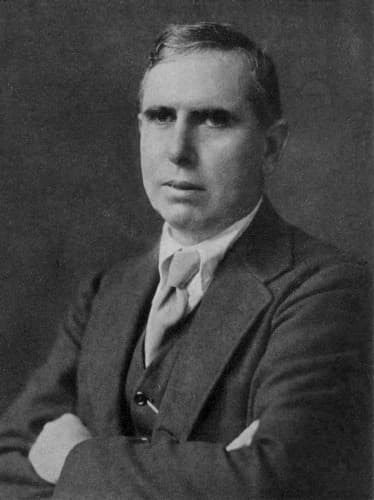
Theodore Herman Albert Dreiser was an American novelist and journalist of the naturalist school. His novels often featured main characters who succeeded at their objectives despite a lack of a firm moral code, and literary situations that more closely resemble studies of nature than tales of choice and agency. Dreiser's best known novels include Sister Carrie (1900) and An American Tragedy (1925).







