“There are no such things as little sins. There are only sins, and every sin is a great sin. We cannot tell how great it is because we cannot tell how much good it prevents.”
— A reflection on the nature and impact of sin.


George MacDonald (1879)
Genre
Fantasy / Children's / Historical Fiction / Young Adult
Reading Time
900 min
Key Themes
See below
Sign in to track this book
Gibbie, an orphaned, mute boy, lives in the Scottish Highlands. His pure heart and selfless spirit change the lives around him as he seeks to live honestly and with sacrifice.
Gibbie is a mute, ragged boy living in the poor 'ghetto' of Glasgow around the turn of the 19th century. His only known parent is his alcoholic father, Sanny Macruadh, a street porter who, despite his faults, loves Gibbie. Gibbie often fends for himself, surviving on scraps and the kindness of strangers. He is pure-hearted and quick to help others, often sharing his meager findings. One cold night, Sanny, after heavy drinking, falls into the icy Clyde River and drowns. Gibbie, seeing what happened, is left completely alone, his already difficult life now without support.
After his father's death, Gibbie continues to live on the streets. His muteness and lack of family make him vulnerable. He often sleeps in barrels or under market stalls. He becomes friends with Mrs. Sclater, a kind market woman who sells fish. She feels sorry for him and offers him food and a place to sleep in her small, crowded home when she can. Gibbie, in turn, helps her with chores and watches her younger children, showing his goodness and willingness to serve. This time shows Gibbie's resourcefulness and his ability to inspire affection despite his situation, forming one of his first stable, though temporary, human connections.
Gibbie's life changes significantly when he meets Donal Grant, a young student from the Highlands working in Glasgow to pay for his studies. Donal is struck by Gibbie's innocence and selflessness. When Gibbie is wrongly accused of theft and faces a harsh future in the city, Donal understands Gibbie's vulnerability. He decides to take the boy back to his family's croft in the remote Scottish Highlands. This journey marks Gibbie's leaving the poverty of Glasgow and his introduction to a different, more natural and peaceful environment. This sets the stage for his spiritual and personal growth.
At the Grants' humble croft, 'The Bodach,' Gibbie receives a warm welcome from Donal's parents, Peter and Janet Grant. Despite his muteness, Gibbie quickly wins over the family with his helpfulness, diligence, and sweet nature. He learns to help with daily chores, tending to animals, helping in the fields, and fetching water. The Grants treat him as their own son, giving him love, stability, and spiritual guidance. This time is important for Gibbie's development, as he experiences unconditional love and belonging for the first time, growing under their care in the wild beauty of the Highlands.
Sir George Galbrath, the local laird, is an important figure in the community. He is often distant and busy with his own affairs. He owns the estate that includes the Grants' croft. Unknown to Gibbie or the Grants, Sir George is Gibbie's uncle, though he does not know Gibbie exists or who he is. This connection is a subtle part of the story, hinting at Gibbie's true heritage and the eventual reveal of his noble birth. Sir George's presence shows the social structure of the Highlands and sets the stage for future interactions that will bring Gibbie's family line to light.
A severe storm causes the river to rise dramatically, leading to a flood that threatens the valley. Many families are trapped in their homes, and lives are at risk. Gibbie, with his knowledge of the moors and his fearless spirit, becomes a hero. He bravely navigates the dangerous waters, rescuing several people, including a child, and helping to secure livestock. His actions during the flood show his goodness and courage, making him a beloved and respected member of the community, despite his inability to speak. This event further shows his willingness to sacrifice for others.
Through events and the efforts of Mr. Sclater, the fishmonger from Glasgow, and later Donal Grant, Gibbie's true identity is uncovered. It is revealed that Gibbie is Sir Gilbert Galbrath, the rightful heir to the estate of Glashgar, and the nephew of Sir George Galbrath. His father, Sanny Macruadh, was the illegitimate son of the previous Sir Gilbert, making Gibbie the true baronet. This discovery changes Gibbie's status from an orphaned street boy to a wealthy landowner, though his pure heart remains unchanged by his new fortune.
With his identity confirmed, Gibbie moves to Glashgar, his ancestral home. Donal Grant, now a close friend, becomes his tutor and companion. Despite his muteness and lack of formal education, Gibbie has a keen mind and a strong desire to learn. Donal teaches him to read, write, and understand the responsibilities of his new position. Gibbie's kindness and spiritual understanding continue to guide him. He begins to use his wealth and influence to help the people on his estate, showing a kind and caring approach to his new power.
As Gibbie matures, he helps his friend and tutor, Donal Grant, marry Janet, the daughter of the local minister, Mr. Sclater (a different character from the fishmonger). Gibbie, now a wealthy baronet, provides for them generously, ensuring their happiness and stability. He continues to live a simple, humble life despite his riches, always using his resources to improve the lives of those around him. He establishes schools, improves living conditions for his tenants, and acts as a silent, benevolent guardian of his community, showing Christian charity and selflessness in his every action.
Sir Gibbie lives a long and fulfilling life, always true to the pure, selfless spirit he had as a child on the streets of Glasgow. He never regains his speech, but his actions speak volumes, showing love, compassion, and faith to everyone he meets. He becomes a respected figure in the Highlands, known for his silent wisdom, generosity, and ability to inspire goodness in others. His life is a powerful example of how true wealth is not in material possessions, but in a pure heart and a life dedicated to serving God and humanity, leaving a legacy of love and quiet kindness.
The Protagonist
Gibbie evolves from a neglected street child to a benevolent baronet, his inner goodness remaining constant and ultimately transforming the lives of those around him.
The Supporting
Donal grows from a struggling student to a respected scholar and a loyal, invaluable companion and mentor to Sir Gibbie.
The Supporting
Peter remains a steadfast figure of faith and paternal love, providing a stable foundation for Gibbie's formative years.
The Supporting
Janet remains a constant source of maternal love and domestic stability throughout Gibbie's time with the Grants.
The Supporting
Her role is primarily to demonstrate early human kindness towards Gibbie in his most vulnerable state.
The Mentioned
Sanny's arc is brief, serving as the catalyst for Gibbie's complete orphanhood and subsequent journey.
The Supporting
Sir George's role is largely static, serving as a placeholder for the family lineage and the initial obstacle to Gibbie's inheritance.
The Supporting
Janet develops from a minister's daughter to Donal's wife, becoming an integral part of the extended family surrounding Gibbie.
The main theme is Gibbie's innocence and pure heart, which lasts despite his upbringing in the poor, corrupt slums of Glasgow. His muteness often shows his unspoiled nature, as he cannot speak ill or deceive. This theme shows that true goodness can exist no matter the environment or social standing. Gibbie's actions, such as sharing his small amount of food or risking his life in the flood, consistently show a selfless love that contrasts with the greed and indifference he often meets, especially in the city. His presence often inspires others to act with more kindness.
“For Gibbie was one of those who are born with a heart that can do nothing but love, and a will that can do nothing but obey.”
The novel shows how unconditional love and compassion can change lives. Gibbie, despite his muteness and initial poverty, inspires deep affection in characters like Mrs. Sclater, Donal Grant, and especially Peter and Janet Grant. Their willingness to take him in, care for him, and love him without expectation lets Gibbie grow. Gibbie's own boundless love and compassion, shown through his actions, affect everyone he meets, often softening hearts or inspiring greater goodness. This theme suggests that love is a fundamental, redemptive force.
“He did not speak, but he loved. And love is the only language that is understood by all.”
A spiritual dimension supports the entire story. Gibbie's journey is often shown as guided by divine providence, with his innocence reflecting a deeper connection to God. The Grants' Christian faith gives Gibbie a spiritual home, and their teachings reinforce his innate goodness. Gibbie's actions, especially his selfless service and quiet thought about nature, are often shown as acts of worship. The novel suggests that true wealth and happiness come from a life dedicated to God and serving others, with Gibbie himself representing a Christ-like figure whose silent love redeems and uplifts.
“God's ways are not ours; they are better.”
The story compares inherited social status and true character. Gibbie starts as an outcast from the lowest social class but is revealed to be a baronet by birth. However, his true character is shown to be his moral purity, selflessness, and compassion, not his title or wealth. The novel criticizes the superficiality of class distinctions by showing that a 'gentleman' is defined by actions and heart, rather than family line or possessions. Gibbie uses his eventual wealth to serve his tenants and community, proving that true leadership comes from kindness and humility.
“It is not the coat that makes the man, but the heart that beats beneath it.”
A central characteristic that deepens themes of innocence and communication.
Gibbie's inability to speak is a fundamental plot device. It initially highlights his vulnerability in the harsh world of Glasgow but later becomes a symbol of his pure, uncorrupted nature, as he cannot lie or engage in malicious gossip. His communication through actions, expressions, and a profound empathy emphasizes that true understanding and love transcend verbal language. This device forces other characters to look beyond superficial communication and connect with Gibbie on a deeper, spiritual level, thereby revealing their own true character. It also allows the narrator to interpret Gibbie's inner thoughts, giving the reader unique access to his pure perspective.
A symbolic backdrop for spiritual growth and natural purity.
The stark contrast between the grim, industrial Glasgow slums and the wild, beautiful Scottish Highlands serves as a powerful symbolic device. Glasgow represents corruption, poverty, and human degradation, while the Highlands, with its mountains, lochs, and moors, symbolizes purity, spiritual upliftment, and a closer connection to God and nature. Gibbie's journey from the city to the Highlands mirrors his spiritual and personal growth, suggesting that a natural, simple life, free from urban vices, is conducive to developing a virtuous character. The landscape itself becomes a character, shaping Gibbie's understanding of the world and providing him with solace and inspiration.
A classic literary device that emphasizes self-reliance and the search for belonging.
Gibbie's status as an orphan, first with an alcoholic father and then completely alone, is a key plot device. It immediately establishes his extreme vulnerability and the challenges he faces, eliciting sympathy from the reader. This device also allows for Gibbie's journey of finding a true 'family' (the Grants) and eventually his true lineage, highlighting themes of belonging, adoption, and the formation of familial bonds beyond blood. His initial lack of family ties makes his eventual inheritance and the love he finds all the more impactful, underscoring the idea that a loving home is more valuable than any material wealth.
Used to represent moral states and spiritual understanding.
The novel frequently employs imagery of light and darkness to symbolize moral and spiritual states. The squalor and moral decay of Glasgow are often described in terms of darkness and shadow, reflecting Gibbie's initial environment. In contrast, Gibbie himself is frequently associated with light, his pure spirit shining through his ragged appearance and muteness. The Highlands are depicted with a natural, clear light, representing spiritual clarity and goodness. This symbolism reinforces the novel's Christian themes, where light is associated with divine presence, truth, and redemption, while darkness signifies sin, ignorance, and despair. Gibbie's journey is one from literal and metaphorical darkness into light.
“There are no such things as little sins. There are only sins, and every sin is a great sin. We cannot tell how great it is because we cannot tell how much good it prevents.”
— A reflection on the nature and impact of sin.
“The one thing that can be said to be the cause of all evil is the yielding to temptation.”
— Discussion about the origin of evil actions.
“Truth is the only thing that can stand the test of time and the scrutiny of God.”
— Emphasizing the enduring power and importance of truth.
“The heart that is not open to love is a heart that is closed to God.”
— Connecting the capacity for human love with spiritual openness.
“No man can truly know God who does not love his fellow man.”
— Highlighting the link between human compassion and divine understanding.
“It is not what we take up, but what we give up, that makes us rich.”
— A paradoxical statement on true wealth and selflessness.
“The greatest good you can do for another is not just to share your riches, but to reveal to him his own.”
— A profound insight into true generosity and empowerment.
“Silence is often the best answer, for it contains the wisdom of God.”
— Reflecting on the power and spiritual depth found in quietude.
“God does not want us to be good; He wants us to be like Him.”
— A theological distinction between mere goodness and divine likeness.
“The only way to get rid of a temptation is to yield to it. Resist it, and your soul will sicken with longing for it.”
— A controversial but thought-provoking statement on temptation, often misinterpreted.
“A man's reach should exceed his grasp, or what's a heaven for?”
— A call for aspiration and striving beyond current limits.
“To be good is noble, but to teach others how to be good is nobler, and no trouble.”
— Comparing personal virtue with the greater impact of guiding others.
“The one thing that can make a man happy is to know that he is loved.”
— A simple yet profound statement on the core of human happiness.
“There is no death, only change.”
— A perspective on the continuity of existence beyond physical death.
Ready to see how well you understood this book? Take our interactive quiz with 10 questions.
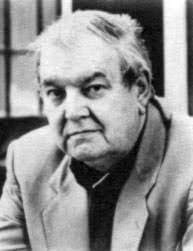
Biography coming soon.







