
Biography coming soon.

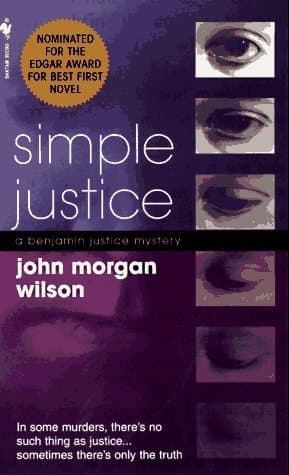
John Morgan Wilson (1996)
Genre
Thriller / Mystery / Romance
Reading Time
12 Minutes
Key Themes
See below
Sign in to track this book
A disgraced, alcoholic reporter is pulled back into West Hollywood's dangerous underworld to solve a murder, forcing him to confront his past and fall for the prime suspect.
Benjamin Justice, a former crime reporter, lives alone in West Hollywood's Norma Triangle. He drinks heavily, haunted by his lover's death and a scandal involving a Pulitzer-winning article. His solitude ends when Harry Brofsky, his old editor, visits. Brofsky, now a city councilman, needs Ben's quiet help. Matthew Vance, a young man, was brutally murdered outside a gay bar, and the police investigation has stalled. Brofsky wants Ben to do some unofficial research, working with another reporter, to find details the police might have missed. Ben is very reluctant to get back into the world, especially the gay scene he tried to leave, but he is slowly drawn into the case. A spark of his old journalistic drive returns, along with a possible desire for redemption.
Ben agrees to Brofsky's request, but then finds his partner is Elizabeth 'Liz' Carmichael, a young, ambitious, and attractive reporter. Their first meeting is tense, with Ben's cynicism clashing with Liz's eager professionalism. He is wary of her youth and lack of experience in the specific community of the case. She is clearly intimidated by his legendary, though damaged, reputation. Despite the awkward start, they begin their investigation, looking at the crime scene and the victim's background. Liz's fresh perspective and dedication slowly break through Ben's tough exterior, even as he deals with unwelcome attraction and the discomfort of working closely with someone so different.
As Ben and Liz investigate Matthew Vance's life, they uncover a complicated web of relationships and secrets. Matthew, who seemed like an ordinary young man, went to several gay bars and had many casual acquaintances and some more intense connections. They interview bartenders, friends, and ex-lovers, building a picture of a charming but sometimes naive person. The initial police idea of a simple hate crime or random street attack begins to fall apart as they find deeper, more personal reasons. Ben, using his knowledge of the West Hollywood gay scene, understands the community's nuances. Liz brings a careful approach to sifting through facts, slowly earning Ben's respect and trust, despite his initial doubts.
During their investigation, Ben meets Paul Barish, a charismatic and smart man who knew Matthew Vance. Paul is helpful at first, offering information about Matthew's life and the local gay community. Ben finds himself drawn to Paul's charm, wit, and vulnerability. This attraction both excites and deeply troubles him, given his recent loss and self-imposed emotional isolation. As Ben and Liz dig deeper, Paul's story shows inconsistencies, and he gradually moves from a helpful contact to a main suspect. The emotional involvement makes Ben's professional task harder, blurring the lines between personal feelings and journalistic duty. This forces him to confront his own desires and biases.
The investigation turns darker as Ben and Liz look into Matthew Vance's family life. They find a very troubled family dynamic, marked by secrets, resentment, and a history of abuse. Matthew's relationship with his family, especially his estranged father, is a significant, previously overlooked, part of the puzzle. The family's unwillingness to cooperate and their attempts to control the story raise red flags, suggesting Matthew's murder might stem from deep family conflicts. Ben's journalistic instincts fully return as he navigates the Vance family's complex emotions, uncovering layers of deceit and pain.
As Ben and Liz continue their work, the seemingly simple murder case reveals a more complex and dangerous political side. They uncover connections between Matthew Vance, his family, and influential figures in local West Hollywood politics, including Councilman Brofsky. The murder no longer seems like an isolated incident but a symptom of deeper corruption and power struggles in the community. Ben realizes his 'off-the-record' investigation is touching dangerous ground, possibly exposing powerful individuals who prefer their secrets buried. This revelation significantly raises the stakes, putting both Ben and Liz in increasing danger.
Despite growing evidence against Paul Barish, Ben finds himself falling deeper in love with him. Their secret meetings and shared vulnerabilities create a powerful emotional bond that directly conflicts with Ben's professional duty to find the truth. He struggles with the agonizing choice of loving a man he increasingly suspects of murder. The emotional toll is immense, forcing Ben to confront his capacity for love after loss and the ethical limits of his journalistic integrity. He desperately wants to believe in Paul's innocence, but the facts continue to build, painting a damning picture and leading him to a painful understanding about love, trust, and betrayal.
With clear evidence, Ben finally confronts Paul Barish. The confrontation is emotionally charged, a painful clash between love and duty. Paul, defensive at first, eventually breaks down, confessing to Matthew Vance's murder. The confession reveals a motive more complex and tragic than a simple hate crime or jealous rage, deeply entwined with the political maneuvering and personal betrayals found during the investigation. Paul's confession is a devastating blow to Ben, shattering his hopes and forcing him to accept the brutal reality of the man he loves. The scene is a peak of both the mystery and Ben's personal journey, leaving him heartbroken but determined.
Paul's confession, along with Ben and Liz's careful reporting, fully exposes the complex web of political corruption and personal betrayals that led to Matthew Vance's death. It is revealed that Matthew had found damaging information about a prominent political figure, information that threatened to ruin careers and expose illegal dealings. His murder was not a crime of passion but a planned act to silence him, with Paul acting as part of this conspiracy, driven by his own desperate situation and misguided loyalty. The full truth is far more sinister than first imagined, involving powerful individuals and revealing the dark side of West Hollywood's seemingly glamorous appearance.
With the case solved and the truth revealed, Ben Justice, with Liz Carmichael, carefully puts together their findings. The information goes to the authorities, and the story, a result of their persistent investigation, is published. While the outcome is professionally satisfying, bringing justice to Matthew Vance and exposing corruption, it leaves Ben with a deep sense of personal loss and heartbreak. The experience, however, has pulled him out of his alcoholic haze and isolation. He has rediscovered his purpose as a reporter and begun the difficult process of healing, finding a fragile sense of closure and a way forward, though one marked by lingering pain and the bittersweet memory of Paul.
The Protagonist
Ben transforms from a reclusive, alcoholic shell of his former self into a re-engaged, albeit heartbroken, journalist, confronting his past and finding a path toward healing and professional purpose. He learns to love again, only to experience profound betrayal, forcing him to reconcile his personal desires with his professional integrity.
The Antagonist
Paul begins as a helpful contact and love interest for Ben, gradually revealing layers of deceit and complicity until he is unmasked as the murderer, driven by complex motives beyond simple malice.
The Supporting
Liz develops from an eager but inexperienced reporter into a confident and capable investigative journalist, earning Ben's respect and playing a vital role in solving the case.
The Supporting
Matthew's character is revealed posthumously, evolving from a seemingly random victim to a central figure whose life and death expose deep-seated corruption and personal betrayals.
The Supporting
Brofsky remains a somewhat enigmatic figure, his full motivations only becoming clear as the political dimensions of the murder are revealed.
The Supporting
The family's secrets are gradually uncovered, revealing their role in Matthew's life and the circumstances that made him vulnerable.
The novel shows Ben Justice's journey from a lonely, alcoholic, and disgraced journalist to someone who finds purpose and begins to heal. His reluctant return to investigation is a form of atonement. By seeking justice for Matthew Vance, he finds a path toward his own redemption, both professionally and personally. The story highlights the chance for new meaning and a fresh start even after great loss and failure, though it comes with significant pain.
“He thought he'd buried that part of himself with David, but the scent of a story, the thrill of the chase, was a ghost he couldn't quite shake.”
A main part of the story is Ben's unexpected love for Paul Barish, who is also the main suspect in the murder. This situation creates a powerful look at love when suspicion is present, the agonizing nature of betrayal from a trusted person, and the difficulty of rebuilding trust after great loss. The theme explores the complexities of human relationships, where emotional connection can blind someone to harsh truths, and where personal desire conflicts with moral and professional duty.
“How could he love a man he suspected of murder? And how could he betray that love by pursuing the truth?”
The novel looks past West Hollywood's glamorous appearance, showing its darker side of secrets, power struggles, and corruption. What starts as a seemingly simple hate crime becomes a complex web of political schemes, blackmail, and murder, involving influential figures. The theme challenges romantic ideas of community, showing how even in seemingly close groups, ambition, fear, and personal failings can lead to violence and systemic cover-ups. It highlights how vulnerable individuals are against powerful, established interests.
“Beneath the glitter and the pride, West Hollywood had its own shadows, as dark and dangerous as any city's.”
Throughout the story, Ben is constantly challenged to tell the difference between how things appear and how they really are. From the initial idea of Matthew Vance's murder as a simple hate crime to Paul Barish's charming illusion, and the seemingly harmless political scene, the story constantly uncovers layers of deception. Ben's journalistic integrity drives him to relentlessly pursue the truth, often forcing him to face uncomfortable realities and break comforting illusions, both in the case and in his own life, leading to painful discoveries.
“The truth was rarely simple, and often, it broke your heart.”
A classic trope where a jaded protagonist is pulled back into action.
Ben Justice embodies the 'reluctant detective' archetype. He is a jaded, cynical former star reporter who has retreated from the world after personal tragedy and professional disgrace. His initial unwillingness to engage with the murder investigation serves to highlight his internal struggles and the profound impact of his past. This device allows for a gradual re-engagement with his skills and a slow peeling back of his emotional defenses, making his eventual commitment to the case, and his personal journey, more impactful and believable as he reclaims his identity and purpose.
Misleading clues or characters designed to divert the reader.
The novel employs red herrings, particularly in the early stages of the investigation, to obscure the true motive and perpetrator of Matthew Vance's murder. Initially, the police and Ben consider the possibility of a simple bias crime or a random act of violence, diverting attention from the deeper, more complex political and personal motives. Various minor characters and circumstantial evidence might lead the reader to suspect individuals who are ultimately innocent, making the reveal of Paul Barish as the killer, and the underlying conspiracy, more shocking and impactful. This device maintains suspense and encourages active participation from the reader in solving the mystery.
A romantic relationship that is morally or ethically problematic.
The developing romance between Ben Justice and Paul Barish serves as a powerful 'forbidden romance' plot device. It is 'forbidden' not by societal norms, but by the escalating evidence pointing to Paul as Matthew Vance's murderer. This creates an intense internal conflict for Ben, where his growing love for Paul directly clashes with his journalistic duty to uncover the truth. This device elevates the personal stakes of the mystery, intertwining the emotional narrative with the investigative one, making Ben's eventual discovery and confrontation with Paul deeply painful and impactful, highlighting the theme of love and betrayal.
The relationship between an experienced and a novice character.
The partnership between Ben Justice and Elizabeth Carmichael establishes a classic mentor/mentee dynamic. Ben, the experienced but jaded veteran, reluctantly guides Liz, the eager but less experienced reporter. This device allows for exposition of journalistic techniques and insights into the specific subculture of the West Hollywood gay scene through Ben's eyes, while Liz's fresh perspective often challenges Ben's cynicism and brings new energy to the investigation. Their evolving professional relationship also serves to humanize Ben and pull him out of his reclusive shell, demonstrating his slow return to engagement and purpose.
Ready to see how well you understood this book? Take our interactive quiz with 10 questions.
Biography coming soon.







