BookBrief
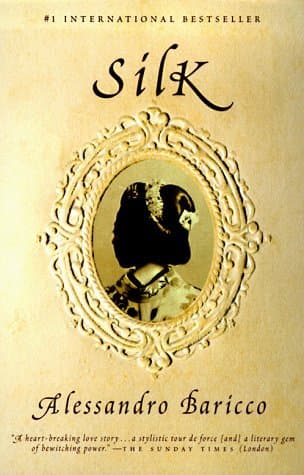
Silk cover
Archivist's Choice

Silk

Alessandro Baricco

Genre

Historical Fiction / Romance

Reading Time

12 Minutes

Key Themes

See below

Track Your Reading

Sign in to track this book

A French merchant's dangerous journey to exotic, forbidden Japan in the 1860s starts a silent, world-spanning love affair that goes beyond language and distance, as he tries to save his village's silk trade.

Synopsis

In the 1860s, a French silk merchant named Herve Joncour embarks on a clandestine journey to Japan, a country then closed to foreigners, to acquire disease-free silkworm eggs after an epidemic threatens the French silk trade. Leaving behind his doting wife, Hélène, Joncour makes several perilous trips across Siberia. During his covert dealings with a local baron in Japan, he becomes captivated by the baron's mysterious concubine, a girl with non-Oriental eyes. Despite a language barrier and the impossibility of their situation, a wordless, profound love affair unfolds between them through a series of subtle, recondite messages exchanged over the course of Joncour's four visits to Japan. The narrative explores the development and unfolding of this secret passion, its impact on Joncour's life, and the quiet devotion of his wife.
Difficulty
Easy
Pacing
Slow
Mood
Melancholy, romantic, contemplative, ethereal, quiet

Plot Summary

The Threat to Lavilledieu

The story begins in Lavilledieu, a quiet French town whose wealth depends entirely on silk production. Hervé Joncour, a former soldier turned silk merchant, lives an outwardly perfect life with his wife, Hélène. However, a devastating disease, pébrine, is spreading through European and African silkworm nurseries, threatening the entire industry. Baldabiou, the town's founder and a clever businessman, sees the danger and suggests a bold solution: importing healthy silkworm eggs from Japan, a country mostly closed to outsiders. Hervé, known for being quiet and reliable, is chosen for this dangerous and secret mission, a choice that will change his life forever.

First Journey to Japan

In 1861, Hervé Joncour makes his first difficult trip to Japan. The route is long and dangerous, involving a carriage through Europe, a train across Russia, and then a ship across the sea, finally arriving in Hakodate. From there, he must travel inland to the secret village of Hara Kei, where he will get the silkworm eggs. This journey shows how hard travel was then and how much determination it took. When he arrives, he meets Hara Kei, a powerful local baron, who, despite Japan's isolation, agrees to the secret trade. During this first meeting, Hervé first sees Hara Kei's mysterious concubine.

The Enigmatic Woman

During his first deal with Hara Kei, Hervé Joncour notices a young woman in the room. She is Hara Kei's concubine, and what strikes Hervé most are her eyes – large, dark, and not Asian, unlike the Japanese people he has met. They do not speak or interact directly, yet a strong, unspoken connection forms. Her gaze has an intensity and strange appeal that deeply affects Hervé, starting an obsession that will grow with each visit. This silent meeting begins his emotional involvement.

Return to Lavilledieu and Second Journey

Hervé successfully returns to Lavilledieu with healthy silkworm eggs, ensuring the town's prosperity for another year. His wife, Hélène, is happy to have him back, and their life returns to its comfortable routine. But the memory of the woman in Japan stays in Hervé's mind, a quiet but constant presence. When it is time for the next season's eggs, Hervé eagerly volunteers for the journey again. This second trip in 1862 is not just about duty; an unspoken wish to see the mysterious woman again pulls him across the vast distances, deepening his inner conflict between his home life and his growing obsession.

The First Letter

During his second visit to Hara Kei's estate, the unspoken connection between Hervé and the concubine grows stronger. As Hervé prepares to leave, he finds a small, folded piece of paper in his hand, placed there by the woman. It is a letter written in Japanese characters. Unable to read it, Hervé puts it in his pocket, feeling a deep sense of curiosity and expectation. Back in Lavilledieu, he finds a Japanese scholar to translate the message. The letter, though short, is deeply personal and sensual, expressing a longing and desire that matches Hervé's own unspoken feelings. This begins their ethereal, long-distance affair, carried out through secret messages and silent glances.

Third Journey and Unspoken Longing

Hervé makes his third journey to Japan in 1863, the longing to see the woman now a powerful force. This time, their interactions are even more filled with unspoken emotion. There is no physical contact, yet their gazes, gestures, and the shared secret of the letter create a close space between them. The concubine shows her feelings through subtle actions and sustained eye contact, communicating a deep sensuality that goes beyond language. Hervé becomes increasingly consumed by this distant passion, his life in Lavilledieu feeling more distant and less interesting compared to the exciting mystery of Japan and the woman who waits for him there.

The Japanese Civil War

Before his planned fourth journey in 1864, news reaches Lavilledieu of a civil war starting in Japan. The country becomes even more dangerous and hard to reach, making travel to Hara Kei's village risky, if not impossible. Baldabiou advises against the trip, fearing for Hervé's life and the mission's safety. Hervé is torn between his duty and his desperate wish to see the woman again. The political unrest in Japan creates a strong external barrier to their growing, silent relationship, adding a tragic impossibility to their already forbidden love. The future of the silk trade, and more importantly, his connection to the woman, is uncertain.

Fourth and Final Journey

Despite the warnings and the growing conflict, Hervé, driven by an irresistible urge, begins his fourth and final journey to Japan in 1864. The trip is full of danger, with signs of war and destruction visible along his path. He eventually reaches Hara Kei's ruined village, finding it mostly abandoned. Hara Kei is still there, but the mood is bleak. The concubine is present, and their final, silent meeting is filled with a deep sense of loss and unspoken farewell. This journey is less about silk and more about a desperate attempt to hold onto a fleeting, impossible love before it disappears amidst the chaos.

The Second Letter

Before Hervé leaves Japan for the last time, Hara Kei hands him a final letter, explaining it is from the woman. This letter, much longer and more direct than the first, is a passionate declaration of love, filled with vivid descriptions of longing and a deep desire for Hervé. It describes intense intimacy and emotional depth, revealing the full extent of the concubine's feelings. Hervé keeps this letter, a tangible link to his forbidden love. However, the true writer and the circumstances around its creation will remain a mystery to him for many years, adding to the enigmatic nature of his Japanese affair.

The Return to Hélène

Hervé returns to Lavilledieu for good, as the silk trade has found new sources. He resumes his life with Hélène, who remains devoted and loving. He never speaks of the letters or the woman. Despite being physically present, Hervé is emotionally distant, his mind often drifting back to Japan and the silent woman. He continues to live a life of quiet domesticity, but the memory of his secret love affair casts a long shadow over his existence. The second letter becomes a treasured, secret possession, a reminder of a love that was both real and ethereal, forever changing him.

Hélène's Secret

Years pass, and Hélène falls ill and eventually dies. After her death, while sorting through her belongings, Hervé discovers a collection of letters. Among them, he finds the two Japanese letters, along with their original French translations. To his surprise, he also finds a small, simple note written by Hélène. In this note, she confesses that she wrote the passionate Japanese letters, having learned of his obsession and wanting to give him the love and longing he sought, though in a fabricated form. This revelation shatters Hervé's view of his past and the woman he believed he loved.

The Truth Revealed

The discovery of Hélène's confession completely changes Hervé's entire experience. The passionate letters he believed were from his Japanese lover were, in fact, an act of deep, selfless love from his own wife, who had silently seen his yearning and tried to fulfill it in the only way she knew how. Hervé must now reconcile the idealized image of his Japanese concubine with the reality of Hélène's immense and heartbreaking devotion. The truth forces him to confront his desires, the illusions he held, and the quiet, lasting love that was always present in his life.

A Life Reconsidered

After Hélène's revelation, Hervé continues his life in Lavilledieu. He no longer travels, as the silk trade has found other routes. He thinks deeply about his love for the Japanese woman, now understanding it was largely a projection fueled by the letters Hélène wrote. He recognizes the immense, quiet strength and love of his wife, a love that was always there, unwavering, even as his heart wandered to a phantom. The story ends with Hervé living out his days, forever marked by both the illusion of a foreign love and the deep, tangible devotion of the woman who truly loved him.

Principal Figures

Hervé Joncour

The Protagonist

Hervé transforms from a content, if uninspired, husband into a man consumed by an ethereal, forbidden love, only to discover that the object of his passion was, in part, a creation of his wife's immense devotion.

Hélène Joncour

The Supporting

Hélène initially appears as the steadfast, loving wife, but is ultimately revealed as the true, profound architect of Hervé's perceived romantic fulfillment, showcasing her immense, sacrificial love.

Hara Kei's Concubine

The Supporting

The concubine remains largely static as an idealized figure, her true nature and feelings serving as a canvas for Hervé's projections and Hélène's hidden love.

Baldabiou

The Supporting

Baldabiou remains a consistent figure of practical wisdom and leadership, largely unchanged by the narrative's emotional currents.

Hara Kei

The Supporting

Hara Kei's external circumstances change dramatically due to the civil war, but his internal character as a stoic, powerful figure remains consistent.

Themes & Insights

The Nature of Love and Desire

The novel explores the many sides of love, separating passionate, idealized desire from quiet, lasting devotion. Hervé's 'love' for the Japanese concubine is mostly an illusion, a projection of his own romantic longings fueled by mystery and distance. In contrast, Hélène's love for Hervé is real, selfless, and deep, shown in an extraordinary act of empathy and sacrifice. The story asks the reader to consider what true love is and the power of both illusion and steady devotion in shaping one's emotions.

It was a strange love. It had no place to go. It was a love that was born in Japan, and it would die in Japan, or it would continue to live in Japan, and no one would ever know.

Narrator

Illusion vs. Reality

A main theme is the strong difference between illusion and reality, especially in matters of the heart. Hervé builds an elaborate fantasy around the silent Japanese concubine, believing her to be the source of his deep emotional fulfillment. The letters, which he thinks are from her, solidify this illusion. The eventual revelation that Hélène wrote these letters shatters this fantasy, forcing Hervé to face the reality of his wife's overlooked devotion. The story suggests that sometimes the deepest truths are hidden behind the most elaborate deceptions, often self-imposed.

He understood that he had traveled the world, not to find the woman, but to find the love that Hélène had always had for him.

Narrator

Silence and Communication

Silence plays a key role in the novel, showing the limits and deep possibilities of non-verbal communication. Hervé and the concubine exchange no words, yet their gazes and gestures convey a deep, sensual connection. The letters, at first seen as direct communication from the concubine, further complicate this, as their true writer reveals how communication can be manipulated and how meaning can be projected. The story suggests that some of the most powerful messages are conveyed without words, or through carefully built illusions, and that silence can be both a barrier and a way for deep intimacy.

He never spoke of it. She never spoke of it. It was a silent story, told only by their eyes.

Narrator

The Exotic and the Familiar

The contrast of the exotic setting of Japan with the familiar comfort of Lavilledieu highlights Hervé's inner conflict. Japan represents the appeal of the unknown, forbidden passion, and escape from the ordinary. Lavilledieu, with his devoted wife, embodies stability, duty, and quiet home life. Hervé is drawn to the exotic, believing it holds the key to a deeper emotional experience, yet the novel ultimately shows that the deepest love and truth were in the familiar, overlooked embrace of his wife. This theme explores the human tendency to seek excitement far away while ignoring the treasures closer to home.

He had crossed half the world for some worms, and he had found a woman.

Narrator

Obsession and Yearning

Hervé's journey is driven by a growing obsession and a deep longing for something beyond his ordinary life. His fascination with the concubine quickly goes beyond the practical purpose of his trips, becoming a powerful, almost spiritual quest for an idealized love. This yearning is kept alive by the mystery of the woman and the perceived intimacy of the letters. The novel looks into how obsession can consume a person, creating a reality separate from the tangible world, and how chasing an elusive ideal can overshadow the genuine affections present in one's life.

He would have given anything for a single word, a single touch, but he knew that these were things that belonged to another life, to another man.

Narrator

Plot Devices & Literary Techniques

The Silkworms/Silk Trade

The catalyst for Hervé's journeys and a metaphor for life's fragility.

The silkworm epidemic and the subsequent need for healthy eggs from Japan serve as the primary plot driver, forcing Hervé out of his comfortable life. Beyond its literal function, the silk trade acts as a powerful metaphor. Silk, beautiful and delicate, symbolizes the fragile nature of life, love, and prosperity. The meticulous process of silk production, from tiny eggs to finished fabric, mirrors the intricate and often hidden threads that weave through human relationships and destinies. The disruption of the trade signals a disruption in Hervé's own life, leading to his emotional unraveling and eventual re-evaluation.

The Letters

The primary medium for Hervé's perceived romantic connection and the ultimate reveal.

The two letters, ostensibly from the Japanese concubine, are crucial plot devices. They serve as the tangible evidence of the 'affair,' fueling Hervé's obsession and providing the illusion of a deep, sensual connection. Their content, particularly the second, passionate letter, shapes Hervé's understanding of his relationship. However, their true authorship, revealed only after Hélène's death, transforms them into instruments of profound irony and revelation. They highlight the themes of illusion, communication, and the hidden depths of love, becoming the pivotal mechanism for the story's emotional climax and reinterpretation.

The Concubine's Eyes

A distinctive physical trait symbolizing exotic allure and hidden identity.

The concubine's 'non-Oriental eyes' are a significant recurring motif and plot device. This specific physical detail immediately sets her apart and makes her memorable to Hervé, symbolizing her exoticism and mysterious nature. Her eyes are the primary means of her silent communication with Hervé, conveying sensuality and longing without words. This distinct feature also subtly foreshadows her perhaps not being entirely Japanese, or perhaps being a projection. Her eyes represent the captivating allure of the unknown and the power of a single detail to ignite a profound, if ultimately illusory, obsession.

The Journeys to Japan

Physical and metaphorical voyages of self-discovery and obsession.

Hervé's four annual journeys to Japan are more than just practical trips for silkworm eggs; they are profound metaphorical voyages. Each journey takes him further from his familiar life and deeper into his obsession. The arduousness of the travel itself emphasizes the lengths to which he goes for his perceived love. The increasing danger and eventual devastation of Japan during the civil war mirror the escalating turmoil within Hervé's own emotional landscape. These repeated trips mark the passage of time and the progression of his internal struggle, culminating in his final, desperate pilgrimage for a fading dream.

Critical analysis

Notable Quotes

Quiz

Test Your Knowledge

Ready to see how well you understood this book? Take our interactive quiz with 10 questions.

10
Questions
~5
Minutes
?
Best Score

Key Questions (FAQ)

'Silk' tells the story of Herve Joncour, a young French merchant in the 1860s who travels to Japan to obtain silkworm eggs. During his clandestine trips, he falls in love with a mysterious woman with non-Oriental eyes.

About the author

Alessandro Baricco

Alessandro Baricco is an acclaimed Italian writer and director, celebrated for his unique, poetic prose. His novel "Silk" achieved international renown, captivating readers with its minimalist style and evocative storytelling. Baricco's work often explores themes of love, loss, and the power of human connection, earning him a dedicated global following.