“The golden gates of the past shut too soon; there are some happinesses that are an agreeable anticipation, and some that are a pleasant retrospect.”
— Reflecting on the nature of happiness and time.

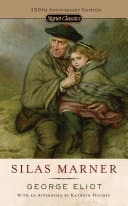
George Eliot (2007)
Genre
Historical Fiction
Reading Time
208 min
Key Themes
See below
Sign in to track this book
A reclusive weaver, embittered by betrayal and loss, finds redemption and the meaning of wealth through an orphaned golden-haired child.
Silas Marner, a diligent weaver in the Dissenting community of Lantern Yard, trusts his best friend, William Dane. Silas has a cataleptic fit while watching a dying deacon. During this time, William frames him for stealing the church's money and blames him for the deacon's death. The community, swayed by William's testimony and Silas's knife found near the crime, condemns him. Feeling betrayed by his friend, his fiancée Sarah, and his faith, Silas leaves Lantern Yard in despair.
Silas Marner settles in the isolated village of Raveloe, far from his past. His strange habits, especially his cataleptic fits, make the superstitious villagers suspicious and fearful. He lives alone, speaking to no one except for his weaving trade. His only interest becomes his work, and he hoards all his earnings, finding comfort and security in the growing pile of gold coins hidden under his floorboards. This gold becomes his only companion, replacing the human connections he once wanted.
The story moves to the prominent Cass family, the squires of Raveloe. Squire Cass is a relaxed father, and his sons, Godfrey and Dunstan, are known for their reckless behavior. Godfrey, the older son, is secretly married to a low-born opium addict named Molly Farren and is in love with Nancy Lammeter, a respectable young woman. His younger brother, Dunstan, who is more dissolute and cunning, constantly blackmails him. Dunstan often uses Godfrey's secrets and money problems for his own gain, creating a web of deceit within the family.
Godfrey, desperate to avoid revealing his secret marriage, lets Dunstan sell his horse, Wildfire. However, Dunstan carelessly kills the horse in a hunting accident. On his way back, looking for money, he finds Silas Marner's unlocked cottage. Seeing Silas is gone, Dunstan enters and finds the hidden gold coins. He steals all the money and flees into the night, vanishing from Raveloe without a trace. This theft will have effects for both Silas and the Cass family.
Silas returns home to find his gold gone. The shock and grief are immense; he feels as though his soul has been stolen. In an unusual act, he rushes to the Rainbow Inn, the village's social center, to report the theft. The villagers, at first suspicious of Silas, are more concerned with their own theories than offering real help. Mr. Macey, the parish clerk, and Mr. Snell, the landlord, offer various unhelpful suggestions. Only Mr. Dowlas, the farrier, and Mr. Crackenthorp, the doctor, offer practical advice, but the gold remains missing.
With Dunstan gone and no news about Molly Farren, Godfrey Cass begins to feel free. He continues to court Nancy Lammeter, a woman he loves and respects, and who represents the upright life he wants. Believing himself free from his past problems, Godfrey eventually marries Nancy. Their marriage is happy at first, but Godfrey carries the burden of his unconfessed secrets, especially his first marriage and his child, which prevents true closeness and peace.
On New Year's Eve, Molly Farren, Godfrey's secret wife, decides to confront him at Squire Cass's annual party, bringing their young daughter. She takes opium to sustain herself on the journey but succumbs to the drug and the harsh winter weather, collapsing and dying in the snow near Silas's cottage. Her toddler, drawn by the light, wanders into Silas's open door. Silas, in a cataleptic fit, mistakes the child's golden hair for his stolen gold returning, but upon touching her, he realizes she is a living child.
Silas takes the child to the Rainbow Inn, where Godfrey Cass, recognizing his daughter, chooses not to claim her to protect his marriage to Nancy. Silas, with the encouragement of Dolly Winthrop, a kind neighbor, decides to adopt the little girl, whom he names Eppie (after his mother and sister, Hephzibah). Eppie's presence completely changes Silas's life. His reclusive habits fade, he begins to talk with the villagers, and his heart, once hardened by betrayal and greed, softens with love for his adopted daughter. She becomes his new 'gold,' bringing him joy and connection.
Eppie grows into a sweet, lively, and affectionate young woman, devoted to Silas. Their small cottage, once a place of solitude, becomes a cheerful home filled with love. Dolly Winthrop guides Silas in raising Eppie and gently brings him back to faith and community. Silas's reputation in Raveloe changes from a strange recluse to a respected figure, all thanks to Eppie. She connects him to the world, and he finds happiness in her presence, far greater than any he found in his gold.
Sixteen years after Dunstan Cass disappeared, the Stone-pit, a disused quarry near Silas's cottage, is drained for agricultural improvements. During the draining, Dunstan's skeleton is found at the bottom, along with Silas Marner's stolen gold, still in the bag. The mystery of the theft is solved, confirming Silas's innocence and revealing Dunstan's fate. This discovery reopens old wounds and forces Godfrey Cass to face the effects of his long-held secrets.
The discovery of Dunstan's body and the gold finally makes Godfrey confess the truth of his past to Nancy: his secret marriage to Molly Farren and that Eppie is his biological daughter. Nancy is hurt by his deception but forgives him. Believing it is their duty and a chance to fix his past mistakes, Godfrey and Nancy approach Silas and Eppie, offering to adopt Eppie and provide her with a life of comfort. They expect Eppie to accept, given their wealth and her biological connection to Godfrey.
Eppie, however, refuses Godfrey and Nancy's offer. She declares her love and loyalty to Silas, stating that he is her true father, the one who raised her and loved her. She values her simple life with Silas and her fiancé, Aaron Winthrop, and does not want the wealth and status offered by the Casses. Her decision moves Silas and shows that true family is made through love and care, not just blood ties. Godfrey and Nancy accept her decision, though with sadness.
With his gold recovered and his heart full, Silas wants to revisit Lantern Yard, hoping to understand why his past was taken from him. He travels there with Eppie, but they find the town unrecognizable. The old chapel and community are gone, replaced by a large factory and new buildings. No one remembers Silas or his past. This visit gives Silas a final sense of closure, confirming that his old life is truly gone and that his future is with Eppie in Raveloe.
Eppie marries Aaron Winthrop, Dolly's son, in a joyful ceremony. They choose to live in Silas's cottage, which Aaron renovates and expands, ensuring Silas's comfort and continued presence in their lives. Silas lives out his days content, surrounded by Eppie, Aaron, and the growing Winthrop family, respected by the community. He has found redemption, love, and a sense of belonging, realizing that his love for Eppie is a greater treasure than any gold he hoarded. His life, once bleak, ends in peace and happiness.
The Protagonist
Silas transforms from a betrayed, misanthropic miser into a loving, compassionate father who finds true happiness and spiritual redemption through his unselfish love for Eppie.
The Supporting/Catalyst
Eppie grows from an abandoned infant into a loving, steadfast young woman who chooses the simple life with her true father, Silas, over the life of wealth offered by her biological father.
The Supporting/Antagonist (initially)
Godfrey struggles with moral cowardice and the weight of his unconfessed past, eventually confessing to Nancy but ultimately failing to win Eppie's affection, learning that love and nurture outweigh blood ties.
The Antagonist
Dunstan's arc is short and sharp; he commits a heinous crime and meets a swift, ignominious end, his body and the stolen gold providing a delayed resolution to a central mystery.
The Supporting
Nancy maintains her moral integrity and love for Godfrey, eventually forgiving his past deceptions and accepting Eppie's choice, demonstrating quiet strength and enduring affection.
The Supporting
Dolly remains a consistent source of wisdom and kindness, playing a pivotal role in Silas's spiritual and social rehabilitation.
The Supporting
Aaron grows into a responsible young man, steadfastly loves Eppie, and eventually marries her, providing a stable and happy future for her and Silas.
The Supporting
Squire Cass remains a static character, representing the moral decay that can result from unchecked privilege and parental neglect.
The Mentioned/Catalyst
Molly's brief appearance and death serve as a tragic catalyst, leading to Eppie's abandonment and the eventual unraveling of Godfrey's secrets.
The main theme is Silas Marner's redemption, which comes not from religion or money, but from his selfless love for Eppie. After his betrayal, Silas becomes a miser, his gold replacing human connection. Eppie's arrival, at first mistaken for his lost gold, forces him to open his heart. His devotion to her heals his emotional wounds, reconnects him with the community, and restores his faith in humanity and a higher power. This theme is clear when Eppie chooses Silas over Godfrey, showing that love built over years is more valuable than biological ties or wealth.
“In old days there were angels who came and took men by the hand and led them away from the city of destruction. We see no angels now, and alas! we have a great many more cities of destruction, but, nevertheless, God is merciful still, and sends us plenty of innocent children to lead us by the hand.”
The novel contrasts the emptiness of greed with the fulfillment found in human connection and love. Silas's hoarding of gold after his betrayal replaces human affection, but leaves him isolated and unhappy. His gold is stolen, causing despair, only for a 'golden-haired' child to replace it, bringing true joy. Similarly, Godfrey Cass's pursuit of wealth and status, and his fear of losing it, leads him to abandon his child. The story shows that true riches are in relationships and compassion, not in possessions or status. The recovery of Silas's gold after Eppie has grown up only reinforces this, as the gold is less important than the love he has found.
“The gold had come back, as much as he had lost, and he would have been a rich man for his old life, but he had a better treasure in a child.”
The importance of community and belonging is a key theme. Silas's expulsion from Lantern Yard and later isolation in Raveloe highlight the pain of being an outsider. His solitary life in Raveloe, marked by villagers' suspicion, emphasizes his alienation. Only through Eppie and Dolly Winthrop's gentle influence is Silas brought back into the community. The village, with its gossip and superstitions, also has a strong sense of mutual support and shared life, which eventually embraces Silas and Eppie, showing the human need for connection.
“To have a share in the life of a fellow-creature, and a bond of love that grew stronger with the years, was of more value than any treasure.”
The novel explores how moral choices, especially deception and cowardice, have lasting and often delayed consequences. Godfrey Cass's secret marriage, his abandonment of Eppie, and his allowing Dunstan to blackmail him, all come from his moral weakness and fear of social judgment. These choices lead to years of guilt, a lack of true intimacy with Nancy, and ultimately, Eppie's rejection of him. In contrast, Silas's initial suffering from betrayal, though not his fault, leads him to a path of isolating greed, which he overcomes by his later, selfless choice to raise Eppie. The discovery of Dunstan's skeleton and the gold years later shows how truth eventually appears, and past actions must be faced.
“The secret of Godfrey's marriage was like a dark cloud over his life; it was a ghost that haunted him and prevented him from enjoying the present.”
The debate over whether upbringing or biological inheritance matters more shapes Eppie's story. Despite being Godfrey Cass's biological daughter, Eppie chooses Silas, her adoptive father, over her wealthy birth parents. This choice strongly supports nurture. Silas's love, care, and the simple, honest life he provides are presented as more important and valuable than the inherited status or wealth offered by Godfrey. The novel suggests that true family bonds are made through shared experience, sacrifice, and affection, rather than just bloodlines, arguing for the power of a loving environment.
“I can't feel as I've got any father but one, and that's you, Marner.”
A literal and symbolic representation of Silas's lost faith and subsequent, misplaced affection.
Silas's gold serves multiple functions. Initially, it represents his attempt to replace the love and faith he lost in Lantern Yard, becoming his sole object of affection and security. Its theft plunges him into a despair equal to his original betrayal, stripping him of his last source of comfort. The gold's eventual recovery, years after Eppie has transformed his life, highlights its diminished importance. By then, Silas has found a 'better treasure' in Eppie, making the gold's return a symbol of his complete spiritual healing rather than a source of renewed avarice. It also serves as a crucial plot device, driving Dunstan's disappearance and later, Godfrey's confession.
A powerful symbol linking Eppie to Silas's lost gold and his eventual redemption.
Eppie's golden hair is a potent symbol. When Silas first discovers her, in a cataleptic fit, he mistakes her golden curls for his stolen gold returning, suggesting a subconscious link between his lost treasure and his future salvation. Her hair visually connects her to the material wealth he once valued, but her living, breathing presence offers a far deeper, spiritual richness. The golden hair therefore symbolizes the transformation of Silas's values, where a living, loving child becomes infinitely more precious than inanimate gold, representing the shift from avarice to selfless love.
A hidden grave and a long-delayed reveal of truth and consequence.
The Stone-pit, an old, disused quarry, serves as a crucial plot device by concealing Dunstan Cass's body and Silas Marner's stolen gold for sixteen years. Its draining and the subsequent discovery of its contents act as a turning point in the novel, resolving the mystery of the theft and forcing Godfrey Cass to confront his past deceptions. The pit symbolizes how secrets, though buried, can eventually surface, and how the consequences of immoral actions, even long-forgotten, will ultimately be revealed. It brings justice and closure to Silas, while forcing a difficult reckoning for Godfrey.
A physical manifestation of Silas's alienation and a plot device for key events.
Silas's cataleptic fits, a recurring physical condition, serve both as a characterization tool and a plot device. They initially mark him as 'other' in Lantern Yard and later in Raveloe, contributing to his isolation and the villagers' suspicion. More crucially, a fit directly enables William Dane to frame him for theft in Lantern Yard. Later, Silas experiences a fit just as Molly Farren dies and Eppie wanders into his cottage, allowing the child to enter his life unnoticed by him until he recovers. These fits symbolically represent his detachment from the world and provide opportune moments for pivotal events to occur in his absence or altered state.
“The golden gates of the past shut too soon; there are some happinesses that are an agreeable anticipation, and some that are a pleasant retrospect.”
— Reflecting on the nature of happiness and time.
“Favourable Chance is the god of all men who follow their own devices instead of obeying a law they believe in.”
— Describing the mindset of individuals who prioritize self-interest over moral codes.
“When a man turns a blessing from his door, it enters in by the window, and is a double blessing to him.”
— Silas Marner's perspective on the unexpected benefits of perceived misfortune.
“The human soul is a vast continent, and has its barren places, its luxuriant valleys, and its hidden gold-mines.”
— A metaphor for the complexity and potential within human nature.
“It is a great privilege to be a man of few words, but a man of many thoughts.”
— Describing Silas Marner's quiet, introspective character.
“To have a good man for your father is a great thing, but to have a good father for your father is a greater.”
— Exploring the difference between a man's inherent goodness and his role as a parent.
“The strongest principle of growth lies in human choice.”
— Emphasizing the power of individual decisions in shaping one's life.
“The love of a man for his children is a thing that will make him do anything.”
— Illustrating the powerful, transformative nature of parental love.
“Our consciousness of the past is a source of knowledge, but also a source of illusion.”
— Pondering the reliability and impact of memory and historical understanding.
“We are apt to think that our own experience is the rule of the universe.”
— Highlighting human tendency towards egocentrism and limited perspective.
“No man can be a good parent unless he has learned to be a good child.”
— Suggesting that understanding one's own childhood is crucial for effective parenting.
“The web of life is of a mingled yarn, good and ill together.”
— A classic reflection on the intertwining of joy and sorrow in human existence.
“The greatest gift a man can give to his children is not riches, but the example of a good life.”
— Emphasizing the value of moral example over material wealth in parenting.
“There is no point in having a good life if you don't share it with others.”
— Highlighting the importance of community and shared experience for true happiness.
Ready to see how well you understood this book? Take our interactive quiz with 10 questions.
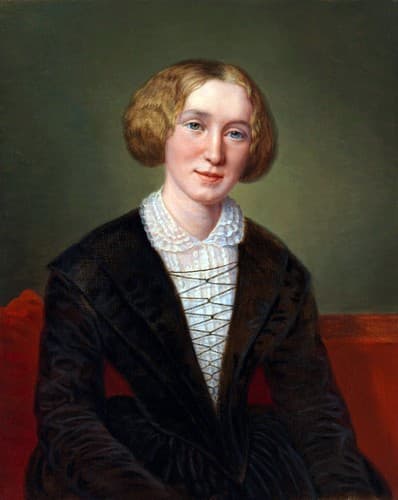
Mary Ann Evans, known by her pen name George Eliot, was an English novelist, poet, journalist, translator, and one of the leading writers of the Victorian era. She wrote seven novels: Adam Bede (1859), The Mill on the Floss (1860), Silas Marner (1861), Romola (1862–63), Felix Holt, the Radical (1866), Middlemarch (1871–72) and Daniel Deronda (1876). Like Charles Dickens and Thomas Hardy, she emerged from provincial England; most of her works are set there. Her works are known for their realism, psychological insight, sense of place and detailed depiction of the countryside.







