“Perhaps that is the difference between a man and a beast: a beast is what it is, a man is what he makes of himself.”
— Reflecting on human nature and self-creation.

Genre
Historical Fiction
Reading Time
180 min
Key Themes
See below
Sign in to track this book
A celebrated author's quest to understand evil leads him to a shocking secret from Hitler's inner circle, forcing him to confront the moral weight of untold history.
Rudolf Herter, a celebrated Dutch author, is in Vienna for a reading from his novel, 'The Invention of Love'. During a television interview, he is asked about his future writing plans. Herter, feeling an intellectual and moral emptiness despite his success, states his intention to write about the true nature of evil, specifically Hitler's evil. He thinks about Hitler's lack of personal history before 1914, his mysterious rise, and the scale of his atrocities, wondering how such a person could exist and wield such destructive power. This statement captures the attention of an elderly Austrian couple, Frau and Herr Kessler, watching the interview.
Intrigued by Herter's interview, Frau and Herr Kessler contact his publisher, insisting they have a story of immense historical significance only Herter can understand and write. They claim to have been personal servants at the Berghof, Hitler's mountain retreat, during World War II, and to have known a secret that changes the understanding of the dictator. Herter, initially doubtful but ultimately curious about the Kesslers' insistence and the sheer boldness of their claim, agrees to meet them. He sees this as a possible way into the core of the evil he seeks to understand, a direct link to Hitler's private world.
Herter meets the Kesslers in their modest Viennese apartment. They are a seemingly ordinary couple, but their eyes hold the weight of extraordinary experiences. They begin their story by describing their long service to the Nazi regime, not out of belief, but from a sense of duty and the need for work. Herr Kessler was a driver and handyman, while Frau Kessler served as a maid, mainly for Eva Braun. They describe the Berghof as a place of strange domesticity amidst the horror of war, a surreal bubble where Hitler and his inner circle lived a life separate from the suffering they caused the world. They emphasize their loyalty and closeness to power.
The Kesslers' story turns dramatic as they reveal the central secret: in 1938, Eva Braun became pregnant with Adolf Hitler's child. They describe the immense secrecy around the pregnancy, arranged by Hitler himself, who feared political consequences and damage to his image as a celibate leader devoted solely to Germany. Eva Braun, despite her initial joy, had to hide her condition, becoming more isolated and anxious. The Kesslers, as her closest attendants, were unwilling confidantes to this monumental secret, witnessing the emotional toll it took on Eva.
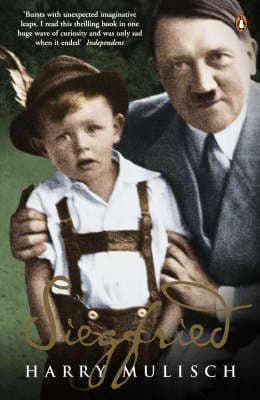
In late 1938, Eva Braun gave birth to a son, whom she named Siegfried. The birth was kept completely secret, attended only by a trusted doctor and the Kesslers. However, the child was not as expected. According to the Kesslers, Siegfried was born without a soul, a creature of pure, unadulterated evil, a 'doppelgänger' of Hitler himself, but more intensely so. Hitler, seeing the infant, did not show paternal love but a chilling recognition of a monstrous reflection. He declared the child to be the ultimate manifestation of the evil he represented, a perfect vessel for absolute nihilism, a being meant to destroy.
Instead of eliminating the child, Hitler planned to cultivate Siegfried's inherent evil, to raise him in absolute isolation from human affection and morality, creating a being of ultimate destruction. He saw Siegfried not as a son, but as a project, a 'negative Messiah' who would bring about the end of the world. The Kesslers were tasked with raising Siegfried, under strict orders to provide only basic necessities, never love or comfort. They describe the child as unsettlingly silent, without typical infant expressions, and possessing an unnerving gaze, confirming Hitler's grim assessment.
Siegfried was kept hidden in a specially built bunker beneath the Berghof, a dark, isolated world where he was raised by the Kesslers under constant surveillance and extreme secrecy. They were forbidden from showing him any affection or teaching him any moral principles, becoming his jailers and unwitting torturers. The Kesslers recount the child's eerie silence, his lack of typical human development, and a chilling aura of malevolence around him. They describe how, as he grew, he seemed to absorb the darkness of the war raging above, a living embodiment of the catastrophe Hitler was unleashing upon the world, a mirror of absolute evil.
As the war turned against Germany and the Allied forces closed in, Hitler, from his bunker in Berlin, gave his final, chilling orders regarding Siegfried. Fearing his 'ultimate weapon' might fall into enemy hands or that his existence would be revealed, Hitler commanded the Kesslers to kill the boy. They were horrified but felt powerless to disobey. They describe the agonizing decision and the act itself, a desperate, tragic end to a life never truly lived, a life designed to be an instrument of pure evil. The Kesslers carried out the gruesome deed, burdened by the terrible secret.
After Siegfried's death and Hitler's own suicide, the Kesslers fled the collapsing regime, their lives forever marked by the horrific events they had witnessed and participated in. They managed to survive the war and rebuild a quiet life in Vienna, but the secret of Siegfried remained a crushing burden. They never spoke of it to anyone, fearing disbelief, judgment, or even reprisal. For decades, they carried the knowledge of Hitler's child, proof of his ultimate depravity and a dark shadow over their own lives. They believed Herter, with his interest in evil, was the only one who could truly understand their story.
As the Kesslers conclude their extraordinary and horrifying story, Rudolf Herter is overwhelmed. The story of Siegfried, the child of pure evil, nurtured by Hitler, shatters his intellectual framework and his understanding of humanity. He grapples with the implications: if evil can be born, not just cultivated, what does that say about the human condition? The weight of the Kesslers' testimony, combined with the grotesque details of Siegfried's existence and demise, proves too much for his mind. Herter collapses, physically and mentally, unable to process the unfathomable depths of depravity he has just been exposed to, his quest for understanding leading him to the brink of madness.
Herter is hospitalized, suffering from a severe psychological breakdown. The Kesslers' story has not just informed him; it has changed his perception of reality and shattered his intellectual confidence. He struggles with the concept of 'born evil' and the idea of Hitler's 'negative creation'. The knowledge that such a being might have existed, coupled with the Kesslers' involvement, even if forced, in its life and death, creates an unbearable moral dilemma. He questions the nature of humanity and the possibility of understanding absolute evil, realizing that some truths might be too terrible to bear, too destructive to the human spirit.
In his weakened state, Herter thinks about his initial ambition to understand evil. He realizes that the Kesslers' story has not given him clarity, but an abyss of despair. The idea of Siegfried, a child engineered for pure destruction, represents an evil so profound it defies human comprehension or narrative. He understands the immense burden the Kesslers have carried and the impossible position they were placed in. The novel ends ambiguously, with Herter making a decision about the Kesslers' secret and his own future as a writer, suggesting that some truths are best left unspoken, or are simply unspeakable in their horror.
The Protagonist
Herter's arc moves from intellectual arrogance and a detached quest for understanding evil to a state of profound psychological collapse and disillusionment, realizing some truths are too devastating to comprehend.
The Supporting
Having lived for decades burdened by a terrible secret, Frau Kessler finds a partial release by sharing it, though the trauma remains evident.
The Supporting
Similar to his wife, he lives with the immense burden of the secret, finally sharing it with Herter, seeking some form of absolution or historical record.
The Antagonist
His character is fixed in the past, serving as the ultimate embodiment of evil Herter attempts to comprehend.
The Supporting
Her arc is one of brief maternal hope crushed by the overwhelming evil of Hitler, leading to resignation and complicity in a horrific secret.
The Mentioned
Born and raised as an instrument of pure evil, his brief existence culminates in a tragic, ordered death, never experiencing human connection.
The central theme explores whether evil is learned, chosen, or inherent. Herter initially seeks to understand Hitler's evil as a product of circumstance and ideology. However, the Kesslers' story of Siegfried, a child allegedly born 'pure evil' and nurtured for destruction by Hitler himself, challenges this view. It suggests that evil can be an intrinsic, almost metaphysical force, beyond human comprehension or rational explanation. This idea shatters Herter's intellectual framework, leading him to question the very possibility of understanding such an absolute form of malevolence. The novel implies some evil might be too profound for human language or reason, as seen in Herter's breakdown.
“What if Hitler was merely a symptom, and the illness itself was far older, far more deeply rooted in the very fabric of existence?”
This theme appears strongly through both the Kesslers and Herter. The Kesslers carry the horrific secret of Siegfried for decades, a crushing psychological weight that shapes their entire post-war existence. Their decision to finally share it with Herter is an attempt to unburden themselves, but it also transfers this immense weight. Herter, upon receiving this knowledge, finds it too overwhelming to bear. The story suggests that some truths are so terrible, so morally complex, that their revelation can be destructive, rather than freeing. Knowing, especially about absolute evil, comes with a profound and often unbearable responsibility, as Herter's collapse shows.
“Some secrets are like poison; they don't just kill the one who keeps them, but also the one to whom they are revealed.”
Rudolf Herter, a brilliant intellectual, sets out to fully understand Adolf Hitler and the origins of his evil. He approaches this task with confidence in his own analytical abilities. However, the Kesslers' story pushes him beyond rational thought. The concept of a child born as 'pure evil' defies scientific, psychological, and philosophical frameworks. Herter's mental breakdown shows the point at which human intellect can no longer process or contain the magnitude of certain horrors. The novel argues that some aspects of reality, particularly absolute evil, are beyond human capacity for understanding, leaving only bewilderment and despair. This challenges the idea that all phenomena can be rationally explained.
“He had sought to understand the darkness, but instead, the darkness had understood him, swallowed him whole.”
The novel examines how history is created and the role of individual memory. The Kesslers' narrative presents a hidden history of Hitler, one that contradicts official records and public perception. This raises questions about what makes up 'truth' in historical accounts and how much is lost or suppressed. The Kesslers' memories, though vivid and consistent, come from a subjective, traumatized perspective. Herter struggles with the truthfulness of their tale, not just factually, but ethically and existentially. The book implies that history is not a static set of facts, but a fluid narrative, constantly shaped by those who lived through it and those who seek to interpret it, even if those interpretations are deeply unsettling.
“History is not what happened, but what is remembered, and what is remembered is often a wound that refuses to heal.”
The Kesslers' extraordinary story is presented through their subjective memories, leaving its ultimate veracity open to interpretation.
While the narrative largely presents the Kesslers' story as factual within the context of the novel, the reader is implicitly invited to question its absolute truth. The Kesslers are an elderly, traumatized couple recalling events from decades past, and their tale is so outlandish that it strains credulity. This device forces the reader, alongside Herter, to grapple with the nature of historical truth, memory, and the power of narrative. It allows the novel to explore its themes of inherent evil and the limits of comprehension without necessarily asserting the literal existence of Siegfried, but rather the profound impact of such a belief.
Rudolf Herter's contemporary quest for understanding frames the Kesslers' historical recounting of Hitler's secret.
The novel employs a frame story structure. The present-day narrative of Rudolf Herter's intellectual obsession and his meeting with the Kesslers serves as the frame for the Kesslers' extended flashback narrative about their time at the Berghof and the secret of Siegfried. This structure allows the author to contrast Herter's intellectual, theoretical pursuit of evil with the Kesslers' visceral, lived experience of it. It also highlights the immediate and devastating impact of historical trauma on a contemporary mind, showing how the past can shatter the present.
Siegfried, Hitler's alleged son, symbolizes the ultimate, uncontainable manifestation of absolute evil.
Siegfried functions as a powerful symbol rather than a fully developed character. He represents the ultimate, purest form of evil, conceived and nurtured by Hitler himself. He is a 'negative Messiah,' a living embodiment of nihilism and destruction, challenging the very notion that evil is always a product of environment or choice. His existence (or the belief in it) forces Herter to confront a metaphysical evil that transcends human understanding and morality, pushing him to the brink of madness. Siegfried embodies the unspeakable horror at the core of the Nazi regime.
“Perhaps that is the difference between a man and a beast: a beast is what it is, a man is what he makes of himself.”
— Reflecting on human nature and self-creation.
“The past is not dead. It is not even past. It is merely sleeping.”
— Discussing the enduring impact of history.
“Every man has a secret life, which is unknown even to his closest friends.”
— Considering the hidden aspects of an individual's existence.
“To forget is to forgive, but to remember is to punish yourself.”
— Pondering the burden of memory and the act of forgetting.
“Reality is always more complex than our theories about it.”
— A philosophical observation on the limitations of human understanding.
“The greatest evil is not to do evil, but to do nothing.”
— A reflection on complicity and the responsibility to act.
“A lie can travel halfway around the world while the truth is still putting on its shoes.”
— Highlighting the speed and pervasiveness of falsehoods.
“We are all prisoners of our own perspectives.”
— Considering the subjective nature of perception.
“The future is always uncertain, but the past is always with us.”
— Contrasting the known past with the unknown future.
“Love is not a feeling, it is a decision.”
— A definition of love emphasizing choice over emotion.
“The true measure of a man is how he treats someone who can do him absolutely no good.”
— A test of character based on altruism.
“Every ending is a new beginning, we just don't always see it that way.”
— Finding hope and continuity in moments of closure.
“Silence is not empty, it is full of answers.”
— Suggesting the wisdom found in quiet contemplation.
“To understand everything is to forgive everything.”
— Linking comprehensive understanding with the capacity for forgiveness.
Ready to see how well you understood this book? Take our interactive quiz with 10 questions.
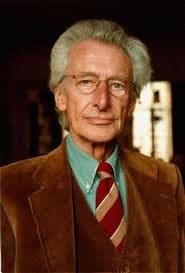
Harry Kurt Victor Mulisch was a Dutch writer. He wrote more than 80 novels, plays, essays, poems, and philosophical reflections. Mulisch's works have been translated into over thirty languages.







