“The past is never dead. It's not even past.”
— A recurring theme in Wallander's reflections on the lingering impact of past events and crimes.


Henning Mankell (2015)
Genre
Thriller / Mystery
Reading Time
432 min
Key Themes
See below
Sign in to track this book
Haunted by a teenage girl's self-immolation, Inspector Wallander races against time to catch a scalping serial killer, all while his department is consumed by budget cuts and World Cup fever.
Detective Chief Inspector Kurt Wallander is called to a rapeseed field near Ystad where a young girl has been acting strangely all day. When Wallander and his team arrive, they see the girl, later identified as Mariam, douse herself in gasoline and set herself on fire. This horrific event deeply traumatizes Wallander, leaving him haunted by her desperate act and the unanswered questions around it. This shocking incident creates a somber tone for the investigations to follow.
The next day, Wallander is called to a gruesome scene on a secluded beach. Björn Fredman, Sweden's former Minister of Justice, has been brutally murdered. His body is found axed and scalped. The savagery of the crime suggests a disturbed perpetrator. Wallander and his team, including detectives Martinsson and Svedberg, begin investigating this high-profile case. It quickly attracts national attention and puts immense pressure on the Ystad police force. The unusual nature of the wounds baffles the investigators.
Before Wallander can make progress in the Fredman case, another prominent man, a wealthy art dealer named Erik Magnusson, is found murdered in a similar grotesque manner – axed and scalped. This second murder confirms Wallander's worst fears: they are dealing with a serial killer. The pattern of targeting powerful, influential men with a distinct, brutal signature sends panic through the community and escalates the urgency of the investigation. The police department is stretched thin, and Wallander feels the weight of public expectation.
The initial investigation yields few concrete leads. The killer leaves little forensic evidence, and the motives remain obscure. Wallander's team struggles to connect the victims beyond their public prominence. Adding to the difficulties, the Ystad police department faces impending budget cuts and the distraction of the World Cup soccer matches, which occupy many officers. Wallander feels isolated, wrestling with the baffling murders and a lack of focus within his own ranks, hindering their progress.
The killer escalates their campaign by using technology. A hacker, later identified as the killer, breaks into public websites, including government and media sites, leaving cryptic messages and taunting the police. These digital communications add a disturbing dimension to the investigation, suggesting the killer is intelligent, technologically adept, and deliberately trying to provoke Wallander. The use of hacking turns the investigation into a psychological battle, as Wallander tries to decipher the killer's intentions.
Despite the official focus on the serial murders, Wallander cannot shake the image of Mariam's self-immolation. He feels a connection between her desperate act and the violence of the serial killer. He begins to explore the possibility that Mariam's death is linked to the later murders, perhaps as a catalyst or a related symptom of a deeper societal problem. This personal obsession, while initially dismissed by others, drives him to look into Mariam's background, hoping to find a thread that might connect the seemingly separate events.
Amidst the pressure of the case, Wallander struggles with his personal life. He is in a tenuous long-distance relationship with Baiba Liepa, the widow of a murdered Latvian policeman, which adds to his emotional strain. His daughter, Linda, is also concerned about his deteriorating mental and physical state, frequently calling him to check in. These personal challenges highlight Wallander's isolation and his tendency to immerse himself completely in his work, often at the expense of his own well-being.
Through the hacked messages and eventually a discovered manifesto, the killer's motivation begins to emerge. The perpetrator sees himself as an avenging angel, targeting powerful men whom he believes are responsible for the moral decay and corruption of Swedish society. His acts are not random but a calculated, symbolic crusade against those he deems responsible for societal injustices, reflecting a deep-seated anger and disillusionment. This revelation shifts the focus from a simple madman to a killer with a dangerous, warped ideology.
Following a breakthrough, Wallander and his team identify a prime suspect, a disgruntled former employee of one of the victims with a history of radical beliefs and technological expertise. The investigation intensifies into a desperate race against time as Wallander tries to track down the killer before he can strike again. The chase takes Wallander across various locations, culminating in a tense pursuit where Wallander's ingenuity and perseverance are tested as he tries to corner a highly intelligent and dangerous adversary.
Wallander eventually corners and apprehends the serial killer after a harrowing confrontation. The capture ends the reign of terror, but it does not bring Wallander peace. The experience leaves him shaken, especially the lingering questions about Mariam's death and the societal issues that may have fueled the killer's rage. The case, while solved, deepens Wallander's weariness and his struggle to reconcile the darkness he encounters with his desire for justice, leaving him with a renewed sense of the fragility of human existence.
The Protagonist
Wallander's arc sees him further descend into his characteristic melancholy, becoming increasingly isolated as he battles both external threats and internal demons, questioning the nature of justice and society.
The Mentioned
Her brief appearance sets a somber tone and provides a recurring, unresolved emotional anchor for Wallander throughout the narrative.
The Victim
His death serves as the inciting incident for the main plot, revealing the killer's methodical and symbolic targeting.
The Victim
His murder solidifies the serial nature of the crimes, intensifying the investigation and confirming a pattern.
The Supporting
He remains a steady, professional presence, providing procedural support and contrasting Wallander's personal struggles.
The Supporting
Svedberg consistently provides diligent background work and research, helping to build the case methodically.
The Supporting
Her relationship with Wallander remains a distant, often strained, source of personal contemplation for him.
The Supporting
Linda's role is primarily to reflect Wallander's personal struggles and the toll his work takes on his family life.
The novel explores societal decay, portraying a Sweden with hidden tensions and moral compromises beneath its calm surface. The serial killer targets prominent figures, believing they embody this corruption, while Mariam's self-immolation points to a more generalized, unspoken despair in society. Wallander often reflects on how these individual acts of violence are symptoms of broader societal failings, questioning the welfare state. The police department's distraction by budget cuts and the World Cup further emphasizes a lack of focus on deeper societal problems.
““He felt as if he were walking on thin ice, that the whole of Swedish society was on the verge of cracking.””
Wallander's character explores isolation and existential anguish. He is often alone, even among his team, burdened by the horrors he witnesses and his inability to fully connect with others. His long-distance relationship with Baiba and his daughter's distant concern highlight his personal loneliness. Mariam's self-immolation, an act of ultimate isolation, deeply resonates with Wallander, mirroring his own internal struggles with meaning and despair in an indifferent world. He grapples with human suffering and the purpose of his own existence.
““He was tired, tired of the endless darkness that seemed to cling to him, to everyone he met.””
The novel explores the personal and professional burden of seeking justice in a complex and often cruel world. Wallander is driven by a strong moral compass, but the pursuit of the serial killer, coupled with Mariam's unexplained tragedy, takes a severe toll on his mental and physical health. He questions whether justice truly brings resolution or merely opens new wounds. The pressure from the public, the media, and his superiors adds to this burden, making him aware of the limitations of the legal system and the emotional cost of confronting evil.
““Justice was a heavy cloak, and sometimes he felt he was suffocating beneath its weight.””
Sidetracked explores the complex nature of evil, moving beyond simple villainy. The serial killer's motives, initially baffling, are gradually revealed as a twisted form of moral righteousness, a crusade against perceived corruption. This forces Wallander to confront a different kind of evil – one rooted in ideological conviction rather than pure madness. The killer's use of hacking and symbolic acts, like scalping, complicates the understanding of his pathology, suggesting a calculated and intellectualized form of violence rather than impulsive rage. The novel questions what societal conditions could breed such a dangerous ideology.
““He wasn’t a madman in the simple sense. He was a man with a distorted vision of justice.””
Mariam's self-immolation serves as a recurring, unresolved emotional anchor.
The image of Mariam setting herself on fire is a powerful and recurring haunting image for Wallander. It is not directly linked to the serial killer's case but acts as a psychological counterpoint, deepening Wallander's despair and forcing him to confront deeper questions about suffering and societal neglect. This unresolved personal trauma for Wallander underscores the pervasive sense of unease in the novel and prevents him from fully detaching from the darkness he encounters, even after the main case is solved. It emphasizes the emotional toll of his profession.
Mariam's death initially appears unrelated but subtly influences Wallander's perspective.
Mariam's self-immolation functions as a powerful parallel mystery or even a red herring. While it initially seems separate from the serial murders, Wallander's persistent, almost obsessive belief that there's a connection, even if symbolic, subtly influences his investigation. It broadens the scope of his inquiry beyond simple criminal profiling to a more profound sociological analysis, suggesting that the causes of violence are multifaceted and interconnected. This device allows Mankell to explore themes of societal despair that extend beyond the specific acts of the serial killer.
The novel portrays a disconnect between Sweden's image and its underlying problems.
This device highlights the contrast between Sweden's international image as a progressive, orderly society and the disturbing undercurrents of crime, corruption, and despair revealed in the story. The serial killer's targets are figures of power, suggesting a rot within the system. The police force's distraction by trivial matters like the World Cup and internal politics further underscores this disconnect. Mankell uses this to critique the perceived infallibility of the Swedish welfare state, arguing that deep-seated problems can fester beneath a seemingly perfect surface.
The killer uses hacking and digital communication to taunt the police and spread his message.
The killer's use of computer hacking to communicate and spread his manifesto introduces a modern element of technological warfare into the traditional police procedural. This device elevates the psychological stakes of the investigation, as the killer is not just physically violent but also intellectually challenging and technologically adept. It forces Wallander and his team to adapt to new methods of criminal activity, reflecting contemporary threats and the evolving nature of crime. The digital taunts add a layer of personal provocation, making the hunt more intense for Wallander.
“The past is never dead. It's not even past.”
— A recurring theme in Wallander's reflections on the lingering impact of past events and crimes.
“He knew that the murderer would strike again. He felt it in his gut, a cold, hard knot.”
— Wallander's intuition early in the investigation, sensing the serial nature of the crimes.
“The silence in the house was so profound it almost hummed.”
— Describing the atmosphere in a victim's home, emphasizing the emptiness left by death.
“He was tired, bone-weary, but the exhaustion was a familiar companion, almost a friend.”
— Wallander's constant state throughout the demanding investigation, highlighting his dedication.
“The truth was a slippery thing, always just out of reach, like a fish in a dark pond.”
— Wallander's frustration with the lack of clear leads and the obfuscation of facts.
“Sometimes, the most ordinary people committed the most extraordinary atrocities.”
— Wallander pondering the nature of evil and how it can reside in seemingly normal individuals.
“The wind carried the smell of the sea, a reminder of the vastness beyond their small, troubled world.”
— A moment of reflection on the natural world amidst the grim reality of the crimes.
“He felt a growing sense of unease, a prickling sensation on the back of his neck.”
— Wallander's physical manifestation of his detective instincts kicking in.
“Every crime leaves a scar, not just on the victim, but on the society that allows it to happen.”
— Wallander's broader philosophical view on the societal impact of crime.
“The fear was a living thing, a shadow that clung to the edges of the light.”
— Describing the pervasive fear that grips the community as the killings continue.
“He had seen too much, understood too little, and that was the curse of his profession.”
— Wallander's personal burden as a detective, grappling with the horrors he witnesses.
“The city itself seemed to hold its breath, waiting for the next blow.”
— Personification of Ystad, reflecting the collective anxiety and anticipation.
“He knew he had to push on, even when every fiber of his being screamed for rest.”
— Wallander's relentless pursuit of the killer despite his overwhelming fatigue.
“The motive, when it finally emerged, was as twisted and incomprehensible as the crimes themselves.”
— Wallander's reaction to the revelation of the killer's complex and disturbing motivations.
Ready to see how well you understood this book? Take our interactive quiz with 10 questions.
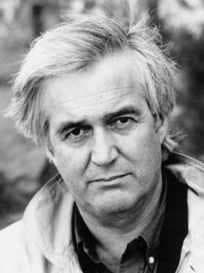
Henning Georg Mankell was a Swedish crime writer, children's author, and dramatist, best known for a series of mystery novels starring his most noted creation, Inspector Kurt Wallander. He also wrote a number of plays and screenplays for television.







