“I’ve learned that life is a lot like a choose-your-own-adventure book. You can pick the easy path and probably be fine, or you can pick the hard path and maybe fall on your face.”
— Alice reflects on her choices and life's unpredictability.

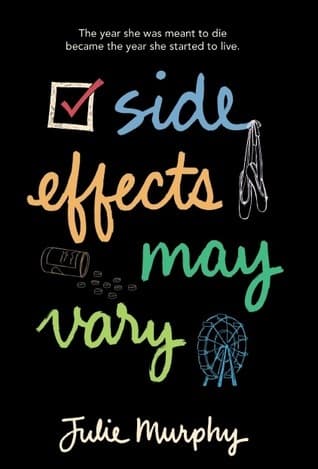
Julie Murphy (2014)
Genre
Young Adult / Romance
Reading Time
6-7 hours
Key Themes
See below
Sign in to track this book
A terminally ill teen's revenge-fueled bucket list takes a sharp turn when she unexpectedly goes into remission, forcing her to confront the chaotic aftermath of her 'final' acts.
Sixteen-year-old Alice Franklin receives a devastating diagnosis: she has aggressive leukemia. Believing she has only a few months left, Alice decides to stop being the 'nice girl' and instead right all the wrongs she's experienced. She creates a 'revenge list.' Her best friend, Harvey, is the only one she tells about her illness and her plan. Despite his initial discomfort with some of her more aggressive ideas, Harvey agrees to help her, believing he's supporting her through her final wishes. The list includes tasks like breaking up her ex-boyfriend Paul from his new girlfriend, exposing her sister's boyfriend, and confronting people who have wronged her or others.
One of Alice's first targets is her ex-boyfriend, Paul. She plans a series of encounters to make Paul jealous and to highlight Lori's perceived flaws. Alice uses her illness to gain sympathy and guilt from Paul. She subtly undermines Lori, making Paul question their relationship. Harvey, though uneasy, helps Alice by creating situations that put her in Paul's path. Alice succeeds, and Paul breaks up with Lori, much to Alice's satisfaction. This act is a clear change from Alice's previous personality, showing her new willingness to be cruel.
Another item on Alice's list involves her older sister, Brooke, and Brooke's boyfriend, Kevin. Alice has always disliked Kevin, sensing he was bad news. She gathers evidence of Kevin cheating on Brooke with a girl named Emily. Despite Harvey's warnings about the potential fallout, Alice plans a public confrontation, revealing Kevin's infidelity to Brooke and their family. The revelation causes a huge rift between Alice and Brooke, as Brooke is devastated and furious at Alice for interfering, believing Alice did it out of spite. This act further isolates Alice from her family, even as she feels a grim satisfaction.
Alice and Harvey target their strict and often unfair English teacher, Mrs. Jones. They plan an elaborate prank involving a fake emergency and a classroom full of pigeons. The prank is meant to humiliate Mrs. Jones and disrupt her class, a long-held fantasy for many students. Harvey, despite his usual reluctance for rule-breaking, gets caught up in the thrill of the plan and helps Alice. The prank causes chaos and embarrassment, but it also lands Alice and Harvey in significant trouble with the school, leading to suspensions and more scrutiny of Alice's erratic behavior.
As Alice and Harvey continue to work through her revenge list, their already close friendship deepens. Harvey is the only one who knows about Alice's illness and her reasons, and he consistently supports her, even when he disagrees with her actions. Their shared experiences, the adrenaline of their escapades, and the intimacy of Alice's confession create a new level of closeness. Alice starts to see Harvey romantically, and their relationship grows from best friends to something more, leading to their first kiss. This new romance adds complexity and tenderness to Alice's otherwise destructive path.
Just as Alice has completed most of her revenge list and is starting to embrace her romantic feelings for Harvey, she receives unexpected news from her doctor. Her leukemia, against all odds, has gone into remission. The life sentence she thought she had been given is suddenly lifted. This news, while medically miraculous, throws Alice's entire world into disarray. She is now faced with the daunting prospect of living with the consequences of all her 'final' actions. The relief of remission is quickly overshadowed by the immense guilt and fear of facing the people she's hurt and the relationships she's damaged, including her relationship with Harvey, which was built on her impending death.
With her remission, Alice is forced to confront the wreckage of her 'revenge list.' Her sister Brooke is still furious, her parents are confused and hurt by her behavior, and she's alienated many friends. To make matters worse, Paul, having broken up with Lori because of Alice's manipulation, now believes Alice is still dying and wants to get back together with her. Alice, burdened by guilt, struggles with how to tell him the truth about her remission and her manipulative actions. She sees the pain she's caused and the impossibility of simply going back to her old life, especially with Paul's misguided affections.
The truth about Alice's remission inevitably comes out, and Harvey is devastated. He feels betrayed, not just by Alice's manipulation of others, but by the very foundation of their recent relationship. He had supported her through what he believed were her final wishes, and their romance had blossomed under the shadow of her impending death. Learning that she is now healthy, and that much of their shared experience was based on a premise that no longer exists, shatters his trust. Harvey confronts Alice, expressing his anger and hurt, and ends their relationship, leaving Alice heartbroken and alone.
Alice begins a difficult journey of atonement. One of her first and most important steps is trying to reconcile with her sister, Brooke. She genuinely apologizes for revealing Kevin's infidelity in such a public and hurtful way, acknowledging that her actions were driven by selfishness and not just concern. Brooke is slow to forgive, but Alice's persistent and sincere efforts eventually start to lessen her anger. Alice also tries to make amends with Lori, Paul's ex-girlfriend, confessing her manipulation and expressing remorse for the pain she caused. These conversations are difficult and often met with anger, but Alice understands she deserves it.
Driven by her desire to truly move forward, Alice decides to make a public apology. With the help of her principal, she arranges to speak at a school assembly. In front of the entire student body and faculty, Alice bravely confesses her leukemia diagnosis, her 'revenge list,' and the harmful actions she took while believing she was dying. She apologizes to everyone she hurt, including Mrs. Jones, and takes full responsibility for her behavior. This public act of regret is incredibly difficult but freeing, marking a significant turning point in her journey toward redemption and self-acceptance, though not everyone is immediately forgiving.
After her public confession, Alice continues to try and reach out to Harvey. He remains hurt and distant, but Alice doesn't give up. She gives him space but also makes it clear she wants to earn back his trust, even if it's just as friends. Slowly, and with much hesitation, Harvey begins to respond. Their interactions are tentative and awkward at first, a stark contrast to their previous closeness. They start to talk, not about the past, but about the present and the future. There's no immediate romantic reconciliation, but a fragile hope emerges that they might, eventually, be able to rebuild a friendship based on honesty and genuine understanding.
Alice continues her remission, attending regular check-ups and adjusting to a life she never thought she'd have. She accepts that she cannot erase the past, but she can learn from it. She focuses on rebuilding trust with her family and those she wronged, understanding that forgiveness is a process. While her relationship with Harvey is still a work in progress, there are signs of healing. Alice begins to volunteer, finding a new purpose in helping others. She learns to live with the side effects of her 'revenge list' and the emotional scars of her illness, recognizing that her journey is about growth and embracing the messy, unpredictable nature of life.
The Protagonist
Alice transforms from a people-pleasing 'nice girl' to a vengeful, manipulative individual, and then through a difficult journey of guilt and atonement, ultimately finding self-acceptance and a path toward genuine connection.
The Supporting Character / Love Interest
Harvey moves from unquestioning loyalty to profound betrayal and heartbreak, eventually showing signs of forgiveness and a willingness to cautiously rebuild trust.
The Supporting Character
Brooke experiences betrayal and anger, eventually moving towards understanding and cautious forgiveness of Alice.
The Mentioned / Supporting Character
Paul is a victim of Alice's manipulation, experiencing heartbreak and confusion, and serves as a catalyst for Alice's guilt.
The Mentioned / Supporting Character
Lori is an innocent victim who experiences heartbreak, eventually receiving an apology from Alice, demonstrating Alice's growth.
The Mentioned / Supporting Character
Mrs. Jones is a target of a prank, later receiving a public apology from Alice, reflecting Alice's journey of accountability.
The Mentioned / Supporting Character
Kevin's infidelity is exposed by Alice, serving as a plot point that creates conflict between Alice and Brooke.
This theme is central to the novel, exploring how Alice's 'final' actions have lasting results once she goes into remission. Her revenge list, born out of a perceived lack of future, devastates relationships and leaves emotional wreckage. For example, her manipulation of Paul and Lori, and her public exposure of Kevin, lead to deep hurt and anger that she must painstakingly try to mend. The story emphasizes that even actions taken under extreme circumstances still carry weight and require accountability, forcing Alice to deal with guilt and begin a difficult journey of atonement.
“What do you do when you're given a second chance, but you've already burned all your bridges?”
The novel explores how Alice's identity changes dramatically under her leukemia diagnosis. She sheds her 'nice girl' persona, believing she has nothing to lose, and acts in ways she never would have before. Her illness becomes a mask, allowing her to justify selfish and cruel behavior. Upon remission, she struggles with who she has become and how others now see her. Her journey is about reconciling her past self with her 'revenge' self and building a new, authentic identity based on responsibility and genuine connection, rather than fear or a fabricated persona. She learns that true strength is in owning her mistakes.
“I didn't know who I was anymore. The dying girl was gone, but the girl before her was gone too.”
This theme is explored primarily through Alice's relationships with Harvey and Brooke. Harvey's unwavering love and loyalty are tested by Alice's betrayal when he discovers her remission. Their romance, built on a foundation of impending loss, crumbles under the weight of deceit. Similarly, Brooke's sisterly love is fractured by Alice's hurtful revelation of Kevin's infidelity. The novel details the pain of betrayal and the difficult, often messy, process of seeking and granting forgiveness. It shows that forgiveness is not instantaneous but a gradual rebuilding of trust, earned through genuine remorse and consistent effort, particularly evident in Alice's slow reconciliation with Harvey and Brooke.
“Forgiveness wasn't a switch you flipped. It was a slow, painful climb, one apology at a time.”
The story contrasts Alice's initial despair upon her diagnosis, which fuels her destructive 'revenge list,' with the unexpected hope of remission. This sudden shift from a finite timeline to an open-ended future creates a unique form of despair, as Alice is forced to live with the fallout of her actions. The novel explores how hope can be a double-edged sword: while it offers a chance at life, it also brings the burden of accountability. Alice's journey is about finding a new kind of hope—not in avoiding consequences, but in facing them, making amends, and striving for a better future despite the scars of the past. Her hope becomes rooted in redemption rather than delusion.
“I was supposed to die. I was supposed to be a memory. Instead, I was just a mess.”
A bucket list created by Alice, primarily focused on righting perceived wrongs and enacting revenge.
The 'Revenge List' serves as the central inciting incident and driving force for the first half of the novel. It provides Alice with a sense of purpose and control in the face of her terminal diagnosis. Each item on the list dictates a specific plot point, allowing Alice to shed her inhibitions and act out. This device is crucial for showcasing Alice's character transformation from 'nice girl' to a vindictive individual. Its existence also sets up the major conflict of the second half of the book: the consequences of fulfilling such a list when she unexpectedly goes into remission, forcing her to confront the damage she caused.
The story is told from Alice's perspective, alternating between 'Before' (during her revenge list) and 'After' (after remission).
This narrative structure is a powerful device that allows the reader to experience Alice's emotional journey in real-time while also understanding the devastating impact of her choices. The 'Before' chapters immerse the reader in Alice's mindset during her illness, making her motivations understandable, even if her actions are questionable. The 'After' chapters immediately reveal the painful consequences, creating dramatic irony and tension as Alice grapples with her past self. This alternating timeline effectively highlights the theme of consequences and identity, showing the stark contrast between Alice's two personas and the difficulty of reconciling them.
Alice's cancer unexpectedly goes into remission, completely altering the trajectory of the plot.
The remission is the primary turning point and a major plot twist. It shifts the entire premise of the story from a terminal illness narrative to one about living with the consequences of past actions. This device creates immense dramatic tension and forces Alice into a profound moral dilemma. It challenges the common trope of the 'dying wish' and highlights the unforeseen complexities of life and death. The remission is not a simple 'happy ending' but rather the beginning of Alice's most challenging journey: redemption and rebuilding her life and relationships from the ground up.
“I’ve learned that life is a lot like a choose-your-own-adventure book. You can pick the easy path and probably be fine, or you can pick the hard path and maybe fall on your face.”
— Alice reflects on her choices and life's unpredictability.
“Sometimes, the things you're most afraid of are the things that end up saving you.”
— Alice contemplates the unexpected positive outcomes of difficult situations.
“Maybe love isn't about grand gestures and perfect moments. Maybe it's about being there, even when it's messy.”
— Alice considers a more realistic and enduring definition of love.
“It's funny how you can spend your whole life planning for the future, and then one day, the future just happens, completely differently than you imagined.”
— Alice muses on the unpredictable nature of life and how plans often change.
“Just because something is hard doesn't mean it's wrong. Sometimes, hard is exactly what you need.”
— Alice finds strength in facing challenging circumstances.
“We're all just trying to figure things out, even the people who look like they have it all together.”
— Alice realizes that everyone, including adults, is navigating uncertainties.
“The best kind of apologies aren't just words; they're actions.”
— Alice understands the importance of demonstrating remorse through behavior.
“Sometimes you have to break a few rules to find out what really matters.”
— Alice reflects on the consequences and insights gained from defying expectations.
“It's amazing how much you can learn about yourself when you're forced to face the things you'd rather ignore.”
— Alice experiences personal growth through confronting difficult truths.
“Being brave doesn't mean you're not scared. It means you do it anyway.”
— Alice grapples with fear but pushes through it to act.
“There's a difference between giving up and knowing when to let go.”
— Alice learns the wisdom of distinguishing between defeat and acceptance.
“You can't control everything, but you can control how you react to it.”
— Alice realizes the power of her own perspective and response to events.
“Friendship isn't about being perfect; it's about being present.”
— Alice values the consistent support and presence of her friends.
“The only way to truly live is to embrace all the messy, complicated, beautiful parts of it.”
— Alice comes to terms with the complexities and imperfections of life.
Ready to see how well you understood this book? Take our interactive quiz with 10 questions.

Biography coming soon.