“I have been afraid of myself, and I have been afraid of the world.”
— Siddhartha reflects on his journey and fears after leaving the Samanas.

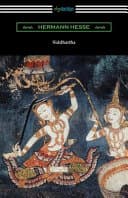
Hermann Hesse (2021)
Genre
Historical Fiction / Spirituality / Philosophy
Reading Time
90 min
Key Themes
See below
Sign in to track this book
Siddhartha leaves a life of privilege and piety, embracing asceticism, wealth, and love to find enlightenment not in dogma, but in the whispers of a river and the unity of all existence.
Siddhartha is a handsome and smart young man, respected in his village for his spiritual promise. He excels in all Brahmin practices, but an inner restlessness remains. He feels that the Brahmins' wisdom, while deep, does not offer the ultimate truth he seeks. His closest friend, Govinda, is devoted to him and shares his spiritual hopes, but Siddhartha's longing goes beyond common teachings. He questions the cycle of rituals and learned knowledge, believing true understanding must be directly experienced. This growing unhappiness leads him to a major decision, much to his parents' sorrow.
After much thought, Siddhartha tells his father he plans to join the Samanas, wandering ascetics who give up all worldly possessions and pleasures. His father first objects but eventually agrees, seeing Siddhartha's strong will. Govinda, always loyal, immediately decides to follow his friend. For three years, Siddhartha and Govinda live a life of strict austerity, fasting, meditating, and enduring hardship to empty themselves of desire and ego. Siddhartha learns to control his breath, body, and mind, reaching temporary states of detachment, but he realizes this path is only an escape, not a true integration of self.
Rumors of an enlightened one, Gotama, the Buddha, start to spread among the Samanas. Govinda is eager to hear the Buddha's teachings, believing he has found the ultimate path. Siddhartha, though curious, remains doubtful of any doctrine that can be taught or learned. Still, he agrees to go with Govinda to the Jetavana grove, where Gotama lives. They see Gotama's calm presence and listen to his deep talk. Govinda is deeply moved and decides to join Gotama's order, finding his master. Siddhartha, however, politely declines, feeling that Gotama's teachings, though perfect, cannot directly transfer for his own enlightenment.
After a private talk with Gotama, in which Siddhartha explains his belief that true wisdom cannot be taught, he says goodbye to Govinda, who stays with the Buddha. Siddhartha then finds himself completely alone, feeling a deep sense of loss and freedom. He realizes he has spent his life learning from others, and now, for the first time, he must truly listen to himself. This realization marks a turning point; he decides to leave all past paths and teachings, embracing the world and his own inner voice as his new guides. He feels a deep awakening, a sense of rebirth and a fresh view on life.
Siddhartha wanders into a town, curious about the world he had avoided. He meets a beautiful and smart courtesan named Kamala, who immediately fascinates him. He tells her he wants to learn the art of love from her, but she insists he must first prove himself worthy by getting wealth and status. Kamala sees Siddhartha's natural nobility and potential, advising him to find a merchant for work. This meeting shows Siddhartha's deliberate entry into the sensory world, a sharp contrast to his ascetic past, as he seeks to understand this part of human experience.
Following Kamala's advice, Siddhartha goes to the wealthy merchant Kamaswami. Kamaswami is initially doubtful of Siddhartha's lack of experience but impressed by his intelligence and calm manner. Siddhartha quickly learns business, using his sharp mind to accumulate significant wealth. He lives a life of luxury, enjoying fine food, wine, and Kamala's affections. However, as years pass, Siddhartha feels more and more caught in the worries and small matters of the material world. He becomes dependent on pleasure and develops a gambling habit, slowly losing his inner peace and feeling a growing emptiness despite his outward success.
After many years, Siddhartha finds himself deeply unhappy and disappointed with his life as a merchant. The initial excitement of worldly pleasures has faded, replaced by a deep sense of tiredness and disgust. He recognizes that he has become like the ordinary people he once looked down on, caught in the endless cycle of desire, attachment, and suffering – Sansara. His spiritual sensitivity has dulled, and he feels a deep disconnect from his true self. One night, he looks at his reflection and is repulsed by the image of a pleasure-seeker, realizing he has lost his way and reached the lowest point of his journey.
Driven by despair, Siddhartha leaves his rich home and wanders into the forest, thinking of ending his life by drowning in the river. As he stands on the bank, about to give up, a deep, resonant sound comes from within him – the sacred syllable 'Om'. This ancient sound, which he had learned as a young Brahmin, wakes him from his spiritual dullness. It reminds him of his past self, his spiritual search, and the inherent unity of all things. The 'Om' marks a deep moment of realization and rebirth, pulling him back from self-destruction and inspiring him to continue his journey.
Refreshed by his 'Om' experience, Siddhartha meets the kind and wise ferryman, Vasudeva, by the very river where he almost ended his life. Vasudeva, with his deep simplicity and connection to nature, offers Siddhartha shelter and a new path. Siddhartha asks to become Vasudeva's apprentice, drawn by the ferryman's calm presence and his clear understanding of the river's wisdom. Vasudeva accepts him, and Siddhartha begins a new, humble life, learning to listen to the river's many voices and to live in harmony with its flow. This period is a return to simplicity and a deeper spiritual learning.
Years later, Siddhartha, now a peaceful ferryman, meets Kamala again. She is on a pilgrimage to see Gotama, but a snake bites her near the river and she is dying. She recognizes Siddhartha and reveals they have a son, also named Siddhartha. Kamala dies in Siddhartha's arms, leaving him with the unexpected job of raising their son. This sudden return of his past life and the responsibility of fatherhood brings Siddhartha into a new phase of attachment and suffering. He struggles to connect with his spoiled and rebellious son, who resents his father's simple life.
Siddhartha loves his son deeply but struggles with the boy's defiant and unhappy nature. The young Siddhartha longs for the city life he knew with his mother and rejects his father's simple existence. Despite Siddhartha's efforts to show him love and teach him the ways of the river, the son runs away. Siddhartha is consumed by sorrow and searches for him in vain, experiencing the deep pain of attachment and loss. Vasudeva, with his great compassion and silent wisdom, helps Siddhartha understand that he cannot force his son's path and must let him find his own way, just as Siddhartha himself once did.
After his son leaves, Siddhartha's sorrow slowly turns into a deeper understanding, guided by Vasudeva. Vasudeva encourages Siddhartha to listen closely to the river, not just as water, but as a living thing that holds all of existence. Siddhartha begins to hear the river's voice as a symphony of all sounds – joy, sorrow, life, death, the past, present, and future – all flowing together in an eternal unity. He hears the sacred 'Om' within this collective voice, realizing that the river embodies the essence of time, interconnectedness, and the eternal cycle of being. This listening becomes his deepest meditation.
Once Siddhartha has fully absorbed the river's wisdom and reached a state of deep inner peace and unity, Vasudeva announces his departure. He has finished his role as a guide and feels his own journey is complete. With a radiant smile and a gesture of pure love, Vasudeva walks into the forest, disappearing from Siddhartha's sight, seemingly merging with nature's oneness. Siddhartha, now alone by the river, realizes he has found enlightenment. He embodies the same calm wisdom and kind understanding that Vasudeva had, becoming the new, respected ferryman, a living symbol of the river's eternal truth.
Years later, Govinda, now an old monk still seeking ultimate enlightenment through Gotama's teachings, hears rumors of a wise ferryman and seeks him out. He recognizes Siddhartha, but finds him deeply changed, radiating perfect peace and wisdom. Govinda asks Siddhartha about his path, still holding onto doctrines and words. Siddhartha explains that true wisdom cannot be taught but must be experienced, that love is most important, and that time is an illusion. Govinda, initially confused, finally understands Siddhartha's wisdom when Siddhartha asks him to kiss his forehead, and Govinda experiences a flash of pure, unified understanding, seeing the unity of all forms in Siddhartha's face.
The Protagonist
Siddhartha transforms from a restless, intellectual seeker to an enlightened being who finds wisdom not in doctrines, but in the unity of all life and the present moment, achieved through direct experience and compassion.
The Supporting
Govinda remains a seeker throughout his life, faithfully following the Buddha, and eventually, through Siddhartha, experiences a moment of non-conceptual enlightenment.
The Supporting
Kamala lives a life of pleasure and wealth, eventually becoming a devotee of Gotama before her death, and in doing so, plays a crucial role in Siddhartha's journey by introducing him to fatherhood and the pain of attachment.
The Supporting
Kamaswami serves as a catalyst for Siddhartha's immersion into the material world, ultimately leading Siddhartha to realize the emptiness of such a life.
The Supporting
Vasudeva acts as Siddhartha's final guide, silently leading him to enlightenment before departing, having fulfilled his purpose.
The Mentioned
Gotama's role is to present a complete and revered spiritual path from which Siddhartha ultimately must diverge to find his own unique enlightenment.
The Supporting
The young Siddhartha causes his father profound suffering, forcing him to confront and overcome the pain of attachment and learn the wisdom of letting go.
The Mentioned
The Samanas provide Siddhartha with an early, rigorous spiritual training that he ultimately surpasses.
The novel's main theme is Siddhartha's endless, lifelong search for a personal understanding of truth and enlightenment. He rejects inherited knowledge and established teachings, whether from the Brahmins, the Samanas, or even Gotama, in favor of direct, experienced learning. His journey is marked by a willingness to leave comfort and certainty to follow his inner voice, leading him through different life stages – asceticism, worldly pleasure, and humble service – each adding to his complete understanding. The river becomes a central symbol for this journey, representing the unity of all experiences and the flow of life towards ultimate wisdom.
“Knowledge can be communicated, but not wisdom. One can find it, live it, be fortified by it, do wonders through it, but one cannot communicate and teach it.”
The idea of 'Om' and the unity of all existence is a deep theme Siddhartha slowly comes to understand. Initially, 'Om' is a sacred sound from his Brahmin past, which saves him from despair by the river. Later, guided by Vasudeva, he learns to hear the 'Om' within the river's many voices, realizing that all sounds, experiences, and forms – joy, sorrow, life, death – are connected and part of a single, eternal flow. This realization goes beyond dualities and leads to his ultimate enlightenment, where he sees the perfection and interconnectedness of everything, including his own varied past experiences.
“He saw all forms and faces in a thousand relationships, none like another, and yet all intertwined, all constantly becoming, constantly changing, constantly flowing, and over all of them there was a layer of something else, something wonderful, something divine, that Om.”
Siddhartha's journey strongly argues for the importance of direct experience in seeking wisdom. He repeatedly finds that intellectual understanding or following a specific teaching, no matter how profound (even the Buddha's), is not enough for true enlightenment. He must personally live through the extremes of asceticism and sensuality, wealth and poverty, attachment and detachment, to bring these lessons together. His time as a merchant, though spiritually backward, is essential for him to understand desire and suffering. This theme highlights that wisdom is not found in books or sermons, but in the lived reality of one's own unique path, embracing both 'good' and 'bad' experiences.
“I have had to pass through so much stupidity, through so much vice, through so much error, through so much nausea, disillusionment and sorrow, just to become a child again and begin anew. But it was right that it should be so; I had to pass through all of that. I had to become a child again to find Om.”
At first, Siddhartha sees love and worldly attachment as obstacles to spiritual progress, which he tries to overcome through asceticism. However, his relationships with Kamala and especially his son, young Siddhartha, force him to face the deep pain and beauty of human connection. His love for his son causes him great suffering when the boy rejects him, but this suffering becomes a key factor in his deeper understanding of compassion, empathy, and letting go. He learns that true wisdom doesn't mean avoiding attachment, but understanding it and moving past its painful parts while still embracing the love in human experience, realizing that love, too, is part of the 'Om'.
“He saw that his love for his son was an animal love, a dark, passionate love, full of pain and longing. And yet, it was love, and it was a source of his deepest understanding.”
The idea of Sansara, the cycle of birth, death, and rebirth, is explored not just literally but as the cyclical nature of human experience and spiritual growth. Siddhartha's life is a series of 'deaths' and 'rebirths' – from Brahmin to Samana, Samana to worldly man, worldly man to ferryman. His time as a wealthy merchant is clearly described as being caught in the 'Sansara' of desire and suffering. The river itself is a strong symbol for this eternal cycle, constantly flowing, changing, yet staying the same. Siddhartha's enlightenment involves understanding and accepting this cycle, realizing that all moments and experiences are connected and contribute to the whole.
“The river laughs, it laughs at me, because I was once a Brahmin and now I am a ferryman.”
A central symbol representing the unity of all things, the flow of life, and the eternal present.
The river is the most significant symbolic plot device in the novel. It first appears as a place of despair where Siddhartha contemplates suicide, then becomes a source of renewal and his ultimate teacher. The river embodies the 'Om', the unity of all existence, as Siddhartha learns to hear all voices—joy, sorrow, past, present, future—flowing together within its sound. It represents the cyclical nature of life, constant change within an unchanging essence, and the idea that wisdom is found not by fighting the current, but by listening to and flowing with it. The river is a living metaphor for time, interconnectedness, and the path to enlightenment through acceptance and presence.
A sacred syllable representing the essence of ultimate reality and unity, acting as a spiritual anchor and turning point.
The 'Om' is a powerful auditory symbol that appears at critical junctures in Siddhartha's journey. Initially learned in his Brahmin youth, its spontaneous resurfacing saves him from suicide by the river, reminding him of his spiritual core. Later, under Vasudeva's guidance, Siddhartha learns to hear the 'Om' not just as a sound, but as the underlying harmony and unity within the river's myriad voices and indeed, all of existence. It signifies the interconnectedness of all phenomena and serves as a direct, non-conceptual experience of ultimate reality, contrasting with the intellectual pursuit of truth.
Siddhartha's journey through distinct, contrasting phases of life to gain a holistic understanding.
Siddhartha's life is structured as a series of distinct, often opposing, stages: the Brahmin, the Samana, the worldly man (lover and merchant), and finally, the ferryman. Each stage provides a unique set of experiences and lessons that are essential for his eventual enlightenment. This device illustrates that wisdom is not found by adhering to a single path but by integrating knowledge from diverse experiences, including those that seem counter-spiritual. The contrasting stages emphasize the novel's message that all aspects of life, even the 'mundane' or 'sinful', contribute to a complete understanding of the self and the world.
Characters who guide Siddhartha through different phases of his spiritual and worldly education.
Siddhartha encounters several mentor figures who represent different forms of knowledge and wisdom. The Brahmins teach him traditional religious practices, the Samanas teach him asceticism, Kamala teaches him about love and the material world, Kamaswami teaches him commerce, and Gotama presents a complete spiritual doctrine. However, the most profound mentor is Vasudeva, the ferryman, who teaches Siddhartha not through words, but through silent presence, listening, and a deep connection to nature. These mentors challenge, instruct, and ultimately prepare Siddhartha to become his own final teacher, demonstrating that guidance comes in many forms, but true wisdom is internalized.
“I have been afraid of myself, and I have been afraid of the world.”
— Siddhartha reflects on his journey and fears after leaving the Samanas.
“Knowledge can be communicated, but not wisdom. One can find it, live it, be strengthened by it, do wonders through it, but one cannot communicate and teach it.”
— Siddhartha discusses the limitations of teaching wisdom with Govinda.
“The river has taught me to listen; you will learn it, too. It has taught me that you cannot go home again.”
— Siddhartha, now a ferryman, shares his insights about the river with Govinda.
“When someone seeks, said Siddhartha, it easily happens that his eye sees only the thing he seeks, and he is unable to find anything, to let anything enter his mind, because he always thinks only of the thing he seeks, because he has a goal, because he is obsessed with his goal. Seeking means: to have a goal; but finding means: to be free, to be open, to have no goal.”
— Siddhartha explains the difference between seeking and finding to Govinda.
“Love is the most important thing in the world. It is the only thing that can save us.”
— Siddhartha ponders the nature of love during his time with Kamala.
“He saw his father, lonely, suffering, and dying, and he loved him. He saw his mother, lonely, suffering, and dying, and he loved her. He saw all of humanity, lonely, suffering, and dying, and he loved them.”
— Siddhartha experiences an awakening of universal love while contemplating his past.
“The world, my friend Govinda, is not imperfect or on a slow path toward perfection. No, it is perfect at every moment.”
— Siddhartha shares his understanding of the world's inherent perfection with Govinda.
“You are like the river, Siddhartha, always flowing, always changing, yet always the same.”
— Govinda observes Siddhartha's enduring essence despite his transformations.
“I have had to pass through so much stupidity, through so many vices, through so much error, through so much nausea, disillusionment and sorrow, just to become a child again and begin anew.”
— Siddhartha reflects on his journey through worldly experiences to regain innocence.
“The opposite of every truth is just as true!”
— Siddhartha expresses his realization about the paradoxical nature of truth.
“Softly, Siddhartha began to sing, and his voice was like the murmur of the river, like the rustling of the wind in the trees, like the song of a bird in the morning.”
— Siddhartha's connection to nature is highlighted through his singing as a ferryman.
“It is not for me to judge another's life. I must only judge my own.”
— Siddhartha expresses his personal philosophy of non-judgment.
“He listened. He was now nothing but a listener, a waiting vessel, an open space, without a self, without desire, without taste, without judgment, without will, without possession.”
— Siddhartha achieves a state of pure listening and emptiness by the river.
“Never has a man taken a step in his life without being accompanied by the entire world.”
— Siddhartha reflects on the interconnectedness of all things.
Ready to see how well you understood this book? Take our interactive quiz with 10 questions.
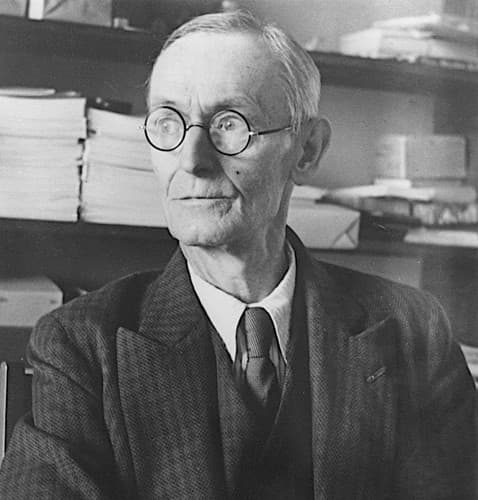
Hermann Karl Hesse was a German-Swiss poet, novelist, and painter. His best-known works include Demian, Steppenwolf, Siddhartha, and The Glass Bead Game, each of which explores an individual's search for authenticity, self-knowledge and spirituality. In 1946, he received the Nobel Prize in Literature.







