“Which would be worse, to live as a monster, or to die as a good man?”
— Teddy Daniels pondering the nature of sanity and morality at the end of the story.

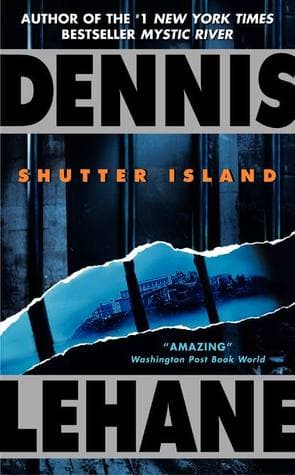
Dennis Lehane (2003)
Genre
Thriller / Mystery
Reading Time
720 min
Key Themes
See below
Sign in to track this book
A U.S. Marshal investigates a vanished patient from a remote asylum for the criminally insane, only to confront a spiraling hurricane, sinister medical secrets, and the terrifying possibility that his own identity is the most dangerous illusion of all.
U.S. Marshals Edward 'Teddy' Daniels and Chuck Aule travel by ferry to Shutter Island, home to Ashecliffe Hospital for the Criminally Insane, in September 1954. Their mission is to investigate the disappearance of Rachel Solando, a patient who drowned her three children and was housed in a locked cell in Ward C, despite constant surveillance. Upon arrival, they meet Warden McPherson and Dr. Cawley, the hospital's chief psychiatrist. Teddy immediately feels uneasy and notes the heavy security, including armed guards and barbed wire. He tells Chuck that he's also looking for an arsonist named Andrew Laeddis, whom he believes is hiding on the island, responsible for the fire that killed his wife, Dolores Chanal.
Teddy and Chuck begin interviewing the staff and patients. They learn that Rachel Solando left a cryptic note, 'The law of 4; who is 67?' and her file is missing. The staff seems uncooperative and evasive, especially Dr. Cawley and his colleague, Dr. Naehring. Teddy experiences severe migraines and vivid flashbacks of his wife, Dolores, and his traumatic experiences as a soldier liberating Dachau during World War II. He notices the staff's odd behavior and their reluctance to provide full access to patient records or certain areas of the hospital, particularly Ward C. Teddy's suspicions deepen. He believes the hospital is hiding something more sinister than a simple missing patient.
A powerful hurricane comes to Shutter Island, cutting off communication with the mainland and trapping the marshals. The storm causes power outages and further chaos, allowing some patients to escape their cells. Teddy and Chuck intensify their search for Rachel Solando, believing she might be hidden somewhere on the island. During the storm, Teddy has increasingly vivid and disturbing visions of Dolores, who warns him about the island and Andrew Laeddis. He also recalls the horrific scene of his children's bodies. He grows more convinced that the hospital conducts illegal experiments on its patients, possibly mind control or lobotomies, and that Rachel's disappearance is a cover-up.
Defying the staff, Teddy sneaks into Ward C, the most dangerous ward. There he encounters George Noyce, a patient who was a former Ashecliffe doctor. Noyce cryptically warns Teddy about the hospital's true nature, mentioning experiments and the lighthouse as the real location of their operations. He also tells Teddy to 'Run!' and implies that Chuck is not who he seems. These encounters increase Teddy's paranoia. He becomes obsessed with the lighthouse, believing it holds the key to the hospital's secrets and the truth about Andrew Laeddis. He suspects that Laeddis is either a patient there or involved in the experiments.
After attempting to scale the cliffs towards the lighthouse with Chuck, Teddy gets separated from his partner, who seemingly falls into the water and disappears. Teddy frantically searches for Chuck but finds no trace. Believing Chuck has been captured or killed by the hospital staff, Teddy continues alone. He discovers a hidden cave where he encounters a woman who claims to be the real Rachel Solando, a former psychiatrist at Ashecliffe. She tells Teddy that she was institutionalized after discovering the hospital's unethical experiments, specifically psychotropic drugs and surgical procedures aimed at creating compliant, memory-wiped individuals. She warns him that he is also a patient and that the marshals' investigation is a setup.
Teddy eventually makes his way to the lighthouse, where he finds Dr. Cawley waiting for him. There, Dr. Cawley reveals the shocking truth: Teddy Daniels is not a U.S. Marshal, but Andrew Laeddis, the most dangerous patient at Ashecliffe, incarcerated for murdering his wife, Dolores. 'Teddy Daniels' and 'Andrew Laeddis' are anagrams, and 'Rachel Solando' and 'Dolores Chanal' are also anagrams. The entire investigation was an elaborate role-play, designed by Dr. Cawley and 'Chuck Aule' (who is actually Dr. Sheehan, Andrew's primary psychiatrist) to allow Andrew to confront his delusions and trauma in a controlled environment, hoping to bring him back to reality and prevent him from undergoing a lobotomy.
Dr. Cawley explains that Andrew Laeddis murdered his manic-depressive wife, Dolores Chanal, two years prior, after she drowned their three children. Andrew, unable to cope with the immense guilt and trauma, constructed an elaborate delusion where he was U.S. Marshal Teddy Daniels, investigating a missing patient Rachel Solando and searching for an arsonist Andrew Laeddis. He believed the hospital was experimenting on people and that Dolores was killed by Laeddis. The staff, including Dr. Sheehan (as Chuck) and a nurse playing Rachel Solando, participated in this intricate therapy, hoping to break through his psychosis. The 'migraines' were withdrawal symptoms from his medication.
For a brief moment, Andrew Laeddis acknowledges the truth, recognizing Dr. Sheehan as his doctor and admitting his identity and the murder of his wife and children. He recounts the tragic events with clarity and remorse. However, the next morning, as he sits with Dr. Sheehan, Andrew reverts to his 'Teddy Daniels' persona, asking 'Chuck' if they need to get off the island. Dr. Sheehan, disheartened, exchanges a knowing look with Dr. Cawley. Andrew Laeddis, unable or unwilling to remain in the painful reality, chooses to retreat into his delusion, effectively sealing his fate for a lobotomy, as the experimental therapy has failed.
The Protagonist/Patient
Teddy's arc is a tragic descent into the realization of his true identity, only to retreat back into delusion to escape the painful reality.
The Supporting/Psychiatrist
Dr. Sheehan's arc is one of sustained effort and ultimate disappointment as his patient fails to maintain grasp of reality.
The Antagonist/Hospital Director
Dr. Cawley's arc is one of a desperate attempt to save a patient, ending in a reluctant acceptance of failure.
The Supporting/Victim
Dolores's arc is entirely in the past, her tragedy serving as the catalyst for the entire narrative.
The Supporting/Patient
Rachel Solando's arc is a deliberate illusion, a prop in the therapeutic drama.
The Supporting/Psychiatrist
Dr. Naehring remains a static, ominous figure throughout the narrative, serving primarily as a catalyst for Teddy's paranoia.
The Supporting/Patient
Noyce provides a momentary, unsettling glimpse of reality for Teddy, before being dismissed as another 'madman'.
The Supporting/Hospital Administrator
McPherson's role is largely administrative and obstructive, maintaining the illusion of the investigation.
The novel explores how an individual constructs and clings to a fabricated identity to escape unbearable truth. Teddy Daniels's entire persona is a complex delusion, a shield against the horrific reality of his past. He meticulously builds a narrative of a heroic marshal, seeking justice, while subconsciously suppressing the fact that he is Andrew Laeddis, a murderer. The narrative forces the reader to question Teddy's identity alongside him, culminating in the shocking reveal that his entire existence is a lie he tells himself to survive.
“Which would be worse – to live as a monster, or to die as a good man?”
Shutter Island looks at the psychological impact of severe trauma, particularly from war and personal tragedy. Teddy's flashbacks to Dachau and his wife's death are not just memories but intrusive, destabilizing forces that blur the line between reality and hallucination. The novel illustrates how the mind copes with overwhelming pain by distorting or erasing traumatic events, leading to a fractured sense of self. His 'migraines' and visions are physical manifestations of his mind's struggle with repressed memories.
“Memory, truth, and fantasy, they are all the same thing, aren't they?”
The book constantly blurs the lines between sanity and madness, questioning what truly constitutes either. Ashecliffe Hospital, a place for the criminally insane, becomes a microcosm where Teddy's own sanity is tested and ultimately revealed to be fragile. The doctors, in their attempt to 'cure' Andrew, engage in an elaborate deception that could be seen as its own form of madness. The ending forces the reader to reconsider everything, showing the subjective and often fluid nature of mental health and the desperation to escape painful realities, even if it means choosing delusion.
“You are a violent, delusional man, Andrew. A very, very dangerous man.”
Andrew Laeddis's entire delusion is a manifestation of his overwhelming guilt over his wife's murder and, more profoundly, his failure to prevent his children's deaths. His 'investigation' for Andrew Laeddis and Rachel Solando is a subconscious quest for atonement, a way to project his own monstrous acts onto external figures. The story explores the crushing weight of responsibility and the lengths a human mind will go to avoid facing its darkest deeds, even creating an entire alternate reality where he is a hero rather than a perpetrator.
“I didn't save them. I didn't save any of them.”
Teddy Daniels's perspective is revealed to be entirely fabricated, misleading the reader.
The entire narrative is presented through the subjective and ultimately deluded perspective of Teddy Daniels. The reader experiences the story as Teddy does, including his suspicions, hallucinations, and 'deductions.' This device creates immense suspense and confusion, as the reader trusts Teddy's interpretation of events, only to have that trust shattered by the final revelation. It forces a complete re-evaluation of every scene and character interaction, highlighting the power of self-deception and the fragility of perception.
Character names are cleverly disguised anagrams, hinting at the true identities.
The use of anagrams for key character names is a subtle yet crucial plot device. 'Edward Daniels' is an anagram of 'Andrew Laeddis,' and 'Rachel Solando' is an anagram of 'Dolores Chanal.' These linguistic clues are hidden in plain sight, offering a clever hint to the observant reader about the true nature of the protagonist and his past. They serve as a structural element that underpins the central twist, demonstrating the meticulous construction of Andrew's delusion by both himself and the doctors.
A symbolic location that represents truth, confinement, and the ultimate choice.
The lighthouse serves as a potent symbol throughout the novel. Initially, it is presented as a mysterious, forbidden place where illegal experiments are supposedly conducted, a focal point for Teddy's paranoia. It represents the dark secrets of Shutter Island. Ultimately, it is revealed to be the place where Dr. Cawley finally confronts Andrew with the truth, turning it into a symbol of brutal reality and the final, inescapable choice Andrew must make between sanity and lobotomy. It is both a place of revelation and a place of no return.
A literal and metaphorical storm that isolates the island and reflects Teddy's internal turmoil.
The hurricane that hits Shutter Island serves multiple functions. Literally, it cuts off the island from the mainland, trapping Teddy and intensifying the sense of isolation and claustrophobia. Metaphorically, it mirrors Teddy's internal psychological storm – his escalating paranoia, hallucinations, and the violent clash between his delusion and reality. The chaos of the storm provides a perfect backdrop for the unraveling of his mind, blurring the lines between external events and internal psychological breakdown.
“Which would be worse, to live as a monster, or to die as a good man?”
— Teddy Daniels pondering the nature of sanity and morality at the end of the story.
“You're not a good man, Teddy. You're not a bad man. You're just a man.”
— Dr. Cawley speaking to Teddy, trying to get him to accept his true identity.
“The mind is a labyrinth, my friend. We are all lost in it.”
— Dr. Naehring discussing the complexities of the human psyche with Teddy.
“God loves violence. We have to love violence. It's the only thing that works.”
— A patient's disturbing philosophy, reflecting the harsh realities of the asylum.
“There's no moral compass here, Chief. There's just a compass pointing to whatever they want it to point to.”
— Chuck Aule expressing his distrust of the asylum's administration to Teddy.
“Memory is a funny thing. Sometimes it hides, sometimes it reveals.”
— Teddy reflecting on the nature of memory and its unreliability.
“It's all a game, Teddy. A very complicated game. And you're playing it whether you want to or not.”
— Dr. Cawley hinting at the elaborate deception surrounding Teddy.
“We are not here to judge, Mr. Daniels. We are here to help.”
— Dr. Cawley reassuring Teddy, though his intentions are complex.
“Sanity is not a choice. It's a privilege.”
— A nurse's cynical observation about the patients at Ashecliffe.
“You have to let go, Teddy. You have to let go of the past.”
— Dolores Chanal's spectral voice haunting Teddy, urging him to move on.
“The truth is a matter of perspective, Mr. Daniels. And perspective can be a dangerous thing.”
— Dr. Naehring subtly manipulating Teddy's understanding of reality.
“We're all trapped on this island, Chief. Some of us just don't know it yet.”
— A cryptic remark from a patient, foreshadowing the confinement of the characters.
“There are some places, Mr. Daniels, where the line between good and evil blurs.”
— Warden discussing the moral ambiguities of Ashecliffe Asylum.
“You think you know yourself, don't you? You think you know what you're capable of.”
— Dr. Cawley challenging Teddy's self-perception.
Ready to see how well you understood this book? Take our interactive quiz with 10 questions.
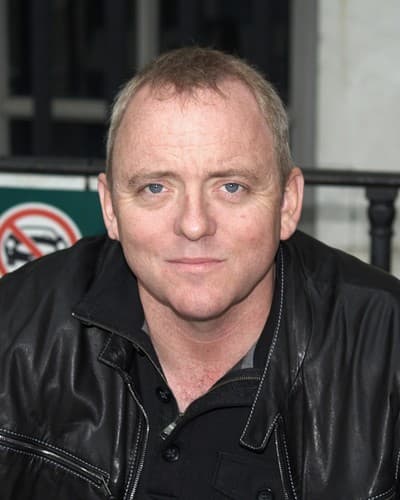
Dennis Lehane is a critically acclaimed author known for his gritty crime novels set in Boston. His notable works include "Mystic River," "Shutter Island," and the award-winning "Live by Night." Lehane's powerful storytelling and complex characters have earned him a dedicated readership and numerous accolades.







