“The camera was a weapon, and I was its wielder.”
— Early in the story, after Micheline describes her cursed camera.

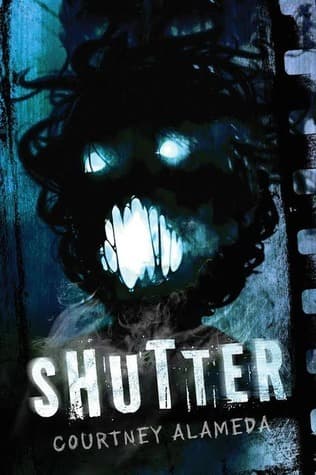
Courtney Alameda (2015)
Genre
Thriller / Fantasy / Young Adult / Romance
Reading Time
8-10 hours
Key Themes
See below
Sign in to track this book
Armed with an analog SLR and the ability to see spectral auras, monster hunter Micheline Helsing must capture a powerful entity on film within seven days, or she and her crew will be consumed by the very soulchain curse they were trying to fight.
Micheline Helsing, a tetrachromat and monster hunter, leads her crew—Oliver, Jude, and Ryder—on a routine ghost hunt in a derelict hospital. With her specialized analog SLR camera, Micheline captures the spiritual energy of a malevolent entity. However, the exorcism goes wrong when the ghost, a powerful Specter, fights back. Instead of being fully contained, part of the entity latches onto Micheline and her team, becoming a soulchain curse. This spiritual affliction begins to spread through their bodies, giving them seven days to find a cure before it kills them. The incident immediately puts them at odds with Micheline's father, Leonard Helsing, head of the Helsing Corporation, who sees their failure as a dangerous breach of protocol.
As the soulchain curse takes hold, Micheline, Oliver, Jude, and Ryder begin to experience its horrifying effects. Their bodies are slowly being consumed by shadowy, spectral chains, causing intense pain, hallucinations, and a gradual loss of their humanity. Micheline, desperate, looks into ancient Helsing archives and forbidden texts, trying to understand the soulchain and its origins. She learns that the curse is tied to the Specter they encountered, an entity far more powerful and ancient than they first believed. The seven-day deadline looms, making their search for a way to sever the connection more urgent.
Following the disastrous mission and the soulchain infection, Leonard Helsing, Micheline's father and the rigid head of the Helsing Corporation, declares Micheline and her crew renegade agents. He believes they are compromised and dangerous, or perhaps even possessed. Leonard activates all available Helsing resources, including other trained hunters, to track them down. This forces Micheline and her friends to go underground, constantly avoiding their former allies and mentors while also battling the encroaching soulchain. The pursuit adds another layer of danger, as they must outrun not only the spiritual curse but also the very organization dedicated to fighting the supernatural.
Micheline's research leads her to a shocking discovery: the Specter that infected them is the tormented spirit of a powerful witch named Lillith, who was unjustly executed centuries ago. Even more disturbing, Lillith has a deep, vengeful connection to the Helsing lineage, specifically to a past ancestor who played a part in her death. This revelation explains why the Specter targeted them and why the soulchain is so potent. Understanding Lillith's history and motives becomes important to defeating her, as Micheline realizes that traditional exorcism methods may not be enough against such a deeply rooted and vengeful entity.
As the soulchain intensifies, so does the pressure on the crew. Ryder, Micheline's childhood friend and long-time love interest, begins to act strangely. His behavior becomes increasingly secretive and suspicious, leading to arguments and a growing split within the group. Micheline, despite her deep affection for him, starts to question his loyalty and motives, especially when his actions seem to accidentally jeopardize their efforts to find a cure. This internal conflict adds significant emotional strain, threatening to unravel the bonds that hold the team together at a time when unity is important for their survival against both the Specter and Leonard Helsing's pursuit.
Jude, whose precognitive abilities have been heightened by the soulchain, experiences a powerful and terrifying vision. He foresees a catastrophic future where the Specter fully consumes them, leading to their deaths and the release of immense evil. Realizing the seriousness of their situation and the limited time they have, Jude makes a difficult decision. To buy Micheline and Oliver more time to find a definitive cure, he deliberately draws a significant portion of the Specter's energy into himself, acting as a temporary containment vessel. This selfless act severely weakens him, pushing him closer to death, but it buys his friends precious hours.
The truth about Ryder's suspicious behavior is finally exposed: he has been secretly working with the Specter, Lillith. It is revealed that Lillith manipulated Ryder, promising him power or salvation for his own hidden struggles, in exchange for his cooperation in her larger plan. Lillith's ultimate goal is to fully appear in the physical world by possessing a living host—specifically, Micheline, due to her powerful tetrachromat abilities and her direct lineage to the Helsing family, who Lillith seeks vengeance against. Ryder's betrayal is a devastating blow to Micheline, shattering her trust and forcing her to confront the painful reality of his deception.
Desperate and with time running out, Micheline confronts her father, Leonard Helsing. She reveals the true nature of the Specter, Lillith, and her connection to the Helsing lineage, along with Ryder's betrayal. Initially dismissive and skeptical, Leonard eventually realizes the depth of the threat and the danger his daughter is in. This confrontation forces Leonard to re-evaluate his rigid protocols and his perception of Micheline, shifting from a pursuer to an uneasy ally. He begins to understand that the Specter's plan is far more insidious than a simple rogue ghost and that Micheline's unique abilities are their only hope.
The final confrontation takes place at the Helsing ancestral home, a place with much spiritual energy and historical meaning. Lillith, now close to full appearance, unleashes her full power, creating a terrifying spectral battleground. Micheline, aided by Oliver and a repentant Leonard Helsing, uses her unique tetrachromat vision and her camera to fight Lillith. The battle is intense, pushing Micheline to her physical and spiritual limits. She must not only capture Lillith's essence but also sever the soulchain that binds her and her friends, all while battling the emotional turmoil of Ryder's betrayal and the looming threat of death.
In the climactic moments of the battle, Micheline realizes that simply capturing Lillith is not enough to break the soulchain. She must make a profound sacrifice, using a unique spiritual technique that risks her own life and potentially her connection to her powers. She successfully severs the soulchain, saving Oliver and Jude, but the act leaves her severely weakened and forever changed. Lillith is finally contained, but the cost is immense. Ryder, consumed by the Specter's influence, is lost. Micheline recovers, grappling with the trauma, the loss of Ryder, and the new understanding of her place in the Helsing legacy. The world of monster hunting is forever altered for her.
The Protagonist
Micheline transforms from a rule-abiding hunter to a renegade, forced to question her family's methods and embrace her unique powers to save her friends and herself.
The Supporting
Oliver's loyalty is tested by the soulchain and Ryder's betrayal, solidifying his bond with Micheline and his role as her steadfast ally.
The Supporting
Jude's role shifts from a passive seer to an active participant, culminating in a selfless act that underscores his deep commitment to his friends.
The Supporting/Antagonist
Ryder's arc is a tragic descent from trusted friend and lover to a pawn of the antagonist, culminating in his ultimate loss to the Specter's influence.
The Supporting/Antagonist
Leonard's character evolves from an authoritarian antagonist to a reluctant ally, forced to confront his own biases and the limitations of his traditional methods.
The Antagonist
Lillith's arc is one of relentless pursuit of vengeance and a near-successful attempt at full manifestation, ultimately leading to her containment.
Micheline constantly deals with the weight of being a Helsing, the last descendant of a renowned monster-hunting lineage. Her father, Leonard, embodies these expectations, enforcing strict protocols and a rigid adherence to tradition. This theme shows up in Micheline's initial struggle to operate outside established Helsing rules when she and her crew become renegades. Her internal conflict between duty to her family's name and her loyalty to her friends is central, especially as she uncovers dark secrets within the Helsing history that challenge her understanding of her heritage. The past actions of her ancestors directly influence Lillith's vengeful target on her.
“"The Helsing name was a shield and a cage, a legacy that demanded absolute adherence, even when it meant sacrificing those she loved."”
This theme is deeply explored through the evolving relationships within Micheline's crew. The soulchain curse forces them into extreme circumstances, testing their trust. Ryder's ultimate betrayal, driven by his own vulnerabilities and Lillith's manipulation, is a devastating blow to Micheline and the entire team. This act shatters Micheline's perception of love and loyalty, forcing her to confront the painful reality that even those closest to her can be compromised. The betrayal highlights how fragile human connections are under pressure and the deep impact of deception.
“"The chains that bound them were spiritual, but the ones that broke them were forged in lies."”
The soulchain curse introduces an immediate and deadly countdown, forcing the characters to make difficult choices for survival. Jude's selfless act of absorbing a portion of the Specter's energy to buy his friends time is an example of personal sacrifice for the greater good. Ultimately, Micheline herself must make a profound sacrifice to sever the soulchain and save Oliver and Jude, risking her own life and powers. This theme shows the high stakes of their mission and the depth of their bonds, demonstrating that survival often demands immense personal cost and difficult decisions.
“"To save them, she had to give a part of herself she could never get back. It was a price she was willing to pay."”
The novel explores the complexities of good and evil, blurring traditional lines. While Lillith is the clear antagonist, her origins reveal a history of injustice and torment, suggesting that her malevolence comes from deep-seated pain and a desire for retribution rather than pure evil. The Helsing Corporation, supposedly dedicated to fighting evil, is shown to have its own dark secrets and rigid, sometimes cruel, methods. Ryder's betrayal further complicates this, as his actions are influenced by his own struggles, rather than an inherent wickedness. This theme challenges simple ideas, suggesting that even 'good' institutions can have flaws and 'evil' entities can have understandable motivations.
“"Sometimes, the monsters were born from the very hands that claimed to fight them."”
Micheline's unique ability to see the auras of the undead.
Micheline's tetrachromacy is her defining characteristic and a crucial plot device. It allows her to perceive the spiritual world in a way no one else can, making her indispensable for identifying, tracking, and understanding various supernatural entities. This ability is directly linked to her effectiveness as a hunter and her connection to the Specter. It also serves as a visual metaphor for her unique perspective and her ability to see beyond the ordinary, enabling her to uncover truths that others miss. Her tetrachromacy is central to her method of exorcism via the camera.
Micheline's specialized weapon for capturing spiritual energy.
The analog SLR camera functions as Micheline's primary tool for exorcism. It's not just a prop but a specialized piece of technology, designed by Oliver, that can capture and contain spiritual energy on film. This device is essential for the plot, as its successful (or unsuccessful) use dictates the outcome of ghost hunts. The camera's analog nature emphasizes a blend of old-world tradition (Van Helsing lineage) with modern adaptation, requiring specific film and development processes, adding to the stakes and complexity of their missions.
A spiritual affliction binding the crew to the Specter, with a seven-day deadline.
The soulchain curse is the central inciting incident and driving force of the plot. It establishes the immediate stakes and the ticking clock, creating urgency and forcing Micheline and her crew into a desperate race against time. The physical and psychological manifestations of the curse—pain, hallucinations, and gradual consumption—serve as constant reminders of their peril. It directly links them to the antagonist, Lillith, and necessitates their journey of discovery, ultimately leading to the revelation of Lillith's history and the true nature of the Helsing lineage. Without the soulchain, the core conflict would not exist.
The ability to foresee death and future events.
Jude's precognitive visions serve as a significant plot device, providing crucial foreshadowing and warnings. His visions often reveal dire future events or aspects of the Specter's plan, guiding the crew's actions and increasing the sense of dread. The soulchain amplifies these abilities, making his visions more frequent and intense, which directly leads to his decision to make a selfless sacrifice. This device allows the narrative to hint at future dangers and provides the characters with vital, albeit often cryptic, information that helps them navigate their perilous situation.
“The camera was a weapon, and I was its wielder.”
— Early in the story, after Micheline describes her cursed camera.
“Every shot stole a piece of me, a sliver of my soul, but it was worth it to capture the truth.”
— Micheline reflecting on the toll her camera takes on her.
“Ghosts weren't just the dead; they were the echoes of choices made, of lives lived and lost.”
— Micheline's broader understanding of the supernatural.
“Fear was a lens, distorting everything until the monstrous became mundane and the mundane, terrifying.”
— Micheline contemplating the nature of fear and perception.
“Love, like a photograph, could be both a beautiful memory and a haunting reminder of what was lost.”
— Micheline's thoughts on her past relationships and family.
“Some secrets were meant to stay buried, but the dead had a way of unearthing them.”
— As Micheline delves deeper into the mystery surrounding her family.
“The past wasn't just behind us; it was a shadow that followed, always threatening to eclipse the present.”
— Micheline's struggle with her family's dark history.
“To truly see, sometimes you had to close your eyes and trust what was beyond the visible spectrum.”
— Micheline learning to rely on her supernatural senses.
“Family was a tangled web of loyalty and betrayal, love and resentment, and sometimes, all at once.”
— Micheline's complex feelings about her extended family.
“Every click of the shutter was a gamble, a roll of the dice with my own life as the stake.”
— Micheline acknowledging the danger inherent in her photography.
“The world was full of monsters, but the scariest ones were often the ones who looked just like us.”
— Micheline's realization about human evil versus supernatural threats.
“Hope was a fragile thing, easily shattered, but even a shard could cut through the darkest despair.”
— Micheline's internal struggle to maintain optimism.
“Sometimes, the only way to save yourself was to let go of everything you thought you knew.”
— Micheline's journey of self-discovery and challenging her assumptions.
“The dead don't forget, and neither should we.”
— A recurring theme about remembering the past and its victims.
“To be truly alive, you had to face your own mortality, and embrace the shadows as well as the light.”
— Micheline's ultimate acceptance of her fate and abilities.
Ready to see how well you understood this book? Take our interactive quiz with 10 questions.







