“Sometimes you have to let go of the picture of what you thought life would be like and learn to find joy in the story you're actually living.”
— Delsie reflects on accepting her life circumstances.

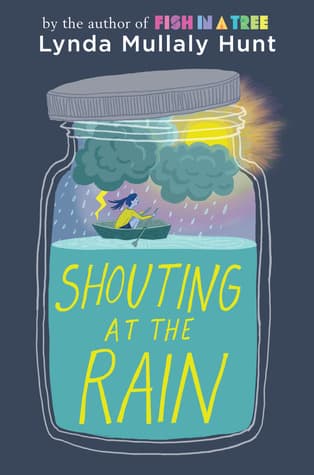
Lynda Mullaly Hunt (2019)
Genre
Children's / Young Adult
Reading Time
15 min
Key Themes
See below
Sign in to track this book
On the blustery shores of Cape Cod, a weather-obsessed girl grappling with family secrets and a changing friendship finds an unexpected anchor in a new boy, as they navigate the storms of loss and belonging together.
Ten-year-old Delsie loves tracking the weather and living with her kindhearted Grammy and her Gramps on Cape Cod. However, as summer begins, Delsie starts to feel a sense of otherness. She observes her best friend, Brandy, and Brandy's seemingly perfect family, which makes Delsie aware that she doesn't have a mother or father living with her. This realization makes Delsie long for a 'regular family' and a desire to understand why she was left with her grandparents as a baby. She spends her days observing the world around her, including her eccentric neighbors and the changing dynamics with Brandy.
Delsie's friendship with Brandy begins to fray as Brandy, influenced by her new friend Caitlyn, starts to exclude Delsie and make her feel childish. This rejection hurts Delsie, adding to her feelings of isolation. A new boy, Ronan, moves into the house across the street. Ronan is initially aloof and seems troubled, but Delsie is drawn to his quiet strength and the air of mystery surrounding him. Their first interactions are cautious, but a connection begins to form, offering Delsie a new friendship when she needs it most.
Delsie and Ronan begin to spend time together, exploring the natural beauty of Cape Cod. During their adventures, which include navigating the woods and the beach, they gradually start to share pieces of their lives. Ronan reveals that his mother died, and he now lives with his aunt and uncle, carrying grief and anger. Delsie, in turn, confides her own feelings of abandonment and her yearning for a connection to her birth parents. These shared vulnerabilities create a strong bond between them, as they find solace and understanding in each other's company, recognizing similar pains.
As their friendship deepens, Delsie sees the intensity of Ronan's grief and anger. He sometimes lashes out or withdraws, struggling to process the loss of his mother. Delsie observes his internal turmoil, which helps her to differentiate between anger and sadness. She learns that Ronan's outbursts are often a shield for his sadness. This experience allows Delsie to empathize more deeply with Ronan, as she recognizes that his 'brokenness' is a result of sorrow, not inherent flaw, and she becomes determined to be a supportive friend to him.
Brandy's abandonment of Delsie becomes more pronounced and painful. At one point, Brandy and Caitlyn intentionally exclude Delsie from a game and make her feel small and unwanted. This act of betrayal deeply wounds Delsie, making her question her value. However, Delsie begins to lean on her new friendship with Ronan and the unwavering support of her Grammy and the quirky neighbors. This period tests Delsie's resilience, but she slowly learns to prioritize genuine connections over superficial ones, finding strength in her own character.
Driven by Delsie's persistent questions and her growing emotional maturity, Grammy decides it's time to reveal the truth about Delsie's birth mother. Grammy explains that Delsie's mother was a young woman who loved Delsie deeply but was unable to care for her due to difficult circumstances, choosing to leave her with Grammy and Gramps out of love and a desire for Delsie to have a stable home. This revelation is bittersweet for Delsie; while it doesn't bring her mother back, it provides closure and transforms her feelings of abandonment into an understanding of being loved and protected, even in absence.
Ronan's suppressed anger and grief reach a breaking point, leading him to engage in a dangerous act of recklessness. Delsie witnesses this escalating behavior, which shows how deeply he is struggling. This event creates a sense of urgency among the adults, particularly Ronan's aunt and uncle, and Delsie. It forces a confrontation with Ronan's pain, making it clear that he needs more help than he's been receiving. This crisis solidifies Delsie's commitment to Ronan and her understanding that true friendship means supporting someone through their darkest moments.
Following Ronan's crisis, the close-knit community of neighbors, including T. O. and Esme, and Delsie's supportive Grammy, step in to offer Ronan a network of care. They understand that Ronan's anger stems from deep sadness and loss. Through their collective efforts, they create a safe space for Ronan to begin processing his grief. This communal support shows both Ronan and Delsie the power of chosen family and the importance of allowing others to help, reinforcing the idea that no one has to weather a storm alone.
As the summer draws to a close, Delsie's understanding of family changes. She realizes that her 'regular family' isn't what she initially envisioned, but rather the loving, unconventional household she shares with Grammy and Gramps, enriched by her supportive neighbors and her friendship with Ronan. Delsie no longer feels the pangs of longing for a different life but embraces the warmth and security of her current one. She understands that love, care, and belonging are not defined by traditional structures but by the connections forged and nurtured.
By the end of the summer, Delsie and Ronan have grown. Delsie has come to terms with her past and found a deeper appreciation for her present family, while Ronan has begun his journey of healing his grief and anger, learning to accept help and connection. Their friendship is a cornerstone of their individual growth. They understand that life will continue to bring storms, both literal and metaphorical, but they now have the resilience, self-awareness, and the support of each other and their community to face them, knowing they are not alone.
The Protagonist
Delsie transforms from a child longing for a conventional family and feeling abandoned to a resilient girl who understands love comes in many forms and finds peace in her unique and supportive family.
The Supporting
Ronan moves from being consumed by unexpressed grief and anger to beginning the process of healing, learning to accept support and open up to others.
The Supporting
Grammy remains a steadfast source of love and wisdom, guiding Delsie through her emotional journey and helping Ronan find comfort.
The Supporting
Gramps remains a consistently loving and supportive figure, providing a stable foundation for Delsie.
The Supporting
Brandy's character arc involves a shift from a close friend to a distant and somewhat cruel one, representing the challenges of growing up and changing social circles.
The Supporting
T. O. remains a consistent source of wisdom and support, helping both Delsie and Ronan navigate their emotional challenges.
The Supporting
Esme consistently provides warmth and support to Delsie, Ronan, and the community.
The Mentioned
Caitlyn's role is static; she acts as a catalyst for Brandy's behavior.
Delsie's journey is about understanding who she is and where she belongs. Her initial longing for a 'regular family' stems from her uncertainty about her past and her place in the world. Through her observations of others, her friendship with Ronan, and finally learning the truth about her mother, Delsie redefines what family means to her and finds peace in her unique identity. She learns to appreciate the love she has, rather than mourning what she lacks, solidifying her sense of self.
“Maybe family wasn't just blood. Maybe it was like the weather, always changing, but always there.”
Grief and loss are central, particularly through Ronan's character, who is struggling with the recent death of his mother. His anger and recklessness are manifestations of unexpressed grief. Delsie also experiences a form of loss and abandonment related to her birth parents. The book explores different ways individuals cope with loss and the importance of acknowledging and processing these emotions. The community's support for Ronan shows the healing power of shared empathy and connection in overcoming sadness.
“Sometimes angry was just sad, all dressed up.”
Initially, Delsie adheres to a conventional idea of 'family,' leading to feelings of inadequacy. However, the novel redefines this concept. Through the love of Grammy and Gramps, the supportive community of neighbors like T. O. and Esme, and the deep bond formed with Ronan, Delsie learns that family is not solely defined by blood ties but by love, care, and mutual support. Her journey culminates in the realization that her unconventional family is full of love, making her feel 'whole' rather than 'broken.'
“Family was a patchwork quilt of people, all stitched together with love.”
The shifting dynamics of Delsie's friendships are important to her growth. The painful dissolution of her friendship with Brandy teaches Delsie about the fleeting nature of some bonds and the importance of genuine connection. Her friendship with Ronan, built on shared vulnerability and empathy, becomes a lifeline for both of them. Their ability to understand and support each other through their individual pains shows the healing power of true friendship and the strength found in not facing challenges alone.
“It was like they were two halves of the same storm, both a little broken, but together, they could weather anything.”
Despite facing challenges like feeling abandoned, experiencing friendship betrayal, and witnessing Ronan's intense grief, Delsie consistently shows resilience. She learns to find strength within herself and from her support system. The book emphasizes that even after storms, there is always hope for clear skies and new beginnings. Both Delsie and Ronan, through their individual journeys and their shared bond, learn to face their pasts and futures with courage, showing the human capacity to adapt, heal, and find joy amidst adversity.
“Even the biggest storms eventually pass, leaving behind a chance for something new to grow.”
Delsie's fascination with weather mirrors and symbolizes the emotional 'storms' in her life and the lives of those around her.
Delsie's hobby of tracking weather patterns serves as a central metaphor throughout the novel. The changing weather conditions—squalls, clear skies, and passing storms—directly parallel the emotional turbulence and eventual calm experienced by Delsie and Ronan. For instance, Ronan's anger is likened to a 'storm' brewing within him, and Delsie's feelings of longing are like a 'cloudy' day. This device allows for a deeper understanding of the characters' internal states and reinforces the theme of weathering life's difficulties.
The story is told exclusively through Delsie's eyes, offering intimate access to her thoughts and feelings.
The narrative is presented entirely from Delsie's point of view, allowing readers to experience her internal struggles, observations, and emotional growth firsthand. This perspective creates a strong sense of empathy for Delsie as she navigates complex feelings about family, friendship, and identity. It also shapes how other characters, particularly Ronan and Brandy, are perceived, as their actions are filtered through Delsie's interpretations and emotional responses. This intimate viewpoint highlights her journey of self-discovery and understanding the world around her.
The natural beauty and close-knit community of Cape Cod provide a backdrop that fosters connection and healing.
The specific setting of Cape Cod is more than just a location; it's an integral part of the story's atmosphere and character development. The natural landscapes—beaches, woods, and the ocean—provide a space for Delsie and Ronan to explore, bond, and reflect. The close-knit, somewhat eccentric community of neighbors living on the Cape also plays a crucial role, forming an extended support system that reinforces the theme of chosen family. The isolation and beauty of the Cape contribute to the introspective nature of Delsie's journey and the eventual healing of Ronan.
The title itself symbolizes futile anger and the importance of finding healthier ways to cope with emotions.
The phrase 'Shouting at the Rain' serves as a powerful symbol for expressing anger and frustration in an ineffective or destructive way. It particularly resonates with Ronan's initial struggles to process his grief, where his anger often feels misdirected and overwhelming, much like futilely yelling at a storm. The title subtly suggests the journey of the characters to move beyond this unproductive expression of pain towards understanding, acceptance, and finding constructive ways to 'weather' their emotional storms, rather than fighting against them in vain.
“Sometimes you have to let go of the picture of what you thought life would be like and learn to find joy in the story you're actually living.”
— Delsie reflects on accepting her life circumstances.
“Rain doesn't just fall; it shouts. It shouts at the world to listen, to pay attention.”
— Delsie describes the intensity of a storm.
“Friends are the family you choose for yourself.”
— Delsie learns about friendship from her neighbor, Ronan.
“You can't control the weather, but you can control how you dance in the rain.”
— Delsie's grandmother offers advice during a difficult time.
“Sometimes the people who are supposed to love you the most are the ones who let you down.”
— Delsie grapples with feelings of abandonment.
“Home isn't always a place. Sometimes it's a person.”
— Delsie finds comfort in her friendship with Ronan.
“Storms don't last forever. Even the loudest rain eventually stops.”
— Delsie reminds herself during emotional turmoil.
“You don't have to be related by blood to be family.”
— Delsie realizes the importance of her chosen family.
“The truth doesn't always come in a pretty package. Sometimes it's messy and hard to hold.”
— Delsie confronts difficult realities about her mother.
“Sometimes the bravest thing you can do is ask for help.”
— Delsie learns to lean on others for support.
“Memories are like seashells: some are smooth and beautiful, others sharp and broken, but they all make up the beach of your life.”
— Delsie reflects on her past while collecting shells.
“You can't change the past, but you can choose how it shapes your future.”
— Delsie decides to move forward despite hardships.
“Sometimes the quietest people have the loudest hearts.”
— Delsie observes her friend Ronan's kindness.
“Love isn't about keeping score. It's about showing up, even when it's hard.”
— Delsie learns about unconditional love from her grandmother.
“The best stories aren't the ones with perfect endings. They're the ones where people keep trying, no matter what.”
— Delsie finds inspiration in her own journey.
Ready to see how well you understood this book? Take our interactive quiz with 10 questions.

Biography coming soon.

Dan Gemeinhart
4.5

Kate O'Hearn
4.4

Jeanne Birdsall
4.4

Jen Wang
4.4

Wendelin Van Draanen
4.3

John Marsden
4.3

Chris Van Allsburg
4.3

Jennifer A. Nielsen
4.2