“I didn't know then that the things that make you different are the things that make you strong.”
— Marie reflecting on her early experiences at the base.

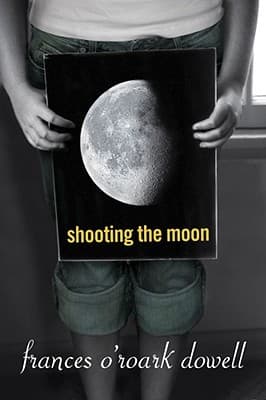
Frances O'Roark Dowell (2008)
Genre
Children's / Historical Fiction / Young Adult
Reading Time
150 min
Key Themes
See below
Sign in to track this book
A young girl's hero worship for her military father crumbles as her brother's photographs from Vietnam expose the grim realities of war, forcing her to confront the limits of even a hero's power.
Twelve-year-old Jamie Dexter lives on a military base in Fort Bragg, North Carolina, with her father, Colonel Dexter, and her older brother, TJ. The book begins with TJ deciding to join the Army and his deployment to Vietnam. Jamie, an aspiring photographer and patriotic girl, is initially excited by TJ's departure, seeing him as a hero fighting for his country, much like their father. Colonel Dexter, a career military man, is proud of TJ's choice, reinforcing the family's military values. Jamie looks forward to TJ's letters, expecting combat stories and adventure, believing the war is a clear fight between good and evil.
Jamie waits for TJ's first message from Vietnam. To her surprise, it is not a letter with heroic tales but a small package containing a roll of undeveloped film. TJ's note is short, simply telling her to develop the pictures. Jamie, who shares a love for photography with TJ and has access to a darkroom, is curious. This unexpected form of communication immediately sets a different tone than her initial expectations. She wonders why TJ chose this method over writing and what images these mysterious frames might hold, unaware that these photographs will become her main way of seeing the war's realities.
Jamie takes the film to her darkroom and begins the development process. The first images are not the heroic combat scenes she imagined. Instead, she sees ordinary soldiers, some looking tired or bored, others simply existing in a foreign place. There are pictures of a young Vietnamese girl, a soldier writing a letter, and the dense jungle. These photos lack the glory and action she expected; they show a common, yet subtly unsettling, reality. This first batch of photos begins to break down Jamie's idealized view of the war, showing her a side of conflict that is more complex and human than the propaganda she has heard.
Struggling to understand the quiet power of TJ's photographs, Jamie finds Private Miller, a young, injured soldier recovering at the base hospital. Private Miller, who has also seen combat in Vietnam, recognizes the truth in TJ's images. He explains to Jamie that the photos capture the 'real' war – the exhaustion, the fear, the moments of humanity amid the chaos, and the daily struggles of survival. Their shared understanding of the photos creates a bond between them. Private Miller's insights help Jamie move past her initial disappointment, guiding her to see the emotional depth and difficult truths TJ is trying to share.
Colonel Dexter, a man of strict military discipline and patriotism, eventually finds Jamie's darkroom and the growing collection of TJ's photographs. He is bothered by the images, finding them unprofessional and unpatriotic. He believes TJ should focus on his duty, not on taking pictures that do not glorify the war. The Colonel's reaction shows the generational and ideological gap between him and his children about the war. He sees the photos as a weakness, a distraction from the 'mission,' and struggles to understand why TJ would send them, especially to his young sister.
As more rolls of film arrive from TJ, the content becomes more somber and revealing. Jamie develops photos showing the aftermath of combat, the suffering of Vietnamese civilians, and the deep weariness in the eyes of the soldiers. These images sharply contrast with the heroic stories she grew up with. They convey a sense of futility, moral confusion, and deep emotional cost. Through his lens, TJ is silently sharing his growing disappointment with the war, its purpose, and its devastating impact on everyone involved, leaving Jamie to deal with the painful truths her brother is experiencing.
Through TJ's photographs and her conversations with Private Miller, Jamie's view of the Vietnam War changes greatly. She begins to see the war not as a glorious fight but as a messy, brutal, and often senseless conflict that causes immense suffering. Her childhood hero-worship of her father, the Colonel, starts to fade as she realizes his firm belief in the war means he supports the system that is hurting her brother. Jamie begins to question authority and the simple stories she has always accepted, developing a more thoughtful and critical understanding of patriotism and sacrifice.
Among TJ's photographs, a particular series stands out: images of a small Vietnamese village and a young girl. These photos are not of combat, but of quiet moments, daily life, and the innocent faces caught in the fighting. The young girl, in particular, becomes a symbol for Jamie, representing the innocent victims of the war and the humanity TJ is trying to acknowledge amid the destruction. These images reveal TJ's compassion and his struggle with the moral issues of the conflict, deeply affecting Jamie and solidifying her understanding that the war is not just about soldiers, but about the lives of ordinary people.
With the truths from TJ's photographs, Jamie finally confronts her father, Colonel Dexter. She challenges his rigid, patriotic view of the war, expressing her fear for TJ and her understanding of the conflict's devastating reality. The Colonel, deeply rooted in his military beliefs, dismisses her concerns and maintains his belief in the war's necessity and righteousness. This confrontation is painful for Jamie, as she realizes her father cannot or will not acknowledge the complexities and suffering his son is experiencing. It marks a significant point in their relationship, showing the gap that has grown between them.
Jamie's ultimate understanding is that her father, the powerful Colonel she has looked up to her whole life, cannot protect TJ from the horrors of the war. Despite his rank, his authority, and his firm belief in the military, he cannot shield his son from the danger, the disappointment, or the emotional scars of Vietnam. This understanding shatters Jamie's idealized image of her father and of military life. It is a painful but important step in her growing up, making her face the limits of power and the devastating impact of war on even the strongest people and families. She learns that love and a father's position cannot stop suffering.
A final roll of film arrives from TJ, and the images are the most unsettling yet. They are less clear, more broken, showing scenes of deep despair, perhaps even a direct call for help. Jamie recognizes the urgency and the depth of TJ's emotional distress in these last photographs. This final message is a silent cry from the front lines, showing that TJ is at his breaking point. The images are a desperate call for someone to understand his suffering and to intervene, increasing Jamie's fear and her feeling of powerlessness, yet also strengthening her resolve.
Realizing that her father cannot or will not act, Jamie takes action herself. She gathers all of TJ's photographs, understanding their power to show the truth that words cannot. While her exact action is somewhat open, the implication is that she intends to use these images to expose the reality of TJ's situation and the war, perhaps by showing them to someone in authority who might listen, or by finding a way to make his suffering known. This act is Jamie's ultimate expression of love and defiance, her way of fighting for her brother when all other options seem closed, using the medium they both share.
The Protagonist
Jamie transforms from an innocent, patriotic child into a disillusioned but empathetic young woman who challenges authority and takes action to protect her brother.
The Supporting/Catalyst
TJ's character arc, though mostly unseen, shows a descent from initial military engagement to profound disillusionment and emotional distress, communicated through his art.
The Antagonist/Supporting
The Colonel remains largely static in his beliefs, serving as a representation of the unyielding pro-war stance, highlighting the generational divide and the difficulty of questioning ingrained ideology.
The Supporting
Private Miller serves as a catalyst for Jamie's understanding, providing crucial insights without undergoing a significant personal arc within the narrative.
The Mentioned/Symbolic
The Vietnamese girl doesn't have an arc, but her recurring image deepens the thematic resonance of innocence lost and the war's universal impact.
This theme looks at the sharp difference between the idealized, patriotic image of war and its brutal, often senseless reality. Jamie first sees the Vietnam War as a glorious adventure, but through TJ's photographs, she sees the exhaustion, fear, and suffering of soldiers and civilians. TJ sending photos instead of letters means he cannot speak about the horror he is experiencing, and the images themselves – showing daily hardship, innocent victims, and the psychological cost – make Jamie face the deep disappointment that war brings. This breaks her childhood beliefs about heroism and national pride, as seen when she processes the quiet despair in TJ's later photos.
“It was as if TJ was trying to show me the truth, not with words, but with light and shadow.”
Photography is the central plot device and a strong thematic element, acting as a clear window into truth. Unlike letters, which can be censored or changed, TJ's undeveloped film offers raw, unfiltered images that Jamie must understand. The photographs convey emotions, environments, and realities that words might not capture or that TJ is unwilling to say directly. They make Jamie see past propaganda and think critically about what she is shown. The act of developing the photos in the darkroom symbolizes Jamie's own process of gaining a deeper understanding of the world and the war's complexities.
“A photograph doesn't lie, not really. It just shows you what was there.”
The book explores the conflict between unquestioning obedience to authority and the courage to challenge main ideas. Jamie first accepts her father's and the military's patriotic story of the war. However, as she processes TJ's photos and learns from Private Miller, she begins to question the Colonel's rigid beliefs and the government's portrayal of the conflict. Her confrontation with her father shows her growing independence and her refusal to accept simple answers. This theme highlights how hard it is to break free from old beliefs, especially when those beliefs are tied to family and national identity, and the need to question when facing injustice or suffering.
“How could someone I'd worshiped my entire life be just as helpless to save my brother as I was?”
The story looks at the complexities of family relationships, especially under the stress of war, and the different ways people communicate. The bond between Jamie and TJ is key, strengthened by their shared love for photography and TJ's silent plea for understanding. Their communication goes beyond spoken words, relying on the visual language of the photographs. In contrast, the communication between Jamie and her father, Colonel Dexter, is strained by his inability to acknowledge the nuanced truths in TJ's images and his strict adherence to military rules. The book suggests that true understanding and love require empathy and a willingness to see past one's own ideas, even when it is painful.
“He didn't send words, he sent pictures. And the pictures told a story words couldn't.”
TJ's primary method of communicating his experiences from Vietnam to Jamie.
The rolls of undeveloped film are the central plot device. Instead of letters, TJ sends these to Jamie, forcing her to actively participate in uncovering his story. This device emphasizes the raw, unfiltered nature of his experiences, contrasting with potentially censored or sanitized letters. The act of developing the film becomes a metaphor for Jamie's own developing understanding of the war. Each roll serves as a chapter in TJ's unseen narrative, gradually revealing his disillusionment and the harsh realities of combat, driving Jamie's emotional arc and her eventual confrontation with her father.
Jamie's personal space for processing TJ's images and her own evolving understanding.
The darkroom functions as a symbolic space for transformation and revelation. It is where Jamie physically develops TJ's photographs, bringing hidden truths into light. More significantly, it's a private, contemplative space where Jamie processes her emotions, questions her beliefs, and grapples with the unsettling realities of war. The isolation of the darkroom allows her to confront these difficult images without external interference, enabling her personal growth and the development of her critical perspective. It represents a sanctuary for truth-seeking amidst the patriotic fervor of the military base.
A wounded soldier who provides Jamie with a crucial, experienced perspective on the war.
Private Miller serves as a narrative guide and a voice of experience for Jamie. As a soldier who has returned from Vietnam, he possesses firsthand knowledge of the war's complexities and emotional toll. His ability to interpret the unspoken messages in TJ's photographs validates Jamie's own nascent understanding and helps her articulate the truths she sees. He acts as a foil to the Colonel's unyielding patriotism, offering a compassionate and realistic perspective that accelerates Jamie's disillusionment with idealized notions of war and empowers her to trust her own interpretations.
“I didn't know then that the things that make you different are the things that make you strong.”
— Marie reflecting on her early experiences at the base.
“Sometimes you have to break the rules to do what's right.”
— Marie contemplating the ethics of her actions related to her brother's photos.
“The moon was always there, even if you couldn't see it.”
— A recurring thought for Marie, symbolizing hope and persistence.
“War makes everyone a little crazy, I guess.”
— Marie observing the behavior of adults and soldiers around her.
“It’s hard to tell what’s real and what’s not when you’re watching things on a screen.”
— Marie musing on the impact of television and media during the Vietnam War.
“You can't just sit around waiting for things to happen. You have to make them happen.”
— Marie's internal motivation to take action regarding her brother's situation.
“Grief is a funny thing. It makes you feel like you’re the only one who ever felt it.”
— Marie reflecting on her family's struggles and isolation.
“Sometimes the bravest thing you can do is just keep going.”
— Marie's internal monologue about enduring difficult circumstances.
“A photograph can tell a story, but it can't tell the whole story.”
— Marie's understanding of the limitations and power of photography.
“The world was bigger than our little base, bigger than our war.”
— Marie realizing the vastness of the world beyond her immediate experiences.
“It's easy to judge when you're not the one living it.”
— Marie thinking about how others view her family's choices.
“You never really know what someone else is going through.”
— Marie's growing understanding of the complexities of human experience.
“Even when things are bad, there's always something good to find.”
— Marie trying to maintain a positive outlook amidst challenges.
“Being different doesn't mean you're wrong. It just means you're different.”
— Marie's acceptance of her own unique qualities and those of others.
Ready to see how well you understood this book? Take our interactive quiz with 10 questions.

Dan Gemeinhart
4.5

Kate O'Hearn
4.4

Jeanne Birdsall
4.4

Jen Wang
4.4
Wendelin Van Draanen
4.3

John Marsden
4.3

Chris Van Allsburg
4.3
Jennifer A. Nielsen
4.2