“The sea is a vast, indifferent force, and we are but tiny specks upon it.”
— Reflection on the power of the ocean and human vulnerability.

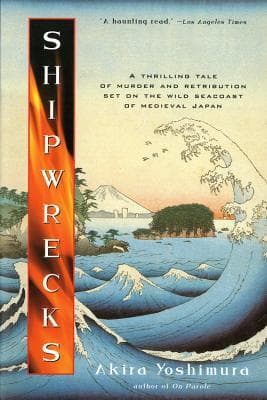
Akira Yoshimura (1996)
Genre
Historical Fiction
Reading Time
180 min
Key Themes
See below
Sign in to track this book
In a desolate Japanese fishing village where salt fires lure ships to their doom for plunder, a young boy uncovers a shipwreck's cargo that promises a terrifying retribution for his people's dark survival.
Isaku, a nine-year-old boy, lives in a remote, nameless Japanese village with his mother, father, grandfather, and younger sister, Hana. The village is very poor, living on small catches from the sea and the salt they produce, which they trade with other villages. The salt-making uses large, round cauldrons heated by fires. These fires, burning brightly on the cliffs, have two purposes: to boil seawater for salt and to lure passing ships onto the rocky shoals. This 'ship-luring' is the village's secret for survival. When a ship wrecks, the villagers kill the crew and loot the cargo, getting essential supplies and rare goods.
One night, the fires burn with increased intensity, and the villagers, including Isaku's father and grandfather, get ready. Isaku watches from afar as a ship, drawn by the lights, crashes onto the rocks. The entire village participates: men, women, and older children rush to the wreck. Isaku sees the crew members killed quickly, their bodies thrown into the sea. His own father takes part in the killing. The cargo, mostly rice, sake, and other foods, is carefully saved and shared. This event, though terrible, is a normal part of the community's survival, leaving a strong impression on young Isaku.
Months pass, filled with the constant struggle for food and the hard work of making salt. Then, during a particularly stormy night, another ship appears. This vessel is much larger and looks unusually dark, almost black, against the rough sea. The villagers, hoping for a big haul, light the fires with even more enthusiasm. Despite the bad weather, the ship, like others before it, is drawn to shore and eventually crashes with a loud sound. There is a mix of excitement and worry among the villagers; the ship's size suggests many goods, but its dark appearance also hints at something different.
As the villagers rush to the black ship, they find something chilling: the crew is already dead, their bodies spread across the deck and in the hold, swollen and discolored. Their usual brutal work is not needed. The air smells foul and unfamiliar. The cargo, to their initial joy, is a huge amount of rice, packed in large, heavy sacks. However, they see the rice is discolored and has the same bad smell. Despite the disturbing discovery and the strange odor, the villagers, desperate, decide to take the rice, believing it is just spoiled but still edible after some preparation.
The villagers, after much discussion and driven by their extreme need, begin to eat the rice from the black ship. They try different ways to remove the bad smell and taste, like washing and sun-drying it, but the odor remains. Soon after, people start to get sick. The sickness causes extreme tiredness, vomiting, diarrhea, and a quick decline. Isaku's younger sister, Hana, is one of the first to die. The illness spreads quickly through the village, affecting everyone. The villagers, isolated and without medical knowledge, are helpless against the mysterious disease, which they first blame on the bad rice.
The plague continues to devastate Isaku's village. First, his younger sister, Hana, dies from the illness, her small body wasting away. Soon after, his mother becomes very sick, her strength quickly failing. Isaku tries to care for her, getting water and offering comfort, but her condition worsens. His father, who seemed stronger at first, also gets the disease, his health quickly failing. Even the strong grandfather eventually shows symptoms. Isaku, by some miracle, stays healthy, becoming the only caregiver and witness to his family's slow deaths. A deep and terrifying isolation settles over him.
Each day, more villagers die. The communal fires for salt production stop burning. The sounds of daily life, the chatter, the fishing boats, all go silent. The village, once a close-knit, though harsh, community, becomes a ghost town. Houses are empty, and the few remaining healthy people are overcome by fear and sadness, often too weak or hopeless to bury the dead properly. Isaku walks through the deserted paths, finding only silence and the lingering smell of death. The once-busy village, where everyone had a role, now shows the quick, impartial power of the mysterious illness.
Isaku's family eventually dies, leaving him completely alone in their small hut. He performs the last rites for his parents and grandfather as best he can, driven by a basic sense of duty. He then realizes he is the last person left in the entire village. The silence is absolute, broken only by the wind and the sea. He searches for food, trying to understand the disaster that has hit his home. The profound loneliness is a heavy burden, and the reality of his isolation settles on him, forcing him to face a future without family or community.
Days turn into weeks, and Isaku survives alone, his young mind trying to cope with his great loss. One day, a man appears outside the deserted village. He is a stranger, well-dressed and carrying supplies, clearly not from the area. He approaches Isaku carefully, observing the desolation. The man says he is a merchant or traveler from a distant village and has heard rumors of the plague. He offers to take Isaku with him, promising a new life away from the cursed village. Isaku, desperate for companionship and a way out, hesitantly agrees, finding a small flicker of hope amid his despair.
As they travel, the merchant tells Isaku the grim truth about the black ship. He explains that it was a plague ship, carrying people infected with a very contagious and deadly disease, and the rice was contaminated. The merchant, however, did not come to rescue Isaku out of pure kindness. He explains that Isaku, having survived the plague and likely being immune or a carrier, is a unique and dangerous item. The merchant's real plan is to sell Isaku to a wealthy lord or a group of researchers who want to study immunity to the plague, seeing the boy as a scientific specimen rather than a person. Isaku's supposed salvation becomes a horrifying new form of captivity, a chilling example of the village's fate and his own.
The Protagonist
Isaku transforms from an innocent, if aware, village boy into a traumatized, isolated survivor, whose unique immunity makes him a tragic curiosity.
The Supporting
He begins as a resilient provider and enforcer of village traditions, only to succumb helplessly to the mysterious plague.
The Supporting
She is a nurturing figure who tries to maintain normalcy, only to be overwhelmed and ultimately claimed by the disease.
The Supporting
He is the embodiment of the village's history and traditions, who ultimately falls victim to the plague, severing a vital link to the past.
The Supporting
Her brief life symbolizes the innocence lost to the village's desperate circumstances and the plague's devastating impact.
The Antagonist/Supporting
He appears as a potential rescuer but transforms into an exploiter, revealing the harsh realities of the outside world.
The Supporting
They begin as a struggling but unified community, only to be completely annihilated by the plague.
A main theme is the extreme measures people take to survive when facing severe poverty and isolation. The villagers' reliance on ship-luring, a brutal and morally complex practice, shows their desperation. They are not evil, but driven by hunger and the need for basic things like rice. This shows in how they justify killing shipwrecked crews and, later, their willingness to eat the bad-smelling rice from the black ship, because any food is better than none.
“For the villagers, the ships that ran aground were not tragedies but blessings, providing the sustenance that the stingy sea and barren land denied them.”
The physical and cultural isolation of the village is a central theme. Their remoteness means they have no contact with the outside world, no medical knowledge, and no understanding of diseases like the plague. This ignorance makes them completely vulnerable when the contaminated rice arrives. Their isolation also keeps their brutal customs alive, as there are no outside moral rules or laws to challenge their practices. The tragic result of this isolation is their total destruction.
“Their world was the sea and the cliffs, and the knowledge of the world beyond was as remote as the stars.”
The story strongly suggests a sense of retribution for the villagers' actions. Their practice of luring ships to their doom and killing the crews ultimately leads to their own destruction by a plague ship. The black ship, with its dead crew and contaminated cargo, can represent a dark fate or a punishment for their past deeds. This theme explores whether their suffering is a direct result of their choices or simply a cruel twist of fate in a harsh world.
“The sea, which had given them so little and taken so much, now brought them a gift that would devour them whole.”
Isaku's story explores the loss of childhood innocence and the lasting effects of trauma. He sees brutal acts from a young age, and his family and entire community are killed by disease. He must face death and isolation directly, without the comfort or protection of adults. His eventual 'rescue' by the merchant, who sees him as an object, adds to his trauma, showing that even survival does not guarantee peace or freedom from exploitation.
“He had seen too much, understood too much, for a boy of his age. The world had shown him its bare, cruel face.”
The book examines the darker parts of human nature when pushed to its limits. The villagers' willingness to murder for survival, how quickly they adapt to brutality, and the merchant's cold calculation of Isaku's worth all show the extent of human cruelty and self-preservation. It questions where the line between survival and inhumanity lies, and how easily it can be crossed when societal norms and outside morality are absent.
“In the face of starvation, the rules of men became as fluid as the tides.”
A physical and cultural barrier that shapes the villagers' worldview and fate.
The extreme isolation of the nameless village is a crucial plot device. It explains the villagers' lack of external resources, their ignorance of the outside world (including diseases), and the unchecked development of their brutal customs like ship-luring. This isolation creates a closed system where their actions have direct, contained consequences, ultimately leading to their self-destruction without external intervention or escape. It amplifies the sense of doom and makes their fate feel inevitable.
A symbol of both sustenance and deception, leading to destruction.
The fires used for distilling salt serve as a powerful symbol and plot device. Ostensibly for an honest trade, their true, sinister purpose is to lure ships onto the rocks. These fires represent the villagers' desperate ingenuity, their deceptive nature, and the precarious balance between life and death in their community. Ultimately, they lead to the arrival of the black ship, making the very source of their survival (and deception) the instrument of their demise, embodying the theme of retribution.
An ominous harbinger of plague and a catalyst for the village's destruction.
The black ship functions as a central plot device, representing a turning point and an agent of fate. Its unusual color, the already dead crew, and the putrid rice all signify its ominous nature. It is the instrument through which the plague is introduced to the isolated village, directly leading to their annihilation. It can be interpreted as a symbol of karmic retribution, bringing death to those who dealt death, or simply a random, devastating force of nature that exposes the fragility of their existence.
The seemingly valuable cargo that becomes the vehicle of the plague.
The contaminated rice from the black ship is the direct mechanism through which the plague spreads throughout the village. It represents a deceptive bounty, appearing as salvation but bringing destruction. Its foul smell, ignored by the desperate villagers, underscores their dire circumstances and their fatal choices. This device highlights the theme of desperation leading to self-inflicted harm and the ironic twist of their 'treasure' becoming their doom, linking their poverty to their ultimate demise.
“The sea is a vast, indifferent force, and we are but tiny specks upon it.”
— Reflection on the power of the ocean and human vulnerability.
“A shipwreck is not a tragedy for all; for some, it is a blessing.”
— Observation on how coastal villagers rely on wrecks for survival.
“We pray for storms, yet fear the destruction they bring.”
— Villagers' conflicted feelings about shipwrecks.
“The lighthouse keeper's duty is to guide, but ours is to salvage.”
— Comparison between different coastal roles.
“In the wreckage, we find not just goods, but stories of lives lost.”
— Reflection on the human cost of shipwrecks.
“The sea gives and takes away; we are merely its instruments.”
— Philosophical view of the villagers' relationship with the ocean.
“A man's worth is measured by what he saves from the waves.”
— Comment on the villagers' values and survival skills.
“The sound of breaking timbers is both a warning and a promise.”
— Description of a shipwreck in progress.
“We live between the mercy of the sea and the cruelty of the shore.”
— Reflection on the harsh coastal existence.
“Every wreck leaves a ghost upon the beach.”
— Musing on the lingering impact of shipwrecks.
“To survive here, one must learn to read the sea's moods.”
— Advice on coastal living and wrecking.
“The goods we salvage are tainted by the salt of sorrow.”
— Reflection on the moral ambiguity of salvaging.
“A calm sea is a hungry sea for those who wait on shore.”
— Observation on the villagers' dependence on storms.
“In the end, the sea claims all, wrecker and sailor alike.”
— Final reflection on mortality and the ocean's power.
Ready to see how well you understood this book? Take our interactive quiz with 10 questions.

Akira Yoshimura was a celebrated Japanese novelist known for his profound explorations of the sea and human endurance. His most acclaimed work, "Shipwrecks" (1986), earned him the prestigious Naoki Prize, solidifying his reputation as a master storyteller. Yoshimura's writing often delves into themes of isolation, survival, and the sublime power of nature, drawing readers into meticulously researched and emotionally resonant narratives.







