“I can't stand to see anything hurt.”
— Marty explains his deep empathy for animals, especially the abused dog he finds.

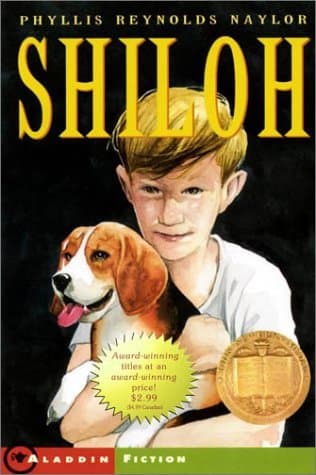
Phyllis Reynolds Naylor (1991)
Genre
Children's / Young Adult
Reading Time
180 min
Key Themes
See below
Sign in to track this book
A young boy in rural West Virginia defies the local hunter, Judd Travers, to protect a gentle beagle he names Shiloh, risking his family's safety and his own conscience to save the dog from abuse.
Marty Preston, an eleven-year-old boy in rural Friendly, West Virginia, explores the woods behind his house and finds a small, timid beagle puppy. The dog is thin and looks neglected. Marty immediately feels a connection with the dog, which he knows belongs to Judd Travers, a local man known for hunting, drinking, and mistreating his dogs. Marty's family, especially his father, has told him to stay away from Judd. Despite this, Marty is drawn to the puppy and tries to get it to come closer. He wants to keep the dog, knowing it is wrong to take another person's property, but also feels a strong need to protect the animal from what he thinks is an abusive owner.
The beagle, who Marty secretly names Shiloh, follows him home a few days later. Knowing his father would make him return the dog, Marty hides Shiloh in the woods near an old deer path, bringing him food scraps from his own plate. He builds a small pen and spends every free moment with the dog, trying to help him get healthy and earn his trust. Marty feels responsible for Shiloh and believes he is saving the dog from a cruel life with Judd Travers. This secret weighs on Marty, making him lie to his parents and sneak around, creating a conflict between his love for Shiloh and his duty to his family and community rules.
Marty's secret becomes harder to keep. His younger sister, Dara Lynn, finds Shiloh in his hidden pen while playing in the woods. Marty tries to make her promise to keep it a secret, but Dara Lynn, being a child, struggles to keep such a big secret. Marty's parents, especially his mother, notice his strange behavior, his small appetite, and the missing food. The truth comes out when Marty's mother follows him into the woods and finds Shiloh. His father, Ray Preston, is angry and disappointed, saying the dog must go back to its owner, Judd Travers, despite Marty's pleas.
Following his father's strong belief in honesty and property rights, Marty must return Shiloh to Judd Travers. The separation breaks Marty's heart, and he worries constantly about Shiloh's safety. A day or two later, Shiloh appears back at the Preston house, badly hurt after being attacked by a larger dog or wild animal in Judd's yard. Marty's family, seeing the dog's bad condition, agrees to let Marty care for Shiloh until he recovers, but he must return him to Judd when he is well. This temporary relief gives Marty hope and makes him more determined to keep Shiloh permanently, leading him to make more desperate plans.
As Shiloh gets better, the thought of returning him to Judd Travers makes Marty more determined. He goes to Judd, offering to work for him to earn money to buy Shiloh. Judd, a sharp and unfriendly man, first rejects Marty's offer. But Marty keeps trying, offering to do odd jobs like collecting cans, chopping wood, and cleaning Judd's yard. Judd, seeing a chance for free labor, agrees to a seemingly impossible deal: if Marty works for him for twenty hours, he will sell Shiloh to Marty for forty dollars. Marty, desperate, accepts the terms, knowing it will be a long and hard task, but sees it as his only way to own Shiloh legally.
Marty begins his hard work for Judd Travers. The tasks are often unpleasant, involving finding cans, splitting firewood, and doing other chores around Judd's run-down property. Judd is demanding and often cruel, often making mean comments and rarely offering encouragement. Marty faces physical tiredness, unpleasant work, and the constant fear that Judd might break their deal. Despite the difficulties, Marty stays focused on his goal, driven by his love for Shiloh and the idea of the dog finally being his own. He carefully tracks his hours, determined not to let Judd cheat him.
While working for Judd, Marty sees Judd kick and mistreat one of his other hunting dogs. This sight frightens Marty and strengthens his belief that Shiloh cannot go back to such a place. It also makes him angry at Judd. Later, while Marty is still working, he overhears Judd talking about another missing dog and suggests he knows what happened to it, hinting he might have harmed it. This moment reminds Marty of Judd's cruelty and the danger Shiloh faces. Judd also threatens Marty, warning him that if he tells anyone about what he has seen or tries to take Shiloh again, there will be serious problems, making the young boy even more scared.
One afternoon, while Marty is working near Judd's property, he sees Judd about to step on a poisonous copperhead snake. Marty shouts a warning, startling Judd and making him move back just in time. Marty then quickly kills the snake with a rock. This unexpected act of heroism, saving Judd from a dangerous bite, creates a moment of awkward thanks and a small change in their difficult relationship. Judd, still gruff, shows a bit of respect or at least recognition for Marty's actions, adding a complex layer to their interactions. It does not erase Judd's cruelty, but it briefly softens his unfriendliness toward Marty.
As Marty finishes his twenty hours, he finds that Judd has been cheating him, miscounting his hours and making the goal seem further away. Marty faces a hard choice: should he lie about the remaining hours to get Shiloh, or should he stick to his honesty? After much thought, Marty decides to tell Judd the truth, though with fear. He tells Judd that he knows he has completed his hours and that Judd has been dishonest. To Marty's surprise, Judd, perhaps influenced by Marty saving him from the snake or just tired of the situation, gives in. He accepts the forty dollars Marty has earned and agrees to sign the paper making Shiloh legally Marty's dog.
With the forty dollars earned and Judd's unwilling agreement, Marty finally takes Shiloh home, officially and legally his own dog. The relief and joy Marty feels are huge. His family, who saw his dedication and sacrifice, shares his happiness. Shiloh, now healthy and safe, becomes a loved member of the Preston household. Marty's journey has been hard, full of moral problems, difficult work, and the constant fear of losing his pet. The story ends with Marty and Shiloh together, the boy having learned important lessons about honesty, never giving up, and how far one will go for love and justice, even when facing trouble and hard truths.
The Protagonist
Marty evolves from a boy who secretly shelters a dog to a young man who bravely confronts an adult and works tirelessly to earn what he believes is right.
The Central Figure
Shiloh transforms from a scared, abused dog into a healthy, beloved, and secure family pet.
The Supporting
Ray initially enforces strict rules but eventually compromises, recognizing Marty's maturity and the justice of his cause.
The Supporting
Louise remains a supportive figure, providing emotional comfort and understanding to Marty throughout his ordeal.
The Antagonist
Judd remains largely unchanged in character, but his interactions with Marty lead him, reluctantly, to a resolution that benefits Marty and Shiloh.
The Supporting
Dara Lynn's character remains consistent as a typical younger sibling, primarily serving as a plot device to advance the conflict.
The Supporting
Becky's character remains consistent throughout the story, representing the younger members of the Preston family.
The Mentioned
Mr. Wallace's character remains consistent as a supportive community figure.
The main theme is Marty's struggle between what is legally right and what he feels is morally right. He knows Shiloh belongs to Judd Travers by law, but he believes it is wrong to leave an innocent animal in an abusive situation. This conflict makes Marty lie, hide, and work for Judd, all to get a 'right' outcome for Shiloh. The book explores these ideas, showing that true justice sometimes needs unusual and difficult actions, and that personal honesty can be a strong force for change. Marty's father represents sticking strictly to the law.
“"When you got a dog, you got a responsibility. Not just to feed him and give him water, but to keep him safe and happy, too."”
Marty's strong care for Shiloh starts the whole story. He sees the dog's suffering and feels a need to protect it, even if it costs him a lot. This theme is clear in the difference between Marty's gentle care for Shiloh and Judd's neglect and cruelty. The book shows how important compassion is not just for animals, but also for understanding the difficult situations that can lead to moral problems. Marty's family, who first insisted on returning the dog, eventually shows care for both Shiloh and Marty's feelings, showing how empathy can change actions.
“"That dog wasn't just hungry, he was scared. He had a right to be scared, living with Judd Travers."”
Marty starts by lying to his parents and hiding Shiloh, creating a web of lies that causes him much guilt and stress. His father's strong focus on honesty constantly challenges Marty's actions. The book explores the inner conflict of choosing between honesty and protecting someone or something you love. Ultimately, Marty learns that while lies can offer temporary solutions, true peace comes from facing the truth, as seen when he tells his parents and later confronts Judd about the hours. The story suggests that honesty, even when hard, leads to true freedom and solutions.
“"A lie is a lie, Marty. No matter how small."”
Marty's journey to save Shiloh shows his strong will. Despite facing many problems—his parents' disapproval, Judd Travers's threats, Shiloh's injury, and hard work—Marty never gives up. He always finds new ways to fight for Shiloh, showing great strength for a young boy. His determination to finish the twenty hours of work, even when cheated, shows the power of a strong will when driven by love and purpose. This theme encourages readers to believe they can overcome problems for what they believe in.
“"I was going to get Shiloh, one way or another. I didn't care what I had to do."”
Allows deep insight into Marty's internal struggles and moral dilemmas.
The story is told entirely from Marty Preston's perspective. This narrative choice immerses the reader directly into Marty's thoughts, feelings, and moral conflicts. We experience his love for Shiloh, his fear of Judd Travers, his guilt over lying, and his determination firsthand. This deep point of view makes Marty's struggles relatable and personal, allowing the reader to understand the nuances of his ethical choices and empathize with his plight. It also limits the reader's knowledge to only what Marty knows or observes, enhancing suspense, especially concerning Judd's actions and intentions.
The central conflict driving Marty's actions and character development.
The entire plot of 'Shiloh' is predicated on a profound moral dilemma: Marty must choose between obeying the law and his father's strict principles (returning Shiloh to his rightful, albeit abusive, owner) or acting on his deeply felt sense of compassion and justice (protecting Shiloh from harm). This device forces Marty into difficult choices, leading to lying, hiding, and eventually making a selfless bargain. The dilemma creates internal conflict for Marty and sparks discussions about right and wrong, legality versus morality, and the responsibility humans have towards animals.
The dog represents innocence, vulnerability, and Marty's developing conscience.
Shiloh functions as more than just a character; he symbolizes innocence and vulnerability in need of protection. His physical condition—scrawny, timid, and later injured—reflects the suffering caused by neglect and abuse. For Marty, Shiloh also comes to symbolize his own burgeoning conscience and sense of justice. Saving Shiloh becomes Marty's personal quest to right a wrong, and the dog represents the moral purity Marty strives to uphold in a world that isn't always fair or kind. Shiloh is the tangible representation of Marty's commitment to his values.
Provides a backdrop of close-knit community, poverty, and independence.
The rural setting of Friendly, West Virginia, is more than just a backdrop; it shapes the story's themes and conflicts. The isolation of the community means people know each other's business, making Marty's secret difficult to keep. The prevalence of hunting and the often-harsh realities of country life inform Judd Travers's character and the societal norms around dog ownership. The financial struggles of Marty's family underscore his need to earn money to buy Shiloh, making his bargain with Judd even more challenging. The rugged landscape also provides the perfect hiding places for Shiloh and reinforces the idea of self-reliance.
“I can't stand to see anything hurt.”
— Marty explains his deep empathy for animals, especially the abused dog he finds.
“It's not right to keep a dog chained up like that.”
— Marty reflects on the cruel treatment of the dog by its owner, Judd Travers.
“Sometimes you have to lie to do what's right.”
— Marty justifies hiding the dog from his parents and Judd to protect it.
“A dog's a dog, and a man's a man, and there's a difference.”
— Judd Travers dismisses Marty's concerns about the dog's treatment.
“I'm going to call him Shiloh.”
— Marty names the dog after the place where he found him, showing his attachment.
“You can't buy everything with money.”
— Marty argues that love and care for the dog matter more than Judd's ownership claim.
“It's hard to do the right thing when you're scared.”
— Marty struggles with fear while trying to protect Shiloh from Judd.
“A promise is a promise.”
— Marty emphasizes the importance of keeping his word, especially to his family.
“Sometimes the truth hurts worse than a lie.”
— Marty contemplates the consequences of revealing Shiloh's whereabouts.
“He's not just a dog; he's my friend.”
— Marty expresses the deep emotional connection he has formed with Shiloh.
“You got to stand up for what you believe in.”
— Marty's father advises him on taking a stand, even when it's difficult.
“Hate's a heavy load to carry.”
— Reflection on Judd's bitterness and how it affects him and others.
“Love makes you do things you never thought you could.”
— Marty realizes his actions to save Shiloh are driven by love.
Ready to see how well you understood this book? Take our interactive quiz with 10 questions.

Biography coming soon.
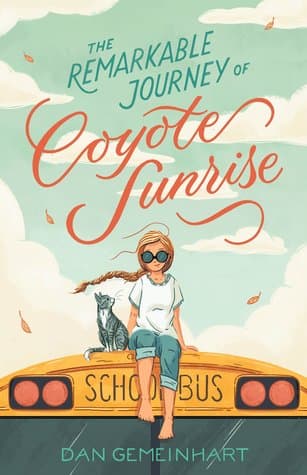
Dan Gemeinhart
4.5
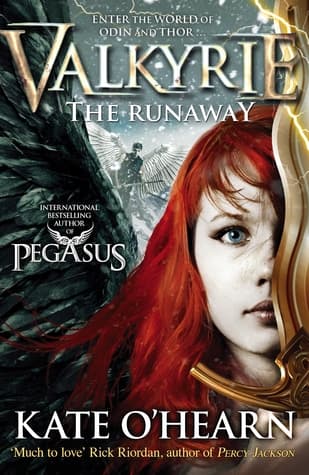
Kate O'Hearn
4.4

Jeanne Birdsall
4.4

Jen Wang
4.4
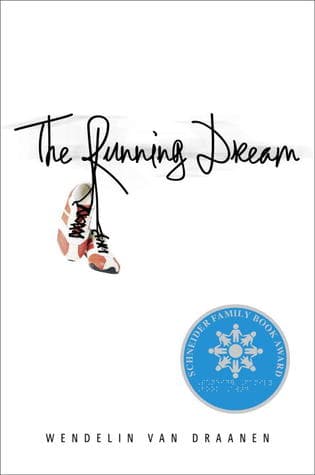
Wendelin Van Draanen
4.3

John Marsden
4.3

Chris Van Allsburg
4.3
Jennifer A. Nielsen
4.2