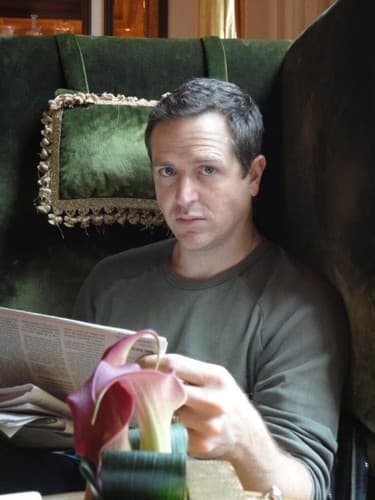
Biography coming soon.


Hugh Howey (2013)
Genre
Fantasy / Science Fiction / Young Adult
Reading Time
12 Minutes
Key Themes
See below
Sign in to track this book
In a future where humanity lives underground and memories can be erased, a young woman finds a disturbing link between nanotechnology and the hiding of traumatic pasts that could doom their society.
Troy, a former senator and the designer of Silo 1, wakes from cryosleep in the Silo's command center. He is confused and cannot believe the world outside is devastated, having helped plan the destruction of humanity to 'save' it. His memory is broken, and he struggles to remember the events leading to the apocalypse and his current job. He talks with other Silo leaders, especially Thurman, who designed Silo 17 and is still alive, keeping up the lie of a toxic world. Troy's main job is to watch the other silos and make sure they follow the rules, including the regular 'cleanings' and leadership 'shifts.' He struggles with the huge weight of his actions and the moral problems of his part in the extinction event.
Thurman, another designer and a key person in the Silo project, explains their full plan to Troy. They reveal that 'the Shift,' a memory-altering drug, is essential for keeping the Silos controlled and stopping residents from questioning their lives. The drug is given to those chosen for leadership 'shifts,' effectively erasing their memories of the outside world and their past lives. This lets them fully accept their new identities in the Silo. This also applies to the first designers, including Troy, whose memories are partly erased to prevent guilt and keep them focused. Thurman stresses that this deception is necessary for humanity's long-term survival, believing a controlled, amnesiac population is the only way to prevent self-destruction.
Manning, a young technician from Silo 1, is sent on a risky mission to Silo 17, which is failing. His goal is to get important data and possibly save the Silo's systems before it completely breaks down. Other technicians and soldiers go with him, but the trip through the contaminated tunnels is dangerous. As they move through the decaying structures, Manning starts to find things that don't fit, suggesting the official story about the outside world and the Silos' purpose might be false. His mission becomes more than just a repair job; it turns into an investigation into their true history and the secrets in Silo 1.
In Silo 17, a rebellion starts among residents who are tired of the harsh rule and the mysterious deaths of loved ones. Led by Solo, a charismatic figure, the residents begin to question their leaders' authority and their society's strict rules. Manning, caught in the middle of the uprising, feels torn between his loyalty to Silo 1 and his growing sympathy for the rebels. He sees firsthand the desperation and strength of the people fighting for freedom. This experience makes him question his own ideas about the Silos and their control. The rebellion shows how much humans want knowledge and to make their own choices.
Solo, the leader of the rebellion in Silo 17, tries desperately to reach the surface. He confirms the outside world is toxic but also reveals the Silos are connected. His actions, though deadly, push other residents to question their reality. Manning, after seeing Solo's sacrifice and finding important information about the Silo's history, starts to understand the full extent of the deception. He realizes the Silos are not separate safe places but a controlled experiment to preserve humanity under specific rules. Solo's legacy becomes a symbol of hope and resistance against the oppressive system, inspiring Manning to keep searching for the truth.
Juliette, a former mechanic from Silo 18, wakes in Silo 1's medical bay after a 'shift.' Her memories are broken and confusing, and she struggles to fit her old identity with her new role as a potential leader. She is told she is now important for the Silo's future, but the details are vague and contradictory. As she slowly recovers, she remembers parts of her previous life, including loved ones and the harsh realities of Silo 18. These fragmented memories clash with the story told by Silo 1 leadership, making her suspect she is being manipulated and that the truth about her past and the Silos is hidden from her.
Driven by her broken memories and a growing unease, Juliette begins a secret investigation inside Silo 1. She goes into restricted areas and uses her mechanical skills to get into hidden parts of the Silo. Her search leads her to the central control room, a heavily guarded place where the entire Silo system is managed. There, she discovers the shocking truth: all the Silos are connected, and their existence is part of a large, manipulative experiment. She learns about the 'shift' process, the memory wipes, and the deliberate creation of a toxic outside world to maintain control. This discovery shatters her understanding of reality and fuels her desire to expose the truth.
With the knowledge she has found, Juliette realizes her only hope for true understanding and freedom is outside Silo 1. She carefully plans her escape, using her mechanical skills to get past security and navigate the dangerous tunnels to the surface. Her journey is full of danger. She faces hostile environments, broken equipment, and the constant threat of being caught. Despite the huge risks, Juliette's determination to find answers about the devastated world and humanity's true fate pushes her forward. Her escape is not just a physical act but a symbolic break from the Silo system's manipulative control.
Juliette finally reaches the surface, finding a world not as she was told. While still desolate, it is not completely unlivable, and she finds remnants of the pre-apocalyptic world. She finds proof of the large conspiracy and the deliberate destruction of humanity. More importantly, she meets other survivors, showing that the Silos were not the only answer and that life exists outside their controlled environments. This discovery not only proves her suspicions but also gives her a new goal: to connect the remaining Silos, expose the truth, and unite humanity against those who created their destruction. Her journey changes from a personal search to a mission for collective freedom.
Juliette, now a symbol of truth and defiance, confronts the remaining Silo designers, especially those in power in Silo 1. She uses the knowledge she gained and the evidence she collected to expose their deception and the terrible crimes they committed against humanity. Her actions start a new wave of rebellion and resistance in the Silos, as residents begin to question their reality and demand answers. Juliette's ultimate goal is to break down the oppressive system, allowing the remaining Silos to connect and the survivors to reclaim their history and their future. She works towards a future where humanity can rebuild, free from the designers' manipulative control.
The Protagonist
Troy evolves from a compliant, memory-wiped architect to someone who questions the morality of the Silo project, experiencing guilt and doubt about his past actions.
The Antagonist
Thurman remains steadfast in his belief that the Silo project is the only way to save humanity, resisting any attempts to question or dismantle the system until the very end.
The Supporting
Manning transforms from a loyal technician into a truth-seeker, his experiences revealing the deception of the Silo system and fueling his desire for change.
The Supporting
Solo rises from an ordinary resident to a revolutionary leader, his sacrifice becoming a powerful symbol of defiance against the Silo system.
The Protagonist
Juliette's arc is one of awakening and empowerment, as she regains her memories, exposes the truth of the Silo system, and becomes a leader in the fight for humanity's freedom.
The Supporting
Lucas transitions from a fearful, compliant resident to a courageous ally, risking his safety to help Juliette expose the truth.
The Supporting
Walker's arc involves a slow recovery from trauma, leading him to offer crucial, albeit fragmented, guidance to Juliette.
The Supporting
Donald's arc is explored through flashbacks and historical records, revealing his initial complicity and subsequent moral struggle against the Silo project's ethics.
The novel explores how truth can be manipulated and hidden for what some see as a greater good, and the terrible results of such lies. The entire Silo system is built on lies: the false toxic outside world, the selective memory wipes, and the controlled stories. Characters like Troy struggle with these lies, while others like Thurman strongly defend them. Juliette's journey is a search for truth, showing humanity's basic need for knowledge and the moral duty to challenge established falsehoods, even when those falsehoods promise safety.
“The truth was a weapon, and like all weapons, it had a recoil. And sometimes, the recoil was worse than the wound.”
A main conflict in 'Shift' is the struggle between humanity's survival and its natural desire for freedom. The designers believe they sacrificed freedom and truth to ensure survival, creating a controlled place where life could continue, though under strict authoritarian rule. However, the rebellions and individual searches for knowledge show that humans will always seek independence, even at great personal risk. The book asks if a life without truth or freedom is truly worth living, and if survival at such a cost is a win or a long defeat. Characters like Solo and Juliette show this theme.
“They had traded the sky for a roof, the stars for a light bulb, and freedom for a cage. And called it salvation.”
Memory manipulation is a strong tool used by the designers to control Silo residents and shape their identities. The 'Shift' drug erases traumatic memories and past lives, forcing people into new roles and realities. This theme explores how important memory is to self-identity and how its absence or change can cause deep confusion and loss of self. Characters like Troy and Juliette deal with broken memories, trying to fit their past selves with their current situations. The book suggests that true identity cannot be fully erased and will always try to reappear, even through subconscious ways.
“Memory was a stubborn thing. It clung to the edges of the mind, even when the center was wiped clean.”
The novel looks at the ethical problems of absolute power and control exercised by the designers over the Silo populations. The designers, believing they know best for humanity, make life-and-death decisions, plan mass deceptions, and dictate every part of their subjects' lives. This raises questions about who has the right to decide humanity's fate and whether the outcome justifies such extreme methods. The constant surveillance, the brutal enforcement of rules, and the suppression of disagreement highlight the dangers of unchecked power and how easily good intentions can lead to tyranny.
“Power was a corrosive thing. It ate away at the edges of morality until nothing was left but the will to maintain it.”
A memory-altering drug used for control.
The 'Shift' drug is a powerful pharmacological agent used by the architects to selectively erase memories, particularly those related to the outside world or traumatic events. It is administered to individuals chosen for leadership roles or to maintain the illusion of a toxic world. This device is crucial for enabling the architects' control and preventing the Silo inhabitants from questioning their reality. It highlights the theme of memory manipulation and its impact on identity, serving as a constant reminder of the deception at the heart of the Silo system. Its use underscores the architects' willingness to sacrifice individual truth for collective perceived survival.
The hidden network linking all the Silos.
Initially, the Silos are presented as isolated, self-contained environments. However, a major plot device is the revelation of their hidden interconnectivity, allowing communication and observation between them, particularly from Silo 1. This device shatters the illusion of isolation and reveals the true scale of the architects' experiment. It creates a sense of dread and claustrophobia as characters realize they are under constant surveillance. The ability to monitor and influence other Silos allows the architects to maintain their grand plan, but it also becomes a weakness when characters like Juliette discover how to exploit these connections to expose the truth.
Suspended animation for the architects.
The cryosleep chambers are a critical device used by the architects to survive the initial apocalypse and oversee the long-term management of the Silo project. They allow key personnel, like Troy and Thurman, to awaken periodically to address issues or perform 'shifts' of leadership. This device emphasizes the immense temporal scale of the architects' plan and their commitment to their vision. It also creates narrative opportunities for memory fragmentation and disorientation, as characters awaken decades or centuries later, struggling to reconcile their past and present. The chambers symbolize the architects' attempt to transcend time and exert control over future generations.
A ritualistic execution disguised as maintenance.
The 'cleaning' protocol is a brutal, ritualistic execution disguised as a necessary maintenance task for those who break the Silo's rules. Individuals are sent outside to 'clean' the external sensors, knowing full well they will die in the toxic environment. This device serves multiple purposes: it reinforces the myth of the deadly outside world, acts as a deterrent for dissent, and provides a macabre form of population control. The act of cleaning, ironically, is a symbolic way of erasing dissent and maintaining the 'clean' facade of the Silo's controlled existence, further highlighting the themes of truth and deception.
Ready to see how well you understood this book? Take our interactive quiz with 10 questions.
Biography coming soon.







