“He knew, with the certainty of instinct, that the world was far larger than the pasture, and that there were things in it he had not yet seen.”
— Jack's early musings about the world beyond the fence.

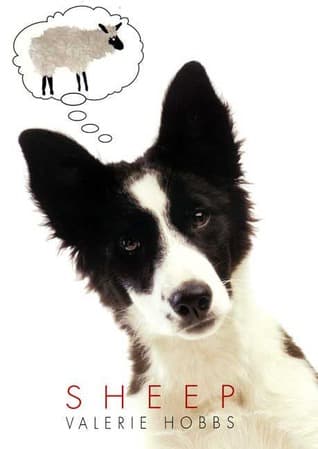
Valerie Hobbs (2006)
Genre
Fantasy / Children's / Young Adult
Reading Time
120 min
Key Themes
See below
Sign in to track this book
A Border collie puppy, taken from his life as a sheepdog, goes on a difficult journey through many names and struggles, always longing for the flock and a real home.
A young Border Collie puppy, called 'Pup' by his mother, is born on a farm. Early on, he shows a strong instinct for herding. His mother, an experienced sheepdog, starts his training by gently showing him his role. He feels a powerful excitement and a deep sense of belonging as he learns to move the sheep, at first with his mother watching closely. This early time sets his identity and future goal, confirming what it means to be a working sheepdog.
One day, a man comes to the farm and takes Pup from his mother and siblings. Pup is confused and scared, not understanding why he is being removed from his home and family. He is put in a small, dark crate and driven away, the familiar sights and smells of the farm quickly fading. This hard separation marks the end of his innocent puppyhood and the start of his lonely journey, making him face an unknown world without his family's comfort and guidance.
Pup is bought by an old, kind man known as the Goat Man, who renames him Shep. The Goat Man lives a simple, isolated life and needs Shep to help manage his small herd of goats. Shep, despite missing his first family and the sheep, learns to herd goats, finding a new purpose and a temporary home. He learns to appreciate the Goat Man's gentle way and the quiet rhythm of their life, even though goats are not as challenging to herd as sheep.
The Goat Man, feeling old, gives Shep to a young, energetic boy named Hollerin and his family. Hollerin renames him Spot. Life with Hollerin is very different from the quiet time with the Goat Man. Hollerin's family is large and loud, and Spot experiences the busy household's chaos and affection. While he enjoys the attention and open spaces, he struggles with the lack of clear purpose and his main herding instinct not being used, longing for the structured work he once knew.
Hollerin's family, facing money problems, sells Spot to a circus man named Billy. Billy renames him Sparky and trains him harshly, using a whip to make him do tricks. Sparky's life becomes one of fear and confusion, as he is denied his natural instincts and treated cruelly. He dreams of his past life herding sheep and wishes for freedom from the circus tent and Billy's abusive hands, his spirit slowly fading under the constant pressure.
During a very messy circus show, Sparky finds a chance and makes a daring escape. He runs as fast as he can, leaving behind the bright lights, loud noises, and the constant threat of Billy's whip. The escape is a desperate act to save himself, driven by his natural wish for freedom and a return to a life where he can be a real sheepdog. He faces the unknown outside world, but the promise of freedom outweighs any fear.
After escaping, Sparky travels without a plan, surviving by his wits and the kindness of strangers. He meets dangers, like busy roads and other aggressive animals, and moments of unexpected generosity, such as food scraps from kind people. He is always searching, driven by a vague but strong memory of sheep and the farm. During this time, he is often called by temporary names like Blackie, showing his unsettled life and lack of a true home.
Sparky eventually finds a farm with many sheep. His herding instincts immediately return, and he feels a surge of hope and familiarity. He tries to herd them, but he is an outsider, and the farm's sheepdogs see him with suspicion. He realizes this is not his original home, and while seeing the sheep is comforting, he is still alone and without a place among them. This meeting strengthens his longing for his true family and purpose.
Tired and hungry, Sparky is found by an old, wise shepherd named Silas. Silas watches Sparky's natural herding skills and his gentle yet determined nature. He senses the dog's lost past and his deep wish to work with sheep. Silas, seeing the dog's true spirit, offers him a home and a chance to fulfill his destiny. He calls him 'Dog,' a simple but meaningful name that shows his acceptance and belonging.
Under Silas's patient guidance, Dog thrives. He quickly re-learns and improves his herding skills, working alongside Silas and his other sheepdogs. He feels a deep sense of belonging and purpose, the first true home he has known since leaving his birth family. Silas eventually gives him the name 'Shepherd,' a name that covers his journey, his natural talent, and his final destiny. Shepherd finally understands his true identity and finds peace and fulfillment in his life as a working sheepdog.
The Protagonist
He transforms from an innocent, confused puppy into a resilient, self-aware dog who ultimately finds his true calling and a permanent home.
The Supporting
Her role is primarily in the beginning, providing a foundation for Shepherd's journey and becoming a powerful memory.
The Supporting
He provides a brief period of stability before Shepherd's journey continues.
The Supporting
He represents a phase where Shepherd experiences human affection but not true fulfillment of his purpose.
The Antagonist
He serves as the primary antagonist, representing the lowest point in Shepherd's journey.
The Supporting
He acts as the ultimate rescuer and mentor, providing Shepherd with a true home and purpose.
Shepherd's whole journey is guided by his natural understanding of what he is meant to be: a sheepdog. Even after being taken from his family and forced into different roles (goat herder, pet, circus performer), he never forgets his main identity. His longing for sheep and the structured work of herding is always there, appearing in his dreams and sudden attempts to herd anything he can. This theme shows how a true purpose, once found, cannot be easily forgotten or hidden, as seen when he instinctively tries to herd the wild sheep even after years away.
“He knew, deep in his bones, what he was meant to do. He was a sheepdog.”
For Shepherd, home is not just a place, but a mix of belonging, purpose, and love. He lives in several temporary 'homes' – with the Goat Man, Hollerin, and even the brief stability of the farm with wild sheep – but none truly satisfy his longing. His final home with Silas is important not just because it gives him shelter and food, but because it lets him fully live out his purpose as a sheepdog and be truly understood and valued. This theme explores how a sense of belonging is essential for well-being.
“Home wasn't just a place to sleep; it was a place where he belonged, where he was needed.”
Shepherd goes through much hardship, including being separated from family, abuse in the circus, and times of loneliness and hunger. Yet, he never fully loses hope. His clear memories of his mother and the sheep, along with his natural courage, keep him alive and searching. Even in the darkest moments, like his escape from Billy, his actions are driven by a hidden hope for a better life and a return to his true self. This theme highlights the strength of an unbreakable spirit.
“Even in the darkest nights, he carried the memory of woolly backs and the feel of the wind on his face.”
The book explores different parts of the human-animal relationship, from the loving guidance of Shepherd's mother to the gentle care of the Goat Man, the casual affection of Hollerin, and the extreme cruelty of Billy. In the end, it is the deep and respectful bond with Silas that helps Shepherd heal and grow. Silas doesn't just feed Shepherd; he understands his nature and provides the right environment for him to fulfill his destiny, showing the powerful effect of a truly caring connection between humans and animals.
“Silas didn't just see a dog; he saw a working heart, a lost spirit.”
Each new owner renames the protagonist, reflecting his shifting identity and transient existence.
Shepherd's repeated renaming (Pup, Shep, Spot, Sparky, Blackie, Dog, Shepherd) serves as a potent symbol of his fragmented identity throughout his journey. Each name marks a different phase of his life and a different relationship, often imposed upon him rather than chosen. The final name, 'Shepherd,' given by Silas, signifies his true self and his ultimate acceptance of his purpose, marking the end of his identity crisis and the beginning of his true belonging.
A recurring mental image of herding sheep that drives the protagonist.
Throughout his travels and various difficult circumstances, Shepherd holds onto a vivid, recurring dream or memory of herding sheep. This internal imagery acts as a constant reminder of his true purpose and the life he longs for. It fuels his hope and provides him with the motivation to keep searching, even when his physical reality is far removed from his ideal. It's an internal compass guiding him back to his destiny.
The protagonist's physical journey mirrors his internal quest for self-discovery.
Shepherd's physical journey, moving from farm to farm, through the circus, and across open roads, directly parallels his internal quest for identity and belonging. Each new location and interaction teaches him something about the world and himself. The hardships he faces on the road strengthen his resilience, and the diverse characters he meets shape his understanding of humanity, ultimately leading him to the 'home' where his internal and external worlds align.
“He knew, with the certainty of instinct, that the world was far larger than the pasture, and that there were things in it he had not yet seen.”
— Jack's early musings about the world beyond the fence.
“The wind carried the scent of something wild, something that prickled his nose and made his heart beat a little faster.”
— Jack encountering the scent of the outside world for the first time.
“A good shepherd knows his sheep, and a good sheep knows his shepherd.”
— An old sheep's wisdom shared with Jack.
“Sometimes, the bravest thing you can do is to ask for help.”
— When Jack is in a difficult situation and needs assistance.
“The world outside was a place of endless possibilities, and also endless dangers.”
— Jack's realization after venturing beyond the familiar pasture.
“Even the smallest among us can make a difference.”
— A lesson learned about the importance of every individual.
“He learned that courage wasn't the absence of fear, but the decision to act in spite of it.”
— Jack facing a particularly frightening challenge.
“The language of the land was written in the rustle of leaves and the murmur of the stream.”
— Jack observing and understanding his natural surroundings.
“Home wasn't just a place; it was the feeling of belonging, of being safe among those you loved.”
— Jack reflecting on the meaning of home during his journey.
“Every journey begins with a single step, even if that step is over a fence.”
— Jack's initial decision to leave the pasture.
“The most valuable lessons are often learned when you are lost.”
— Jack's experiences while separated from his flock.
“He found that even in the darkest moments, there was always a flicker of hope, if you only looked for it.”
— Jack facing despair but finding a reason to continue.
“The world was full of stories, and he was just beginning to write his own.”
— Jack's perspective shift at the end of his adventure.
Ready to see how well you understood this book? Take our interactive quiz with 10 questions.







