“Sheep in a jeep.”
— Opening line, setting the scene.

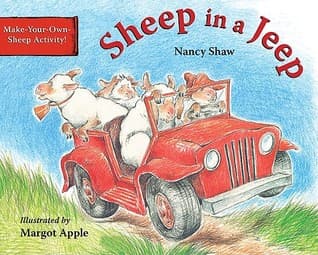
Nancy E. Shaw (1986)
Genre
Children's
Reading Time
5 min
Key Themes
See below
Sign in to track this book
A joyful, rhyming adventure follows a flock of well-meaning, accident-prone sheep as they navigate the countryside in their trusty red jeep.
Five excited sheep decide to go for a drive in their red jeep. They are all happy, smiling as they get into the vehicle. The first sheep drives, while the others ride, eager for the trip. The jeep starts, kicking up dust as it heads into the countryside. The mood is one of carefree joy and excitement for the adventure, with no hint of trouble.
As the sheep drive, they come to a very steep hill. The red jeep, though seemingly strong, starts to struggle. The engine makes a 'beep, beep, beep' sound, showing its difficulty climbing. The hill is not only steep but also muddy, making it hard to get traction. The sheep inside begin to look worried, their faces changing from joyful to concerned as the jeep slows, unable to reach the top. This is the first real challenge of their journey.
Despite their efforts, the jeep cannot climb the muddy hill. Instead, it slides backward, getting stuck in the thick, gooey mud. The wheels spin without moving, splattering mud everywhere, but the jeep stays put. The sheep are now in a difficult spot, unable to move forward or backward. Their faces show frustration and a bit of panic, realizing their fun drive has turned into a sticky mess. The mud is deep, making it hard to get out.
Determined to continue, the sheep decide to get out and push the jeep. They stand behind the vehicle, grunting and straining with all their might. They push and push, their hooves slipping in the mud, but the jeep does not move. Their combined strength is not enough to free the heavy vehicle from the deep mud. This attempt shows their lack of practical problem-solving, relying only on force.
Just as it seems their pushing might work, and the jeep moves a little, a new problem arises. One sheep, seeing a chance, jumps back into the driver's seat, perhaps meaning to steer. However, the jeep, still in a risky position, rolls backward down the hill again, sinking even deeper into the mud. All five sheep are now back inside the jeep, which is more stuck than ever. Their faces show comical dismay and acceptance of their ongoing bad luck.
Realizing they cannot free the jeep alone, the sheep look for help. They seem a bit lost and confused, but also determined not to give up. They scan the horizon, hoping to spot someone or something that can help them. This moment shows a shift from trying to help themselves to recognizing that outside help is needed, showing a small bit of growth in their problem-solving, even if still a bit naive.
Just as the sheep are at their limit, a friendly pig appears. The pig is driving a strong red tractor, a much more powerful vehicle than their jeep. Seeing the sheep's trouble, the pig immediately knows what to do. The pig's arrival brings relief and hope to the sheep, who look expectantly at their potential rescuer. The tractor suggests a practical and effective solution to their muddy problem.
The helpful pig attaches a rope from the tractor to the stuck jeep. With a strong pull, the tractor easily yanks the jeep out of the deep mud. The sheep watch in amazement as their vehicle is freed. Mud flies everywhere as the jeep is pulled out, but the sheep do not mind; they are just relieved to be unstuck. The pig's efficient action contrasts with the sheep's earlier struggles, highlighting the value of the right tools and strength.
Once the jeep is free, the sheep are overjoyed. They gather around the pig, thanking it profusely. Their faces are now bright and relieved, a sharp contrast to their earlier distress. The pig, having successfully completed the rescue, looks pleased with the good deed. This interaction emphasizes friendship and the importance of helping others, even across different species.
With the jeep clean and free, the sheep happily hop back in, ready to continue their adventure. They wave goodbye to the helpful pig and set off once more, their spirits high. However, their joy is short-lived. Almost immediately, as they drive away, the jeep hits a bump or a rock. This small incident causes the jeep to lurch, and the sheep inside are again thrown into mild confusion, suggesting their journey is still prone to mishaps.
After hitting the bump, the jeep loses control. It tumbles down a small, grassy slope, rolling over several times. The sheep inside are shaken and confused. As the jeep rolls, one of its wheels comes loose and bounces away. The scene is chaotic and a bit funny, with the sheep looking surprised and confused by the sudden events. The jeep comes to a final stop, now clearly damaged and missing a vital part.
The sheep get out of the tumbled jeep, looking messy but unharmed. They quickly see the damage: the jeep is now missing a wheel, making it impossible to drive. One sheep points to the empty axle, while another looks sadly at the detached wheel lying nearby. Their faces show a mix of dismay and resignation, as their big adventure has ended because of mechanical failure.
With their jeep broken beyond immediate repair, the sheep have no choice but to leave it. They decide to walk back home. They are seen walking in a line, looking a bit tired but accepting of their situation. The broken jeep is left behind, a reminder of their eventful, if unsuccessful, outing. This final image shows their resilience, as they continue their journey on foot, perhaps wiser from their experience.
The Protagonists
The sheep start as carefree adventurers, face multiple setbacks, learn the limits of their abilities, and ultimately adapt by walking home.
The Supporting
The Pig serves a singular, crucial role as a rescuer, demonstrating immediate competence without personal development.
The Supporting
The jeep goes from a symbol of adventure to a source of repeated trouble, ending as a broken, abandoned object.
The story shows how a lack of experience leads to problems. The sheep, despite their excitement, do not have the practical knowledge to handle challenges like a muddy hill or a broken vehicle. Their repeated attempts to solve problems with force, like pushing the jeep, rather than thinking strategically, highlight this. This theme is clear when the jeep gets stuck in the mud, rolls back, and finally breaks down, all because the sheep cannot properly handle the vehicle or its surroundings.
“Jeep in the mud. Jeep in the deep. Sheep do not peep. Sheep just push.”
This theme is clear when the pig arrives. When the sheep are helpless, stuck in the mud with no solution, the pig with its tractor comes to help. This act of kindness shows that sometimes, outside help is needed, and friends (or friendly strangers) can make a big difference. The sheep's thanks to the pig strengthens the idea of community and support.
“Pig to the rescue! Jeep out of the deep.”
Despite facing many problems—getting stuck, pushing in vain, having the jeep roll back, and finally breaking a wheel—the sheep do not completely give up. While their first attempts to solve problems are not effective, their decision to walk home after the jeep breaks down shows resilience and adaptation. They accept their changed situation and find another way to finish their journey, even if not as they planned. This shows their ability to move on from bad luck.
“Jeep has a flat. Sheep go back. Jeep's a heap. Sheep will walk.”
The consistent use of rhyming couplets and repeated phrases.
The book heavily relies on simple, consistent rhyming couplets (e.g., 'Jeep in the mud. Jeep in the deep.') and repetition of key words ('sheep,' 'jeep,' 'mud'). This device creates a predictable and engaging rhythm, making the story memorable and accessible for young readers. It aids in comprehension and builds anticipation, especially when a phrase like 'Jeep in the mud' is repeated, emphasizing the sheep's predicament.
The contrast between the sheep's initial excitement and their continuous misfortunes.
Situational irony is present in the contrast between the sheep's initial joyful anticipation of a fun drive and the series of unfortunate events that consistently befall them. They set out for a 'joyride' but encounter only obstacles, mud, and ultimately a broken vehicle. This irony provides much of the story's gentle humor, as the reader expects a smooth ride but witnesses continuous, comical mishaps.
The sudden introduction of the pig and tractor to solve an insurmountable problem.
The arrival of the pig with a tractor to pull the jeep out of the mud functions as a deus ex machina. The sheep are in an impossible situation that they cannot resolve themselves, and a new, external force (the pig and its powerful vehicle) appears suddenly to provide a solution. This device neatly resolves the immediate crisis, allowing the plot to continue without the sheep having to develop complex problem-solving skills themselves.
“Sheep in a jeep.”
— Opening line, setting the scene.
“Sheep drive up a hill.”
— The sheep begin their journey.
“Jeep goes splash!”
— The jeep encounters a muddy puddle.
“Jeep in a heap.”
— The jeep is stuck in the mud.
“Sheep push the jeep.”
— The sheep try to get the jeep out.
“Sheep feel a heap of sorrow.”
— Their initial attempts to push the jeep fail.
“Sheep get help from a pig.”
— A pig comes along to assist them.
“Pig gives a shove.”
— The pig helps push the jeep.
“Jeep goes zoom!”
— The jeep finally gets unstuck.
“Sheep leap in the jeep.”
— The sheep quickly get back into the moving jeep.
“Jeep in the town.”
— The sheep arrive at their destination.
“Sheep beep, beep, beep!”
— The sheep honk the horn in celebration or arrival.
“Sheep sleep in the jeep.”
— After their adventure, the sheep are tired.
Ready to see how well you understood this book? Take our interactive quiz with 10 questions.
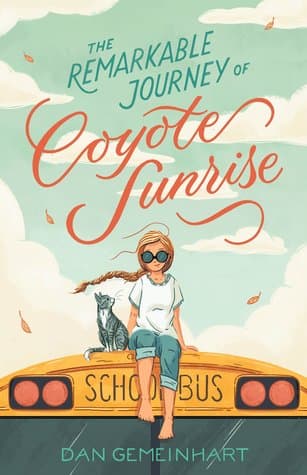
Dan Gemeinhart
4.5

Kate O'Hearn
4.4

Jeanne Birdsall
4.4

Jen Wang
4.4
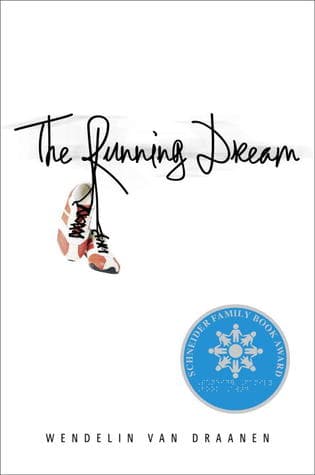
Wendelin Van Draanen
4.3

John Marsden
4.3

Chris Van Allsburg
4.3
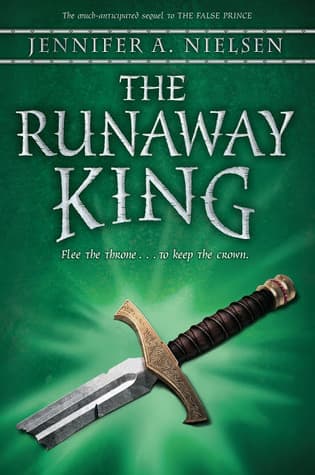
Jennifer A. Nielsen
4.2