BookBrief
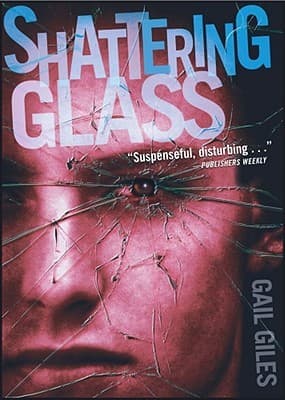
Shattering Glass cover
Archivist's Choice

Shattering Glass

Gail Giles (2003)

Genre

Thriller / Mystery / Young Adult

Reading Time

4-5 hours

Key Themes

See below

Track Your Reading

Sign in to track this book

A charismatic new student transforms a bullied outcast into a prom king, only to unleash a devious side that shatters their social experiment and leads to a chilling, brutal end.

Synopsis

A group of popular high school seniors, led by new student Rob Haynes, decides to turn the school's biggest loser, Simon Glass, into prom king as a twisted social experiment. Simon starts as a clumsy outcast. As Rob and his friends—Young, Bob, and Coop—coach him, Simon's confidence grows, and he shows an unexpected, manipulative side. He quickly gains popularity, surprising Rob, and starts uncovering dark secrets about his 'friends.' The project goes out of control as Simon uses his new power and knowledge to turn against his creators. This leads to a tense confrontation where the group's initial contempt for Simon escalates into a brutal act of violence. The story is a confession from one of Simon's killers, looking back at the events that led to his murder and the disturbing reasons behind their actions.
Reading time
4-5 hours
Difficulty
Medium
Pacing
Moderate
Mood
Dark, Suspenseful, Disturbing, Psychological
✓ Read this if...
You enjoy psychological thrillers set in high school, exploring themes of bullying, social hierarchy, and the corrupting nature of power.
✗ Skip this if...
You prefer lighthearted stories or are sensitive to dark themes and violence, especially against a vulnerable character.

Plot Summary

The Introduction of Simon Glass and the Arrival of Rob Haynes

The story begins with an unnamed narrator reflecting on the shared guilt over Simon Glass's death. Simon is the typical high school loser: overweight, awkward, and constantly bullied. His life is a cycle of taunts and isolation. This changes with Rob Haynes' arrival, a transfer student who immediately becomes the charismatic, manipulative leader of the senior class. Rob, with his inner circle—the intelligent Young, the charming Bob, and the athletic Coop—watches Simon. Instead of joining the bullying, Rob suggests an unusual project: to change Simon into a popular student, even a prom king.

The 'Simon Project' Begins

Rob starts the 'Simon Project' with almost military precision. He and his friends begin with a physical makeover for Simon, including new clothes, a haircut, and contact lenses. More importantly, they coach Simon on social skills, confidence, and how to interact. Young offers intellectual advice, Bob teaches him how to talk to girls, and Coop gives athletic tips. Simon, at first confused and resistant, slowly starts to comply, seeing a chance to escape his tormentors and find acceptance. The group's efforts slowly show results, surprising their peers.

Simon's Ascent and Developing Confidence

As the project continues, Simon's change is clear. He starts to dress well, act more confidently, and even develops a sense of humor. Girls who once ignored him now pay attention, and he navigates social situations with surprising ease. The group, especially Rob, takes credit for this success. However, Simon's new confidence also brings out a hidden side: he starts to state his own opinions, sometimes challenging Rob's authority, and shows flashes of a calculating and manipulative streak. The lines between their 'project' and Simon's true self begin to blur.

The Introduction of the Girls: Gwen and Sarah

Simon's growing popularity includes romantic interests. He starts dating Gwen, a sweet and seemingly innocent girl, which Rob's group initially approves of. However, Simon also connects with Sarah, a more independent and observant girl who is skeptical of Simon's sudden change and the motives behind it. The romantic entanglements add another layer to the 'Simon Project.' Gwen represents the superficial acceptance Simon now enjoys, while Sarah's questioning nature hints at a deeper understanding of the power dynamics. Simon's interactions with both girls further highlight his evolving personality and increasing self-assurance.

Rob's Growing Unease and Simon's Manipulation

Rob, who first enjoyed his control over Simon, begins to feel uneasy as Simon's transformation takes on a life of its own. Simon no longer passively accepts instructions; he starts making his own decisions, often subtly undermining Rob's plans or using his new social standing to his advantage. He shows surprising cunning, using information he gathers to manipulate situations and people, including members of Rob's own group. Rob realizes that his 'creation' is no longer a puppet but a formidable rival. The power dynamics shift, and the 'Simon Project' changes from an experiment into a dangerous game of wills, with Simon proving to be a surprisingly skilled player.

The Revelation of Dark Secrets

As Simon's confidence and influence grow, he starts to uncover dark secrets about Rob and his inner circle. He learns about Rob's past manipulative actions, Young's academic dishonesty, Bob's philandering, and Coop's hidden vulnerabilities. Simon uses this information as leverage, subtly blackmailing them and asserting his dominance. These revelations are not accidental; Simon deliberately seeks out and exploits these weaknesses, showing a keen understanding of human nature and a ruthless ambition. The group, once in control of Simon's fate, now finds itself vulnerable to his schemes, trapped by the very person they helped create. The stakes of their game escalate dramatically.

The Prom King Campaign

The 'Simon Project' peaks with the Prom King campaign. Rob, initially wanting Simon to simply be a contender, finds himself in a direct rivalry as Simon actively pursues the title. Simon mobilizes his growing base of supporters, using his new charisma and the secrets he holds over others. Rob, feeling his control slipping, tries to counteract Simon's efforts, but Simon's strategies are increasingly effective and ruthless. The campaign becomes a battleground for social power, with Simon proving to be a strong opponent. The stress and tension within the group escalate, pushing their friendships and loyalties to their breaking points as Simon threatens to expose their secrets.

The Confrontation and Simon's Downfall

The night of the prom brings the simmering tensions to a head. Rob and his friends, cornered by Simon's blackmail and fearing exposure, confront him. The confrontation is tense and desperate, fueled by anger, fear, and a sense of betrayal. Simon, confident in his power, pushes them too far, revealing the full extent of his manipulative schemes and how he used each of them. In a moment of panic and rage, the group—each for their own reasons—participates in Simon's death. The exact details are obscured by the narrator's guilt and fragmented memories, but the outcome is clear: Simon is dead, and the group is forever bound by their shared culpability.

The Aftermath and Investigation

After Simon's death, the police investigate. The group of friends, now shattered by their actions, struggles with guilt, fear, and the immense pressure of keeping their secret. The narrator describes the fragmented memories and the collective effort to create a plausible, false story for the authorities. The investigation forces each member to confront their individual role in Simon's demise and the moral compromises they made throughout the 'Simon Project.' The once close-knit group begins to fracture under the strain, as paranoia and suspicion creep in. The weight of their secret becomes a heavy burden, forever altering their lives.

The Narrator's Confession and Reflection

The story ends with the narrator's full confession, revealing himself to be Young. He recounts the events leading up to Simon's death, piecing together the fragmented memories and individual perspectives. Young explains that while they all hated Simon for different reasons, their collective resentment and fear ultimately led to his demise. He reflects on the irony of their 'project' changing a bullied outcast into a manipulative tyrant, and how their desire for control ultimately consumed them. Young's confession is not just an admission of guilt but a deeper look at human nature, power dynamics, and the blurred lines between victim and perpetrator.

Principal Figures

Simon Glass

The Central Figure/Antagonist

From a powerless victim, Simon evolves into a powerful manipulator, ultimately becoming a victim of his own success and the resentment he cultivated.

Rob Haynes

The Protagonist/Antagonist

Starts as an unchallenged leader, then loses control of his creation, leading to his moral compromise and shared guilt.

Young

The Supporting/Narrator

Begins as a detached observer and intellectual participant, becoming a guilt-ridden confessor burdened by the weight of collective responsibility.

Bob

The Supporting

Starts as a confident socialite, then becomes a pawn in Simon's game, leading to his complicity in the tragedy.

Coop

The Supporting

Begins as a well-meaning participant, then becomes increasingly uncomfortable with the project's direction, but ultimately succumbs to group pressure and complicity.

Gwen

The Supporting

Starts as an object of affection, then becomes a symbol of Simon's social success, oblivious to her role in his manipulative schemes.

Sarah

The Supporting

Begins as an insightful outsider, then becomes a potential confidante for Simon, ultimately a witness to the unraveling events.

Themes & Insights

The Corrupting Nature of Power

The novel shows how power can corrupt individuals and relationships. Rob's initial desire for control over Simon quickly turns into a desperate attempt to maintain dominance, leading him to morally ambiguous actions. Simon, once powerless, becomes addicted to his new influence, changing from a victim into a ruthless manipulator. This theme appears as Simon uses secrets to blackmail his 'creators' and as Rob's group takes extreme measures to regain control, ending in Simon's death. The narrative shows that power, whether given or taken, can bring out the darkest parts of human nature.

We created a monster, but the monster was just a reflection of the power we gave him, and the power he took from us.

Young (narrator)

Identity and Transformation

The story's core is Simon Glass's transformation, both external and internal. Initially, his identity is defined by his outcast status. The 'Simon Project' forces a physical and social makeover, but this external change unleashes a dormant, more assertive, and manipulative personality within him. The novel questions whether Simon's 'new' self is a genuine evolution or a performance, and whether the group truly changed him or just provided an outlet for his hidden desires. His journey highlights how identity can change and how circumstances can reveal unexpected parts of a person.

He wasn't just wearing new clothes; he was wearing a new skin, and inside, something else entirely was growing.

Young (narrator)

Bullying and Its Consequences

The novel starts with Simon as a victim of constant bullying, showing its psychological toll. However, it changes the usual narrative by showing how a bullied person, when given power, can become a bully themselves. Simon's past torment fuels his desire for revenge and control, leading him to inflict emotional and psychological pain on his former 'friends.' This theme explores the cyclical nature of abuse and how unresolved trauma can appear in destructive ways. The ultimate consequence is Simon's death, a brutal result of escalating power struggles rooted in initial acts of cruelty.

We hated him for different reasons, but maybe, in the end, we just hated the reflection of our own cruelty he showed us.

Young (narrator)

Moral Ambiguity and Collective Guilt

A central theme is the moral ambiguity of the characters and the idea of collective guilt. While Rob starts the project, each member of his group—Young, Bob, and Coop—helps with Simon's transformation and ultimately his death. The narrator, Young, struggles to assign individual blame, acknowledging that each person had a different reason for hating Simon and participating in his downfall. The novel avoids clear heroes and villains, instead presenting a complex mix of motivations, fears, and compromises that lead to a tragic outcome. The shared responsibility for Simon's death haunts them all, blurring the lines of individual blame.

We didn't realize it until the day we killed him. Each of us, in our own way, held a piece of the blade.

Young (narrator)

Plot Devices & Literary Techniques

First-Person Retrospective Narration

The story is told by one of the perpetrators, Young, looking back on the events.

The entire novel is narrated in the first person by Young, one of Rob's friends, as he recounts the events leading up to Simon Glass's death. This device creates a sense of immediate intimacy and allows the reader direct access to the narrator's conflicted thoughts and guilt. The retrospective nature means the tragic outcome is known from the beginning, building suspense not around 'what happened' but 'how and why it happened.' Young's intellectual and analytical nature shapes the narrative, providing a detailed, albeit biased, examination of the group's motivations and the psychological nuances of their actions, while also highlighting his struggle for understanding and absolution.

The 'Pygmalion' Motif

A group attempts to transform an 'unworthy' individual into a socially acceptable one.

The central premise of the 'Simon Project' directly mirrors the classical Pygmalion myth, where a creator falls in love with their creation, or, in this case, a group attempts to transform an 'unworthy' individual (Simon) into a socially desirable one (a potential Prom King). This motif serves as a framework for exploring themes of identity, power, and control. It highlights the dangers of trying to play 'God' with another person's life, as the creation (Simon) ultimately develops a will of his own, surpassing and then turning on his creators. The motif underscores the ironic and tragic outcome of their social experiment.

Unreliable Narrator

The narrator's account is colored by guilt, self-preservation, and a desire to understand.

As Young recounts the events surrounding Simon's death, his narration is inherently unreliable. While he strives for honesty, his perspective is filtered through his own guilt, his attempt to rationalize their collective actions, and his desire to understand what truly happened. He admits to fragmented memories and the difficulty of piecing together the full truth, especially concerning the exact moment of Simon's death. This unreliability forces the reader to critically evaluate the information presented, question motivations, and piece together the narrative, adding layers of psychological complexity and suspense to the mystery.

Escalating Stakes

The 'Simon Project' gradually transforms from a harmless experiment into a dangerous power struggle.

The plot is carefully constructed with escalating stakes. What begins as a seemingly innocuous social experiment—a 'project' to make Simon Glass popular—slowly and subtly morphs into a high-stakes game of manipulation and power. Each step in Simon's transformation, each secret he uncovers, and each act of defiance he commits raises the tension. The group's initial amusement turns to unease, then fear, as Simon gains leverage over them. This gradual escalation, where seemingly small actions lead to increasingly dire consequences, effectively builds suspense and demonstrates how easily good intentions can unravel into tragic outcomes.

Critical analysis

Notable Quotes

The thing about glass is that it's always breakable. Even when it seems strong, a single flaw, a single point of pressure, can shatter the whole thing.

A thematic reflection on the fragility of reputations and lives, particularly that of the main character, Simon.

We were all part of it, whether we wanted to be or not. Every single one of us had a piece of the blame.

Reflecting on the collective responsibility of the group in the events leading to Simon's downfall.

Sometimes the quietest people are the ones with the loudest thoughts.

A general observation about Simon's character and his internal world, which is largely hidden from others.

It’s easy to judge someone when you don’t know their story. It’s a lot harder when you do.

A realization by one of the characters about the complexity of Simon's situation and motivations.

We built him up, and we tore him down. We played God, and we destroyed our own creation.

A direct acknowledgment of the group's role in both elevating and ultimately destroying Simon.

The truth is like a broken mirror. You can pick up the pieces, but you’ll never see the whole picture again.

A metaphorical statement about the fragmented nature of the truth surrounding Simon's death.

We wanted a king, but we got a martyr.

A concise summary of the group's initial intent to elevate Simon contrasted with the tragic outcome.

Fear can make you do things you never thought you were capable of.

Explaining some of the characters' actions and complicity in the face of escalating events.

The hardest part wasn’t what we did, but what we didn’t do. The things we saw and said nothing about.

Highlighting the sin of omission and the silent complicity of the bystanders.

Everyone has a breaking point. Some just hide it better than others.

A reflection on Simon's internal struggles and the hidden pressures he faced.

We thought we were teaching him how to live, but maybe we were just teaching him how to disappear.

A poignant realization about the unintended and destructive consequences of their 'project' with Simon.

A secret is only a secret if no one ever finds out. Once it's out, it's just a story.

Pondering the nature of secrets and their eventual exposure as the mystery unfolds.

The line between a hero and a victim is often just a matter of perspective, and who gets to tell the story.

Questioning the narrative constructed around Simon and the power dynamics of storytelling.

Quiz

Test Your Knowledge

Ready to see how well you understood this book? Take our interactive quiz with 10 questions.

10
Questions
~5
Minutes
?
Best Score

Key Questions (FAQ)

The book centers on a group of high school seniors led by the charismatic new student, Rob Haynes, who decide to transform the school's biggest loser, Simon Glass, into a popular figure, specifically a potential prom king. This social experiment, however, spirals out of control as Simon gains unexpected power and the group's intentions become increasingly sinister.

About the author






