“In America, you can be anyone you want to be. In China, you are who you are born to be.”
— Lulu and May debate the opportunities in their new country versus their homeland.

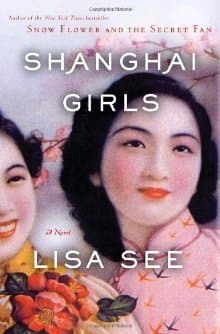
Lisa See (2009)
Genre
Historical Fiction
Reading Time
412 min
Key Themes
See below
Sign in to track this book
From 1930s Shanghai's pre-war glamour to the harsh realities of forced marriage, wartime escape, and immigrant life in Los Angeles, two sisters navigate a world intent on tearing them apart while clinging to the bond that defines their survival.
Pearl and May Chin, two modern sisters, enjoy a privileged life in 1937 Shanghai, known as the 'Paris of Asia.' Their father, Old Man Chin, owns a successful rickshaw business, allowing the girls to model and live carefree. Pearl, the elder and strong-willed, is a Dragon; May, the younger and more docile, is a Sheep. Their lives shatter when their father reveals he gambled away their wealth and, to repay debts, arranged for them to marry two Chinese-American brothers from Los Angeles, Sam and Vern. The sisters are devastated, being sold into a life they never imagined, far from Shanghai.
Before the arranged marriages can be processed, the Japanese begin their invasion of Shanghai. Bombs fall on the city, destroying homes and lives. Amidst the chaos, Pearl discovers she is pregnant by her secret lover, Z.G., an artist. Fearing for their lives and forced to leave their world, the Chin family, including Pearl, May, their parents, and the newly arrived husbands, Sam and Vern, begin a harrowing escape from Shanghai. They join a desperate exodus of refugees, witnessing horrors and facing constant danger from Japanese soldiers, a stark contrast to their former luxury.
The journey inland is dangerous. The family travels by foot, boat, and crowded trains, dodging Japanese soldiers and surviving on meager rations. They witness widespread suffering, death, and societal breakdown. Pearl hides her pregnancy, fearing shame and her new husband Sam's judgment. During this trek, their parents succumb to the harsh conditions and violence, leaving Pearl and May to navigate dangers mostly alone, accompanied by Sam and Vern. The sisters mature quickly, confronting war's brutal realities and loss, testing their bond under extreme stress.
After months of travel, the group reaches Hong Kong, a temporary haven. Pearl gives birth to a daughter, Joy, in secret. The baby is clearly Z.G.'s, not Sam's, and Pearl knows that raising a child born out of wedlock would bring immense shame and endanger her marriage and future in America. With a heavy heart and her family's encouragement, Pearl makes the agonizing decision to give Joy to her aunt and uncle, who cannot have children, ensuring Joy a stable home and a more secure future. This secret will haunt her for decades.
The sisters, along with Sam and Vern, secure passage to America. Their journey ends at Angel Island Immigration Station in San Francisco Bay, a processing center for Chinese immigrants. Here, they face scrutiny, questioning, and discrimination from officials. They must memorize elaborate 'paper son' stories to prove identities and familial connections, a practice to circumvent discriminatory immigration laws. The sisters, especially Pearl, struggle with the dehumanizing process and the contrast between their expectations of America and the harsh reality of their entry.
Upon entering the United States, Pearl and May settle in Los Angeles Chinatown. They move in with their husbands, Sam and Vern, and the extended family. The sisters quickly discover that American life, particularly within Chinatown, is far from what they imagined. They work in their husbands' laundry business, facing long hours and traditional Chinese-American customs. Pearl struggles to connect with Sam, feeling the weight of her secret about Joy, while May, more adaptable, slowly begins to find her footing, though she also feels her new life's limitations.
May's beauty and poise, like their Shanghai modeling days, attract a Hollywood agent. She quickly finds work as a model and actress, achieving fame and financial independence that Pearl, still working in the laundry and burdened by her past, envies. May's success broadens her world beyond Chinatown, introducing her to a modern American lifestyle and attracting non-Chinese men, highlighting the growing differences between the sisters' paths. This new success and their differing adaptations to America strain their complex relationship, leading to resentment and jealousy.
As the McCarthy era's 'Red Scare' grips America, the Chinese-American community, already under scrutiny, becomes a target. Pearl and May, due to their past in China and association with politically active individuals like Z.G., become entangled in the anti-Communist hysteria. Pearl lives in constant fear that her secret past with Z.G. and the truth about Joy will be exposed, jeopardizing her family and immigration status. The paranoia forces them to be cautious, and the threat of deportation looms over their lives, adding tension to Pearl's strained marriage with Sam.
Years later, Pearl's aunt and uncle, struggling in China, send Joy to America, believing Pearl to be her mother. Joy's arrival in Los Angeles, now a young woman, disrupts Pearl's carefully constructed life. The truth about Joy's parentage is finally revealed to Sam, who is devastated and angry at Pearl's deception. This confrontation forces Pearl to reckon with her past choices and the sacrifices she made. Joy, too, grapples with the truth of her origins and her complicated relationship with both Pearl and May, who has also developed a bond with Joy.
After the revelation of Joy's parentage, the Chin family is fractured but slowly begins to heal. Pearl and Sam work to repair their marriage, acknowledging the pressure and circumstances that led to Pearl's secret. Joy, initially resentful, starts to understand the impossible choices her birth mother faced. May, who had also developed a close relationship with Joy, finds her own role in the family shifting. The sisters, despite past resentments and betrayals, begin to find a path toward reconciliation, understanding that their shared history and love for Joy bind them together more strongly than individual pains.
As years pass, Pearl reflects on her life, from Shanghai's glamour to immigration's hardships and motherhood's complexities. She comes to terms with her sacrifices, particularly giving up Joy, understanding it was a choice born of love and necessity in a world with few alternatives. The family, including Sam, May, and Joy, slowly builds a new understanding and acceptance. Pearl finds peace and forgiveness, for herself and for the circumstances that shaped her life, recognizing the strength that allowed her to survive and eventually embrace her daughter fully.
The Protagonist
Pearl transforms from a carefree Shanghai socialite to a resilient survivor, grappling with the consequences of her secret and ultimately finding peace through forgiveness and acceptance of her complex motherhood.
The Protagonist/Supporting
May evolves from a naive, compliant sister to an independent woman who finds her own voice and success, navigating her identity in America while grappling with her sister's secrets.
The Supporting
Sam moves from a traditional, unsuspecting husband to a man who must confront painful truths and ultimately choose forgiveness to preserve his family.
The Supporting
Vern remains a supportive and understanding partner to May, accepting her evolving identity and career choices without significant personal upheaval.
The Supporting
Joy transforms from an innocent, unaware young woman to one who must reconcile with a complex family history and redefine her identity and relationships.
The Mentioned/Supporting
Z.G. remains a static but powerful figure, representing Pearl's lost love and the political turmoil that shaped her life.
The Supporting
Old Man Chin's arc is brief but impactful, as his actions trigger the central conflict of the story before his death during the family's flight from Shanghai.
The Supporting
Mama Chin experiences a tragic arc, losing her comfortable life and eventually her life itself during the family's escape, embodying the suffering of many during wartime.
The novel shows the journey and challenges faced by Chinese immigrants in the mid-20th century. From interrogations at Angel Island to cultural clashes in Los Angeles Chinatown, Pearl and May struggle to reconcile their Chinese heritage with American life. They experience discrimination, pressure to conform, and the negotiation between preserving tradition and embracing modernity. This theme is clear in May's assimilation into Hollywood versus Pearl's adherence to Chinese customs, and their collective fight against the 'paper son' system.
“We were not allowed to forget that we were foreigners, no matter how long we lived here, no matter how much we tried to be American.”
The bond between Pearl and May is central to the story, showing the complexities of sisterly love, rivalry, and interdependence. Despite their different personalities, they rely on each other for survival and emotional support throughout their journey. However, their relationship also includes jealousy, especially when May succeeds in Hollywood, and the secret Pearl keeps about Joy. Ultimately, their sisterhood endures, growing into a deeper understanding and forgiveness forged through shared trauma and love.
“We were two halves of one whole, two sides of the same coin, and neither of us could survive without the other.”
Pearl's decision to give up her daughter, Joy, is the most profound sacrifice in the novel, driven by war, shame, and the desire for her child's survival and a better future. This theme explores the difficult choices women make in crises and the lasting impact of those decisions. It examines motherhood's many facets, including biological ties, adoptive bonds, and the emotional toll of separation. Pearl's internal struggle and eventual reconciliation with Joy highlight a mother's enduring love and the possibility of forgiveness.
“I had given up my child, not because I didn't love her, but because I loved her too much to keep her.”
The story is driven by Pearl's secret about Joy's true parentage. This deception affects her marriage to Sam, her relationship with May, and her own peace of mind. The novel explores how secrets shape identities and the pressure of maintaining them for decades. The eventual revelation of the truth, though painful, leads to healing and reconciliation, showing that while secrets can protect short-term, honesty is essential for true family connection and understanding.
“A secret is a cage, and I had been living in one for far too long.”
The Japanese invasion of Shanghai and the Sino-Japanese War are the catalysts for the sisters' journey. The novel depicts war's horrors: bombings, refugee crises, violence, starvation, and loss of life. Beyond the immediate conflict, it explores the long-term psychological and emotional scars left on survivors, influencing their decisions and shaping their lives for decades. The war changes Pearl and May's worldview, forcing them to mature quickly and instilling a deep sense of resilience and practicality.
“The war had taken everything from us, but it had also given us a strength we never knew we possessed.”
A historical immigration strategy used by Chinese to enter the U.S.
The 'paper son' system is a crucial historical plot device. Due to the Chinese Exclusion Act, many Chinese immigrants could only enter the U.S. by claiming to be the sons (or, less commonly, daughters) of Chinese-American citizens. Pearl and May, along with their husbands, are forced to memorize elaborate, fabricated family histories and undergo intense interrogation at Angel Island. This device highlights the systemic discrimination faced by Chinese immigrants and the lengths they had to go to for a chance at a new life in America, adding immense tension and realism to their immigration experience.
A hidden birth that creates central conflict and drives much of the narrative.
Pearl's secret pregnancy and the subsequent decision to give up her daughter, Joy, is the primary plot device driving the personal drama of the story. This secret creates internal conflict for Pearl, strains her marriage to Sam, fuels May's resentment, and ultimately serves as the catalyst for the climactic family confrontation. The eventual arrival of Joy and the revelation of her true parentage force all characters to confront their pasts and redefine their relationships, making it a powerful device for exploring themes of sacrifice, identity, and forgiveness.
Juxtaposition of the sisters' past luxurious life with their difficult immigrant experience.
The stark contrast between Pearl and May's opulent, carefree lives as models in 1937 Shanghai – the 'Paris of Asia' – and their harsh realities as impoverished, discriminated immigrants in Los Angeles Chinatown serves as a powerful plot device. This juxtaposition underscores the profound loss they experience and highlights the immense sacrifices made for survival and a new life. It emphasizes the theme of the immigrant experience and the disillusionment that can accompany the 'American Dream,' constantly reminding the reader of what the sisters left behind and how much they endured.
Historical political paranoia that threatens the characters' stability.
The McCarthy-era Red Scare in 1950s America functions as a significant external plot device. It creates a pervasive atmosphere of fear and suspicion within the Chinese-American community. For Pearl, it intensifies her anxiety about Z.G.'s communist ties and the potential exposure of her past, which could lead to deportation for her entire family. This historical context adds a layer of political tension, demonstrating how broader societal anxieties can directly impact the personal lives and security of immigrant communities, further highlighting their vulnerability and precarious status.
“In America, you can be anyone you want to be. In China, you are who you are born to be.”
— Lulu and May debate the opportunities in their new country versus their homeland.
“Home is not a place, it's a feeling. And that feeling is with you wherever you go.”
— May reflects on her changing sense of belonging as she adjusts to life in America.
“What is important is not the face you are born with, but the face you make for yourself.”
— Auntie encourages Lulu and May to take control of their destinies despite their arranged marriages.
“We were Shanghai girls, beautiful and modern, but we were also Chinese, and that meant we carried our history with us.”
— May contemplates her dual identity and the weight of her heritage.
“Sometimes the greatest love comes from the most unexpected places, and sometimes the greatest sacrifices are made for those you never expected to love.”
— May reflects on her complex relationship with Sam and the compromises she makes.
“The past is like a ghost. It follows you everywhere, no matter how far you run.”
— Lulu struggles with the secrets and traumas from her past in Shanghai.
“In China, a daughter is a disappointment. In America, she is a promise.”
— May observes the different cultural perceptions of female children.
“We were sisters, bound by blood, by secrets, and by a love that transcended everything else.”
— May describes the unbreakable bond between her and Lulu.
“Fear is a powerful thing. It can make you do things you never thought you would.”
— May recalls the desperation and difficult choices made during wartime Shanghai.
“To be American, we had to forget who we were, but to be Chinese, we couldn't forget anything.”
— Lulu and May grapple with assimilation and the preservation of their cultural identity.
“Sometimes the truth is too painful to bear, so we create our own stories to survive.”
— May reflects on the lies and secrets maintained to protect loved ones.
“Life is not about waiting for the storms to pass. It's about learning to dance in the rain.”
— May's philosophical outlook on overcoming hardship and embracing life's challenges.
“We were two halves of a whole, always searching for each other, even when we were together.”
— May describes the deep, almost symbiotic connection she shares with Lulu.
“A woman's beauty is her power, but her heart is her true strength.”
— May considers the superficiality of physical appearance versus inner character.
Ready to see how well you understood this book? Take our interactive quiz with 10 questions.

Lisa See is an American writer and novelist. Her books include On Gold Mountain: The One-Hundred-Year Odyssey of My Chinese-American Family (1995), a detailed account of See's family history, and the novels Flower Net (1997), The Interior (1999), Dragon Bones (2003), Snow Flower and the Secret Fan (2005), Peony in Love (2007) and Shanghai Girls (2009), which made it to the 2010 New York Times bestseller list. Both Shanghai Girls and Snow Flower and the Secret Fan received honorable mentions from the Asian/Pacific American Awards for Literature.