“A man has to be what he is, Joey. You can't run away from it. A man has to be what he is.”
— Shane explaining his nature to Joey near the end.

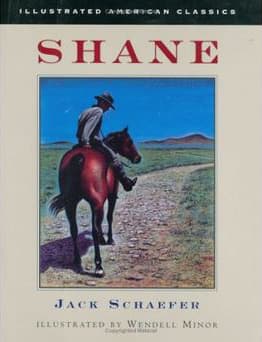
Jack Schaefer (1920)
Genre
Historical Fiction / Young Adult
Reading Time
180 min
Key Themes
See below
Sign in to track this book
A mysterious, quiet gunslinger rides into a Wyoming valley in 1889, becoming a hero through the eyes of a young boy as he helps homesteaders battle cattle ranchers for their land.
One summer evening in 1889, a lone horseman named Shane rides into a secluded Wyoming valley and approaches Joe Starrett's farm. Young Bob Starrett, the narrator, is immediately taken by Shane's look, his dark, quiet intensity, and the powerful gun he carries. Shane asks for water and then for work. Joe, a homesteader struggling against the powerful cattle baron Rufus Ryker, is careful at first but senses honesty in Shane. He offers Shane a job. Shane, despite his fine clothes and clear skill with a gun, accepts and quickly shows he is good at farm work. His presence changes the Starrett home and the small community.
Shane quickly becomes very useful on the Starrett farm, working hard and skillfully. He forms a strong bond with Bob, teaching him about the wilderness and how to use a gun, though he discourages violence. Joe Starrett comes to trust Shane deeply, seeing his strength and honesty. Marian Starrett, Joe's wife, is also drawn to Shane's quiet charm and the unspoken sadness in his eyes, but she stays loyal to Joe. However, the peace is soon broken by Ryker's men, especially the aggressive Chris Fletcher, who try to scare the homesteaders. Shane's past as a gunfighter is hinted at, and his presence quietly challenges Ryker's power.
Tensions grow when Joe Starrett and Shane go to town for supplies. At Grafton's general store, they meet Chris Fletcher and several of Ryker's cowhands. Fletcher, drunk and wanting to show Ryker's power, insults Shane and tries to start a fight. Joe tries to calm things, but Fletcher pushes too far. Shane, at first not wanting to use violence, is forced to defend himself and Joe. He disarms Fletcher with surprising speed and skill, then stops the other cowhands without killing them. This shows his great skill as a gunfighter. This event strengthens Shane's reputation and further angers Ryker against the homesteaders, especially the Starretts.
After the fight, Shane becomes a symbol of hope and strength for the homesteaders. He helps Joe and the other settlers with their daily problems, offering advice and practical help. His calm manner and quiet confidence inspire them. Joe Starrett's friendship with Shane deepens, becoming a strong bond based on respect and shared values. Marian, still worried about Shane's past and the danger he brings, sees his goodness and the protection he offers her family. Bob continues to look up to Shane, learning important lessons about courage, responsibility, and human nature. The valley, though still threatened by Ryker, experiences a brief time of unity and resolve.
Rufus Ryker, shamed by Shane's actions and frustrated by the homesteaders' new strength, works harder to force them out. He uses legal threats, intimidation, and finally, violence. He sends his men to bother the settlers, destroy their property, and graze his cattle on their land. The homesteaders, led by Joe Starrett, try to stand firm, but the pressure is huge. Ryker's actions show his ruthless drive to control the whole valley, believing the land belongs to him because he was there first and has more power. The conflict changes from small fights to a more serious struggle for survival and ownership.
Knowing that the homesteaders, especially Joe Starrett, will not give up, Ryker brings in a professional gunfighter named Luke Fletcher (often confused with Chris Fletcher in some movies, but the book names a different, more dangerous Fletcher). Fletcher is a cold, calculating killer known for his speed and ruthlessness. His arrival signals a deadly turn in the conflict. He immediately makes his presence known by taunting and provoking the homesteaders, making it clear his goal is to remove anyone who stands in Ryker's way. His presence brings fear to the valley, and the homesteaders know a peaceful solution is no longer possible.
After Fletcher kills Ernie Wright, a homesteader, Joe Starrett knows he can no longer wait. He decides he must confront Ryker and Fletcher, even if it means his own death, to protect his family and the other settlers. Shane, seeing Joe's strong will and the growing danger, is conflicted. He knows Joe, despite his courage, is no match for Fletcher. Shane feels a strong responsibility for the Starretts and the peace he has found with them. He also understands that his own past as a gunfighter might be the only way to save Joe and the valley, but it would mean going back to the life he tried to leave.
On the night Joe plans to ride into town, Shane steps in. He knocks Joe unconscious, knowing Joe would not survive the fight. Shane then takes Joe's gun and rides into town alone, determined to face Ryker and Fletcher himself. He understands this is his fate, the final act of protection for the family he has come to love. At Grafton's saloon, Shane confronts Ryker and Fletcher. In a quick, brutal gunfight, Shane kills both Fletcher and Ryker, ending the threat to the homesteaders for good. The saloon becomes chaotic, but Shane remains calm, having done his grim duty.
After the gunfight, a wounded Shane leaves the saloon. Bob, who had secretly followed Shane, sees what happened. Shane finds Bob and tells him he must leave. He explains that he is a man of violence, and his presence would only bring more trouble to the valley. He tells Bob to grow up strong and to tell his father there are no more guns in the valley. Despite Bob's pleas for him to stay, Shane, a solitary figure, gets on his horse and rides away into the dawn, disappearing back into the vast, unknown West he came from. He leaves behind a changed valley and a lasting memory in Bob's mind.
With Ryker and Fletcher gone, the valley finally finds peace. The homesteaders, though sad about Shane's departure, can now claim their land and build their lives without fear. Joe Starrett recovers and, with Marian and Bob, continues to work their farm, now with new hope and security. The memory of Shane, the mysterious gunfighter who brought both danger and salvation, stays, especially in Bob's mind. The valley, once a battleground, is now a place of potential and promise, showing the courage of the settlers and the final sacrifice of their quiet protector.
The Protagonist
Shane attempts to shed his violent past and integrate into a peaceful community, but ultimately embraces his gunfighter identity for the sake of those he protects, leading to his inevitable departure.
The Narrator and Supporting
Bob matures significantly through his observations of Shane, gaining a deeper understanding of good and evil, and the sacrifices heroes make.
The Supporting
Joe grows in his resolve to protect his home and community, ultimately accepting Shane's necessary sacrifice.
The Supporting
Marian learns to trust Shane despite his dangerous nature, accepting his role as a protector while understanding the cost of violence.
The Antagonist
Ryker escalates his tactics from intimidation to murder, ultimately leading to his demise at Shane's hand.
The Antagonist
Fletcher arrives to escalate violence for Ryker, leading to his fatal confrontation with Shane.
The Supporting
Chris Fletcher attempts to intimidate Shane, leading to his public humiliation and further fueling Ryker's animosity.
The Supporting
Grafton maintains his business and neutrality, observing the conflict unfold in his establishment.
The novel explores the complex nature of violence, showing that while it can be necessary for justice and protection, it ultimately isolates. Shane is a hero because he masters violence, but this same mastery keeps him from ever truly fitting into a peaceful society. His final act of heroism requires him to leave, showing that the skills needed to defeat evil are often not compatible with building a harmonious community. This theme is clear in Shane's departure, where he tells Bob that a man like him cannot stay, or he will bring more violence.
“A man has to be what he is, Bob. Can't break the mold. I tried it and it didn't work.”
The story shows the conflict between the wild land, represented by cattle barons and their open-range way of life, and the growing civilization of homesteaders who want to settle, farm, and establish law. Joe Starrett and the other farmers represent the future of settled communities, while Ryker and his men represent the end of a lawless era. Shane, a figure from the wild, helps make way for civilization by removing its violent obstacles, but he cannot be part of the settled world himself. The valley changes from a lawless territory to a place with community potential.
“There was no room in this valley for a man who lived by the gun.”
The novel looks at different aspects of masculinity through its male characters. Joe Starrett represents the hardworking, responsible, family-focused man who builds and protects through honest work. Ryker represents ruthless, greedy power. Shane, however, is the most complex: a man of great physical and moral strength, capable of both gentle guidance and deadly violence. He teaches Bob that true strength is not just about fighting, but about integrity, responsibility, and knowing when to act. The story suggests that a 'good man' can take many forms, but it is ultimately about standing for what is right.
“A gun is a tool, Bob, no better or no worse than any other tool... A gun is as good or as bad as the man using it.”
Told through young Bob Starrett's eyes, the novel is a coming-of-age story. Bob's innocent view of the world slowly breaks as he sees the harsh realities of frontier life, the complexities of adult relationships, and the brutality of violence. Shane acts as his mentor, guiding him through these difficult lessons and shaping his understanding of heroism, sacrifice, and life's moral ambiguities. By the end, Bob has gained important insight into the human condition, losing some childhood innocence but gaining a deep understanding of the world.
“I never saw him again. But I never forgot him.”
The story is told from the perspective of young Bob Starrett.
The use of Bob Starrett as a child narrator allows for a unique lens through which to view the classic Western tale. His innocence and awe amplify Shane's mystique and heroism, while also making the violence and moral complexities more impactful as they are filtered through his developing understanding. This perspective adds a layer of nostalgia and myth-making, as the events are recounted from a distance of time, imbuing Shane with legendary status. It also grounds the grander themes in the personal experience of a family, making the stakes feel more intimate and emotional.
Shane's unknown past and sudden appearance drive much of the initial intrigue.
Shane arrives in the valley without explanation, his past only hinted at through his demeanor, skills, and the reactions of others. This device creates immediate intrigue and suspense, as the reader, like Bob, is left to wonder about his true identity and purpose. His mystery allows him to be projected upon as an ideal hero, but also keeps him separate, foreshadowing his eventual departure. The lack of a detailed backstory emphasizes his symbolic role as a force of justice rather than a fully fleshed-out character with a personal history, making him an archetype of the Western hero.
A classic Western trope where the hero faces the villain in a decisive gunfight.
The final confrontation between Shane and Ryker's men (specifically Luke Fletcher) is a quintessential Western showdown. This device serves as the climax of the conflict, providing a definitive resolution to the struggle between good and evil, and civilization and lawlessness. It is a moment of high tension and quick, decisive action that underscores Shane's exceptional skill and unwavering commitment to justice. The showdown is not merely about violence but about the symbolic cleansing of the valley, paving the way for a new, peaceful order, albeit at a great personal cost to the hero.
Shane rides off into the sunset, unable to remain in the peaceful world he created.
Shane's departure at the end of the novel is a powerful symbolic act. It reinforces the theme that a man of violence, even a righteous one, cannot truly belong in the peaceful society he helps to forge. His riding off into the unknown signifies his return to the wilderness, his necessary isolation, and his transformation into a legend. It emphasizes the transient nature of the Western hero and the idea that some sacrifices are not just about life, but about one's place in the world. This device leaves a lasting impression of bittersweet heroism and the enduring power of myth.
“A man has to be what he is, Joey. You can't run away from it. A man has to be what he is.”
— Shane explaining his nature to Joey near the end.
“There was a sureness in him, a quiet sureness that was in the way he stood and in the way he moved.”
— Joey's early observation of Shane's demeanor.
“He was the past come alive, a man from a time when men were simpler and more direct.”
— Joey reflecting on Shane's connection to an older way of life.
“Right and wrong. You got to pick a side, Bob, and you got to stand on it.”
— Joe Starrett discussing the conflict with Fletcher.
“There are some things a man can't ride around.”
— Shane's grim realization about the inevitability of the conflict.
“He rode into our valley in the summer of '89.”
— The iconic opening line of the novel, setting the scene.
“A gun is a tool, Marian; no better or no worse than any other tool: an axe, a shovel, or anything. A gun is as good or as bad as the man using it.”
— Shane explaining the nature of weapons to Marian Starrett.
“It was as if he had never been a part of our valley, as if he had only passed through, leaving a legend behind him.”
— Joey's final thoughts on Shane's departure.
“He had a way of looking at you, straight and steady, that made you feel he knew what you were thinking.”
— Joey describing Shane's perceptive gaze.
“A man is only as good as his word, Bob.”
— Joe Starrett emphasizing the importance of integrity.
“He belonged to the wild, to the wind and the stars, to the freedom of the open range.”
— Joey's understanding of Shane's inherent nature and origins.
“There are some things a man has to do alone.”
— Shane preparing for his final confrontation.
“It was a fight, a real fight, and it made a man of me just to watch it.”
— Joey's profound experience witnessing the saloon brawl.
“He was like a hawk, poised and ready, a dangerous beauty.”
— Joey's vivid description of Shane's appearance and readiness for action.
Ready to see how well you understood this book? Take our interactive quiz with 10 questions.
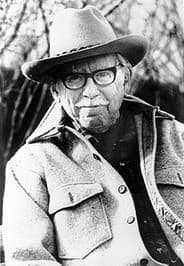
Biography coming soon.







