
Biography coming soon.

Madeleine Roux (2020)
Genre
Fantasy
Reading Time
12 Minutes
Key Themes
See below
Sign in to track this book
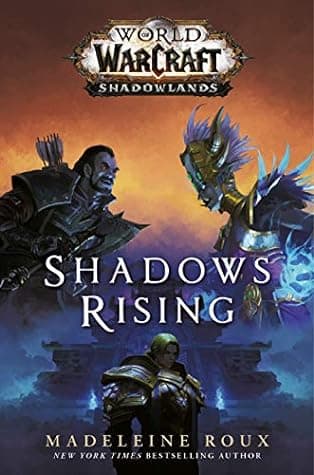
As Sylvanas's treachery shatters the Horde, a young troll shaman and queen must race to save allies and rediscover their strength before a shadowy conspiracy engulfs Azeroth.
Sylvanas Windrunner's betrayal left the Horde and Alliance stunned. Her declaration, 'The Horde is nothing!', broke allegiances and created a power vacuum. King Anduin Wrynn, burdened by leadership, tasks High Exarch Turalyon and Alleria Windrunner with tracking Sylvanas and learning her intentions. The Alliance wants to understand her plans, fearing a greater threat. Meanwhile, the Horde struggles to rebuild its leadership and identity after such a blow, dealing with internal mistrust and outside pressures. This sets the stage for major political shifts.
The Horde's faction leaders decide to abolish the Warchief title, choosing a collective leadership model. This new Horde Council includes Thrall, Lor'themar Theron, Baine Bloodhoof, and First Arcanist Thalyssra. Their goal is to unite the factions and lead the Horde toward a stable future, away from the autocratic rule that led to Sylvanas's destructive reign. However, old distrust and grievances among the races threaten the council's effectiveness, making their first steps tense as they try to forge a new path for the Horde.
During a meeting of the new Horde Council, an assassination attempt is made on Queen Talanji of the Zandalari Trolls, an ally to the Horde. This violence immediately halts the council's work and raises alarms about a hidden enemy. The attack on Talanji, who has significant power, shows the fragility of the new alliance and the persistent threats they face. It forces the Horde leaders to switch focus from internal restructuring to external defense, making them investigate the attack and protect their allies.
Responding to the assassination attempt on Queen Talanji, Thrall and the other Horde leaders turn to the young troll shaman, Zekhan. Still grieving Varok Saurfang, Zekhan is tasked with helping Talanji and investigating the threat against her. This mission tests Zekhan, who is put in a position of greater responsibility despite his youth and recent loss. His journey with Talanji aims to protect the Zandalari Queen and uncover the forces behind the attack, providing intelligence to the struggling Horde Council and solidifying his role in the new Horde leadership.
At the same time, Sylvanas Windrunner plans from the shadows. She sends her loyal lieutenants, Nathanos Blightcaller and Sira Moonwarden, to kill Bwonsamdi, the powerful troll loa of death. This mission aims to destabilize a spiritual and political figure for the trolls and the Horde. Sylvanas's motive appears to be a calculated move to further her agenda, weakening the Zandalari's spiritual protections and potentially disrupting the balance of life and death. Success would have dire consequences for the troll empire and the world.
As Nathanos and Sira pursue their mission, Zekhan and Queen Talanji embark on a journey to save Bwonsamdi. Their quest takes them into spiritual realms and dangerous territories. They must navigate ancient troll magic, confront powerful enemies, and overcome many obstacles to reach Bwonsamdi before Sylvanas's agents succeed. This urgent mission is about protecting Bwonsamdi and safeguarding the Zandalari's spiritual integrity, preventing a shift in the balance of power. Their success is important for strengthening the Horde against the coming darkness and reaffirming their alliances.
The journey to save Bwonsamdi ends in a direct confrontation between Zekhan and Talanji's forces and Sylvanas's agents, Nathanos Blightcaller and Sira Moonwarden. This battle is a struggle for the loa of death and, by extension, the Zandalari and the Horde. Zekhan uses his shamanistic powers, while Talanji uses her royal authority and martial skills. The fight is intense and personal, as both sides are driven by strong beliefs. The outcome will decide if Bwonsamdi survives and if Sylvanas's plot can be stopped, marking a turning point in the story.
Through their courage, Zekhan and Talanji prevent Nathanos and Sira from killing Bwonsamdi. The loa of death is saved, though perhaps not without consequence. Afterward, Bwonsamdi gives cryptic insights into Sylvanas's ultimate goals and the threats she is allied with. His survival is a victory for the Horde, reinforcing the Zandalari's spiritual foundations and offering hope. These revelations, though incomplete, begin to show the terrifying scope of Sylvanas's plans, giving the Horde a clearer, though still daunting, understanding of the darkness they face.
The successful mission to save Bwonsamdi, led by Zekhan and Talanji, greatly impacts the Horde. Their heroism and the preservation of the Zandalari's spiritual protector serve as a rallying point, beginning to mend the fractures caused by Sylvanas's betrayal. The mission instills a renewed sense of purpose and unity among the factions. Zekhan grows, solidifying his role as a capable and respected leader within the Horde. This success shows that despite internal strife and external threats, the Horde can still stand together, rediscovering its strength through shared challenges, preparing for future conflicts.
While the Horde deals with its internal and external threats, Alleria Windrunner and High Exarch Turalyon continue their pursuit of Sylvanas. Their investigation takes them across various lands, as they follow faint trails and piece together information about her movements. They uncover clues that hint at Sylvanas's alliance with forces beyond the mortal realm, suggesting a larger, cosmic conflict. Their journey is dangerous, and Alleria grapples with her sister's betrayal. Their findings, though incomplete, slowly begin to paint a terrifying picture of Sylvanas's true plans and the impending doom she seeks to unleash.
The Supporting
Zekhan evolves from a grieving, uncertain youth into a respected and capable leader within the Horde, finding his own strength and purpose.
The Supporting
Talanji strengthens her resolve and her alliance with the Horde, solidifying her role as a key leader against emerging threats.
The Supporting
Thrall embraces a new role of collective leadership, moving past his past burdens to guide the Horde towards a more unified future.
The Antagonist
Sylvanas solidifies her role as a primary antagonist, revealing hints of a larger, cosmic plan beyond mortal understanding.
The Supporting
Nathanos continues his unwavering service to Sylvanas, executing her dark will with steadfast devotion and ruthlessness.
The Supporting
Bwonsamdi's survival reinforces his importance to the Zandalari and provides vital, albeit cryptic, information about the larger cosmic threats.
The Supporting
Anduin continues to bear the heavy burden of leadership, relying on his allies to uncover Sylvanas's machinations and protect the Alliance.
The Supporting
Alleria confronts the painful reality of her sister's actions, deepening her resolve to understand and stop Sylvanas.
The Supporting
Turalyon continues to uphold the ideals of the Alliance, using his experience to guide the hunt for Sylvanas and prepare for impending threats.
The Supporting
Sira solidifies her role as a ruthless and unfeeling agent of Sylvanas, fully embracing her undeath and her new purpose.
The novel explores the challenge of the Horde rebuilding its identity after Sylvanas's betrayal. It shows the struggle of various factions to forge a new collective purpose, moving from the Warchief system to a council. This theme appears in characters' internal conflicts and their efforts to overcome historical grievances, finding unity in shared adversity and rediscovering what makes them 'Horde.' It is about finding strength in the collective will and diverse strengths of its members.
““The Horde is nothing!” Sylvanas had declared, but the faces around the council table, grim and determined, proved her wrong. The Horde was many things, and it would endure.”
Grief is explored through Zekhan, who still mourns Varok Saurfang. His mission becomes a way to honor Saurfang's legacy and find meaning in his death. This theme also touches on the Horde's collective grief for its past, and the struggle to move forward while acknowledging sacrifices. It shows how personal loss can fuel a desire for justice and purpose, shaping a character's journey and contributing to the larger narrative of redemption and resilience.
“Saurfang was gone, but his words, his honor, still echoed in Zekhan's heart, a guiding drumbeat in the darkness.”
The book contrasts different forms of leadership: the defunct Warchief system versus the new, collective Horde Council, and King Anduin's burdened but compassionate rule. It examines the responsibilities, pressures, and moral dilemmas faced by leaders in crisis. The narrative questions whether true strength is in individual authority or in the unity and collaboration of diverse voices, especially against an existential threat. This theme is central to the Horde's transformation and the Alliance's strategy.
“The weight of a crown was heavy, but the burden of a people, scattered and uncertain, was heavier still. Anduin felt it in his bones.”
Sylvanas's betrayal drives the plot, and its far-reaching consequences are a central theme. It explores the deep wounds her actions left on both the Horde and the Alliance, affecting individuals like Alleria and the collective psyche of the factions. The narrative shows the distrust, anger, and desire for retribution that betrayal ignites, while also showing efforts to overcome these divisions and forge new alliances. It highlights how one act of betrayal can reshape political landscapes and personal destinies.
“Every step Alleria took in pursuit of her sister was a step through a landscape of shattered trust, a painful reminder of what had been lost.”
Beyond political conflicts, the novel introduces a deeper spiritual and cosmic threat. Sylvanas's target, Bwonsamdi, signifies an attack not just on the Zandalari, but on the fabric of death and spiritual balance. This theme expands the conflict beyond mortal realms, hinting at larger, unseen forces and suggesting Sylvanas's agenda is tied to powers greater than previously imagined. It pushes characters to confront dangers that transcend conventional warfare.
“The whispers of death were growing louder, not just for mortals, but for those who claimed dominion over the departed. Sylvanas sought to unmake the very rules.”
The loa's survival as the central object of conflict.
Bwonsamdi's life, or rather the attempt to end it, serves as a pivotal MacGuffin in the plot. It is the primary objective for Sylvanas's agents (Nathanos and Sira) and the critical mission for the Horde (Zekhan and Talanji). While Bwonsamdi is a character, his survival acts as the driving force behind a significant portion of the narrative, compelling the protagonists into action and directly influencing the immediate stakes. The urgency to save him propels the plot forward, leading to confrontations and revelations, even though the true nature of Sylvanas's ultimate goal lies beyond merely killing the loa.
Zekhan and Talanji's perilous journey to save Bwonsamdi.
The narrative employs a classic quest structure as Zekhan and Talanji embark on a perilous journey to save Bwonsamdi. This device provides a clear objective, a defined path, and a series of challenges that test the protagonists' abilities and resolve. It allows for character development, forging a bond between Zekhan and Talanji, and introduces various obstacles and supporting elements essential to their success. The quest not only drives the immediate plot but also serves as a microcosm of the larger struggle, reflecting the Horde's journey towards rediscovering its strength.
Horde's internal struggles versus Alliance's external hunt.
The novel utilizes parallel storylines to showcase the multifaceted impact of Sylvanas's actions. One storyline focuses on the Horde's internal struggles, the formation of the council, and Zekhan and Talanji's mission. The other follows the Alliance's external hunt for Sylvanas, led by Alleria and Turalyon. This device allows for a broader perspective on the unfolding events, revealing different facets of the overarching conflict and Sylvanas's influence. It builds suspense by showing both sides reacting to and investigating the same central antagonist, slowly converging towards a larger, shared understanding of the threat.
The chaos and maneuvering resulting from Sylvanas's departure.
The power vacuum left by Sylvanas's abandonment of the Warchief title creates a rich ground for political intrigue. This device manifests through the formation of the Horde Council, the distrust among its members, and the assassination attempt on Queen Talanji. It highlights the fragility of alliances and the constant threat of internal and external forces seeking to exploit weakness. The political maneuvering and careful diplomacy required to navigate this new landscape are central to the Horde's subplot, showcasing the challenges of collective leadership and the enduring struggle for stability.
Ready to see how well you understood this book? Take our interactive quiz with 10 questions.
Biography coming soon.







