“Tell me a story, Mariam. A story that will make me forget my pain.”
— Sultan's mother, the Shahrazad, to Mariam, early in the book.

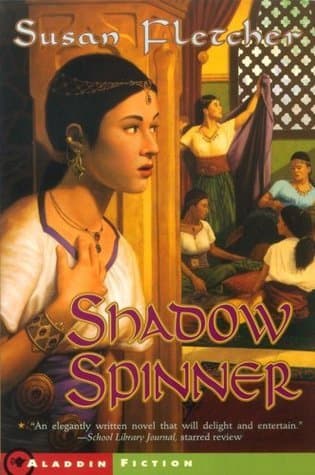
Susan Fletcher (1999)
Genre
Fantasy / Children's / Historical Fiction / Young Adult
Reading Time
270 min
Key Themes
See below
Sign in to track this book
A quick-witted, disabled serving girl must brave the Sultan's wrath and the labyrinthine streets of Persia to find the missing ending to a story, or risk the Shahrazad's life.
Marjan, a young girl with a crippled leg, lives a meager life in Isfahan, Iran, working as a servant for a kind carpet merchant, Master Hamid. Her greatest joy comes from listening to stories, especially those told by her friend, the baker's wife. One day, a royal guard arrives at Master Hamid's shop, demanding Marjan's presence in the Sultan's harem. Terrified and confused, Marjan learns that the Sultan's grandmother, the formidable Shahrazad, wishes to see her. Shahrazad, famous for telling a thousand and one stories to save her life, has fallen into a deep sadness, refusing to eat or speak. Marjan is brought to the forbidden women's quarters, a place of luxury and intrigue, where her simple life changes forever.
Upon entering the harem, Marjan is overwhelmed by its opulence and the watchful eyes of the other women, especially the jealous Pari and the kind Mandana. She is brought before Shahrazad, who remains silent and withdrawn, her once bright spirit dimmed. Shahrazad's attendant, the kind Dunyazad (Shahrazad's sister), explains that Shahrazad is troubled by an unfinished story, one she heard long ago but cannot recall the ending to. This missing ending is the key to her recovery. Shahrazad, recognizing Marjan's love for stories, tasks her with finding the conclusion to the tale, a task that seems impossible for a simple girl like Marjan.
Marjan is given a cryptic clue by Shahrazad: the story involves a boy, a horse, and a mountain. She realizes she must leave the harem, a dangerous undertaking for any woman, especially a servant girl, and venture into the busy, often dangerous streets of Isfahan. With the help of Mandana, who provides her with a disguise and some guidance, Marjan slips out, determined to find a storyteller who might know the tale. Her journey takes her through crowded bazaars, past street performers, and into the heart of the city's oral tradition, where stories are important. She feels the weight of Shahrazad's hope and the danger of her mission.
During her search, Marjan meets Maaz, a street orphan her own age, who initially tries to steal from her but quickly becomes her loyal companion and protector. Maaz, with his knowledge of the city's hidden paths and its people, proves very helpful. Together, they seek out various storytellers. They eventually find the blind storyteller, who recognizes the story Marjan describes but only remembers parts. He tells them of a dervish, a wandering mystic, who might know the full tale and gives them a small, detailed wooden bird, hinting at its importance. The blind storyteller's words are mysterious, urging Marjan to listen not just with her ears, but with her heart.
Back in the harem, Marjan faces increasing hostility from Pari, a jealous concubine who sees Marjan as a threat and constantly tries to get her into trouble with the guards. Pari spreads rumors and tries to undermine Marjan. Meanwhile, the Sultan, growing impatient with his grandmother's continued illness, issues an ultimatum: if Shahrazad does not recover soon, he will take drastic measures. This adds great pressure on Marjan, who feels the urgency of her quest growing. She must find the story's ending quickly, not only for Shahrazad's sake but for her own safety within the dangerous harem.
Following the blind storyteller's lead, Marjan and Maaz search for the dervish. Their quest takes them to the Sultan's elephant house, a place both fascinating and dangerous. There, they finally locate the dervish, a wise and eccentric man. The dervish reveals that he knows the story's ending but will only share it if Marjan can prove herself worthy by solving a riddle or completing a task. He recognizes the wooden bird and explains its connection to the story. He stresses that the true ending is not merely words but understanding. Marjan, though tired, is more determined than ever.
The dervish presents Marjan with riddles and observations, pushing her to think beyond the surface of the story. He speaks of the boy, the horse, and the mountain not just as characters and settings, but as symbols of courage, loyalty, and perseverance. With Maaz's practical insights and Marjan's own growing intuition, she begins to grasp the deeper meaning of the tale. The dervish reveals that the story is not simply about a physical journey but an internal one, about overcoming fear and finding one's own voice. He provides the final pieces of the narrative, explaining the boy's choice and the wisdom of the horse.
Armed with the complete story, Marjan returns to the harem, feeling hopeful. However, Pari, who has been watching her every move, seizes the opportunity to sabotage her. As Marjan prepares to tell Shahrazad the ending, Pari, driven by envy, accuses Marjan of theft, claiming she stole the wooden bird. The guards are summoned, and despite Marjan's protests, she is thrown into the dungeon, her mission seemingly thwarted at the last moment. Her hopes of saving Shahrazad and herself are shattered, and she fears for Maaz's safety as well.
In the dungeon, Marjan despairs. However, Dunyazad, Shahrazad's loyal sister, believes in Marjan's innocence and her mission. She confronts Pari and gathers evidence to clear Marjan's name, including testimony from Mandana. Dunyazad then bravely approaches the Sultan, explaining the true situation and vouching for Marjan. The Sultan, a just but stern ruler, agrees to hear Marjan's side of the story. He orders her release from the dungeon, bringing her before him and Shahrazad for a final judgment, where Marjan must prove her worth and reveal the story's ending.
Before the Sultan, Shahrazad, and the entire harem, Marjan, still weak from her ordeal but resolute, begins to tell the complete story. She weaves the tale of the boy, the horse, and the mountain with newfound confidence, incorporating the ending she learned from the dervish. As she speaks, Shahrazad's eyes begin to clear, and a flicker of her old spirit returns. The story, now complete, resonates deeply with Shahrazad, awakening her from her melancholy. The Sultan is moved by Marjan's courage and the power of the narrative. Shahrazad, restored, thanks Marjan, granting her freedom and a place in her household as a storyteller.
The Protagonist
Marjan transforms from a fearful, ordinary servant girl into a brave and accomplished storyteller, finding her voice and purpose.
The Supporting
She is restored from a state of deep melancholy and silence by the completion of a cherished story, regaining her spirit.
The Supporting
He finds a loyal friend and a sense of purpose by helping Marjan, moving from solitary survival to companionship.
The Supporting
She maintains her unwavering loyalty and compassion, actively working to protect Marjan and help her fulfill her mission.
The Antagonist
She remains a static antagonist, driven by jealousy and ultimately failing in her attempts to sabotage Marjan.
The Supporting
He serves as a catalyst for Marjan's understanding, imparting wisdom that completes her quest.
The Supporting
He provides early, essential guidance and a symbolic object, setting Marjan on the right path.
The Supporting
He moves from impatient concern to understanding and appreciation for Marjan's efforts, ultimately delivering justice.
The Supporting
She provides a crucial act of kindness and assistance to Marjan, enabling her quest to begin outside the harem.
The main theme of 'Shadow Spinner' is the power of stories to heal, connect, and even save lives. Shahrazad's initial tales saved her from execution, and the missing ending of a story is what causes her deep sadness. Marjan's quest is driven by the need to complete a narrative, and its successful conclusion restores Shahrazad's spirit. The book shows that stories are not just entertainment but hold deep emotional and psychological weight, providing comfort, meaning, and a way to understanding.
“A story is not just a bunch of words. It's a living thing. It breathes. It grows. And sometimes, it needs a hand to help it grow.”
Marjan's journey is one of self-discovery. Initially, she is a timid, crippled orphan, defined by her physical limitation and humble status. Through her dangerous quest, she uncovers her inner strength, courage, and talent for storytelling. She learns to trust her intuition and finds her voice, changing from a passive listener into an active participant and creator of narratives. Her physical journey to find the story's ending runs parallel to her internal journey to define who she is beyond her circumstances.
“The story you seek is within you, child. You just have to listen.”
Marjan faces many obstacles and dangers throughout the book: the rules of the harem, the dangers of the city streets, the threat of the Sultan's anger, and the malice of Pari. Despite her physical disability and her fear, she consistently chooses courage, driven by her loyalty to Shahrazad and her belief in the power of stories. Her journey shows that bravery is not the absence of fear, but the willingness to act despite it, often found in the most unexpected individuals.
“A crippled leg can't stop a determined heart.”
Friendship and loyalty are important to Marjan's success. Maaz, a street boy, becomes her steadfast companion and protector, guiding her through the city and offering unwavering support. Dunyazad, Shahrazad's sister, shows fierce loyalty to both her sister and Marjan, speaking up for Marjan when she is imprisoned. These relationships highlight the importance of human connection and mutual support in overcoming challenges, providing strength and comfort in a world full of intrigue and danger.
“I will not let them harm you, Marjan. You are my friend.”
A narrative device that drives the entire plot and symbolizes Shahrazad's psychological state.
The unfinished story is the central plot device. Its incompleteness mirrors Shahrazad's own broken spirit and melancholy. Marjan's quest to find its ending provides the narrative's structure and suspense. The story itself, about a boy, a horse, and a mountain, is a metaphor for courage and perseverance, and its resolution brings healing. This device emphasizes the profound impact stories have on human well-being and the need for closure, both narratively and psychologically.
A symbolic object that serves as a clue and represents the story's deeper meaning.
The small, intricate wooden bird given to Marjan by the Blind Storyteller acts as a tangible clue, leading her to the Dervish. Beyond its function as a plot device, it symbolizes the delicate and intricate nature of stories, and the hidden wisdom they contain. The dervish recognizes its significance, hinting that it represents a key element of the story, linking the physical quest with the spiritual understanding required to complete the tale.
A contrasting setting that highlights Marjan's journey and growth.
The stark contrast between the opulent, restrictive, and dangerous world of the Sultan's harem and the bustling, vibrant, yet equally perilous streets of Isfahan serves as a significant plot device. The harem represents confinement and intrigue, while the city offers freedom, knowledge, and diverse encounters. Marjan's movement between these two worlds underscores her journey of self-discovery, where she gains agency and understanding outside the gilded cage of royal life. It highlights the different forms of danger and opportunity present in her world.
A physical trait that symbolizes vulnerability and eventual strength.
Marjan's crippled leg is a constant physical challenge and a symbol of her initial vulnerability and low status. It makes her journey through the city more difficult and marks her as different. However, it also highlights her resilience and determination. The fact that she, a physically challenged girl, is chosen for such a crucial mission underscores the idea that true strength comes from within, not from physical perfection. Her leg ultimately becomes a part of her unique identity, not a debilitating flaw.
“Tell me a story, Mariam. A story that will make me forget my pain.”
— Sultan's mother, the Shahrazad, to Mariam, early in the book.
“A story is like a spider's web, Mariam. Delicate, but strong enough to catch a king.”
— Mariam's grandmother giving advice about storytelling.
“To truly know a story, you must live it.”
— Mariam reflecting on her experiences as she gathers stories.
“Fear is a poor companion for a storyteller. It makes the tongue heavy and the mind dull.”
— Mariam overcoming her initial fear in the palace.
“Even the smallest thread can hold the most beautiful pattern.”
— Mariam observing a weaver, linking it to the structure of stories.
“The truth has many faces, Mariam. And sometimes, a story can show them all.”
— A wise character discussing the nature of truth and fiction.
“A secret is a heavy burden, especially when it belongs to someone else.”
— Mariam feeling the weight of the Shahrazad's secret.
“Hope is a fragile thing, but it is also the strongest.”
— Mariam finding hope in a seemingly hopeless situation.
“To listen with your heart is more important than to listen with your ears.”
— Mariam learning to understand people's unspoken needs.
“A story does not end when the last word is spoken. It lives on in the listener's heart.”
— Mariam contemplating the lasting impact of her stories.
“Sometimes, the most important stories are the ones we tell ourselves.”
— Mariam strengthening her own resolve through internal narration.
“Even in the darkest night, there is always a thread of light.”
— Mariam finding small moments of beauty or hope amidst palace intrigue.
“The world is full of wonders, Mariam, if only you open your eyes to see them.”
— A character encouraging Mariam to appreciate her surroundings.
“A tale well told can change a heart, or even a kingdom.”
— Mariam realizing the profound power of her storytelling.
Ready to see how well you understood this book? Take our interactive quiz with 10 questions.

Biography coming soon.







