“The moon does not choose its color; it simply reflects the light it is given.”
— A mentor explains the nature of the Red Moon to the protagonist.

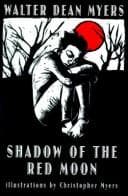
Walter Dean Myers (1995)
Genre
Fantasy / Young Adult
Reading Time
240 min
Key Themes
See below
Sign in to track this book
Forced from his besieged crystal city, a young Okalian goes on a dangerous quest through a frozen, monster-ridden wilderness to find a mythical homeland, only to discover a truth that could redefine his people's survival.
Jon, a young Okalian, lives a sheltered life within Crystal City. His world changes when the monstrous Fen, a nomadic warrior race, break through the city's walls after a long siege. Panic erupts as the city falls. Jon's father, an Okalian leader, gives Jon a mission: to lead a small group of survivors – his sister, Elana, and his friend, Kal – to the legendary Ancient Land, the origin of Okalian civilization. This land is believed to be a sanctuary where their culture can be saved. Jon gets a mysterious map and vague instructions, forced to leave everything he knows and go on a dangerous journey into the unknown Wilderness.
In the Wilderness, Jon, Elana, and Kal quickly find that their city-bred skills are useless. The environment is harsh, filled with strange, dangerous creatures and difficult terrain. They struggle to find food and shelter, realizing how vulnerable they are. During their travels, they meet the Juka, a tribal people known for their ferocity and red markings. The Juka seem hostile at first, but Jon's group avoids direct conflict. The encounter leaves them shaken and wary of dangers outside Crystal City's former borders. They start to question what their elders had told them about the outside world.
Despite trying to stay hidden, Jon's group is captured by a Juka hunting party. They are brought to a Juka encampment, where they are treated with suspicion but not cruelty. Here, they meet the Juka Shaman, an elder who speaks of old prophecies. The Shaman reveals the legend of the 'Red Moon,' a celestial event foretold to bring about a big change or destruction to the world. The Juka believe Jon's arrival, with his Okalian knowledge, might be linked to this prophecy. This discovery makes Jon's understanding of his mission and the world beyond Crystal City more complicated.
While held by the Juka, Jon, Elana, and Kal adapt. They observe and slowly learn the Juka's survival skills, such as hunting, tracking, and identifying edible plants – knowledge completely new to their Okalian upbringing. A young Juka warrior named Kael takes an interest in Jon, perhaps sensing his desire to understand. Kael, reserved at first, starts to share insights into the Wilderness and Juka customs. Through Kael, Jon begins to see the Juka not just as a threat, but as people with their own culture and wisdom, challenging his ideas from Okalian teachings.
Convinced of Jon's quest and the coming Red Moon, the Juka Shaman, persuaded by Kael, lets Jon's group leave, with Kael guiding and protecting them. Their journey through the Wilderness becomes harder. They travel through mountains, dense forests, and scorching deserts, constantly battling hunger, thirst, and the elements. Tensions rise as fatigue and fear affect the group. Kal struggles with their new reality, often questioning Jon's leadership and their quest, longing for Crystal City's comforts.
Following the map, the group finds the ruins of an old Okalian outpost, not the Ancient Land itself, but a desolate sign of a forgotten past. Among the rubble, they find fragmented records and artifacts that go against much of what Jon was taught. They discover that the Fen were not always invaders but were a people driven to desperation by Okalian expansion and resource use. The Okalians, in their pursuit of technology, had moved into Fen lands, leading to centuries of conflict. This discovery shakes Jon, making him confront the possibility that his entire worldview was based on a biased history.
As their journey continues, the Red Moon, a celestial spectacle, becomes visible, growing larger and casting an eerie glow over the land. Its appearance seems to cause more unrest among Wilderness creatures and a growing sense of dread. The Juka Shaman's prophecy feels closer. Jon realizes that the 'Ancient Land' might not be a physical refuge, but a metaphorical understanding of their history and the need for a new path. Faced with dwindling supplies and increasing danger, Jon understands that a direct confrontation or a big change in strategy is coming.
While crossing a desolate plain, Jon's group meets a patrol of Fen warriors. A tense standoff happens, with Kael preparing for battle. However, Jon, remembering the discoveries from the ruined outpost, tries to communicate instead of fighting. Through gestures and Kael's basic understanding of different tribal languages, Jon conveys his group's peaceful intentions and their shared problems under the Red Moon. Surprisingly, the Fen warriors, also showing signs of weariness from the changing world, agree to a temporary truce, acknowledging the greater threat that now faces all peoples.
The Red Moon reaches its highest point, making the world blood-red. Jon, watching the combined Fen and Juka warriors, has an idea. The 'Ancient Land' is not a place, but a return to the basic ideas of connection and respect for all life, a philosophy that came before the Okalian-Fen conflict. He understands that true survival is not in isolation or technology, but in alliance and understanding. He explains his realization to Elana, Kal, and Kael, suggesting that their mission is to build a new future based on cooperation instead of old hatreds and divisions. The group, including the Fen and Juka, now face the Red Moon together, united by a common threat and a new hope for a shared future.
As the Red Moon starts to fade, its impact is shown not as destruction, but as a reshaping of the world's environment, making old ways of life unsustainable for everyone. Jon, having gotten rid of his old prejudices and embraced a broader understanding of humanity, takes on a new leadership role, supporting an alliance between the surviving Okalians, Juka, and even the Fen. The novel ends with the different groups, having seen the Red Moon's power, standing together. They are ready to combine their knowledge and strengths – Okalian ingenuity, Juka survival skills, and Fen warrior spirit – to adapt to the changed world and build a new, more harmonious civilization from the old. The journey to the 'Ancient Land' has changed Jon.
The Protagonist
Jon transforms from a naive, city-bred boy into a wise and empathetic leader who challenges his own cultural biases to forge a new path for survival.
The Supporting
Elana matures from a dependent sister into a resilient and resourceful survivor, providing quiet strength to her brother.
The Supporting
Kal struggles to adapt to the new world, representing the human difficulty in letting go of comfort and embracing harsh change.
The Supporting
Kael transcends tribal prejudice to become a vital ally, demonstrating the power of empathy and shared purpose.
The Supporting
The Shaman's initial suspicion gives way to a broader understanding, as he recognizes the shared fate of all peoples under the Red Moon.
The Antagonist/Supporting
Initially portrayed as an invading menace, their character arc reveals them as a people with their own history and a potential for alliance.
The Mentioned
Represents the initial authority and the legacy Jon must either uphold or redefine.
Jon's journey is one of self-discovery, both personal and cultural. Without Crystal City's comforts, he must redefine who he is outside of his Okalian identity. He learns that much of what he was taught about the world and his people's history was a biased story. His interactions with the Juka and the discoveries about the Fen challenge his worldview, leading him to create a new, more inclusive identity that recognizes how all peoples are connected.
“Everything he's been taught might be a lie -- a lie he must face for everything to survive.”
The novel explores the dangers of prejudice and the value of understanding. The Okalians see the Fen as monstrous invaders, and Jon initially shares this bias. However, through his journey, especially finding the ruined outpost and his interactions with Kael and some Fen warriors, Jon learns that the conflict has deep, historical roots caused by Okalian expansion. The theme shows how preconceived notions can blind people to shared humanity and the possibility of living together, supporting empathy and discussion over conflict.
“He had always seen the Fen as monsters, but the ruins whispered a different story.”
Survival is a main theme, as Jon and his companions must adapt to the harsh Wilderness after living a technologically advanced, sheltered life. They learn skills from the Juka, showing the need for flexibility and resourcefulness when facing big challenges. This theme goes beyond physical survival to the survival of their culture and species, suggesting that true survival requires adapting not just physically, but also ideologically, by letting go of old prejudices and embracing new ways of thinking and cooperating.
“The Okalian way would survive only if some of the Okalians survived.”
The book questions the accuracy of historical stories. Jon's initial understanding of the world, especially the Fen-Okalian conflict, is based on a biased history taught in Crystal City. Finding the ruined outpost reveals a darker, more complex truth, making Jon deal with the idea that history is often written by the winners. This theme shows the importance of seeking many perspectives and critically looking at accepted truths to understand the full picture, which is important for building a better future.
“But he hasn't been told of the horrors he will have to face in the cold Wilderness in order to get there.”
The message of the Red Moon and the environmental changes points to humanity's relationship with nature. The Okalians' technological advancement and expansion likely caused the imbalance that led to the Fen conflict and possibly the Red Moon's impact. The Juka, connected to the land, offer a different view. The story ultimately supports understanding the connection between different peoples and between humanity and the environment, as essential for long-term survival and harmony.
“The Red Moon was not just a prophecy of destruction, but a sign that the world itself was changing, demanding a new way of living.”
A celestial phenomenon signifying impending change and a catalyst for unity.
The Red Moon serves as a powerful symbol and a key plot device. Initially presented as a Juka prophecy of destruction, its appearance acts as a ticking clock and an escalating threat, forcing all factions to confront their shared vulnerability. It symbolizes not just impending doom, but also a transformative event that reshapes the world and forces diverse peoples to unite against a common, existential threat, thereby catalyzing Jon's ultimate realization about cooperation.
A metaphorical destination representing a return to foundational principles.
The 'Ancient Land' is initially presented as a literal, geographical sanctuary, the birthplace of Okalian civilization. However, it functions as a metaphorical plot device. As Jon's journey progresses, he discovers that the true 'Ancient Land' is not a physical place but rather a return to the foundational principles of understanding, cooperation, and respect for all life that predates the conflicts and prejudices of his civilization. It represents the ideological shift required for survival.
A historical artifact revealing a hidden, darker truth about the past.
The ruined Okalian outpost serves as a pivotal plot device. It is a physical location that holds fragmented historical records and artifacts, directly contradicting the official history taught in Crystal City. This discovery shatters Jon's preconceived notions about the Fen and his own people, forcing him to question everything he believed. It acts as a turning point in his understanding, shifting his perspective from one of tribal loyalty to a broader, more critical view of history and truth.
The narrative technique of contrasting Okalian and Juka cultures to highlight different ways of life.
The stark contrast between the technologically advanced, sheltered Okalian society and the primitive, nature-attuned Juka culture is a significant narrative device. It allows the author to explore themes of survival, prejudice, and understanding. By forcing Jon to interact with and learn from the Juka, the story demonstrates the limitations of one worldview and the value of diverse knowledge and perspectives, ultimately advocating for cultural exchange and synthesis as a path to a better future.
“The moon does not choose its color; it simply reflects the light it is given.”
— A mentor explains the nature of the Red Moon to the protagonist.
“In the shadow of the red, we find our true selves, stripped of pretense.”
— Reflection during a pivotal moment of self-discovery.
“Fear is a weapon only if you let it be; otherwise, it is just noise.”
— Advice given before a dangerous journey.
“The old stories are not just tales; they are maps to forgotten truths.”
— Discussing the importance of lore and history.
“Power without purpose is a storm without rain—loud but empty.”
— Warning about the misuse of magic or authority.
“Sometimes the bravest thing is to stand still and listen.”
— A lesson learned in a moment of crisis.
“The world changes not by grand gestures, but by small, persistent acts of kindness.”
— Reflection on making a difference in the community.
“In the silence between heartbeats, destiny is decided.”
— During a tense, quiet moment before action.
“To understand the light, one must first walk in the shadow.”
— Philosophical insight about growth and understanding.
“Magic is not in the wand, but in the will that wields it.”
— Teaching about the source of magical abilities.
“Friendship is the anchor that holds fast when all else is adrift.”
— Emphasizing the importance of loyal companions.
“The past is a ghost; it can haunt or guide, depending on how you face it.”
— Reflecting on personal history and its impact.
“Every ending is a beginning in disguise, if you have the eyes to see it.”
— Offering hope after a loss or failure.
Ready to see how well you understood this book? Take our interactive quiz with 10 questions.

Biography coming soon.







