“The price of security is eternal vigilance.”
— Bean reflecting on the constant threat to Earth and the need for preparedness.

Orson Scott Card (2001)
Genre
Fantasy / Science Fiction / Young Adult
Reading Time
900 min
Key Themes
See below
Sign in to track this book
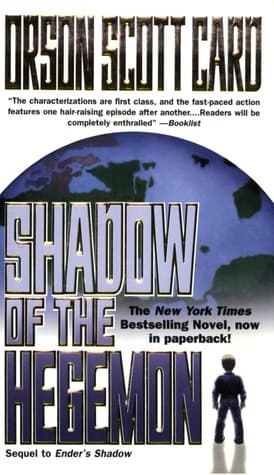
With the alien threat vanquished, Ender's child-hero strategists become pawns in a new global power struggle, forcing the brilliant but diminutive Bean to ally with Ender's manipulative brother, Peter, to save them and, inadvertently, orchestrate Peter's rise to world domination.
After the Formic War, Battle School closes, and the children who saved humanity return to Earth. Their skills and strategic brilliance make them valuable assets and targets for the world's nations. Bean, living in India with Sister Carlotta, barely escapes an assassination attempt by Russian agents. Realizing the danger, he seeks out Peter Wiggin, Ender's older brother, who has begun influencing global politics under the pseudonym 'Locke.' Peter, seeing a chance to consolidate power and establish peace, agrees to help Bean protect the other Battle School children, many of whom are being kidnapped by various groups.
The kidnappings continue, targeting members of Ender's Dragon Army. Hot Soup, Alai, Petra Arkanian, and others are abducted, mostly by Achilles de Flandres. Achilles is a manipulative and psychopathic former Battle School student who resents Ender and his friends. Having gained favor with the Russian government, Achilles uses their resources to capture the children, intending to exploit their genius for his own geopolitical goals. Bean, with Peter's intelligence network, works to track Achilles and understand his scheme, realizing the threat Achilles poses to global stability and the lives of his friends.
Bean uses his intelligence to look into Achilles's past, finding his history of manipulation, murder, and psychological warfare, dating back to his time on the streets of Rotterdam. He learns that Achilles is not just serving Russia but using them to create a global power vacuum he can fill. Achilles's strategy involves starting regional conflicts, especially between Russia and India, to distract the world while he gains control over the kidnapped children and their strategic minds. Bean realizes the true danger: Achilles is not just a kidnapper, but a budding hegemon with an effective plan.
While Bean tracks Achilles, Peter Wiggin, as 'Locke,' works to establish a global information network and a credible voice for peace and reason. He publishes influential essays and participates in online forums, guiding public opinion and fostering international cooperation. He uses his understanding of human psychology and global politics to counteract the rising tensions Achilles fuels. Peter's goal is not just to rescue the children but to prevent a global war and set the groundwork for a unified Earth government, where he sees himself as the ultimate leader, a benevolent hegemon.
Achilles manipulates events, leading to a diplomatic crisis between India and Russia. He stages incidents and feeds misinformation to both sides, using the kidnapped Battle School children's strategic advice (often given under duress) to make the conflict seem unavoidable. The world watches as two nuclear powers prepare for war. Bean, in a race against time, realizes that Achilles's plan is succeeding and that the lives of his friends and billions of others are at stake. He increases his efforts to find Achilles and devise a counter-strategy.
Bean, with Peter's intelligence, discovers that Achilles is holding the children in a secret facility in Ukraine, disguised as a scientific research center. He understands that a direct military assault is too risky and could harm the children. Instead, Bean forms a plan: to publicly expose Achilles's actions and true identity, discrediting him and forcing his Russian patrons to abandon him. He plans to use the global communication networks Peter is building to broadcast the truth, hoping to turn public opinion and international support against Achilles.
With Peter's diplomatic pressure and the impending exposure, Bean begins the rescue operation. He infiltrates Achilles's facility, using his physical abilities and strategic genius. He navigates the security systems and confronts Achilles's guards. After a tense standoff and clever maneuvers, Bean frees Alai, Petra, Hot Soup, and the other kidnapped children. The rescue is a victory against Achilles and restores hope for the children's safety. However, Achilles himself escapes, vowing revenge.
Despite the successful rescue, Achilles de Flandres evades capture, disappearing. His escape leaves a lingering threat, but his immediate power base is shattered. At the same time, Peter Wiggin's 'Locke' persona gains global recognition. His essays and diplomatic efforts, especially in defusing the India-Russia crisis, position him as a voice of reason and a potential leader for a unified Earth. The world, tired of conflict, begins to look to Locke for guidance, setting the stage for Peter's long-term goal of becoming the Hegemon, the benevolent ruler of a peaceful, unified world.
The rescued Battle School children are debriefed and begin recovering from their ordeal. They are safe but affected by Achilles's manipulation. Bean, though relieved, understands that the fight for global stability is not over. He chooses to continue working with Peter, recognizing Peter's ambition and his ability to bring about lasting peace, even through his own manipulation. Bean becomes Peter's trusted advisor and operative, dedicating his intellect to Peter's vision of a unified Earth, even as he deals with his own unique biological condition and his future.
With Achilles neutralized (for now) and the Battle School children mostly safe, Peter Wiggin continues his ascent to power. His 'Locke' persona is now a globally recognized figure, advocating for international cooperation and peaceful conflict resolution. He uses his growing influence to dismantle existing power structures and build new ones that align with his vision of a unified world. The stage is set for Peter to become the Hegemon, the supreme ruler of Earth, a position he believes is necessary to prevent future wars. Bean remains his loyal, though sometimes questioning, shadow, the brilliant mind behind many of Peter's strategic successes.
The Protagonist
Bean evolves from a child soldier to a strategic mastermind, navigating complex political landscapes while grappling with his unique biology and defining his place in a post-war world.
The Deuteragonist / Aspiring Hegemon
Peter transitions from a behind-the-scenes manipulator to a globally recognized figure, methodically laying the groundwork for his eventual ascent to world leadership.
The Antagonist
Achilles rises from a street urchin to a global threat, driven by his psychopathy and desire for control, before being thwarted by Bean and Peter.
The Supporting
Alai endures captivity and is rescued, symbolizing the shared trauma and resilience of the Battle School children.
The Supporting
Petra is abducted and rescued, showcasing her resilience and the enduring bond among the Battle School children.
The Supporting
Sister Carlotta continues her role as a moral anchor for Bean, witnessing his involvement in global events.
The Supporting
Hot Soup is one of the many Battle School children who endure abduction and eventually freedom.
The Mentioned
Graff's influence is felt through the children he trained, but he remains a background figure.
The novel explores different forms of leadership, contrasting Peter Wiggin's manipulative but unifying vision with Achilles's chaotic and self-serving ambition. It questions whether a single, powerful leader (a hegemon) is necessary for global peace, and what moral compromises are acceptable. Peter believes that only a unified Earth under his control can prevent endless wars, a concept he argues through his 'Locke' essays. Achilles seeks to create chaos to seize power for personal gain. The book forces readers to consider if a 'benevolent dictator' is an acceptable price for peace.
“Peace is not the absence of war, but the presence of justice. And for justice, sometimes you need a strong hand.”
The Battle School children, saviors of humanity, are deeply affected by their experiences. They cannot return to normal lives but are seen as valuable assets or dangerous weapons by world powers. Their kidnappings and manipulation by Achilles highlight the trauma they carry and the exploitation they face. Characters like Alai and Petra, despite their brilliance, are vulnerable and scarred, showing that even heroes are not immune to the psychological and political fallout of war. Their struggle for normalcy and safety is a central emotional thread.
“We saved the world, and now the world wants to eat us alive.”
Bean and Peter Wiggin, both with extraordinary intelligence, are burdened by their gifts. Bean's accelerated metabolism and vast intelligence isolate him, making him feel different and alone. Yet, it also compels him to solve the world's problems. Peter's genius drives his ambition for control, believing he alone can prevent global catastrophe. The novel explores the responsibility that comes with such intelligence, and how it can be used for both immense good and dangerous manipulation. Their brilliance makes them both targets and saviors, highlighting the double-edged sword of exceptional cognitive ability.
“Sometimes I think my brain is a curse, not a gift. It sees too much, too clearly.”
The conflict between Peter and Achilles is largely fought through manipulation and control of information, rather than direct military engagement. Peter uses his 'Locke' persona to shape public opinion and foster international cooperation. Achilles spreads misinformation and incites conflict to destabilize nations. The novel shows how words, media, and strategic leaks can be as powerful, if not more so, than armies in a post-Formic War world. It highlights the dangers of propaganda and the importance of discerning truth in a complex political landscape, where perception often outweighs reality.
“The greatest weapon is not the bomb, but the truth. Or what people believe to be the truth.”
Online identities used by Peter and Valentine Wiggin to influence global politics.
These online aliases serve as the primary tools for Peter and Valentine Wiggin to manipulate public opinion and global events. 'Locke,' created by Peter, advocates for peace and a unified world government, subtly positioning Peter as a benevolent leader. 'Demosthenes,' created by Valentine, often takes a more alarmist and nationalistic stance, creating a dialectic that Peter can then exploit. These personas allow the Wiggin siblings to exert immense influence without revealing their true identities, acting as a powerful form of information warfare.
Bean's genetically engineered body and accelerated metabolism.
Bean's unique genetic modifications, which give him an accelerated metabolism, enhanced strength, and a rapidly aging body, serve as both a superpower and a ticking clock. His physical and mental abilities are far beyond human norms, allowing him to perform feats of intellect and agility. However, his rapid aging also creates a profound sense of urgency and mortality, driving his actions and adding a layer of personal tragedy to his heroic efforts. It provides a constant internal conflict and shapes his worldview.
Ender's former commanders become targets and tools for geopolitical power struggles.
The former Battle School children, despite their role in saving humanity, are treated as highly valuable, yet disposable, resources by Earth's nations. Their strategic genius makes them desirable assets, leading to their systematic kidnapping and exploitation by figures like Achilles. This device highlights the moral ambiguity of treating child heroes as mere weapons or political leverage, emphasizing the post-war world's descent into a new kind of conflict where human intellect is the most coveted resource.
Ender's absence and the impact of his legacy on Earth.
Though Ender Wiggin himself is absent from Earth, his presence is constantly felt through his legacy. The entire premise of the book, the conflict over his former commanders, stems directly from his victory and subsequent departure. Characters constantly reference him, compare themselves to him, or seek to emulate his strategic brilliance. Ender's 'shadow' creates a power vacuum and a standard against which all other leaders are measured, driving the ambitions of both Peter and Achilles.
“The price of security is eternal vigilance.”
— Bean reflecting on the constant threat to Earth and the need for preparedness.
“You can't be a hero unless you're willing to die for something.”
— Petra musing on the nature of heroism and sacrifice.
“Power is not given, it is taken.”
— Achilles's philosophy on acquiring and maintaining control.
“It is not enough to defeat your enemy. You must also defeat their ideas.”
— Bean considering the ideological battle against enemies like Achilles.
“Sometimes the only way to save someone is to let them go.”
— Petra's painful realization about the limits of her influence.
“The greatest weapon is not a bomb, but a mind.”
— Bean emphasizing the importance of intellect in warfare and politics.
“Every secret is a potential weapon.”
— Achilles understanding the value of information and its leverage.
“Fear makes people predictable. And predictability is a weakness.”
— Bean observing how fear can be exploited by cunning adversaries.
“There are no innocent bystanders in a war.”
— Petra's cynical view of the global conflict and its impact on everyone.
“The past is a weapon, if you know how to wield it.”
— Characters using historical events and personal histories to their advantage.
“To truly know someone, you must know what they are willing to die for.”
— Bean's insight into understanding the core motivations of individuals.
“Peace is just the time between wars.”
— A pragmatic and somewhat cynical view of international relations.
“Every choice has a consequence, and some consequences are irreversible.”
— Characters facing the weight of their decisions and their lasting impact.
“The world is not fair, but it can be made just.”
— Bean's underlying belief in the possibility of creating a better order, despite inherent unfairness.
Ready to see how well you understood this book? Take our interactive quiz with 10 questions.
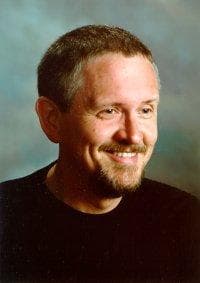
Orson Scott Card is an American writer known best for his science fiction works. He is the first and only person to win both a Hugo Award and a Nebula Award in consecutive years, winning both awards for both his novel Ender's Game (1985) and its sequel Speaker for the Dead (1986). A feature film adaptation of Ender's Game, which Card co-produced, was released in 2013. Card also wrote the Locus Fantasy Award-winning series The Tales of Alvin Maker (1987–2003).







