“Bean wasn't a hero, but he was a soldier. He knew that sometimes soldiers had to do things that were not heroic.”
— Bean reflecting on his actions and responsibilities.

Orson Scott Card (2000)
Genre
Fantasy / Science Fiction / Young Adult
Reading Time
8-10 hours (based on 388 pages and average reading speed)
Key Themes
See below
Sign in to track this book
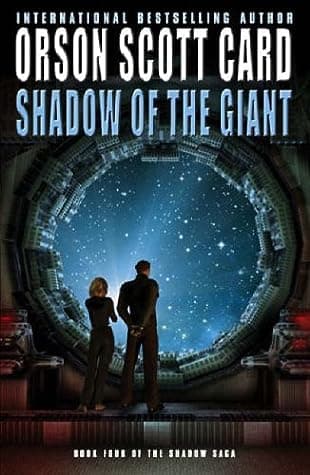
As Earth faces alien annihilation, the brilliant but genetically doomed Bean, once a street urchin who civilized gangs, must now outwit the extraterrestrial threat and his own genetic destiny.
The novel opens with Bean and Petra Arkanian, now married, dealing with the accelerated effects of their genetic modifications. Bean's 'giantism'—from the Anton's Key gene—causes rapid growth and a severely shortened lifespan, a fate Petra also shares, though her symptoms are less advanced. Doctors confirm that Bean has only a few years left, a devastating blow that makes him rush to secure his unborn children's future. He begins meticulously planning for their survival and education, knowing they too carry the Anton's Key gene and will face similar challenges, though with his genetic modifications designed to lessen the worst effects.
Despite the dire medical prognosis, Bean and Petra decide to have children, believing their superior intellect and the potential for a new, improved human lineage outweigh the risks. They understand that their children will inherit the Anton's Key gene, but Bean has engineered a genetic modification intended to slow the growth and extend the lives of his offspring compared to his own rapid decline. This decision is not without internal conflict, as Petra initially struggles with the ethics of bringing children into such a difficult existence. However, their shared love and commitment to a future where their intellect can contribute to humanity ultimately lead them to embrace parenthood.
Driven by the desperate hope of finding a cure or at least a way to extend his and Petra's lives, Bean launches a worldwide search for Dr. Volescu, also known as Anton. Anton is the geneticist responsible for creating the Anton's Key gene, the modification that gave Bean his genius but also his fatal giantism. Bean uses his vast network and resources, including former Battle School colleagues and his own formidable intellect, to track down Anton. He believes Anton might possess critical knowledge or even a solution that could save him and his children, making the pursuit a race against his own rapidly deteriorating health.
Concurrently, Peter Wiggin, now the Hegemon, continues to consolidate his power and influence across the globe. He skillfully manipulates international politics, using his understanding of human psychology and global dynamics to prevent further wars and establish a fragile peace. Peter, while a distant figure to Bean in terms of direct interaction, remains a significant presence, his actions shaping the world in which Bean and Petra are trying to secure their children's future. He occasionally provides resources or information to Bean, demonstrating a complex, mutually beneficial, though often strained, relationship.
Petra gives birth to their children, a group of highly intelligent infants, each carrying the modified Anton's Key gene. The birth is a moment of joy and apprehension for Bean and Petra. They immediately begin to observe and analyze their children's development, noting both their extraordinary intellectual capabilities and the subtle signs of their unique genetic inheritance. Bean's modifications appear to be working, as the children's growth rates are slower than his own, offering a glimmer of hope for a longer lifespan. This new chapter brings a renewed sense of purpose to Bean's frantic efforts.
Bean's search for Anton leads him to a hidden research facility where he uncovers Anton's extensive, and often disturbing, research notes. He learns the full scope of Anton's experiments, including the original purpose of the Anton's Key gene—to create super-soldiers with enhanced intellect and physical prowess, without regard for their lifespan. Bean also discovers Anton's attempts to create a 'cure' or at least a mitigation for the gene's fatal side effects. This discovery provides crucial insights into his own condition and that of his children, giving him a more complete understanding of his genetic destiny.
Knowing his time is limited, Bean dedicates himself to designing an unparalleled educational system for his children. He understands that traditional schooling will be insufficient for their accelerated intellects and unique needs. He creates a curriculum that blends advanced academic subjects with practical skills, critical thinking, and ethical training, all designed to prepare them for a world they will likely outlive their parents in. He employs a team of the world's most brilliant educators and specialists, ensuring his children receive the best possible foundation for their future, emphasizing independence and self-sufficiency.
As the existence of Bean and Petra's genetically enhanced children becomes known in certain circles, they face new threats from international factions and scientific organizations eager to exploit their unique genetics. These groups see the children as potential weapons, research subjects, or a means to gain power. Bean and Petra must employ all their tactical genius and Peter Wiggin's political influence to protect their family. They utilize a network of allies and sophisticated security measures, constantly moving and adapting to safeguard their children from those who would misuse their extraordinary potential.
Bean's health deteriorates rapidly, and he becomes increasingly frail. He experiences the full, devastating effects of the Anton's Key gene, his body growing too large and his systems failing. Recognizing his time is almost up, he focuses on making final arrangements. He meticulously records his knowledge, strategies, and ethical guidelines for his children, ensuring they have access to his wisdom even after his death. He shares poignant goodbyes with Petra, reaffirming his love and his faith in her ability to raise their children and protect his legacy, preparing for his inevitable end with quiet dignity.
After Bean's death, Petra is left with the immense responsibility of raising their children and carrying forward Bean's legacy. She grieves deeply but channels her sorrow into fierce determination. She continues to oversee their specialized education and protection, ensuring they grow into independent, ethical individuals capable of navigating the complex world Bean prepared them for. Petra, herself still affected by the Anton's Key gene, though less severely than Bean, faces her own mortality while striving to provide a stable and loving environment for her children, embodying resilience and strength in the face of profound loss.
As the children grow, their individual personalities and extraordinary intellects begin to show more distinctly. They exhibit remarkable problem-solving skills, advanced comprehension, and a deep curiosity about the world. While still young, their development suggests they will each find their own path, potentially impacting humanity in significant ways. Petra observes them with a mixture of pride and apprehension, knowing they are destined for greatness but also for unique challenges. The narrative hints at the potential for these children to become the next generation of leaders, thinkers, or even a new kind of human.
Petra's struggle does not end with Bean's death. She continues to face political machinations and threats from various factions who still seek to control or exploit her children. She forms new alliances and strengthens existing ones, using her own strategic brilliance, honed during her time at Battle School and alongside Bean. Her primary goal remains the absolute safety and independent development of her children, ensuring they are not used as tools by others. She dedicates her remaining years to upholding Bean's vision of a future where their superior intellect can benefit humanity without succumbing to tyranny.
The Protagonist
Bean begins the story grappling with his impending death and transforms into a meticulous architect of his children's future, accepting his fate while ensuring his legacy endures.
The Protagonist/Supporting
Petra evolves from a partner in Bean's desperate plans to the primary guardian of their children and the enduring flame of Bean's vision.
The Supporting
Peter continues his role as a global stabilizer, his interactions with Bean reinforcing his commitment to a secure future for humanity.
The Antagonist/Mentioned
Anton's arc is largely in the past, his actions having set the stage for the novel's central conflict, but his hidden research provides crucial revelations.
The Supporting
The children begin as vulnerable infants and slowly start to manifest their individual intellects and personalities, hinting at their significant future roles.
The Supporting
The Surgeon General's role is static, serving to deliver critical information.
The Mentioned
Their collective arc is to facilitate the education of Bean's children, ensuring the continuation of his intellectual legacy.
The Antagonistic
These factions serve as persistent external threats, their antagonism driving the protective actions of Bean and Petra.
The novel explores the pressure and isolation that comes with extraordinary intelligence. Bean, and later his children, possess minds far beyond average, but this gift is coupled with the curse of a shortened lifespan and the constant threat of exploitation. Their genius makes them both saviors and targets, forcing them to live under constant vigilance and to make difficult ethical decisions. This is evident in Bean's frantic planning for his children's future, knowing his own time is short, and in Petra's ongoing struggle to protect them from those who would misuse their gifts. Their intellect, while powerful, often brings more challenges than comfort.
“''I am not a weapon, I am a man. But I am also a tool, and my children will be tools, too. It is the nature of the gift.''”
A central theme is the human desire to leave a lasting legacy in the face of inevitable death. Bean's terminal illness drives his desperate efforts to ensure his children's survival and to imbue them with his knowledge and ethical framework. He is determined that his intellect and sacrifices will not be in vain, and that his children will carry forward a positive impact on humanity. This manifests in his meticulous educational plans, his search for Anton, and his final, poignant goodbyes to Petra, all aimed at securing a future he will not live to see. Petra then takes on this mantle, ensuring Bean's vision is realized.
“''What good is a mind like mine if it cannot build a future for those who come after?''”
The novel examines the ethical questions surrounding genetic manipulation. The Anton's Key gene, which grants genius but causes fatal giantism, is a prime example of scientific advancement with devastating consequences. Bean and Petra grapple with the morality of bringing children into existence who will share their genetic burden, even with modifications. The various international factions seeking to exploit the children further highlight the dangers of unchecked scientific ambition and the potential for human enhancement to be used for nefarious purposes. The story forces readers to consider the line between improvement and hubris.
“''We played God, and now we pay the price. But our children... they might be the redemption.''”
At its core, the story is a powerful exploration of familial love and the lengths parents will go to protect their children. Bean's entire existence becomes dedicated to securing his children's future, even as his own body fails. Petra, too, is a fierce protector, inheriting the mantle of guardianship after Bean's death. Their love for their children transcends the challenges of their genetic conditions and the external threats they face. This theme is evident in their shared decision to have children despite the risks, their creation of a safe and intellectually stimulating environment, and their constant vigilance against those who would harm their family.
“''My children are not weapons. They are the future, and I will die protecting them.''”
A genetic modification granting genius but causing terminal giantism.
This is the central plot device, driving the entire narrative. It is the genetic alteration that gave Bean his extraordinary intellect but also condemns him to a drastically shortened lifespan due to rapid, uncontrolled growth (giantism). It is also inherited by his children, albeit in a modified form designed by Bean. The gene creates the primary conflict, the urgency of Bean's quest, and the ethical dilemmas faced by the characters, making it the catalyst for all major plot points and character motivations.
The rapid progression of Bean's terminal illness, creating narrative urgency.
The accelerated onset and progression of Bean's giantism serve as a ticking clock for the narrative. His doctors' grim prognosis that he only has a few years left imbues every decision and action with a desperate urgency. This device forces Bean to condense a lifetime of planning and preparation into a very short period, intensifying the emotional stakes and driving the plot forward at a relentless pace. It highlights his genius under pressure and his unwavering dedication to his children's future.
A desperate quest for the geneticist who created the Anton's Key gene.
This device functions as both a quest narrative and a means of revealing critical backstory and scientific information. Bean's global search for Anton (Dr. Volescu) is fueled by the hope of finding a cure or at least a deeper understanding of his condition. The discoveries made during this search provide crucial insights into the origins of the Anton's Key gene and Anton's own attempts at mitigation, which are vital for Bean's plans for his children. It allows for exposition while maintaining a sense of active pursuit.
The global political stability and influence wielded by Peter Wiggin.
Peter Wiggin's role as Hegemon provides a stable, albeit complex, political backdrop against which Bean and Petra operate. While not always directly involved, Peter's global influence and his network of contacts offer crucial protection and resources to Bean and Petra, especially in warding off international factions seeking to exploit their children. His presence ensures that the threats they face are primarily from clandestine groups rather than outright global warfare, allowing the story to focus more on the personal and ethical struggles of the family.
“Bean wasn't a hero, but he was a soldier. He knew that sometimes soldiers had to do things that were not heroic.”
— Bean reflecting on his actions and responsibilities.
“The price of security is eternal vigilance, and the price of victory is eternal work.”
— Bean's internal monologue about the ongoing struggle for peace.
“Power is like a river; it flows, and you can either build a dam and control it, or you can be swept away.”
— Bean's philosophical view on managing influence and authority.
“There are no easy answers, only difficult choices.”
— A recurring theme in the characters' decision-making.
“He knew that love was not about finding the perfect person, but about seeing an imperfect person perfectly.”
— Bean's reflections on his relationship with Petra.
“The greatest battles are fought not with weapons, but within the mind.”
— Bean's internal struggles and strategic thinking.
“Sometimes the only way to save someone is to let them go.”
— A difficult decision made by a character regarding a loved one.
“A leader's job is not to be loved, but to be effective.”
— Bean's pragmatic view on leadership.
“The future is not something that happens to us, but something we make.”
— A character's belief in agency and shaping destiny.
“Even the smallest person can change the course of the future.”
— Emphasizing the impact of individuals, especially Bean.
“Knowledge is power, but wisdom is knowing how to use that power.”
— A character's insight into the difference between knowledge and wisdom.
“To truly understand someone, you must walk a mile in their shoes, even if those shoes are covered in blood.”
— Bean's attempt to empathize with his adversaries.
“Grief is the price we pay for love.”
— A character dealing with loss.
“The world is not fair, and it never will be. But that doesn't mean we stop trying to make it better.”
— A character's enduring hope despite harsh realities.
Ready to see how well you understood this book? Take our interactive quiz with 10 questions.
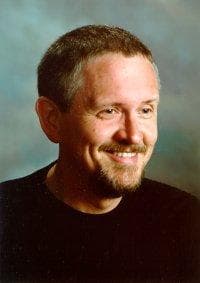
Orson Scott Card is an American writer known best for his science fiction works. He is the first and only person to win both a Hugo Award and a Nebula Award in consecutive years, winning both awards for both his novel Ender's Game (1985) and its sequel Speaker for the Dead (1986). A feature film adaptation of Ender's Game, which Card co-produced, was released in 2013. Card also wrote the Locus Fantasy Award-winning series The Tales of Alvin Maker (1987–2003).







